
Reviewed · NEW YORK CITY
New York’s Iconic Central Park: A Self-Guided Audio Tour
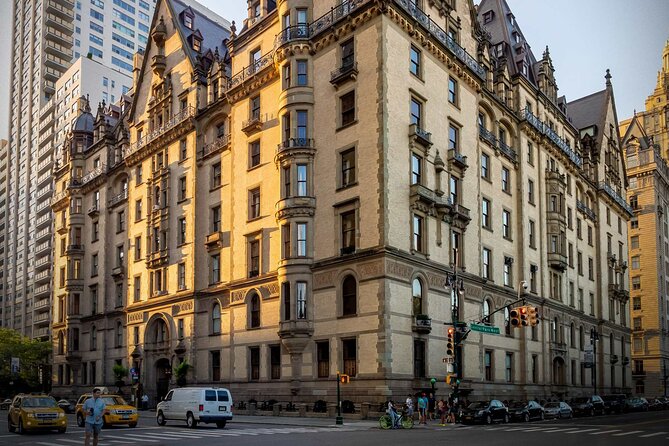
Central Park is best understood on foot, one story at a time. This self-guided walk links the park’s grand entrances, bridges, statues, fountains, and movie-famous corners with tales about Civil War hero William Tecumseh Sherman, the Great Zoo Escape of 1874, Balto, John Lennon, and the Dakota.
I like the freedom to start when you want and the fact that you can pause for photos, coffee, or a bench without holding up a group. I also like the small-scale feel: only your party takes part, and lifetime access lets you reuse the tour. The main caution is navigation. One customer found the Central Park paths confusing and said the app repeatedly reported that the group was lost, so keep your phone charged and pay attention to the route.
Key points to know before you go

- A 90-minute route from The Plaza to The Dakota: You cross a good stretch of Central Park rather than circling one small area.
- An Emmy-nominated storyteller provides the narration: The guide is heard through the VoiceMap app, not met in person.
- Film locations and real New York stories share the route: Gapstow Bridge, Bethesda Fountain, Strawberry Fields, and the Dakota all carry strong associations.
- Offline maps and audio are included: Download the tour before walking so you are not dependent on a live connection.
- You supply the phone and headphones: Neither is included, and there are no food, drink, transportation, museum tickets, or attraction admissions.
- The $14.99 price buys private, flexible access: It can be good value for independent walkers, but less so if you want live questions or hands-on guidance.
What this Central Park walk actually feels like
This is not a museum tour, a horse-drawn carriage ride, or a live walk with a guide waiting at each stop. You follow an audio route on your own smartphone, with spoken commentary tied to the places around you.
The tour takes about one hour and 30 minutes to two hours. The stated walking portion is about 90 minutes, but your real time will depend on how often you stop. Central Park invites pauses, and you may want extra minutes at Bethesda Terrace, the Mall, Strawberry Fields, or one of the bridges.
The route begins at The Plaza Hotel on Fifth Avenue and ends at The Dakota on West 72nd Street. That point-to-point design matters. You do not finish where you started, so plan your day around ending on the Upper West Side rather than near Fifth Avenue.
The narration comes from an Emmy-nominated storyteller. You will hear the story as you walk, with the app supplying maps and location-based audio. Since this is self-guided, you set the pace. Stop the audio for a photo, replay a section, or take a short break without waiting for anyone.
That freedom is the chief reason to choose this experience. The tradeoff is that no live guide is there to answer a question, point out a detail you missed, or rescue you if the route instructions become unclear.
More Self-Guided Audio Tours in the USA
- NYC: St. Patrick’s Cathedral Official Self-Guided Audio Tour
★ 3.5 · 45 reviews - New York City’s Financial District: A Self-Guided Audio Tour
★ 4.5 · 8 reviews - West Village’s Flappers, Freaks & Punks: A Self-Guided Audio Tour
★ 5.0 · 4 reviews
Starting at Grand Army Plaza and The Plaza Hotel
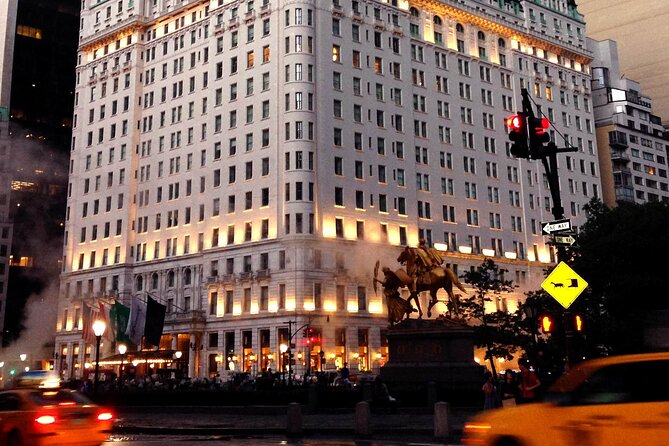
Meet at Grand Army Plaza, in front of The Plaza Hotel, at 768 Fifth Avenue. The location gives the tour a suitably grand opening, with Fifth Avenue and one of New York’s best-known hotels as your first reference points.
The introduction explains how VoiceMap works while you begin walking. This is useful because the app is not simply a collection of recordings you play in any order. You need to follow its route and listen as you move.
Take a moment to confirm that the tour has downloaded properly before setting off. Offline access to the audio, maps, and geodata is included, but you still need the smartphone and headphones yourself. Downloading ahead of time also gives you a better chance of starting smoothly in a crowded city with an unpredictable phone signal.
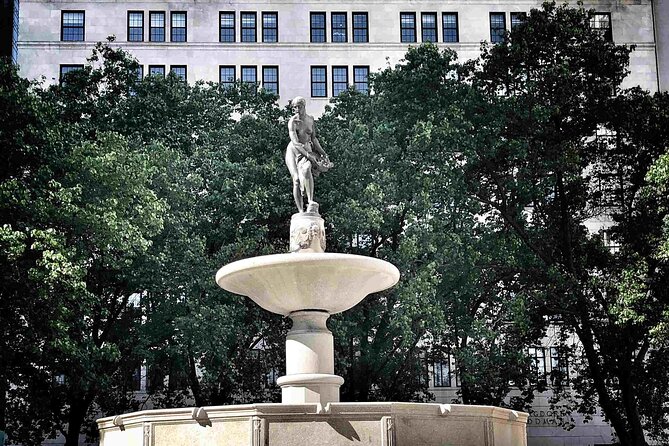
The route soon brings you to the Pulitzer Fountain, designed in 1916 by Thomas Hastings. Hastings was also connected with the firm that designed the New York Public Library. The stop shows how Central Park is tied to the city’s civic buildings, public art, and wealth, not just lawns and trees.
Sherman, Gapstow Bridge, and the movie version of Central Park
The next section turns to William Tecumseh Sherman, the Union general whose horse was shot out from under him during the Civil War battle of Shiloh. His statue gives the narration a chance to connect a Central Park monument with one of the defining conflicts in American history.
This is one of the useful features of an audio walk. You are not just told that a statue exists. You get a short story that gives the figure a reason to matter, then continue through the park with that context in mind.
The route then passes Gapstow Bridge, one of Central Park’s most familiar stone bridges. Its film and television appearances include Home Alone 2, The Devil Wears Prada, Gossip Girl, and Enchanted. If you know those scenes, this stop adds a little screen memory to the physical place. If you do not, the bridge still works as a clear, photogenic landmark and a helpful point along the route.
The film references are not the whole point of the walk, and that is a good thing. Central Park can easily be reduced to a movie backdrop. Here, the screen connection is paired with stories about the people, monuments, and events that shaped the park.
The Zoo Escape and the tale of Balto
Passing Central Park Zoo, you hear about the Great Zoo Escape of 1874. The story adds an odd and lively turn to the walk. A zoo can look orderly from the path, but its history includes more than carefully arranged exhibits.
The tour then reaches the Balto Statue, one of Central Park’s most beloved animal monuments. You hear about the dog associated with saving Nome, Alaska, during a dangerous mission, along with the surprising detail that the animal was not actually called Balto.
This kind of small correction is exactly what makes an audio walk useful. You may recognize the statue, take a photograph, and move on. The narration gives you a compact story that changes how you look at it.
The Balto stop should work well for families, since an animal hero is easier for younger walkers to connect with than a formal civic monument. Still, the tour is not presented as a children’s program, and some stories later in the route deal with murder and darker events. Parents should decide if the full route suits their children.
More Self-Guided Audio Tours in New York City
- New York City’s High Line: A Self-Guided Audio Tour
★ 5.0 · 4 reviews - The Battery: A Self-Guided Audio Tour from Bowling Green Park to Stone St
★ 5.0 · 3 reviews - Boho Greenwich Village: A Self-Guided Audio Tour
★ 5.0 · 3 reviews - Broadway: A Self-Guided Audio Tour of the World’s Iconic Theatre District
★ 4.5 · 3 reviews
The Indian Hunter and the Mall’s cathedral-like design
John Quincy Adams Ward’s Indian Hunter statue introduces another art and history stop. The narration covers both the sculpture and its artist, giving you more than a name on a plaque.
The statue also helps mark a shift in the route. You move from individual monuments and bridges toward the more formal spaces that give Central Park its grand visual rhythm.
One of the most memorable stretches is the Mall, often called cathedral walk. You walk down the broad pathway while hearing why that name fits. The long corridor of trees creates a strong sense of ceremony, and the setting is one of those places where the park feels carefully designed rather than wild.
You can walk this section at a steady pace or slow down to study the details around it. Since the audio plays at your pace, there is no need to choose between listening and looking. Pause when you want to take in the path, then restart the narration.
Women, public memory, and Bethesda Terrace
The narration points out that Central Park did not have a statue honoring a real woman until August 2020. That date marked the 100th anniversary of the 19th Amendment, which gave women the right to vote.
This is a valuable piece of context because public statues are never only about decoration. They show who a city chooses to remember in prominent places. The tour uses Central Park to make that point in a direct, easy-to-grasp way.
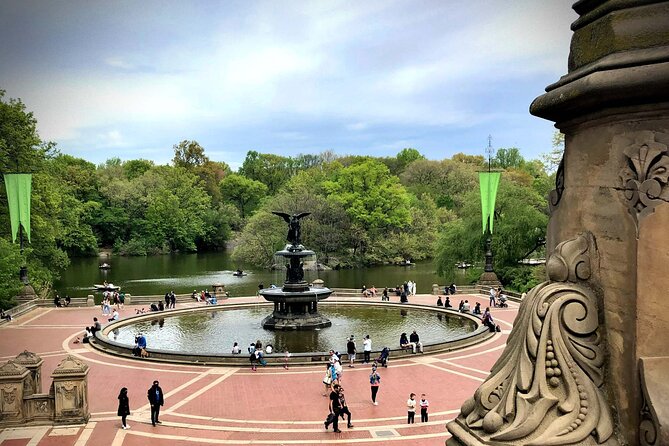
Next comes Bethesda Terrace, where you can take in broad views of the park and hear about the terrace’s past. The terrace is one of the park’s grandest formal spaces, and it rewards a slower pace. Give yourself time here if you care about architecture, public gatherings, or photographs.
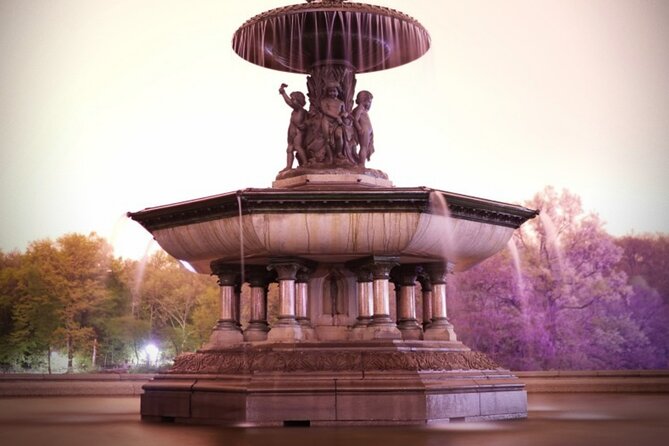
Then you pass Bethesda Fountain. The narration explains the fountain’s history as you walk by. Even if you have seen photographs of the Angel of the Waters statue, hearing the story in place gives the stop more weight.
This is also one of the route’s practical pressure points. Bethesda Terrace and Fountain are major Central Park attractions, so you may encounter people stopping for pictures or moving in different directions. The audio route may be easiest to follow if you pause in a safe spot rather than trying to check your phone while walking through a busy area.
Bow Bridge and the park’s darker stories
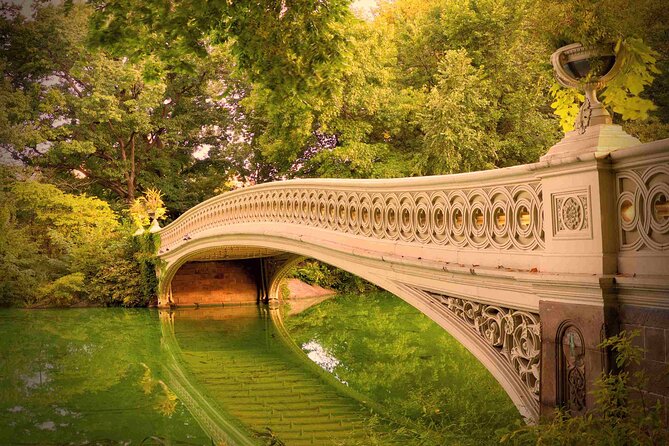
Bow Bridge is one of Central Park’s best-known bridges, but the audio does not treat it as a simple romantic photo spot. You hear about some of the horrors that unfolded in its shadows.
That contrast is a strength. Central Park has a polished public image, yet it has also been the setting for violence, tragedy, and fear. A good walk should leave room for both sides. The tour does that by placing darker stories beside the park’s elegant bridges and fountains.
If you prefer light sightseeing only, this section may feel heavier than expected. The description specifically signals that difficult material appears, so do not choose this route expecting nothing but movie trivia and pretty views.
Strawberry Fields and the road to The Dakota
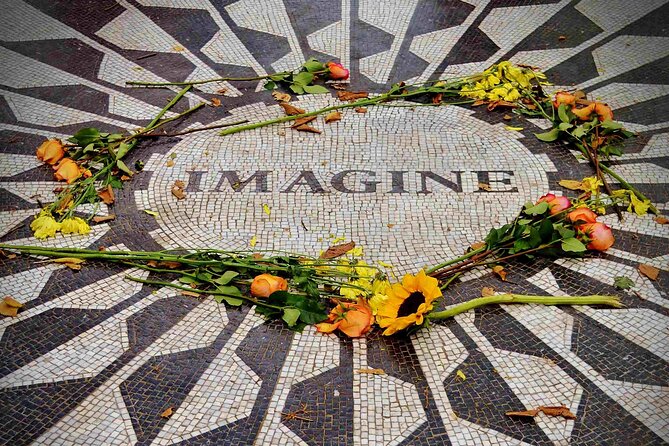
The route continues through Strawberry Fields, the memorial area associated with John Lennon. While you walk, the narration covers Lennon’s murder.
This is a serious part of the experience, and the setting carries a strong emotional charge even before the audio begins. The story connects the park to modern New York history and to the international memory of Lennon.
The walk ends in front of The Dakota at 1 West 72nd Street. The narration explains how the hotel came to be before the tour finishes. That ending gives the route a clear final destination rather than leaving you somewhere in the middle of the park.
The Dakota is especially meaningful after Strawberry Fields because the two locations are linked by Lennon’s life and death. Ending there gives the walk a natural closing point, though it also means you should allow time to get your bearings before moving on to your next activity.
Why the $14.99 price can be good value
At $14.99 per person, this is priced below many live guided walking tours. The value depends on what you want.
If you enjoy setting your own schedule, the cost is reasonable. You get lifetime access in English, offline audio, offline maps, and a private experience for your group. You can also use the material again if you return to New York or want to repeat part of the route at a slower pace.
The private format matters most for couples, families, and small groups who dislike joining strangers. You do not have to keep up with a guide’s pace or worry about losing a large group at a busy crossing.
The price is less compelling if you mainly want personal interaction. There is no live guide, no included food or drink, no transportation, and no admission to museums or other attractions along the way. Your phone and headphones are also your responsibility.
The route passes sights that are free to see from the park paths, so you are paying for the storytelling, route design, and app access rather than entrance tickets. For an independent visit, that can be a fair exchange.
Using the VoiceMap route without getting turned around
Central Park’s paths can feel confusing, especially when several paths meet near a bridge, terrace, or attraction. One customer reported that the app repeatedly said the group was lost and that the route seemed to circle back. The provider processed a refund and said the group had completed most of the tour, but the problem is still worth taking seriously.
I would prepare in a few simple ways:
- Download the audio, map, and geodata before arriving.
- Start with a fully charged phone.
- Bring headphones that allow you to hear nearby surroundings.
- Check the map at pauses rather than while crossing paths.
- If the app says you are off route, stop and compare your position with the map before continuing.
The ability to pause and restart helps, but the route still depends on your phone and your attention. This is not the best choice for anyone who wants to put the device away completely.
The tour is offered in English only. Most people can participate, service animals are allowed, and the starting point is near public transportation. The available information does not promise a particular walking surface, distance beyond the approximate duration, or a fully step-free route, so you should ask the provider directly if those details matter to you.
Who should choose this tour
I would choose this experience if you want a structured first walk through Central Park but do not want a fixed appointment with a live guide. It suits independent visitors who like history, public art, film locations, and stories about the city’s less polished side.
It also suits repeat visitors. You may already know Bethesda Fountain or Strawberry Fields, but the audio gives familiar places a new set of connections.
Families can enjoy the zoo escape and Balto story, though parents should remember that the route also covers murder and other disturbing events. Couples may like the private format and the freedom to stop at bridges and terraces.
I would skip it if you need constant personal guidance, dislike walking with a phone in hand, or want detailed access inside museums and attractions. I would also think twice if you are uncomfortable with route-finding in a large park.
Should you book this Central Park audio walk?
Book it if the idea of walking from The Plaza to The Dakota with a steady stream of stories sounds better than joining a group at a fixed time. The route covers a generous set of Central Park landmarks, and the $14.99 cost is fair for flexible access, offline tools, and a private group experience.
Go in prepared. Download everything first, bring your own headphones, and allow closer to two hours if you want to stop. If the app loses your position, pause and check the map instead of blindly following the audio.
This is a good choice for self-directed sightseeing with a story attached. It is not a substitute for a live guide, but it gives you a clear route through some of the park’s most memorable places, ending at a location with a powerful connection to New York’s modern past.
FAQ
How long does the Central Park audio tour take?
The tour takes approximately one hour and 30 minutes to two hours. The walking route is described as a 90-minute experience, but stops and pauses can make your visit longer.
Where does the tour begin?
It begins at Grand Army Plaza, in front of The Plaza Hotel at 768 Fifth Avenue, New York, NY 10019.
Where does the tour end?
The tour ends in front of The Dakota at 1 West 72nd Street, New York, NY 10023.
Is this a live guided tour?
No. It is a self-guided audio tour delivered through the VoiceMap app. An Emmy-nominated storyteller provides the narration, and you follow the route with your smartphone.
What do I need to bring?
You need a smartphone and headphones. Food, drinks, transportation, and admission to museums or other attractions are not included.
Is the tour available offline?
Yes. Lifetime access includes offline audio, maps, and geodata through the VoiceMap app for Android and iOS.
Latest audio tours in New York City
- Boho Greenwich Village: A Self-Guided Audio Tour★ 5.0 · 3 reviews
- The Battery: A Self-Guided Audio Tour from Bowling Green Park to Stone St★ 5.0 · 3 reviews
- West Village’s Flappers, Freaks & Punks: A Self-Guided Audio Tour★ 5.0 · 4 reviews
- New York City’s Financial District: A Self-Guided Audio Tour★ 4.5 · 8 reviews
- Self-Guided Audio Tour of New York City★ 4.5 · 2 reviews
- Broadway: A Self-Guided Audio Tour of the World’s Iconic Theatre District★ 4.5 · 3 reviews
- Guided Tour (with Audio) Hamilton Musical in Lower Manhattan NYC★ 5.0 · 11 reviews
- New York City’s High Line: A Self-Guided Audio Tour★ 5.0 · 4 reviews
Self-Guided Audio Tours, compared.

Acropolis Ticket & Optional Self-Guided Audio Tours
Read our review →


Ultimate Acadia National Park Self-Guided Driving Audio Tour
Read our review →

Akrotiri Ticket with Optional Self-Guided Audios
Read our review →
Browse the lists this tour appears in