
Reviewed · LONDON
London’s Alternative History: A Self-Guided Audio Tour
London’s Alternative History turns a familiar central London walk into a trail of odd facts, theatrical scandals, strange court cases, and clever bits of engineering. You begin at Covent Garden and finish at the Savoy, ticking off major sights while listening to stories you might otherwise miss.
I like the self-paced format, especially because you can pause for photos, coffee, or a longer look at Somerset House. I also like the GPS-triggered narration, which tells you where to go and when to pay attention instead of making you stare at a map.
The main trade-off is that this is an audio tour, not a live guide. You need a charged smartphone and headphones, and the route is best for people happy to manage their own pace and crossings.
Key points at a glance
- Covent Garden to the Savoy: A central London route covering theatres, churches, courts, riverside sights, and grand hotels.
- Unusual stories: Hear about a medieval convent garden, London’s first recorded punch-up, theatre ghosts, and sewer gas.
- GPS-based directions: The VoiceMap app guides you from one stop to the next and includes offline maps and audio.
- Flexible timing: The audio takes about one to one and a half hours, but you can pause whenever you like.
- Good value for repeat visits: The $9.99 price includes lifetime access, so you can replay the walk or split it over more than one outing.
- A strong theatre theme: The route includes the Actors’ Church, an old theatre site, the Lyceum, and the Savoy.
Starting among Covent Garden’s old market stories
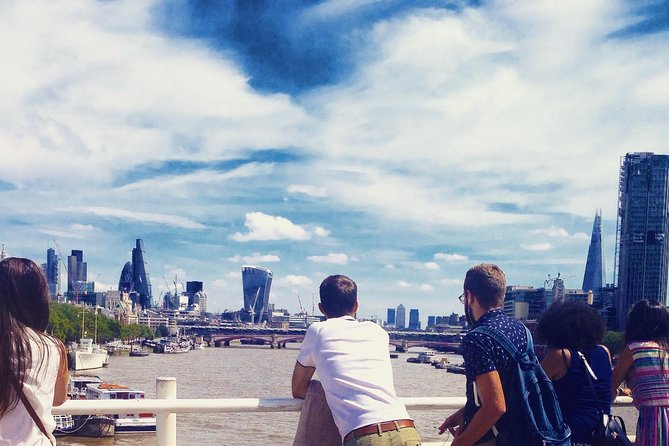
The walk begins at The Piazza in Covent Garden, London WC2E 8HD. This is a smart starting point because you are immediately in one of central London’s best-known public spaces, but the tour asks you to look past the shops and street performers.
The name Covent Garden comes from Convent Garden, a reference to the area’s medieval use as a convent’s garden. That small fact sets the tone for the entire walk. You are not simply moving between famous buildings. You are being shown the older, stranger explanations behind places you may already recognize.
The opening section should suit you if you like getting your bearings through a story rather than through a long historical lecture. The route is in English, and the audio is tagged to each location by GPS. You can keep your phone in your pocket for much of the time, listening for the next instruction instead of checking directions at every corner.
Covent Garden can be busy, so give yourself a little room to hear the narration. The tour runs every day, with the listed operating hours covering the full day, but the practical quality of the walk will depend on how comfortable you are navigating central London on your chosen date.
More History Audio Tours in the UK
- London: Natural History Museum Express Guided Tour & Audio Guide
★ 4.0 · 100 reviews - London: Natural History Museum Express Tour & Audio App
★ 3.6 · 60 reviews - Paisley History Walking Tour with Personal Audio
★ 5.0 · 30 reviews
St Paul’s Church and London’s theatrical side
The next part brings you to St Paul’s Church in Covent Garden, often called the Actors’ Church. It is a fitting stop on a route that keeps returning to theatre, performance, and the sometimes unruly crowds that came with them.
The church is known for memorials to famous actors. The more unexpected detail is its link to London’s first recorded punch-up. That kind of story gives the stop a human scale. Instead of only hearing about celebrated names, you get a reminder that public spaces have long been used for arguments, celebrations, and the occasional loss of temper.
I like this stop because it connects London’s cultural life with its less polished side. You can look at the church as a place of remembrance, while the narration adds a story about public disorder. It is a useful pattern for the whole walk: major landmarks are treated as settings for odd incidents, not just as items on a sightseeing checklist.
You do not need to enter every building on the route. Admission tickets are not included, and the tour is designed to be followed from public places. If a church or another attraction catches your eye, you can pause the audio and make your own decision about going inside.
The old theatre site and the Man in Grey
The route continues to one of London’s oldest theatre sites, associated with a long run of performances and a famous ghost story. The figure to listen for is the Man in Grey, an apparition connected with the theatre.
This is one of the walk’s more entertaining stops because it brings together two things London does especially well: theatre lore and ghost stories. The account is not simply about a building where plays were staged. It also asks why certain places collect stories of unexplained visitors and why those stories remain part of a venue’s identity.
The theatre connection gives the route a clear thread. Covent Garden, the Actors’ Church, the old theatre site, the Lyceum, and the Savoy all sit within a compact area where entertainment has shaped the streets for generations.
If you are hoping to tour a theatre interior, keep your expectations in check. The $9.99 fee covers the audio walk, not entrance to theatres or other attractions. The value here is in the commentary and the chance to see the buildings from the outside while learning the less obvious stories attached to them.
Courtrooms, odd cases, and London’s legal humor
Another stop focuses on unusual cases and famous trials. The setting reflects the quirkier side of London’s legal past, giving you a change of pace after the theatre stories.
This section should appeal to anyone who likes social history told through individual incidents. Legal buildings can look formal and imposing, but the cases connected with them often reveal pettiness, eccentric behavior, sharp disagreements, and the everyday problems that landed people in court.
I appreciate this change in subject. A route made up only of theatres and grand buildings could become predictable. The legal stop adds another layer to the city, showing how public life was shaped not only by actors and aristocrats, but also by disputes that needed a judge’s attention.
The audio format works well here because you can keep walking while the story unfolds. You are not tied to a group’s pace, and you can stop nearby if you want to listen more carefully. The route is private in the practical sense that only your own group takes part, but there is no live guide accompanying you.
More Self-Guided Audio Tours in London
- Kew Gardens, Richmond – Self-Guided Audio Tour
★ 4.5 · 30 reviews - London Walks – 12 Self-Guided Audio Walking Tours
★ 4.0 · 17 reviews - Britpop Camden: A Self-Guided Audio Tour in London
★ 5.0 · 8 reviews - Self-Guided Audio Tour – Shakespearean London
★ 3.0 · 7 reviews
The Lyceum and the early electric stage
The Lyceum brings the tour back to theatre, with a production history that includes The Lion King. The stop also looks at the early use of electricity in theatre lighting.
That pairing makes the Lyceum more than a photo stop. You hear about the theatre as a working venue and about the technology that changed how audiences experienced performances. Electricity made lighting more flexible and more dramatic, helping theatres create effects that candles and gas could not match as easily.
This is the kind of detail that adds value to a familiar sightseeing route. You may recognize the theatre from its current productions, but the audio encourages you to see it as part of a longer story about stagecraft and city technology.
The Lyceum also shows why the tour is best for curious repeat visitors, not only first-time sightseers. If you have already walked through this part of London, the route gives you a fresh reason to stop and listen instead of passing by.
Somerset House, from Tudor palace to Navy office
Somerset House is one of the route’s grandest settings. The narration traces its change from a Tudor palace to a Navy office, then links the building to the development of the British postal system.
That sequence makes the stop useful for understanding how London’s buildings changed jobs over time. A palace could become an office, and an office could help support the systems that connected people across Britain. You get a story about government, communication, and practical city life rather than only architecture.
One particularly useful feature of the walk is that you can pause it while exploring. A previous visit to Somerset House does not make the stop pointless, since the audio adds a new angle to a place you may already know. If you have time, this is one of the best spots to stop, look around, and continue when you are ready.
The tour does not include entry fees, so any interior visit is extra. The route itself remains usable without buying a ticket.
Victoria Embankment and the Thames moved out of the way
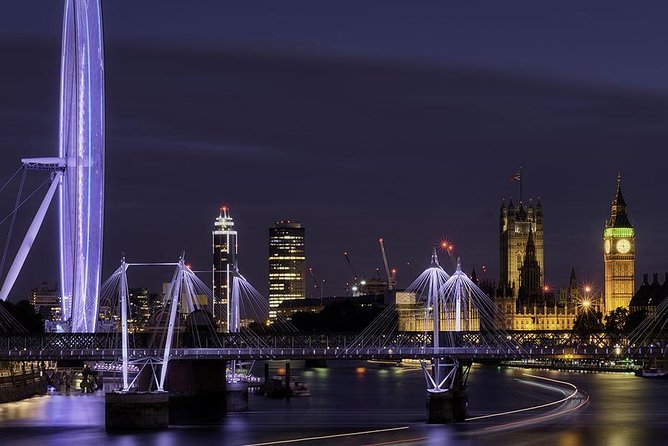
The walk then reaches Victoria Embankment, where the focus shifts from theatres and institutions to engineering. The riverside promenade was built by diverting the River Thames, and the work exposed hidden secrets along the river.
This is a good reminder that London’s present-day public spaces are often the result of major engineering projects. The promenade may look like a simple place for a riverside walk, but its creation involved changing the course of the river and dealing with what lay beneath or beside it.
I like the way this stop broadens the tour. You are not only hearing about famous people and performances. You are also learning how the city made room for roads, sewers, public paths, and new systems of movement.
The river section is likely to be the most open part of the walk. That makes it easier to pause, take in the view, and catch up if you have stopped often earlier. It also means you should pay attention to the route instructions rather than assuming every riverside path leads directly to the next point.
Waterloo Bridge, the Ladies’ Bridge
Waterloo Bridge is known here as the Ladies’ Bridge because it was largely built by women during World War II. The bridge also offers broad views across London.
This stop combines a wartime story with a strong visual payoff. The bridge is not just a crossing. It becomes a place to think about the people who kept major construction work going during the war, while also giving you a chance to look across the city.
The view is one reason to avoid rushing this tour in exactly one hour. The audio may take about 60 to 90 minutes, but you control the clock. Stop on or near the bridge, listen again if needed, and take your time with the view.
Central London crossings require ordinary care. Keep the phone use to a minimum while walking, and let the audio guide you between points rather than trying to read the map at busy junctions.
London’s last Victorian gas lamp
One of the most memorable stops is the last remaining Victorian gas lamp in London. It was powered by sewer gas, which earned it the nickname The Lamp that Lights Itself.
That is precisely the sort of small, unusual fact this tour does best. You do not need a large monument for a good story. A single lamp can open up a discussion about old fuel systems, city sanitation, and the practical inventions that once shaped daily life.
This stop is also a good example of why GPS audio can be useful. A small object can be easy to miss if you are only following a standard sightseeing map. With location-based narration, the lamp becomes a specific target rather than an incidental detail somewhere along the street.
Do not expect a long stop or a major attraction with an entrance hall. The appeal is the story, the location, and the oddity of the object itself.
The Savoy and the first fully electric public building
The walk ends at the Savoy on Strand, London WC2R 0EZ. The building is associated with luxury, famous visitors, and notorious parties, but the technical detail is even more striking: it was the first public building in the world to be lit entirely by electricity.
That makes the Savoy a fitting finish. The tour has already touched on theatre lighting, the Victorian gas lamp, and the engineering of the Embankment. At the end, those threads come together in a grand hotel that helped make electric lighting part of a modern public experience.
The final stop also changes the mood. You finish among one of London’s most famous hotels and the busy Strand, rather than at a quiet historic site. This is useful if you want to continue sightseeing, find food, or use nearby public transportation after the audio ends.
A review of the route would be incomplete without mentioning the Savoy cabs and carts detail included in the walk. It adds a sense of how the hotel functioned as a place of arrival and spectacle, not just a handsome building.
How the VoiceMap format works in practice
You receive access through the VoiceMap application, with offline audio, maps, and geodata. Downloading the material for offline use is important because it lets you follow the route without depending on a constant data connection.
The GPS setup is the main practical advantage. The audio is tied to locations, and the directions tell you when to turn and where to look. That can be easier than balancing a written route with a separate map, especially if you find standard Google Maps directions awkward.
The narrator’s name is not provided, but the voice is described as soothing and carefully paced. That matters on a walking tour. Clear timing makes it easier to keep moving without feeling hurried, and it also makes pausing simple when you want to talk or take photographs.
You can expect the route to take about one hour to one and a half hours if you walk steadily. In real use, plan on longer if you stop at Covent Garden, Somerset House, Waterloo Bridge, or the riverside. The tour can also fill a spare couple of hours without forcing you to commit to a half-day outing.
Is $9.99 good value?
At $9.99 per person, this is inexpensive for a central London activity, especially because the price includes lifetime access. You are not paying for a one-time performance that ends when you leave. You can return to the route later, replay sections, or use it on another day.
The value is strongest if you like self-guided sightseeing and want more than a basic list of landmarks. Ten stops, GPS directions, offline content, and stories ranging from medieval Covent Garden to electric lighting give you plenty for the price.
The value is weaker if you want a personal exchange with a guide, detailed answers to spontaneous questions, or admission to historic interiors. Those are not part of the package. You are buying a structured audio walk, not a guided museum visit.
The lifetime access also makes this a useful option for a short London stay. You can start when convenient, pause for lunch, and finish later, although the supplied duration refers to the audio route itself rather than every possible break.
Who should book this walk?
I would choose this for you if you enjoy unusual facts, theatre history, city engineering, and short walks that connect several landmarks. It is especially good for independent visitors who prefer to stop when they want rather than stay with a group.
Families with older children may also find the ghost, punch-up, gas lamp, and courtroom stories more engaging than a formal history talk. The route is private to your group, and most people can participate, with service animals allowed.
I would think twice if you dislike using a smartphone while sightseeing or if you need a fully guided experience. You also need to budget separately for food, transportation, and any entrance fees along the way.
Free cancellation is available if you cancel at least 24 hours before the scheduled start time. Inside that window, the payment is not refunded, and changes are not accepted.
FAQ
How long does London’s Alternative History tour take?
The audio walk takes approximately one hour to one hour and 30 minutes. You can take longer because the tour is self-paced and can be paused.
Where does the tour start?
It starts at The Piazza, 1-7 Covent Garden, London WC2E 8HD, UK.
Where does the tour finish?
The route ends at The Savoy on Strand, London WC2R 0EZ, UK.
What language is the audio tour in?
The tour is offered in English.
Does the tour include a live guide?
No. It is a self-guided audio tour delivered through the VoiceMap application. Only your group participates.
What does the price include?
The $9.99 price includes lifetime access to London’s Alternative History Tour, the VoiceMap application, and offline access to the audio, maps, and geodata.
Are entrance fees included?
No. Tickets or entrance fees for museums and other attractions along the route are not included. Food, drinks, transportation, and a smartphone are also not included.
Should you book London’s Alternative History?
Book it if you want a low-cost, flexible way to connect Covent Garden, the Strand, the Thames, and the Savoy through unusual stories. The strongest reasons are the easy GPS directions, the well-paced narration, and the excellent range of subjects, from theatre ghosts to sewer gas.
Skip it if you want a live historian or a tour built around entering attractions. For everyone else, $9.99 buys a useful central London walk that can be paused, replayed, and enjoyed at your own speed.
More History Audio Tours in London
- Colosseum, Roman Forum & Palatine Hill with Audioguide App
★ 4.4 · 6,291 reviews - Venice: St. Mark Basilica Ticket, Audioguide+History Gallery
★ 3.9 · 4,780 reviews - Rome: Colosseum, Ancient Rome Tour or AudioGuided Tour
★ 4.4 · 2,879 reviews - Colosseum, Roman Forum & Palatine Hill Entry and Audioguide
★ 4.1 · 2,475 reviews
More Self-Guided Audio Tours in the UK
- Southbank Immersive Self-Guided Audio Walking Tour
★ 5.0 · 6 reviews - Medieval London: A Self-Guided Audio Tour from Monument to the Tower of London
★ 4.0 · 5 reviews - Westminster Famous Sites Self-Guided Audio Walking Tour
★ 3.5 · 4 reviews - Londinium’s Footprint: Explore London’s Roman wall on a self-guided audio tour
★ 5.0 · 3 reviews
Latest audio tours in London
- Wicked Whitechapel: Where Now’s Jack The Ripper Audio Tour★ 5.0 · 2 reviews
- Tower of London Ticket with Audio Guide and Unlimited Entry Time★ 5.0 · 15 reviews
- Medieval London: A Self-Guided Audio Tour from Monument to the Tower of London★ 4.0 · 5 reviews
- Westminster Famous Sites Self-Guided Audio Walking Tour★ 3.5 · 4 reviews
- Southbank Immersive Self-Guided Audio Walking Tour★ 5.0 · 6 reviews
- Harry Potter London Tour with Audioguide on Smartphone★ 5.0 · 3 reviews
- Self-Guided Audio Tour-Behind the shadow of evil: Jack the Ripper★ 4.0 · 2 reviews
- London Public Buses Audio Tour★ 4.0 · 7 reviews
Self-Guided Audio Tours, compared.

Acropolis Ticket & Optional Self-Guided Audio Tours
Read our review →


Ultimate Acadia National Park Self-Guided Driving Audio Tour
Read our review →

Akrotiri Ticket with Optional Self-Guided Audios
Read our review →
Browse the lists this tour appears in