

Reviewed · LAS VEGAS
Lake Mead & Valley of Fire State Park Self-Guided Audio Tour
Lake Mead and Valley of Fire give you two very different views of southern Nevada: a huge reservoir shaped by dams and drought, followed by red sandstone formed from ancient dunes. This 68-mile self-guided drive fills the route with more than 60 audio stories, so you are not just watching the scenery slide past your window.
I like the low group price, which covers up to four people, and the freedom to stop for a short walk, skip a story, or pause the tour for lunch and photos. The main thing to consider is the technology. Audio can move ahead if you drive faster than the app expects, and Android Auto is not supported.
Key points to know before you go
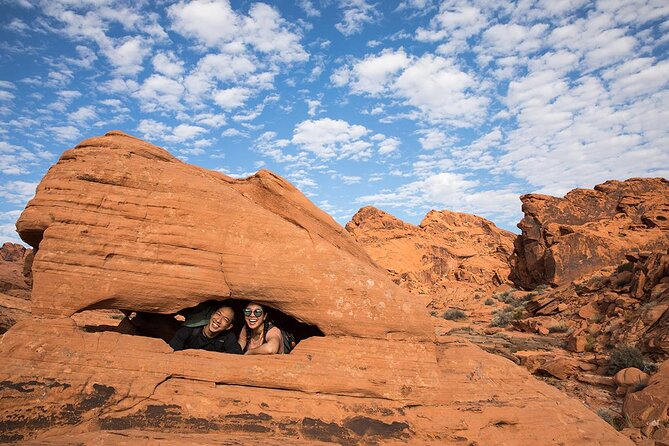
- More than 60 stories cover Lake Mead, desert wildlife, geology, local history, and Valley of Fire.
- The $15 price is per car, not per person, for groups of up to four.
- Offline maps and GPS-triggered audio let you tour without a cellular signal after downloading the app.
- Birdwatching is a real focus, with tips for spotting sparrows, finches, herons, and dragonflies.
- Optional trails range from half a mile to three miles, but the full route takes about two to three hours by car.
- You drive yourself, with no guide waiting at the start and no fixed departure time.
A desert drive with a story at every turn
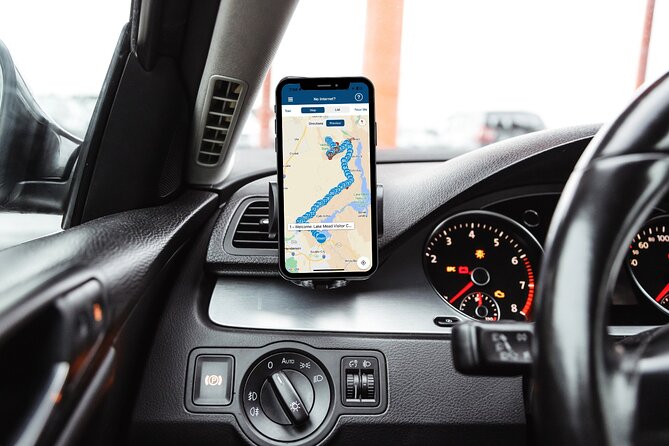
This experience works best as a road trip with commentary, not as a guided hike. You start at the Lake Mead Visitor Center on Lakeshore Road in Boulder City and use your own vehicle to follow the route toward Lake Mead and Valley of Fire.
The app uses your phone’s location to start each story automatically. You connect your phone to the car with Bluetooth, USB, or AUX, then let the narration play through the vehicle speakers. After the initial download, the maps and audio work offline, which matters in a region where coverage can be patchy.
The stories add useful context to what might otherwise look like a long stretch of desert highway. You hear about fossils, lost communities, water systems, fish stocking, rock art, changing lake levels, and the people tied to this corner of Nevada. The tone is more entertaining than academic, but there is enough detail to make the stops feel connected.
The advertised drive takes two to three hours, though that estimate does not include long hikes or extended photo stops. If you walk several trails, you should allow more time. The app is designed to let you pause and resume, so you do not need to force every stop into one quick outing.
More Self-Guided Audio Tours in the USA
- Gettysburg Battlefield Self-Guided Driving Audio Tour
★ 4.5 · 910 reviews - Joshua Tree National Park Self-Guided Driving Audio Tour
★ 4.5 · 762 reviews - Ultimate Acadia National Park Self-Guided Driving Audio Tour
★ 4.0 · 521 reviews
Lake Mead Marina: a working shoreline with a moving past
The first featured stop is Lake Mead Marina, identified by its floating platforms and docks. The unusual detail here is that the marina did not begin in its current location. It was moved, and the story suggests it may move again as water conditions and shoreline access change.
That detail gives you an early lesson in the region. Lake Mead may look permanent from a distance, but its useful shoreline shifts with water levels, development, and recreation needs. You can stop for about 10 minutes, listen, and look across the water without committing to a major walk.
The marina is also a practical place to get oriented. The tour begins with the reservoir itself, then gradually widens its focus to the desert around it. If you are driving with children or a mixed-interest group, this short stop keeps the beginning easy.
Hatchery Saddle Point and the story of stocked fish
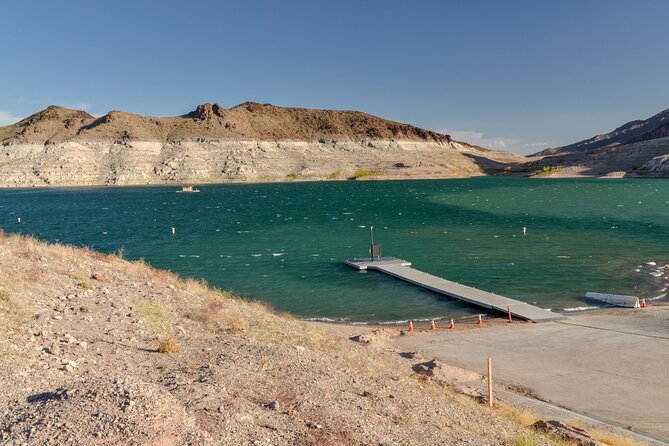
At Hatchery Saddle Point, the audio explains the former Lake Mead Fish Hatchery, built in 1969 to raise striped bass and other trout species for sport fishing. The hatchery is no longer operating, but its name remains attached to the area.
I find this stop useful because it shows how much of the lake’s recreational identity was planned by people. Lake Mead is not only a natural setting. Fishing, boating, water management, and tourism have all shaped how the shore is used.
Plan on roughly 10 minutes for the stop itself. The point is less about a big hike and more about listening to the story while taking in the open desert and water views.
Sunset View Scenic Overlook and the big picture
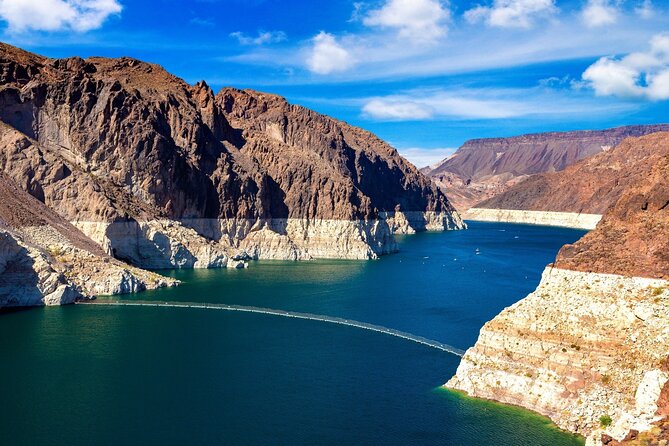
The Sunset View Scenic Overlook gives you a broad look across Lake Mead. From here, you can see Boulder Basin, the Muddy Mountains, and Callville Mesa.
This is one of the places where the audio format makes sense. You can pause the narration, step outside, and match the names to the formations in front of you. The view is wide rather than intimate, so give yourself time to scan the horizon instead of treating it as a quick photo stop.
The desert can look spare from the car. At the overlook, its structure becomes clearer. Water, basin, mesa, and mountain all sit in one frame. The stop takes about 10 minutes in the suggested plan, but you can stay longer if the light is good.
More National Park Audio Tours in the USA
- Arches National Park Self-Guided Driving Audio Tour
★ 4.5 · 288 reviews - Yellowstone National Park Self-Guided Driving Audio Tour
★ 4.5 · 249 reviews - Self-Guided GPS Audio E-Bike Tour Hawaii Volcanoes National Park
★ 4.5 · 131 reviews - Shenandoah National Park Self-Guided Driving Audio Tour
★ 4.5 · 109 reviews
Owl Canyon and the changing waterline
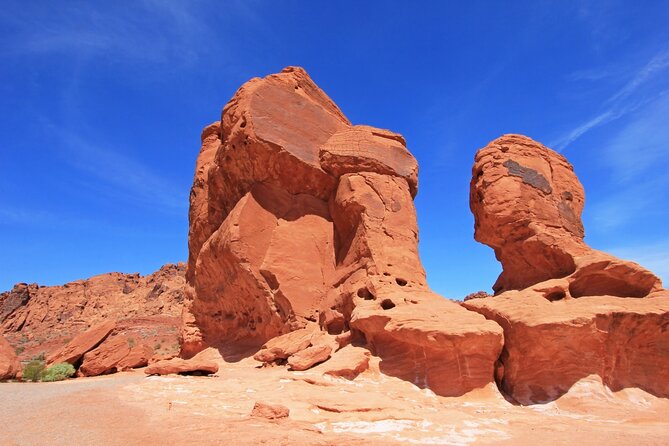
Owl Canyon offers one of the more unusual parts of the route. As Lake Mead’s water level drops, places that were once underwater become visible again. Owl Canyon was submerged beneath the reservoir and has since reappeared for hikers.
This story links geology with current water conditions without turning the stop into a lecture. You get a direct sense of how the reservoir has changed the land, and how the land continues to change as the water level falls.
The route information allows about 10 minutes for the stop, but hiking conditions can vary. Treat the audio time as a guide, not a promise that you can walk the entire area in that window. Wear suitable shoes if you plan to leave the road and explore.
Wetlands Trail: the best stop for birdwatching
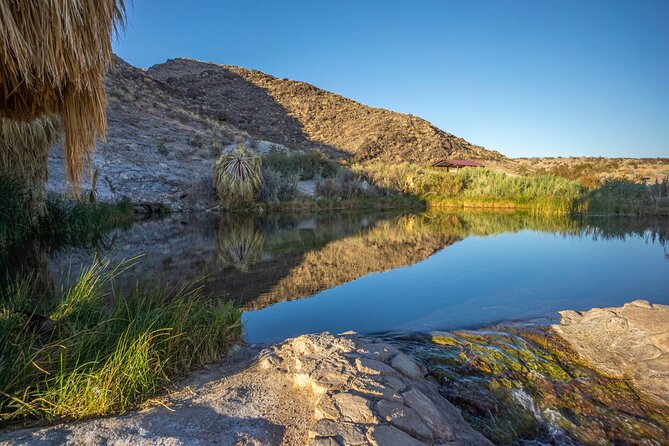
The Wetlands Trail is only 1.5 miles long and should take less than an hour to walk. It is one of the strongest choices for anyone interested in birds or insects.
The vegetation along this corridor attracts Black-throated Sparrows and House Finches. You might also spot a Great Blue Heron, while dragonflies move around the wet areas. These details give you something specific to watch for, instead of simply hoping a bird appears.
This stop also changes the pace of the outing. Much of the tour is a scenic drive through dry country. The wetlands offer a different texture and a reason to slow down. If your group has no interest in walking, you can still listen and continue, but birdwatchers should make room for this trail.
Las Vegas Wash and the water behind the city

Las Vegas Wash is the main channel that carries excess water from the Las Vegas Valley back to Lake Mead. The stop explains the connection between the city and the reservoir.
That connection is easy to miss when you are staying in Las Vegas. The city may feel separate from the open desert, but its water system reaches directly into the lake. This stop helps you understand the route as a working water story, not just a scenic drive.
It is another short audio stop, planned at about 10 minutes. The value comes from the explanation, so make sure your phone is connected and the volume is clear before you set off.
Anniversary Narrows: a slot canyon option
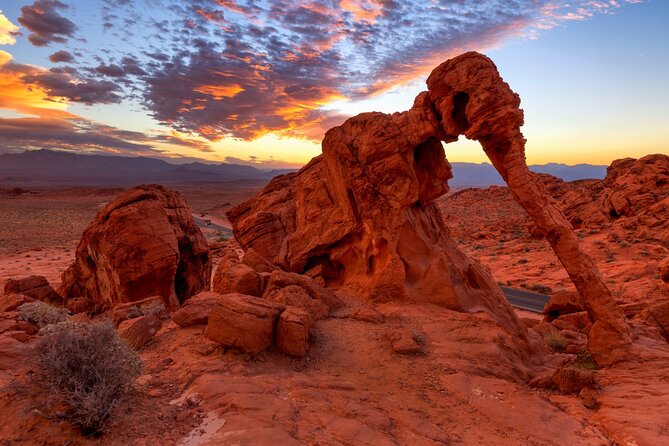
The Anniversary Narrows Trail is an easy three-mile walk through a slot canyon. It usually takes about an hour and a half.
This is one of the longer optional walks on the route, so do not treat it as a quick add-on between two audio points. You will need to plan for the extra time, water, and desert conditions. The tour gives you the background and directions, but you remain responsible for deciding how far to walk.
For me, this stop is best for people who want more than roadside overlooks. A slot canyon offers a closer look at the rock, with walls that make the desert feel narrower and more enclosed. If your goal is a fast driving loop, save it for another visit.
Northshore Summit and a steep payoff
Northshore Summit Trail is short but steep. The reward is a broad view toward the Muddy Mountains, Bowl of Fire, and Bitter Spring Valley.
The word steep matters here. The trail may be brief, but it is not the easiest walk on the route. You can use the audio to decide if the climb fits your group before leaving the car.
The payoff is a classic high desert view, with multiple formations spread across the distance. It is a good choice if you want one energetic stop without committing to a long hike.
Redstone Dune Trail: a small walk with strong color
Redstone Dune Trail is an easy half-mile loop that takes less than 30 minutes. It is a good fit for a short leg stretch or for anyone who wants to see the red rock without tackling a long route.
The loop format helps keep the stop simple. You are not committing to a major out-and-back walk, and the tour can continue after a brief break. This is also a useful option for families or groups with different energy levels.
The red stone begins to prepare you for Valley of Fire. The route gradually shifts from lake views and gray desert tones toward the sandstone color that defines the state park.
Atlatl Rock and ancient marks in stone
Atlatl Rock introduces the area’s petroglyphs and the tool that gives the site its name. An atlatl is a throwing stick used by Pueblo peoples to launch spears. The tool is shown in the rock art at the site.
This is a strong stop for anyone who wants the route to include more than scenery. The markings connect the modern drive with people who used and understood this desert long before the roads arrived.
The audio helps you look with purpose. Instead of seeing a wall of rock and moving on, you know to pay attention to the petroglyphs and the shape of the tool. Allow about 10 minutes in the tour’s suggested timing, with extra time if you want to study the markings.
Fire Cave and Windstone Arch
Fire Cave was once set within a small wind tunnel carved through sandstone. Windstone Arch stood at its entrance, and both features became popular subjects for photographs because of their red rock and arch shape.
The wording here calls for a little care. Rock formations can change, and access or appearance may not match old photographs. Use the audio for the story, then follow current signs and local conditions rather than assuming every older feature looks exactly as pictured.
This stop is about the way wind and sandstone work together. The rock is not just red scenery. Its openings, curves, and hollows record erosion over time.
Pastel Canyon and the quieter side of Valley of Fire
Pastel Canyon Trail is about a mile long and is described as an easy walk. Compared with the famous formations, it offers a calmer look at the park’s colored sandstone.
This is the kind of stop I like on a self-guided route. You are not pushed through on a fixed schedule, and you can give the softer rock colors the attention they deserve. The walk is long enough to feel like an outing but short enough to fit into a day of driving.
The trail also reminds you that Valley of Fire is not only about its boldest red formations. Subtle bands and pale tones can be just as interesting when you slow down.
Fire Wave Trail and the final major formation
The Fire Wave Trail leads to a sandstone formation that resembles an ocean wave frozen in place. It is about 1.5 miles, moderate in difficulty, and takes roughly an hour.
This is one of the signature walks on the route, but heat and uneven desert ground can make a moderate trail feel harder. The audio gives you the setting and route context, while you decide if the walk fits your time and energy.
The changing bands in the rock are the reason to come. From a distance, the formation looks like a wave. Up close, the curves and stripes make it clear how much shape can come from wind, sand, and time.
What the app does well, and where it needs care
The best feature is the hands-free automatic playback. You do not need to stop at every sign or keep checking a printed guide. Stories start as you reach their points, and the next one follows as you continue.
The offline function is just as useful. Download the tour while you have strong Wi-Fi or cellular service. If you wait until you are already in the desert, setup may be slow or fail.
There is one clear weakness. Some stories can be longer than the distance between audio points. If you drive faster than the suggested speed, the next story may begin before the current one finishes. A previous experience with the tour also found it difficult to go back and replay missed sections.
To avoid that problem, begin at the recommended point, follow the route, and keep to the app’s suggested speed. You can also pause the tour and replay content when stopped. The app works on iPhone with iOS 15 or later, Android version 9 or later, and iPads or tablets with GPS and cellular access.
Android Auto is not supported. You can still send the sound through your car speakers, but the map remains on your phone. Apple CarPlay is supported for audio playback, while Android Auto support is listed as coming later.
Is $15 a good value for your car?
At $15 per group of up to four, the price is hard to fault if you have a car and plan to visit both areas. Four people can share the cost, making it far less expensive than a private guide or a bus tour.
The value comes from access and repeat use. The tour has no expiry, so you can pause it, split the route over multiple days, or use it again on another trip. You are paying for the route, narration, maps, and flexibility, not admission to attractions.
Entry tickets, reservations, and attraction passes are not included. Keep that separate from the tour price when planning your day.
The experience is best for independent drivers, couples, families, and small groups who dislike fixed schedules. It is less suitable if you want a person beside you to answer questions, manage parking, or lead hikes.
The start is the Lake Mead Visitor Center, and the listed endpoint is Fire Cove Road. No one meets you there. The operating hours shown for the visitor center are 8:30 AM to 4:30 PM daily, from July 13, 2023 through February 24, 2027. Free cancellation is available up to 24 hours before the scheduled start time.
Should you book this Lake Mead and Valley of Fire tour?
Book it if you want a low-cost way to connect the road, the stories, and the short walks between Las Vegas, Lake Mead, and Valley of Fire. I especially recommend it for people who like birdwatching, geology, desert history, and the freedom to stop whenever a view catches their eye.
Skip it if you expect a live guide, polished Android Auto navigation, or a tightly managed walking tour. Download the app before leaving reliable service, connect your phone to the car, and drive at the suggested pace. Do that, and the tour gives you a practical, flexible way to turn a scenic drive into a fuller day outdoors.
FAQ
How long does the Lake Mead and Valley of Fire audio tour take?
The driving route takes about two to three hours. Longer hikes, photo stops, meals, and side excursions will add time.
How many people does the $15 price cover?
The price covers one group of up to four people. It is purchased per car rather than per person.
Where does the tour begin and end?
It begins at the Lake Mead Visitor Center, 10 Lakeshore Road in Boulder City. The listed endpoint is Fire Cove Road in Nevada, before the Valley of Fire area.
Do I need cellular service during the tour?
You need strong Wi-Fi or cellular service to download the tour. After downloading, the audio and maps work offline.
Does the app support Android Auto?
No. Android Auto is not supported. You can connect your phone to the car stereo with Bluetooth, USB, or AUX, while the map remains on your phone. Apple CarPlay supports audio playback.
Can I cancel for a full refund?
Yes. You can receive a full refund if you cancel at least 24 hours before the experience start time. Cancellations within 24 hours are not refunded.
Latest audio tours in the USA
- Solvang City Personalized Self-Guided App Tour★ 3.0 · 6 reviews
- Essential Downtown SLO: A Self-Guided Audio Tour★ 4.5 · 27 reviews
- Silicon Valley Self-Guided Driving Audio Tour for Tech Lovers★ 4.0 · 24 reviews
- Self-Guided Audio Tour of the Golden Gate Bridge★ 3.5 · 3 reviews
- The Ghosts of San Francisco Haunted Audio App Walking Tour★ 5.0 · 2 reviews
- Point Reyes National Seashore Self Guided Driving Audio Tour★ 4.0 · 9 reviews
- San Francisco Self-Guided Audio Drive: Explore at Your Own Pace★ 4.0 · 9 reviews
- Explore Coronado Island on a Self Guided Audio Tour★ 5.0 · 2 reviews
National Park Audio Tours, compared.

Ultimate Acadia National Park Self-Guided Driving Audio Tour
Read our review →
Vesuvius National Park Skip-The-Line Ticket and Audio Guide
Read our review →
Self-Guided GPS Audio E-Bike Tour Hawaii Volcanoes National Park
Read our review →
Browse the lists this tour appears in