

Reviewed · GERMANY
Koblenz: City Walk with Audio Guide in 7 Languages on your Phone
Koblenz is a city made for walking, and this self-guided tour takes you from grand river views to old squares and medieval towers without tying you to a guide’s schedule. The route covers 33 stops over 5.3 kilometers, with stories delivered through your phone as you go.
I like the freedom to pause for a museum, coffee, or a proper look at the Rhine and Moselle meeting at the German Corner. I also like the low price, about $8.87 per person, especially for a private experience that you can complete at your own speed. The trade-off is that GPS and location points are not always exact, so you need to keep your eyes open and use the map as a helpful guide rather than a perfect street-by-street command system.
Key points to know before you walk
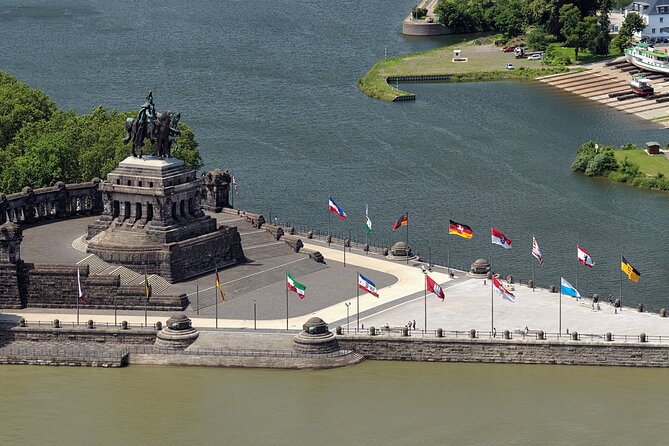
- 33 audio stops cover the main sights: You will pass the German Corner, St. Castor Basilica, Ludwig Museum, Our Lady Church, Jesuitenplatz, and the Four Towers.
- The route takes 2 to 3 hours: You can also spread it over the rest of the day and finish by the end of the next day.
- Your phone is the guide: GPS directions and the audio app are included, but you must bring a charged smartphone and headphones.
- Seven audio languages are available: The activity is designed for independent sightseeing, with no live guide to keep pace with your group.
- The route begins and ends in Koblenz: The stated meeting point is at 56 Koblenz, Germany, and the walk returns to the starting point.
- A small GPS issue is possible: Location points may not always land exactly where you expect, so allow a little patience when finding each stop.
Starting in Koblenz with your own guide
The appeal here is simple: you get a city walk with structure, but without a group gathering around a flag or a guide setting the pace. You open the app on your phone, follow the GPS guidance, and listen to the stories as you reach each place.
That arrangement works well in Koblenz. The city center brings together riverside views, churches, museums, old squares, and fragments of medieval defenses within a manageable walking area. A route that links these sights saves you from constantly checking a map to decide what comes next.
You should allow two to three hours for the full walk. That is the stated walking time, but you have until the end of the next day to complete it. This extra window is useful if you want to stop for lunch, spend time inside the Ludwig Museum, or simply sit near the rivers and watch the water meet.
The experience is private in the practical sense: only your own group takes part. You are not sharing the walk with strangers, though you also do not have a live person nearby to answer questions or adjust the route.
More Audio Walking Tours in Germany
- Berlin Cathedral Ticket & Audio Tour with a City Walk
★ 4.1 · 28 reviews - Trier: City Walk with Audio Guide in 7 Languages on your Phone
★ 4.0 · 19 reviews - Cologne Walking Tour with Audioguide: City and Cathedral
★ 4.5 · 14 reviews
The German Corner and two great rivers
The German Corner, or Deutsche Eck, is the natural centerpiece of the route. Here, the Rhine and Moselle meet, creating one of Koblenz’s clearest visual moments. A large equestrian statue of Emperor William I marks the point, giving the open area a strong historical and ceremonial feel.
I would plan extra time here rather than treating it as a quick audio stop. The meeting of the rivers is easy to understand from a map, but the place makes more sense when you can look in both directions and see how the waterways shape the city.
The German Corner also gives you a welcome break from the tighter streets of the old center. After several urban stops, the open river view changes the mood. Listen to the story, then put the phone away for a few minutes and take in the scene yourself.
As with every stop on a GPS walk, keep an eye on your surroundings instead of staring at the screen. The route is meant to guide you through the city, not replace the basic work of looking around.
St. Castor Basilica and Koblenz’s religious landmarks
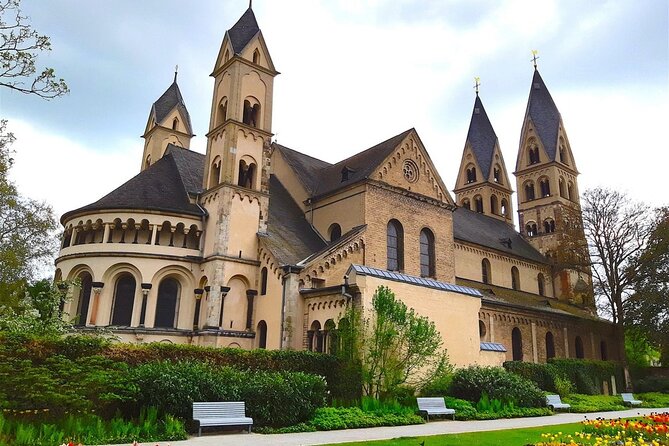
The St. Castor Basilica brings a different kind of atmosphere to the walk. This Romanesque church is one of Koblenz’s major landmarks, with a long religious history and architecture that feels more solid and formal than the open riverfront.
The audio stop gives you useful context before you move on. I find that churches are easier to appreciate when a tour explains their role in the city rather than simply pointing them out as photo stops. You can consider the building’s age, design, and place in Koblenz’s story without having to join a scheduled interior tour.
The route also passes the Our Lady Church. Together, these churches add variety to the walk. You are not simply moving from one public square to another. The route shows how religious buildings helped shape the old city and still serve as visual anchors today.
The supplied details do not promise a guided interior visit or guaranteed opening hours, so treat these as sightseeing stops rather than assume you will enter every church. If you want to see the interiors, check local opening arrangements before setting out.
The Four Towers and medieval Koblenz

The Four Towers are among the most distinctive stops because they connect the modern city with its defensive past. These historic watchtowers once formed part of Koblenz’s medieval fortifications. Today, they offer picturesque views of the surrounding area and give the route a strong architectural highlight.
You will likely notice how different the towers feel from the larger churches and museums. They are smaller, more compact, and tied to the practical business of guarding the city. That contrast helps you picture Koblenz as a protected medieval settlement rather than only a pleasant river city.
This is also one of the places where the audio format earns its price. A tower can be easy to pass without understanding its purpose. A short explanation turns an old structure into a clue about how the city worked.
The GPS points may not always be perfectly precise. If the audio begins a little before or after the exact building, use the surrounding streets and the map to orient yourself. The walk remains usable, but it rewards a calm approach rather than hurried phone checking.
More Smartphone Audio Tours in Germany
- 800 Years of History: A Munich GPS Audio Tour
★ 4.5 · 12 reviews - Dusseldorf: City Walk Audio Guide in 7 Languages on your Phone
★ 4.5 · 11 reviews - Berlin Walking Tour with Audioguide on Your Smartphone
★ 4.0 · 11 reviews - Nuremberg Walking Tour with Audioguide on your Smartphone
★ 5.0 · 3 reviews
The Ludwig Museum for a change of pace
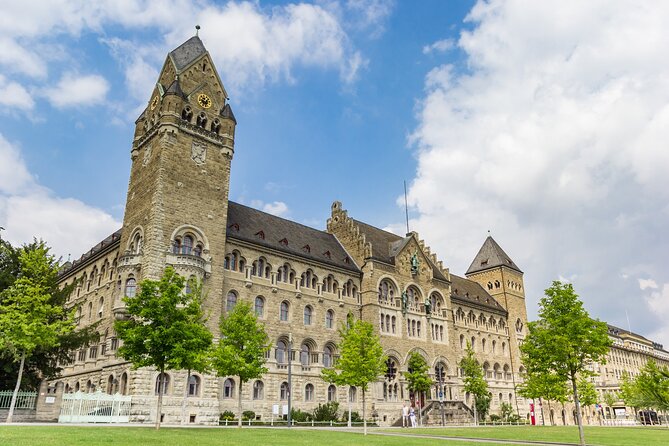
The Ludwig Museum adds contemporary art to a route otherwise focused on churches, fortifications, and historic squares. Its collection includes paintings, sculptures, and multimedia installations, giving the tour a modern cultural stop in the middle of the old city.
This is a good place to use the flexible timing. You can listen to the museum’s story from outside or nearby, then decide if you want to visit the collection. The activity itself does not include museum admission, so any interior visit is separate.
I like this kind of stop in a city walk because it keeps the route from becoming a parade of old buildings. Contemporary art can be more personal and less immediately familiar, but that is part of the point. Even if you only give the museum a short look, it adds another side of Koblenz.
The two-day completion window gives you room to make that decision. You do not have to squeeze a museum visit into the same continuous block as the walking route.
Jesuitenplatz, Our Lady Church, and the old city streets
Jesuitenplatz offers one of the route’s more historic urban settings. Squares such as this help you understand the shape of the old center, with buildings arranged around shared public space rather than along broad modern roads.
The Our Lady Church adds another recognizable landmark nearby. The route’s value here is not just the individual stop. It is the way the stops connect, taking you through the city on foot so that the distance between major sights becomes part of the experience.
This is where the self-guided format feels most natural. You can stop to study a facade, take a photograph, or choose a slightly slower pace without making a group wait. You can also replay a story if a street crossing or distraction caused you to miss part of it.
Do not expect every location to feel like a major monument. Some stops are included to help you notice smaller details and lesser-known corners. That creates a more local-feeling walk, but it also means the experience is not a nonstop parade of headline sights.
How the audio guide works in real use
You need three things before starting: a smartphone, a working internet connection, and an active GPS function. Headphones are not included, so bring your own. Charge your phone fully, and take a power bank if you have one.
The app provides audio in seven languages. The supplied tour information identifies English among the available language options, which makes it suitable if you want explanations without joining a live English-speaking group.
GPS guidance is helpful, but it is not magic. One available assessment noted that some locations and positioning were not always completely accurate, though still good enough to orient yourself. My advice is to listen for the story, check the map, and look for the landmark around you. Do not assume the phone’s blue dot is always standing on the exact spot.
The best rhythm is to start the audio near each attraction, listen while standing safely to one side, and then continue when you have taken in the building or view. That keeps the walk from becoming a technical exercise.
Price, timing, and the value of going independent
At about $8.87 per person, this is a low-cost way to add structure to a Koblenz visit. The value is strongest if you want explanations at the major sights but do not need a personal guide. A private group also avoids paying for people outside your party.
The price does not cover a smartphone, headphones, museum admission, food, or other personal costs. Those exclusions are minor for most people, but they matter if you arrive without the right equipment. A dead battery can turn an inexpensive tour into an awkward morning.
The stated distance is 5.3 kilometers. That is reasonable for most people who are comfortable walking for several hours, but the total day may take longer once you add stops, photos, food, and possible museum time.
You can finish in one outing or spread the walk over the remainder of the booking day and the next day. That flexibility is one of the best features for a relaxed visit. You might complete the riverside sights first, then return to the old center after a break.
Group discounts are available, though the exact discount is not specified. If you are traveling with several people, check the final price before booking.
Who will enjoy this Koblenz walk most
I would choose this experience if you like independent sightseeing and want more than a bare map. It suits couples, families, and small private groups that prefer to pause often or follow their own rhythm.
It is also a good fit for a first look at Koblenz. The route links the city’s best-known landmarks with smaller points of interest, so you can learn the basic layout before deciding where to spend more time.
You should think twice if you want a live guide, detailed personal answers, or a perfectly exact route. The audio guide cannot respond to questions, and the occasional GPS mismatch means you need to use your own judgment.
People with limited walking ability should also consider the 5.3-kilometer distance and two to three hours of movement. The supplied information says most people can participate, but it does not provide detailed accessibility information about every street, building, or stop.
My practical verdict on CityAppTour in Koblenz
This is a useful, inexpensive introduction to Koblenz, especially if you want the freedom to stop at the German Corner, spend time in a museum, or linger over the Four Towers without holding up a group.
Its strongest points are the clear selection of 33 stops, the wide choice of audio languages, and the generous time window. The main weakness is the lack of a live guide, along with GPS points that may need a little common sense.
I would book it if you already have a charged phone, headphones, and an interest in seeing Koblenz at your own pace. I would skip it only if your priority is personal conversation with a guide or a tightly managed route with exact turn-by-turn precision.
Free cancellation is available if you cancel at least 24 hours before the start time. Changes or cancellations inside that window are not refunded.
FAQ
How long does the Koblenz audio walk take?
The walking time is about two to three hours. You have until the end of the next day to finish the activity, so you can take breaks or visit a museum along the way.
How far is the walking route?
The route covers about 5.3 kilometers.
How many stops are included?
The audio walk includes 33 stops and stories.
What sights are included on the route?
The route passes the German Corner, Ludwig Museum, St. Castor Basilica, Our Lady Church, Jesuitenplatz, and the Four Towers, along with other points in Koblenz.
Is a live guide included?
No. This is a self-guided private activity using an app, audio guide, online map, and GPS guidance on your phone.
What do I need to bring?
You need your own smartphone, an internet connection, GPS access, and headphones. You should charge your phone fully or bring a power bank.
How many languages are available?
The audio guide is available in seven languages.
Where does the activity start and finish?
It starts at 56 Koblenz, Germany, and ends back at the meeting point.
What is the cancellation policy?
You can receive a full refund if you cancel at least 24 hours before the experience start time. Cancellations or changes made less than 24 hours before the start time are not refunded or accepted.
More multilingual audio guides in Germany
- Cologne: City Walk with Audio Guide in 7 Languages on your Phone
★ 3.5 · 3 reviews - Heidelberg: City Walk Audio Guide in 7 Languages on your Phone
★ 3.0 · 2 reviews - Athens: Acropolis Ticket with Multilingual Audio Guide
★ 3.9 · 926 reviews - Geiranger: Bus Tour with Multilingual Audio Guide
★ 4.0 · 317 reviews
Latest audio tours in Germany
- Private audio book city rally around the Jahrhunderthalle in Bochum★ 5.0 · 12 reviews
- Private audio book city rally around the old town of Essen Kettwig★ 4.0 · 6 reviews
- Sanssouci Park: A Self-Guide Audio Tour of the Garden’s Landmarks★ 3.0 · 2 reviews
- Beautiful Baroque Potsdam: A Self-Guided Audio Tour★ 4.5 · 4 reviews
- Nuremberg Walking Tour with Audioguide on your Smartphone★ 5.0 · 3 reviews
- Nuremberg Scavenger Hunt and Highlights Self Guided Audio Tour★ 4.5 · 7 reviews
- Discover Nuremberg: Self-Guided Audio Tour★ 3.0 · 9 reviews
- Self Guided Tours Munich With 100 Captivating Audio Stories★ 5.0 · 3 reviews
Multilingual Audio Guides, compared.


Geiranger: Bus Tour with Multilingual Audio Guide
Read our review →
Sightseeing Cruise on the Danube with Audio Guide in Budapest
Read our review →

Castel Sant’Angelo E-Ticket & Multilingual Audio Guide
Read our review →
Best Of – with Tour Leader & Multilingual Audio Guide
Read our review →
Chiva Private Cultural Tour with Audio Guide in Buga
Read our review →
Acropolis Museum E-Ticket and Multilingual Audio Guide
Read our review →Browse the lists this tour appears in