
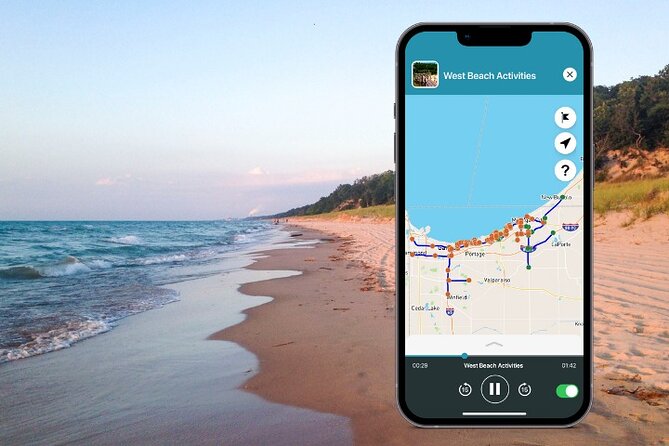
Reviewed · USA
Indiana Dunes National Park Self-Guided Audio Tour
Indiana Dunes is far more than a string of Lake Michigan beaches. This self-guided drive connects moving dunes, old shorelines, wetlands, prairie, immigrant farms, Indigenous culture, and a surprising collection of modernist houses from the 1933 Chicago World’s Fair. The audio route gives the scenery a story, which matters here because much of the park’s history is written in sand, plants, and shifting water.
I like the private, flexible format and the way the narration turns a simple car trip into a full day of small discoveries. I also like the $15.99 group price: one purchase covers up to 15 people, so it can be excellent value for a family or group in one vehicle.
The main drawback is that the route is ambitious. Twenty-two stops spread across two parks and nearby communities can easily fill more than one day, and one customer lost about an hour after the app sent the car off course. Download everything over strong Wi-Fi, follow the route carefully, and keep a backup plan.
Key things to know before you go
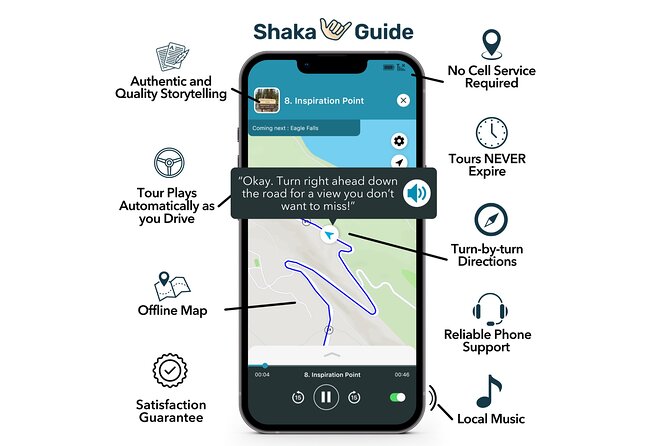
- Twenty-two stops cover more than beaches: You’ll visit birding trails, old farm buildings, a cemetery, historic homes, wetlands, prairie, and several Lake Michigan beaches.
- GPS narration plays as you drive: Stories, music, directions, and tips are designed to trigger automatically from your phone.
- The tour is private: Your group controls the pace, the stops, and the order in which you explore.
- The $15.99 price covers a vehicle-sized group: Up to 15 people can use one tour, with no per-person audio fee.
- Indiana Dunes National Park and Indiana Dunes State Park are different: The state park charges a separate entrance fee and can have lines on busy days.
- Download before leaving Wi-Fi: The map and audio work offline, but you need to prepare the tour in the Shaka Guide app first.
A car tour through a surprisingly varied national park
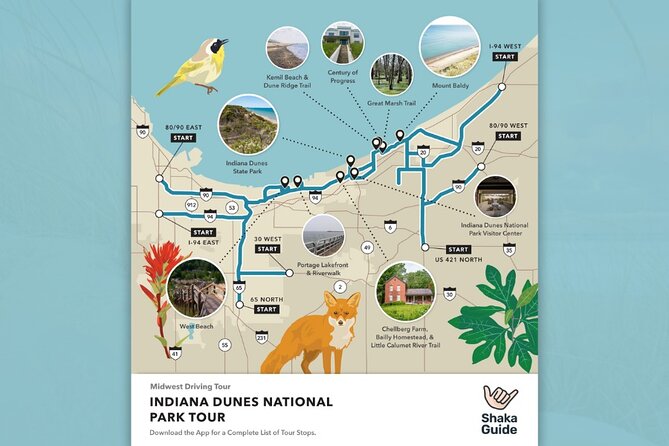
The Indiana Dunes National Park Self-Guided Audio Tour is best understood as a driving framework rather than a single guided walk. You move between trailheads, beaches, historic sites, and visitor centers while the app supplies context at the right points.
The route begins at 5648 US-6 in Westville and ends near the Paul H. Douglas Center in Gary. Additional starting points include New Buffalo and Sherwood Forest Paintball. Since the tour is valid any day and never expires, you do not have to force every stop into one visit. That is useful here. Some stops take 10 minutes, while others call for a real hike.
The audio is in English, and the narrator has a relaxed, friendly delivery with plenty of odd facts. One of the strongest parts of the format is that you can pause the tour when you reach a trail, then resume when you return to the car. You can also skip a crowded beach or a longer hike without losing the rest of the route.
More Self-Guided Audio Tours in the USA
- Gettysburg Battlefield Self-Guided Driving Audio Tour
★ 4.5 · 910 reviews - Joshua Tree National Park Self-Guided Driving Audio Tour
★ 4.5 · 762 reviews - Ultimate Acadia National Park Self-Guided Driving Audio Tour
★ 4.0 · 521 reviews
Heron Rookery and Mount Baldy: birds and moving sand
The Heron Rookery Trail Auxiliary West Lot introduces the park with an easy 3.3-mile walk through a bird sanctuary. The old Great Blue Heron nesting colony has moved elsewhere, but that does not make the trail empty. You might see kingfishers, warblers, Red-headed Woodpeckers, and Yellow-bellied Sapsuckers.
Spring brings a special reason to walk slowly. Look for Harbinger of Spring, with small white petals and dark purple stamens, and Yellow Trout Lilies, whose flowers resemble little banana peels. Allow about 30 minutes for the audio stop, but take longer if you plan to hike the full trail.
At Mount Baldy, the subject changes from birds to geology. The dune rises about as high as a 12-story building and can move as much as 10 feet in a year. Foot traffic destroyed the grass that once held the sand in place, so wind now pushes the dune toward its own parking area.
You cannot simply climb straight over Mount Baldy to reach the water. The beach route is a half-mile round trip around the dune and includes stairs. That makes this a short stop on paper, but the loose sand and stairs may slow you down.
Central Beach, Great Marsh, and Lake View Beach
Central Avenue Beach has seasonal restrooms, drinking water, and two picnic tables at the west end of the parking lot, up the stairs. The restrooms are wheelchair accessible, but the beach and picnic tables are not.
There are no lifeguards, and the park warns about rip currents and rough waves. Treat swimming as an optional activity, not the main reason to stop. In spring and summer, look toward the dunes for Bank Swallows moving in and out of their nests.
The Great Marsh Trail offers a gentler nature stop. Its easy path looks over the largest wetland complex in the Lake Michigan watershed, with chances to see ducks, geese, herons, egrets, warblers, and Red-winged Blackbirds. A separate paved path leads quickly to an observation deck, making this one of the more accessible stops on the route.
Lake View Beach is a brief stop with a seasonal spring tradition. Smelt, a small oily fish, can be caught here in spring and eaten whole after being dusted with flour and shallow fried. The audio narration’s food detail helps connect the lake to local life, though you should treat the stop as a quick look rather than a full beach facility visit.
Century of Progress homes and the eastern beaches
The five Century of Progress houses are among the strangest sights in the park. They were first displayed at the 1933 Chicago World’s Fair as part of a futuristic Homes of Tomorrow exhibit. After the fair, a developer moved five of them to Beverly Shores, naming the community after his daughter.
The houses now belong to the National Park Service but are leased to private residents who maintain them. You cannot go inside during an ordinary visit. An annual tour takes place each September, but tickets generally sell out within an hour, so do not build your day around interior access unless you already have a ticket.
Dunbar Beach has seasonal restrooms and drinking water, but its paved parking lot can fill quickly on summer weekends. There are no lifeguards, and swimming conditions can be hazardous.
Kemil Beach has year-round restrooms and drinking water, plus another reason to stay after dark. It is a good place for watching the night sky and looking for nocturnal animals. The nearby Dune Ridge Trail may be the best short walk for variety, crossing forested dunes and Black Oak Savanna with views toward the Great Marsh and Lake Michigan.
The route continues to the Little Calumet River Trail, a favorite area for summer birding and winter cross-country skiing. The trail also offers a useful lesson in time. The Calumet Dunes Ridge was once the shoreline of Lake Michigan. Over the last 12,000 years, the lake receded about one and a half miles, leaving old dunes behind.
More National Park Audio Tours in the USA
- Arches National Park Self-Guided Driving Audio Tour
★ 4.5 · 288 reviews - Yellowstone National Park Self-Guided Driving Audio Tour
★ 4.5 · 249 reviews - Self-Guided GPS Audio E-Bike Tour Hawaii Volcanoes National Park
★ 4.5 · 131 reviews - Shenandoah National Park Self-Guided Driving Audio Tour
★ 4.5 · 109 reviews
Glenwood Dunes and the visitor center
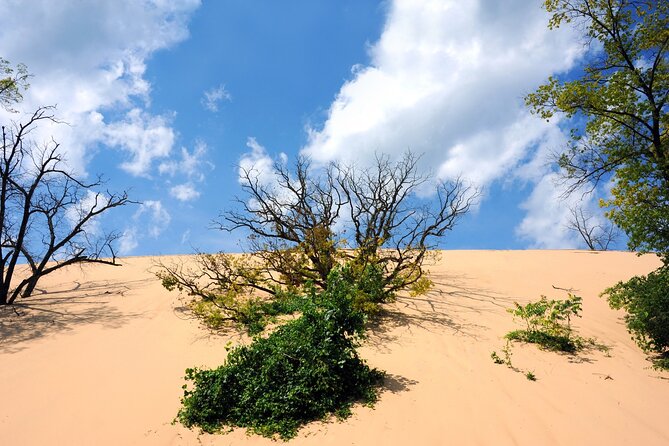
Glenwood Dunes is the point where you need to plan rather than wander. The trail system serves hikers, runners, horseback riders, and cross-country skiers. Routes range from less than a mile to 6.8 miles, with extensions that can push the total beyond 15 miles.
There are 13 trail junctions, so carry a trail map. The audio guide can direct you to the area, but it cannot replace a map once you begin choosing among multiple paths. The dunes here are about 13,000 years old, making them the oldest in the park.
At the Indiana Dunes Visitor Center, you can see educational displays, watch short films, browse the bookstore, and speak with a park ranger. Give special attention to the Indigenous Cultural Trail. It honors the Potawatomi and Miami people who lived here and explains how closely their lives were tied to the park’s wetlands, woods, dunes, and shoreline.
This is a good place to ask questions that a phone narration cannot answer. If you have time for only one indoor stop, the visitor center gives you the broadest introduction to the park.
Indiana Dunes State Park and Porter Beach
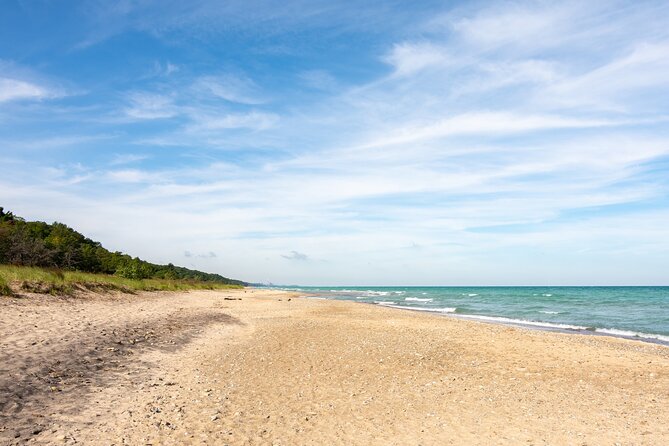
Indiana Dunes State Park is separate from the national park and requires its own fee. This distinction matters because the state park can get crowded, especially in warm weather. Rangers may direct traffic, and you may wait in line to enter.
The park’s Nature Center is the starting point for the 3-Dune hiking challenge. Near the beach, you’ll find a large Art Deco pavilion with a general store and restaurants. A bird observatory sits west of the pavilion. In winter, the 100-foot Devil’s Slide becomes a sledding hill.
History fans should look for the marker near the route to the pavilion. It identifies the site of the 1780 Battle of Petit Fort.
Porter Beach is next door to the state park beach but has fewer facilities. You can park there and walk about a quarter mile along the beach to reach the state park area. Seasonal restrooms are available, but there are no lifeguards.
Cowles Bog, Bailly Cemetery, and Bailly Homestead
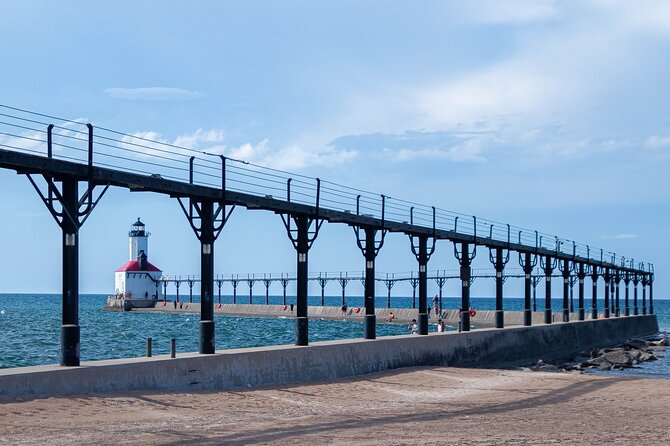
Cowles Bog Trail is a moderate 4.7-mile hike with about 202 feet of elevation gain. It is rugged, with steep climbs through loose dune sand, so the listed 30-minute stop does not represent the time needed to complete the full trail. You’ll want sturdy footwear, water, and enough daylight.
The trail honors ecologist Henry Cowles, whose work on how plants respond to environmental change helped establish Indiana Dunes as a birthplace of modern ecology. This is one of the best places to understand why the park matters to science, not just recreation.
The short route to Bailly Cemetery is less than half a mile round trip and leads into the woods. The site has an unusual family story, including the way one family took control of the cemetery and reshaped it for its own use. It is an easy stop to miss if you focus only on beaches, but it adds a quiet, slightly eerie note to the day.
Bailly Homestead is a National Historic Landmark and the former home of Joseph and Marie Bailly. Joseph established a trading post here in 1822 and provided one of the few stopping places between Chicago and Detroit. Five buildings make up the site, including log cabins, brick structures, and a large late 19th-century house.
Chellberg Farm and Mnoké Prairie

Chellberg Farm tells a later settlement story. Swedish immigrants bought the land in 1869. Their wooden farmhouse burned in 1884, and the brick replacement you see today was built the following year.
The family began producing maple syrup in the 1930s. You pass the syrup shack on the way to the farm, and each March the national park holds a maple syrup festival. The park also schedules ranger programs that may let you tour the old farmhouse and feed cows, chickens, and goats. Check the park calendar before you arrive because these activities are not guaranteed every day.
Mnoké Prairie is a restored tallgrass prairie, showing how the area looked before European-American settlement. It offers a clear change from the dunes and woods. Watch for Double-crested Cormorants, Rock Pigeons, and Cooper’s Hawks.
Portage Lakefront, Tolleston Dunes, and West Beach
Portage Lakefront and Riverwalk combines an easy riverwalk of just under a mile with a beach pavilion offering snacks, gifts, restrooms, and ranger programs. Spring and summer are good seasons for birding. In winter, shelf ice can form along Lake Michigan.
Tolleston Dunes is a roughly three-mile hike through dunes about 5,000 years old. The trail rises and falls over sand and can become soggy after rain, but tree cover provides shade. Keep an eye out for prickly pear cactus, sassafras, and wild blue lupine.
West Beach is the largest and busiest beach in the national park. You can sunbathe, swim, search the shore, watch birds, or use the nearby picnic area. There is a designated dune-climbing spot, along with trails such as the Long Lake Loop through forest, wetlands, and rolling dunes.
For a serious challenge, try the Dune Succession Trail and its 270 steps to the top of Diana’s Dune. The one-mile route is short in distance but strenuous in effort. Save it for when you have water, good weather, and energy left.
Gary sights and the Paul H. Douglas Center
Marquette Park belongs to the city of Gary and sits outside the national park. It includes a playground, concession stand, hiking trails, disc golf, and a beach. The Gary Bathing Beach Aquatorium, built in 1921, is the architectural highlight.
The final major stop is the Paul H. Douglas Center for Environmental Education in Miller Woods. Exhibits cover park wildlife, and nearby trails cross several habitats. The Miller Woods Loop is less than a mile and offers lake views, making it a sensible final walk after a long day in the car.
Cost, timing, and app reliability
At $15.99 per group of up to 15 people, this tour is inexpensive when shared by a family or full vehicle. It is less compelling for a solo driver who wants only one beach, but the price becomes strong value if you use the narration across multiple days.
The tour is advertised as about 12 hours, but that does not mean you must complete it in one stretch. The stop times total several hours before adding driving, meals, parking, hikes, and waits at the state park. I would split the route into two days if you want to walk Cowles Bog, Glenwood Dunes, Dune Ridge, or West Beach’s longer trails.
The app supports offline maps and GPS-triggered audio, so you do not need continuous data once the tour is downloaded. Still, the reported navigation failure is worth taking seriously. Test the app before leaving, download the tour on strong Wi-Fi, keep your phone charged, and carry a paper or saved park map. Customer support is available by phone, chat, or email, but a delayed response can cost you valuable sightseeing time.
Who should book this tour?
You should book it if you like independent sightseeing but want a steady stream of context, directions, and suggestions. It suits families, couples, and groups sharing a car, especially people who would otherwise drive between beaches without understanding the area’s geology and history.
It is also a good choice if your schedule is uncertain. You can pause, skip, return later, and reuse the tour because it never expires. The best plan is to treat the route as a menu, not a race.
You may want to skip it if you already know the park well, dislike phone-based navigation, or have only an hour for a quick beach stop. In that case, a ranger station and one carefully chosen trail may be enough.
FAQ
How much does the Indiana Dunes audio tour cost?
The tour costs $15.99 per group, with up to 15 people included.
How long does the tour take?
The suggested experience lasts about 12 hours, though the tour can be paused, split across multiple days, or shortened by skipping stops.
Does the tour include transportation?
No. You need your own transportation. The tour provides audio narration, GPS directions, and an offline map through the Shaka Guide app.
Does it work without Wi-Fi or mobile data?
Yes, after you download the tour and map over strong Wi-Fi. The audio and map are designed to work offline.
Is Indiana Dunes State Park included in the national park?
No. Indiana Dunes State Park is separate and requires its own entrance fee. The tour includes directions and information for visiting it.
Are the beaches supervised by lifeguards?
No. The listed beaches have no lifeguards, and rip currents and waves can make swimming hazardous.
Can I cancel for a refund?
Yes, if you cancel at least 24 hours before the experience start time. Cancellations within 24 hours are not refundable.
Latest audio tours in the USA
- Sequoia National Park Self-Guided Audio Tour★ 4.5 · 9 reviews
- Sequoia and Kings Canyon Audio Tour Self Guide National Park Tour★ 5.0 · 3 reviews
- Kings Canyon National Park Self-Guided Audio Tour★ 4.0 · 4 reviews
- Sedona, Arizona Self-Guided Audio Tour★ 4.0 · 36 reviews
- Sedona & Red Rock State Park Self-Guided Driving Audio Tour★ 3.0 · 30 reviews
- Haunted Savannah Self-Guided Walking Audio Tour★ 4.5 · 3 reviews
- Downtown Seattle Self-Guided Walking Audio Tour★ 4.5 · 6 reviews
- Uncover Seattle: Self-Guided Audio Tour★ 3.5 · 7 reviews
National Park Audio Tours, compared.

Ultimate Acadia National Park Self-Guided Driving Audio Tour
Read our review →
Vesuvius National Park Skip-The-Line Ticket and Audio Guide
Read our review →
Self-Guided GPS Audio E-Bike Tour Hawaii Volcanoes National Park
Read our review →
Browse the lists this tour appears in