
Reviewed · NORWAY
Downtown Oslo: Self-Guided Highlights and History Audio Tour
A former shipyard, a Nobel museum in an old railway station, the Royal Palace park, Oslo’s grand main street, and a reborn railway hall make up this compact introduction to the city. The route gives you a useful thread through central Oslo, rather than a string of disconnected sights.
I like the low price and the freedom to walk without matching a guide’s pace. I also like the offline access, which matters when you want to save mobile data or avoid relying on a signal. The main caution is that the commentary may not always be fully current, and one purchaser found outdated information distracting.
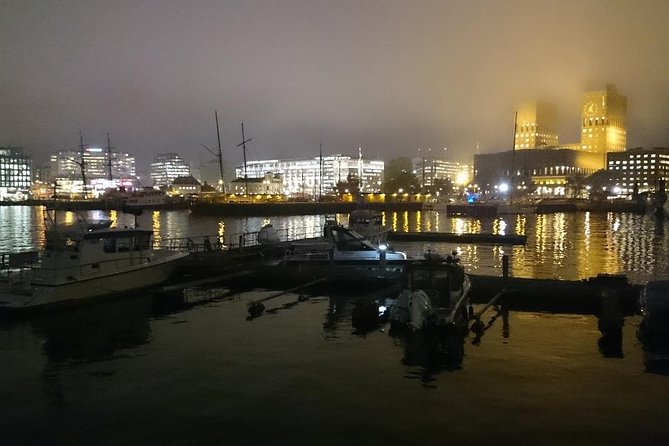
- Aker Brygge begins the walk in a converted shipyard district with shops, restaurants, and waterfront meeting spots.
- The Nobel Peace Center occupies a former railway station, linking Oslo’s transport past with the story of Alfred Nobel and the Peace Prize.
- The Royal Palace park offers a quiet green pause among lawns, trees, ponds, and fountains.
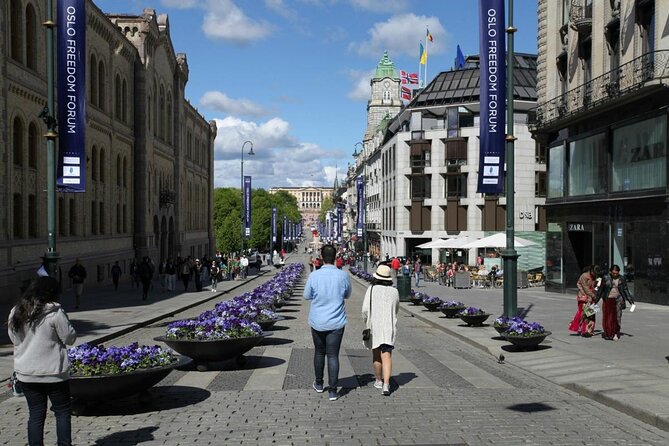
- Karl Johan Avenue provides Oslo’s grand urban spine, leading through one of the city’s best-known streets.
- Østbanehallen ends the route inside a transformed railway hall with food, shops, a hotel, and the Oslo Visitor Center.
- Offline audio, maps, and geodata are included, but you need your own smartphone and must pay separately for any museum entry.
What this short Oslo walk actually covers
This is a 40-minute audio walk through the middle of Oslo. The start is at Rådhusplassen, the city hall square, and the route finishes at Havnelageret on Langkaia, near Østbanehallen and the central railway area.
The route links several places that can otherwise feel unrelated. You begin in a modern waterfront district, pass a museum devoted to peace and Alfred Nobel, cross the grounds around the Royal Palace, follow Karl Johan Avenue, and finish at a former railway hub. That sequence gives you a simple way to understand how Oslo connects its harbor, institutions, royal center, shopping street, and transport quarter.
I would think of this as an orientation walk, not a full museum tour or a substitute for a local guide. The commentary is designed to be heard while you walk. You receive lifetime access to the tour, so you can return to sections later, but the listed route itself is short.
Because the tour is self-guided, you decide when to pause for photographs, coffee, or a closer look. You can also move faster than the suggested timing if you mainly want the route and key facts. The tradeoff is that there is no person beside you to answer questions, adjust the route, or explain a detail that catches your interest.
Starting at Rådhusplassen and Aker Brygge
The walk begins at Rådhusplassen, a practical starting point beside Oslo’s city center and waterfront. From there, the experience introduces Aker Brygge, a shopping and dining district built on the remains of an old shipyard.
That contrast is the point. You are not looking at a preserved old quarter. You are seeing how former industrial land has been reused for everyday city life. Aker Brygge is now a popular place to meet after work, eat, or have a drink, but its earlier shipyard use gives the district a working-history angle that a simple shopping stop would miss.
I like this as an opening because it gets you into Oslo’s modern waterfront story right away. If you want food or a drink, you can make your own stop, though the cost is not part of the tour. The audio walk does not provide refreshments, so treat Aker Brygge as an optional break rather than an included tasting stop.
A practical point: the route is designed around walking between locations, not private transport. You should be comfortable moving through city streets and open public areas for roughly 40 minutes. Since the group limit is 10 people, the experience remains personal in scale, although you are still responsible for following the audio on your own device.
More History Audio Tours in Norway
- Colosseum, Roman Forum & Palatine Hill with Audioguide App
★ 4.4 · 6,291 reviews - Venice: St. Mark Basilica Ticket, Audioguide+History Gallery
★ 3.9 · 4,780 reviews - Rome: Colosseum, Ancient Rome Tour or AudioGuided Tour
★ 4.4 · 2,879 reviews
The Nobel Peace Center in a former station
The next major stop is the Nobel Peace Center. The building once served as an old railway station for trains arriving from the western parts of Norway. Today, it houses a museum about the Nobel Peace Prize, Alfred Nobel, and previous prize winners.
This is one of the most meaningful transitions on the walk. A railway station is built around movement and connection. The museum now uses the building to tell stories about peace, people, and international recognition. Even if you do not enter, the building’s former purpose adds useful context to the outside view.
The tour does not include museum admission. That distinction matters because the audio commentary and the museum visit are separate experiences. You can follow the route without buying a ticket, then decide for yourself if the museum deserves extra time.
I would allow more than the listed 40 minutes if you plan to go inside. The stated duration fits a walking route with audio stops, not a careful museum visit. You will also want time for the building itself, since a former station repurposed as a museum is part of what makes this stop interesting.
A quiet pause in the Royal Palace park
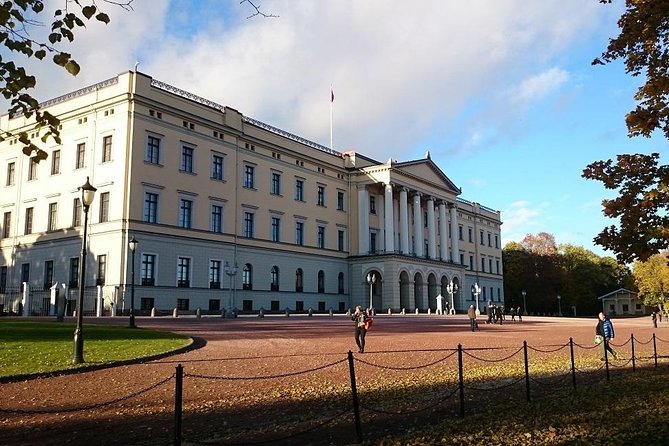
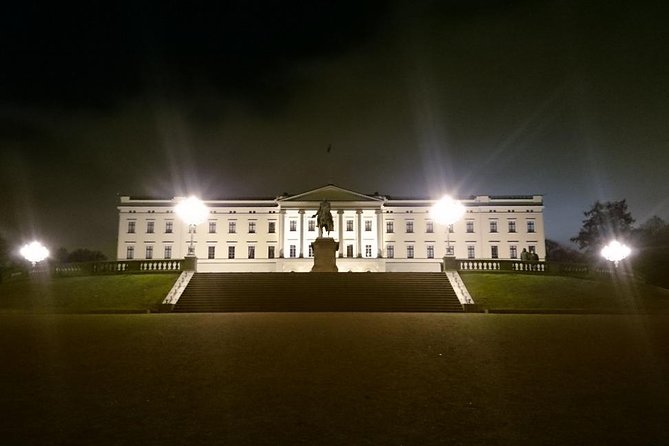
The route continues to the park surrounding the Royal Palace. The park was laid out during the 1840s and includes large trees, maintained lawns, ponds, and fountains.
This section changes the mood. After the waterfront and museum district, the palace grounds give you open space and a slower stretch of the walk. The park is used for recreation by people living in Oslo, so it is presented not only as royal property but also as part of the city’s daily life.
The park also carries a less formal piece of Oslo’s recent social history. It served as a base for hippies in the mid-1960s. That detail keeps the stop from becoming a simple account of royal buildings and tidy lawns. It shows how public places can take on different meanings over time.
I like this stop for travelers who prefer a little breathing room in a city walk. You might want to pause here, but remember that extra time will take you beyond the approximate 40-minute schedule. The audio route gives the park context, while the actual pleasure comes from looking around at your own speed.
Walking Karl Johan Avenue through Oslo’s center
Karl Johan Avenue is Oslo’s best-known grand street. The first section was established in the 1500s, and since 1852 it has carried the name Karl Johan, after the king.
This is the most traditional urban part of the route. The avenue helps you read Oslo as a capital city, with a central public street connecting important parts of downtown. It is also a useful place to continue exploring after the audio ends, since a main avenue naturally gives you access to shops, public buildings, and other central sights.
The audio commentary makes the street more than a route from one stop to the next. Its name and age provide a compact lesson in how the city developed and how royal history shaped its public spaces.
Do not expect a long architectural tour from a 40-minute walk. The information supplied for this experience focuses on the avenue’s origins and name rather than a detailed survey of every building. If you want a deeper look at architecture or Norwegian political history, you will need another source or a longer guided experience.
Still, Karl Johan is a sensible part of a first visit. You get a feel for the city’s formal center without spending hours in a vehicle or committing to a large group tour.
More Self-Guided Audio Tours in Norway
- Akerselva River Meander: A Self-Guided Audio Tour
★ 3.5 · 8 reviews - Oslo Scavenger Hunt and Highlights Self Guided Audio Tour
★ 4.5 · 6 reviews - Discover Oslo: Self Guided Audio Tour
★ 3.5 · 5 reviews - Athens: Acropolis Ticket & Optional Self-Guided Audio Tours
★ 4.1 · 2,542 reviews
Finishing at Østbanehallen and Langkaia
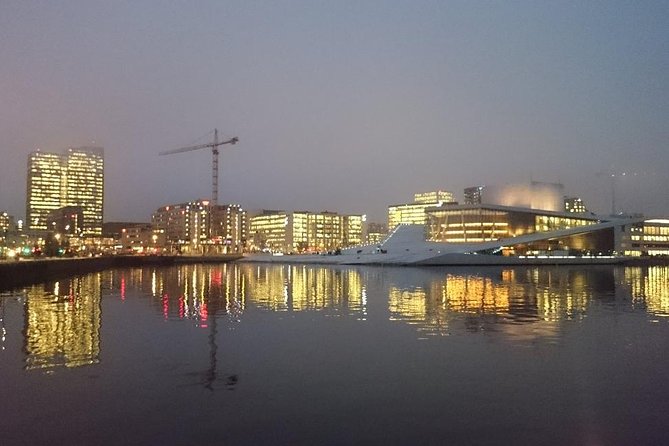
The walk ends at Havnelageret, at Langkaia 1, near the old Østbanehallen. This building was once Oslo’s central railway station for northern routes in Norway. After a full transformation, it reopened in 2015 with shops, restaurants, a hotel, and the Oslo Visitor Center.
The ending works well because it returns you to the practical side of the city. You finish near food, visitor information, and transport-related facilities rather than at an isolated monument. If you want to continue sightseeing or plan the next part of your day, the Oslo Visitor Center can be useful.
Østbanehallen also completes the route’s larger story. You started with a former shipyard turned shopping district, passed a former station turned museum, and ended in a former railway hall turned public food and retail space. Oslo’s past is repeatedly being reused rather than left frozen in place.
The route end is listed as Havnelageret, while the description highlights Østbanehallen. Check your map as you walk so you understand the exact final position in relation to the hall and Langkaia. The included geodata should help, but a quick look before setting off is sensible.
How the VoiceMap format works for you
The experience uses the VoiceMap application and includes offline access to the audio, maps, and geodata. You need your own smartphone. The phone is not supplied, and neither transportation nor food is included.
Offline access is one of the strongest practical features here. You can download what you need before walking and avoid depending on a live connection. It also lets you keep the route available if you are trying to limit data use.
The format suits independent sightseeing. You can stop the audio, look around, take photographs, or pause for a meal. You are not tied to a meeting time beyond reaching the starting point, and the listed operating hours cover every day and all hours during the stated availability period.
There is a weakness to this format. A recorded route cannot react to roadworks, closures, a museum event, or your personal questions. One purchaser felt the information was out of date and preferred switching it off and reading signs instead. That is a serious warning for anyone expecting a polished, constantly updated guide.
The provider asked for specific details about outdated content, which suggests that updates may depend on users reporting problems. I would download the tour before setting out, keep your map available, and treat on-site signs as the final word if the audio and current information differ.
Is $9.99 good value for this Oslo route?
At $9.99 per person, this is an inexpensive way to add structure to a short walk through central Oslo. The price is especially reasonable if you want basic context for five distinct areas and do not need a live guide.
The value drops if you only want a quick map or if you plan to enter several attractions. Museum tickets, food, and drinks are separate. The Nobel Peace Center, in particular, may take longer than the audio route if you choose to visit it properly.
The lifetime access improves the deal. You can use the route once as an introduction, then return to sections later. That is more useful than a one-time recording if you plan to spend several days in Oslo or want to revisit the walk at a slower pace.
The overall rating shown for the experience is 3.9 from 10 ratings. That is a modest sample, so I would not treat it as a firm measure of quality. The one detailed complaint about outdated information is enough to make me cautious, but not enough to dismiss the tour if you value independence and a low price.
Who should choose this audio tour?
I would recommend it most to independent visitors who want a brief introduction without joining a scheduled group. It also suits people who like to stop often, take pictures, or fit sightseeing around meals and other plans.
It can work well for a first look at central Oslo because the route touches modern redevelopment, peace history, royal public space, a major avenue, and a former railway center. You get several themes in a compact walk.
You may want something else if you need a live guide, detailed architectural commentary, or guaranteed current information. Families and most people who can take part in an ordinary city walk should be able to use it, and service animals are allowed. The maximum group size is 10, but since this is self-guided, the group limit matters less than your comfort with using an app.
The non-refundable policy also deserves attention before booking. You cannot receive a refund or change the booking for any reason, so confirm that the date, price, language, and self-guided format suit you first.
Should you book this Oslo walk?
Book it if you want a low-cost, flexible introduction to downtown Oslo and like having history delivered through your phone. The strongest reasons are the clear route between five varied stops, lifetime access, and offline audio with maps.
Skip it if you expect a personal guide, extensive museum commentary, or perfectly current narration. For the right buyer, $9.99 is a fair price for a short orientation walk. Just keep your expectations practical: this is a recorded city walk, not a full guided tour, and you should use current signs and local information alongside it.
FAQ
Where does the audio tour start?
The tour starts at Rådhusplassen in Oslo, Norway.
Where does the tour end?
It ends at Havnelageret, Langkaia 1, 0150 Oslo, Norway.
How long does the tour take?
The approximate duration is 40 minutes.
What language is available?
The tour is offered in English.
What attractions are covered?
The route covers Aker Brygge, the Nobel Peace Center, the park around the Royal Palace, Karl Johan Avenue, and Østbanehallen.
Is museum admission included?
No. Tickets or entrance fees for museums and other attractions along the route are not included.
Do I need my own smartphone?
Yes. A smartphone is not provided. The tour uses the VoiceMap application.
Can I use the tour offline?
Yes. Offline access to the audio, maps, and geodata is included.
Is transportation or food included?
No. Transportation, food, and drinks are not included.
Latest audio tours in Norway
- Oslo Scavenger Hunt and Highlights Self Guided Audio Tour★ 4.5 · 6 reviews
- Discover Oslo: Self Guided Audio Tour★ 3.5 · 5 reviews
- Akerselva River Meander: A Self-Guided Audio Tour★ 3.5 · 8 reviews
- Audio Walking Tour in Bergen Famous Ghosts Location★ 5.0 · 4 reviews
- Bergen in Your Pocket: Landmarks and Lore Audio Tour★ 4.5 · 22 reviews
- Audio-Guide Bus Tour at Scenic Routes of Åndalsnes to Trollstigen★ 4.0 · 2 reviews
- Molde and Atlantic Ocean Road Audio Tour★ 3.0 · 35 reviews
- Norwegian Coastal Cities: Smartphone Audio Guide App★ 4.0 · 27 reviews
Self-Guided Audio Tours, compared.

Acropolis Ticket & Optional Self-Guided Audio Tours
Read our review →


Ultimate Acadia National Park Self-Guided Driving Audio Tour
Read our review →

Akrotiri Ticket with Optional Self-Guided Audios
Read our review →
Browse the lists this tour appears in