
Reviewed · ALBERTA
Discover the Lake Agnes Tea House Trail with an Audio Nature Tour
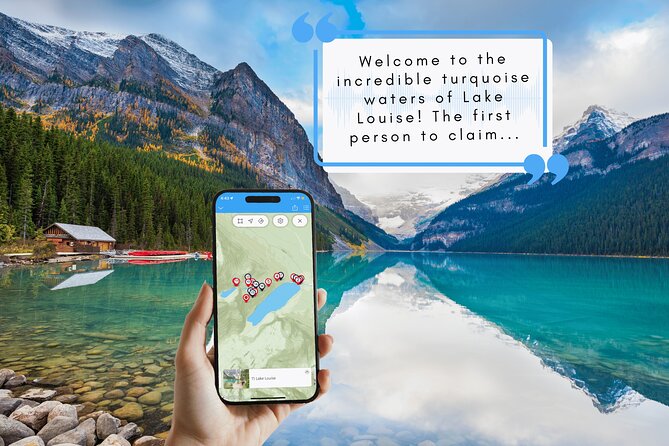
The big idea here is simple: you hike one of Banff’s best-known trails while your phone provides short stories at points along the way. The route climbs from Lake Louise to Mirror Lake and Lake Agnes, with views of Victoria Glacier, mountain peaks, forest, and the famous tea house.
I like the freedom to stop, snack, and take photos without waiting for a group. I also like the low price, just $8.22 per person, especially since one purchase can give each selected device its own copy of the tour. The catch is that this is still a serious uphill hike, and the app has not worked perfectly for everyone.
Key points to know before you go
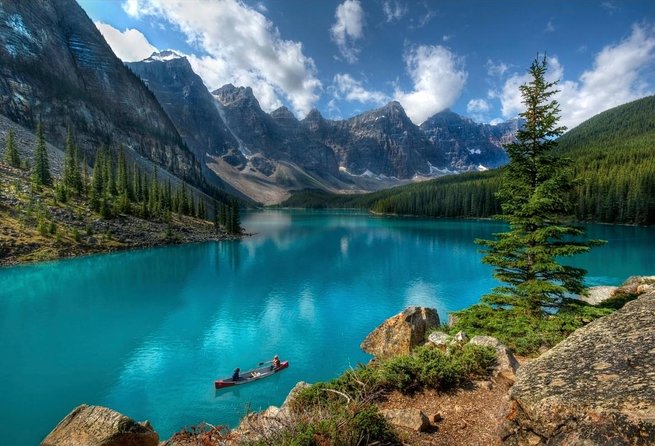
- A 7 km uphill trail: The path is relatively smooth in places, but the climb continues for most of the way and becomes rockier near the top.
- GPS-triggered storytelling: Commentary starts as you approach each point, with manual playback available if the audio misfires.
- Offline use: Download the tour over Wi-Fi before setting out. No mobile signal or data is needed on the trail.
- Major scenery in a short hike: You pass Lake Louise, forest, Mirror Lake, Victoria Glacier views, and Lake Agnes.
- A private experience: No guide or other booking group joins you. Your own party sets the pace.
- Budget-friendly, but bring your own gear: The fee covers the app and commentary, not a phone, headphones, or other hiking equipment.
What the Lake Agnes audio tour really offers
This is not a guided hike in the usual sense. Nobody walks beside you. Instead, Tripvia Tours turns your smartphone into a trail guide, using GPS to play short audio segments as you reach different places on the route.
That format suits you if you want background information but dislike fixed schedules. You can pause for a photo, continue past a crowded viewpoint, or stop for a rest without holding up a group. The optional trivia at each stop adds a small game element, which can be fun for families or anyone who likes a reason to look more closely at the surroundings.
The tour begins near the Fairmont Chateau Lake Louise at 111 Lake Louise Drive. It ends back at the same meeting point after you return from Lake Agnes. The advertised walking time is about two to three hours, but that does not include long breaks, a tea stop, or time spent taking in the views.
The route covers about 7 km. That distance alone may sound manageable, but the climb is the main issue. You gain height almost all the way to the tea house, and one useful warning from the experience is that this feels harder than a moderate walk. The trail is fairly smooth for much of its length, yet the upper section can be rocky, and the final wooden stairs add another push.
More Audio Tours in Canada
- Cabot Trail: a Smartphone Audio Driving Tour
★ 4.5 · 118 reviews - Icefields Parkway: a Smartphone Audio Driving Tour
★ 4.0 · 118 reviews - Niagara: Behind The Falls, Skylon Tower Ticket & Tesla Audio Tour
★ 3.5 · 69 reviews
Starting at Lake Louise and looking toward Victoria Glacier
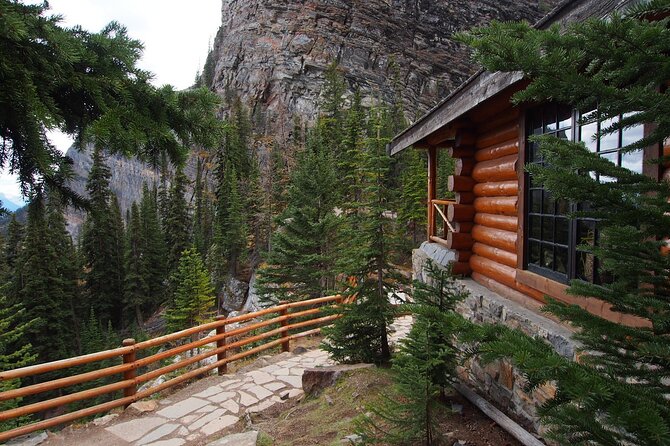
The first commentary begins near Fairmont Chateau Lake Louise. From the start, the tour places the lake and its mountain setting in context rather than sending you straight up the path with no explanation.
Lake Louise is known in the Stoney language of the Nakoda people as the Lake of Little Fishes. As you move along the trail, the bright water appears through the trees and then opens into wider views. The color, framed by surrounding peaks, is one of the main reasons this hike is so popular.
The audio also points your attention toward Victoria Glacier, the ice-covered backdrop behind the lake. This is useful because a busy viewpoint can make the scene feel like a single postcard. The commentary gives you a few details to separate the glacier, the lake, and the mountain walls around them.
At this point, you should keep your phone easy to reach. The app is designed to play automatically as you approach a point of interest, but GPS playback can be irregular on some devices. If a segment does not start, you can play it manually. That small bit of phone handling is worth knowing before you set off.
Banff National Park, forest, and the stories beneath the trail
As the path rises, the audio shifts from the view in front of you to the natural setting around you. Banff National Park was established in 1885 and is Canada’s oldest national park. The trail passes through a boreal forest, and the commentary explains how the surrounding plant life fits into that northern environment.
The material also covers the park’s wildlife. Banff has as many as 310 bird species and about 840 plant species. You should not expect a wildlife show on demand, but the information gives you more to notice as you walk. Look and listen rather than treating the forest as scenery between viewpoints.
One stop discusses wildlife crossings, including the tree-covered bridges and underpasses built to help animals cross roads. These features may be more visible on a drive through the park than on this particular trail, yet the topic helps explain how Banff handles the tension between popular roads and animal movement.
The tour also makes room for human history. Evidence shows people have lived in the Banff area for as long as 10,000 years. The audio places Indigenous presence before the arrival of later explorers and modern recreation. That is an important correction to the usual story, which can focus too heavily on the people who mapped, named, or promoted the mountains for outside audiences.
The uphill section toward Mirror Lake
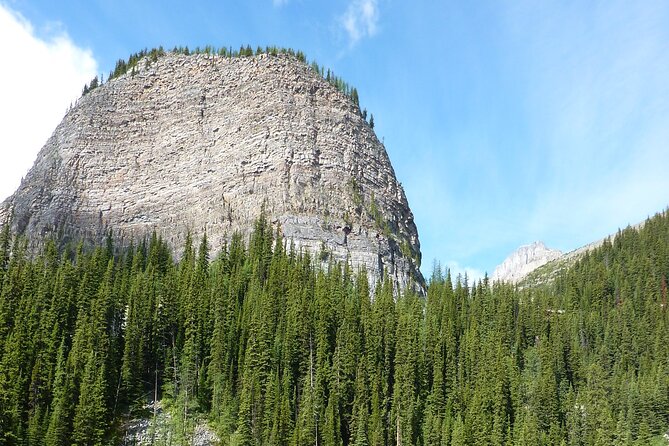
The route uses switchbacks to reduce the steepness of the climb, but they do not remove the effort. You will catch glimpses of Lake Louise through the trees, then move deeper into the forest as the trail rises.
This is where the experience requires an honest assessment. The path is described as relatively smooth, but you should not confuse smooth with easy. The climb is constant, and the upper part becomes more uneven. If you have health concerns or are not comfortable with a sustained uphill hike, this may not be the right activity.
The audio keeps the walk from feeling like a silent series of switchbacks. It covers subjects such as caves in Banff National Park, including Castleguard Cave, although you will not visit a cave on this trail. It also points out mountain peaks and local wildlife. These short topics give you something to consider while catching your breath.
Mirror Lake is one of the few clear stops before the tea house. It is smaller and quieter in scale than Lake Louise, with Big Beehive Peak rising behind it. The name comes from the way the mountain can reflect in the water when conditions are right.
Mirror Lake is a good place to pause, check your water, and decide how much time you want to spend at Lake Agnes. The tour treats it as a scenic stop, but you do not need to rush through it just because the commentary lasts only a few minutes. The audio segments are brief. Your day does not have to be.
Another self-paced route in Canada:
- A 7th-Gen Local’s View of Downtown Charlottetown: An Audio Tour
★ 4.5 · 27 reviews - Smartphone Audio Driving Tour between Banff and Calgary
★ 4.0 · 25 reviews - Halifax Churches, Gardens & Graveyards: a Smartphone Audio Walking Tour
★ 4.5 · 25 reviews - Self Guided Audio Driving Tour of the North Shore of PEI
★ 4.0 · 24 reviews
Reaching the Lake Agnes Tea House
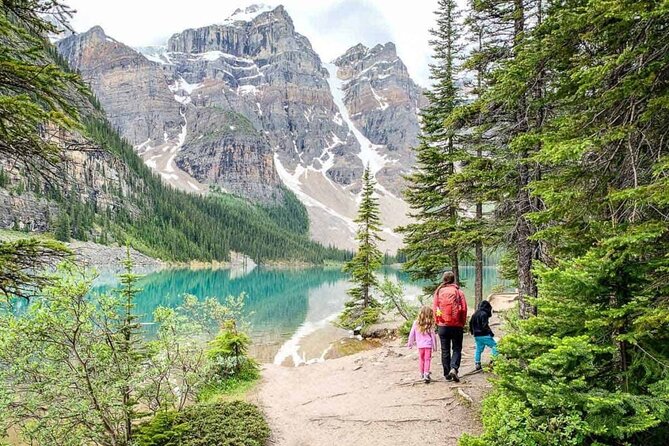
The final approach includes a waterfall view and wooden stairs. This is the last major effort before the tea house, and it can feel more demanding after the steady climb from Lake Louise.
The Lake Agnes Tea House sits beside the lake at an elevation of about 7,005 feet. The setting is the reward: water, mountain walls, and the feeling of arriving at a small high-country destination rather than merely reaching the end of a marked path.
The commentary connects the tea house with early explorers and explains that the site takes its name from Lake Agnes. It also gives you time to look toward Mount St. Piran and consider the possibility of continuing farther if you have the energy. The supplied details do not promise a longer route as part of this tour, so treat any extra walking as your own choice, not an included extension.
The tea house is the natural turning point. Since the activity ends back at the starting point, plan enough time for the descent. Going down may feel easier on your lungs, but uneven sections and stairs can still demand care. The audio continues with information about the surrounding peaks as you return.
The return walk and changing views
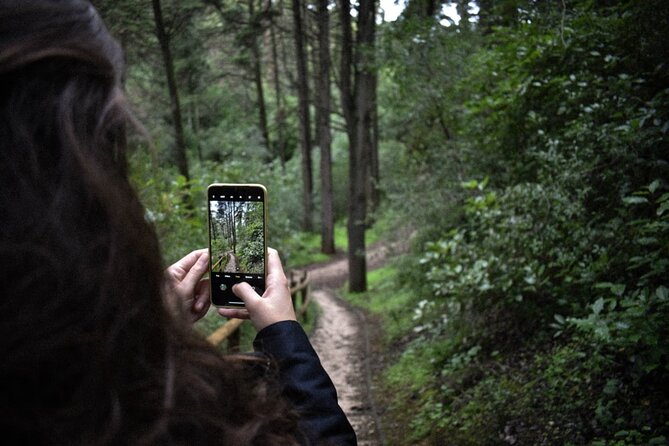
The trip back is not simply a repeat of the climb. Your direction changes, and gaps in the trees can show the mountains from a new angle. The commentary draws attention to differences among the peaks, which gives you a simple challenge while walking: compare shapes, colors, and snow or ice from one viewpoint to the next.
The return also includes information about recreation in Banff National Park. Hiking is the obvious activity here, but the park supports many forms of outdoor use. The point is less about listing every option and more about placing your walk within the wider way people use this protected area.
Near Lake Louise, the audio explains glacial melting and the lake’s cold conditions. Winter temperatures in this region can fall below freezing, and the water and ice help shape the setting you have been seeing from the trail.
The final approach brings you back toward the shore and the original meeting point. Give yourself time to enjoy the lake again before leaving. The return view can be as worthwhile as the first one, especially after you have seen the water from above and spent time beside Lake Agnes.
How the phone app works on the trail
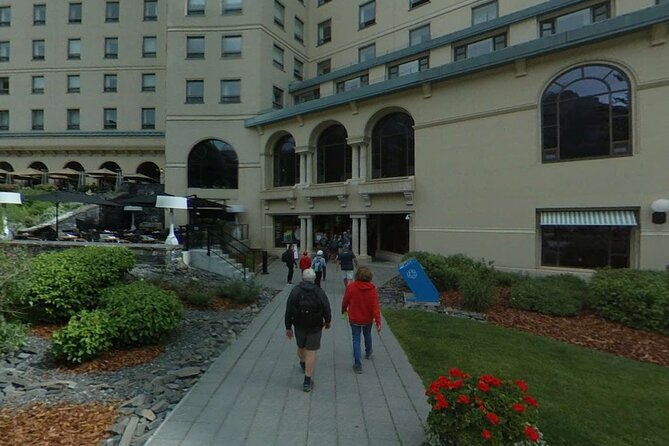
Download the Tripvia Tours app and the tour before you go. The operator specifically recommends using Wi-Fi for this step. Once downloaded, the route does not need mobile signal and does not use data during the hike.
The live GPS map shows your position and the route ahead. Audio is meant to begin as you approach each point of interest, so you can keep walking rather than constantly reading a screen. The optional trivia question appears after the commentary, and you tap your answer on the device.
There are two practical limits. First, you need your own smartphone or tablet. Neither is supplied. Second, headphones are not included. You can let the audio play through the phone speaker, but headphones may make it easier to hear in wind or around other people.
The app worked well for some users, while others had trouble getting it to function. GPS can also cause the audio to start and stop at awkward moments. The company suggests playing the segments manually when needed and offers help by phone or email. I would download everything early, test the app before reaching the trail, and keep the map available even if the automatic commentary fails.
The tour is offered in English. No other language options are listed, and the audio guide does not replace basic trail awareness. Keep your eyes on the path, especially near the rockier upper sections.
Is $8.22 good value for this Lake Louise hike?
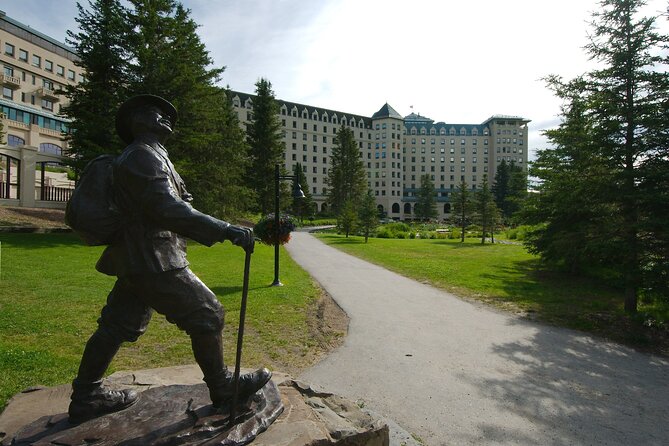
At $8.22 per person, this is a low-cost way to add context to a well-known hike. You are not paying for transport, a professional walking guide, or admission to a separate attraction. You are paying for the audio content, GPS route, trivia, and continued access to the tour in the Tripvia app.
The value is strongest if you would otherwise hike without any information. A small amount of history and nature commentary can make the walk feel more purposeful, and you can share the experience with your own group without paying for a private guide.
The value is weaker if you want a person beside you to answer questions, manage the pace, or handle navigation. You also need to accept the risk of app glitches. At this price, that tradeoff is reasonable, but you should not expect the same support as a fully guided excursion.
The selected number of participants is important because it represents the number of devices that can download the tour. If four people want independent access on four phones, select four devices when booking. The activity itself remains private to your own group.
Who should book this audio walk?
I would recommend it to independent hikers who want more than a route map but less than a scheduled tour. It is especially useful if you enjoy natural history, mountain stories, and small facts about the place you are seeing.
Families may like the optional trivia, provided everyone can handle the uphill walk. Couples and small groups can use it at their own pace. Solo hikers may also appreciate having information triggered along the way, though the app does not provide a human companion or emergency service.
I would think twice if you need a gentle walk. The steady climb is the central fact of this experience. The trail may be fairly flat underfoot in sections, but the route is not flat overall. The supplied guidance calls for moderate physical fitness, while the actual uphill effort can feel harder than that label suggests.
The audio is also best treated as a helpful extra, not the reason to hike the trail. The views of Lake Louise, Mirror Lake, Victoria Glacier, and Lake Agnes are the main event. The app adds meaning and entertainment, but the mountain setting carries the experience.
Should you book the Lake Agnes Tea House audio tour?
Book it if you want a private, inexpensive way to learn more while walking one of the area’s signature trails. The offline map, automatic commentary, and optional trivia are practical features, and the freedom to stop whenever you like is a real advantage.
Skip it if you want a live guide, multilingual commentary, or a relaxed stroll. Also skip it if you are not prepared for a sustained uphill hike with a rockier final section.
For most fit hikers who already plan to visit Lake Agnes, $8.22 is a sensible add-on. Download it over Wi-Fi, test the app, bring headphones if you want them, and be ready to start audio manually if GPS behaves poorly. The trail itself is the star, but the stories can help you notice more along the way.
FAQ
How long is the Lake Agnes Tea House Trail?
The tour covers approximately 7 km and is expected to take about two to three hours. Longer stops, meal breaks, and time at Lake Agnes will add to the total.
Where does the tour start?
It starts at 111 Lake Louise Drive in Lake Louise, Alberta, near the Fairmont Chateau Lake Louise.
Where does the activity end?
The activity ends back at the starting point after you return from Lake Agnes.
Does the tour require mobile signal?
No. You should download the app and tour over Wi-Fi before starting. The downloaded tour can be used without signal or mobile data.
Do I need to bring a smartphone?
Yes. A smartphone or tablet is not provided. The number of people selected at booking represents the number of devices allowed to download the tour.
Are headphones included?
No. Headphones are not provided. You can listen through your device speaker or bring your own headphones.
Is this a private tour?
Yes. Only your own group participates. No other booking group joins you, and your group can set its own pace.
Can I cancel for a full refund?
Yes, if you cancel at least 24 hours before the experience start time. Cancellations made within 24 hours are not refunded, and changes within that period are not accepted.
Latest audio tours in Canada
- Fruit alcohol tasting + Velvet Orchards audio tour★ 5.0 · 2 reviews
- Quebec City Self-Guided Driving Audio Tour★ 4.0 · 7 reviews
- APP Self-Guided Tours Quebec with Audioguide★ 3.0 · 2 reviews
- Layers of Natural History: Picton Nature Self-Guided Audio Tour★ 5.0 · 4 reviews
- Smartphone Audio Driving Tour between Wasaga Beach and Toronto★ 4.5 · 3 reviews
- Niagara: Behind The Falls, Skylon Tower Ticket & Tesla Audio Tour★ 3.5 · 69 reviews
- Niagara Falls Pass: 5 Iconic Attractions, WEGO Bus & Audio Guide★ 5.0 · 7 reviews
- Niagara Peninsula: a Smartphone Audio Driving Tour★ 4.0 · 10 reviews
Alberta Audio Tours, compared.
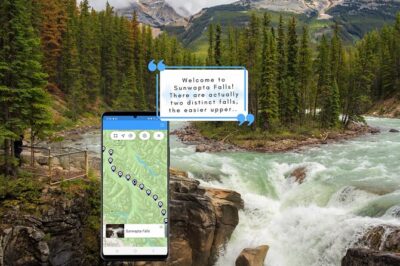
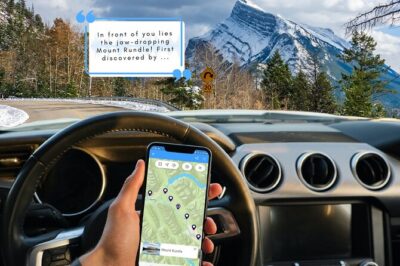
Smartphone Audio Driving Tour between Lake Louise and Calgary
Read our review →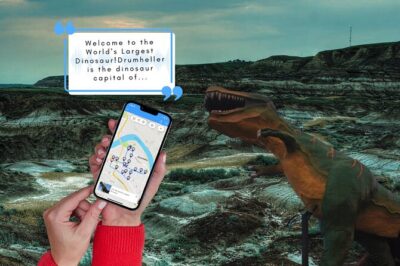
Ghosts of Drumheller: a Smartphone Audio Ghost Tour
Read our review →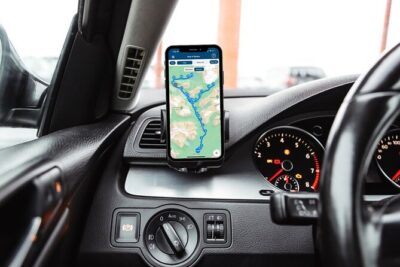
Audio Tour for Self-Guided Drives in Waterton National Park
Read our review →
Browse the lists this tour appears in