

Reviewed · NASHVILLE
Country Music Hall of Fame Admission with Audio Guide
The most memorable part of this Nashville experience is the sheer range of material under one roof, from Elvis’s Cadillac and Nudie’s famous cars to handwritten letters, stage clothes, instruments, films, and displays devoted to artists such as Dolly Parton and Taylor Swift. You can trace country music from its early years to its modern stars without being pushed through on a fixed tour.
I like the freedom to stay for 90 minutes or four hours, depending on your interest. I also like the audio guide, which adds stories and context that are easy to miss when you are reading case after case. The main drawback is that the museum can feel crowded and a little scattered, and some visitors find the handheld audio device awkward to use while studying the displays.
Key points to know before you go
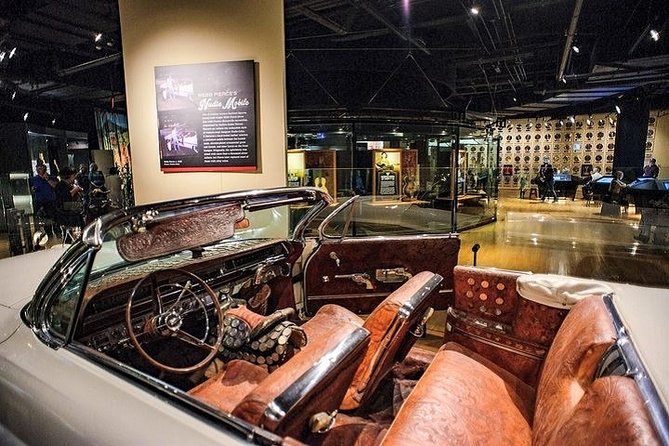
- Elvis’s Cadillac and Nudie’s cars provide two of the museum’s most memorable visual stops.
- Five audio-guide languages are available: English, French, Spanish, German, and Japanese.
- Plan at least two hours if you want to read labels, watch films, and use the audio guide.
- The museum covers modern country, too, with displays connected to Dolly Parton, Taylor Swift, and newer performers.
- A $36.95 ticket offers flexible value if you take your time and use the films and audio material.
- Downtown parking can be expensive, so public transportation, Uber, or Lyft may make more sense.
What you actually see inside the Country Music Hall of Fame

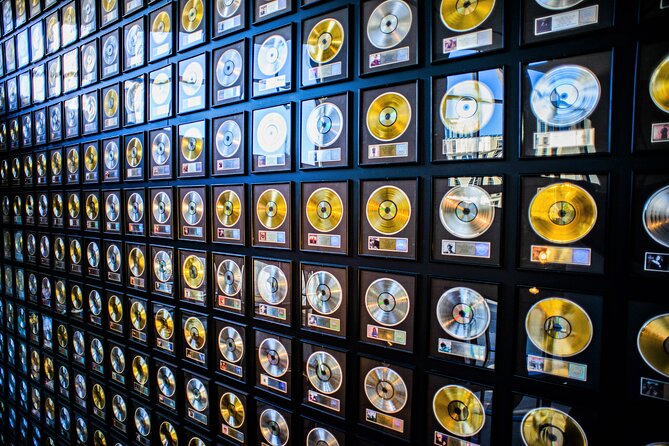
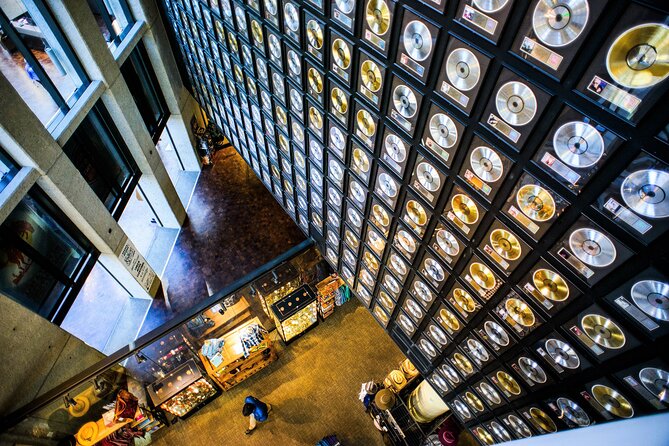
The Country Music Hall of Fame and Museum is not just a wall of plaques honoring famous singers. It is a large, two-floor museum that uses personal objects and career material to tell the story of country music.
You will see costumes, instruments, cars, letters, photographs, videos, and professional memorabilia. Some displays focus on a single performer, while others place artists and songs into a broader timeline. This gives you two ways to visit: you can follow the history from beginning to end, or you can move toward the artists you already know.
I recommend starting with the overall story instead of rushing straight to your favorite singer. The museum becomes easier to understand once you have a sense of how performers, songwriters, recording, radio, television, and stage culture fit together.
The collection includes both older and newer country music. That matters if you are visiting with someone who knows the classic performers but not the current generation, or the other way around. The Dolly Parton and Taylor Swift areas are especially useful for younger visitors and anyone who wants more than a history lesson about the first decades of the genre.
More Audio Tours in the USA
- Los Angeles: Hop-On Hop-Off Bus Tour with Audio Guide
★ 3.7 · 2,030 reviews - City Sightseeing Hop-On Hop-Off Bus Tour with Audio Guide
★ 3.0 · 1,083 reviews - Medieval Torture Museum Ticket with Audio Guide and Ghost Hunting
★ 5.0 · 962 reviews
The cars, clothes, and objects that bring the music to life
Country music history can be hard to grasp when it is presented only as dates and names. The museum solves that problem with objects you can see immediately.
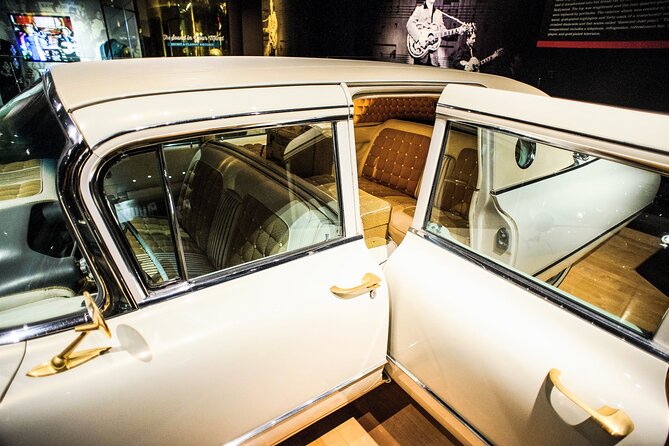
Elvis’s Cadillac is one of the big visual draws. Nudie’s cars add another dose of country style, showing how clothing, vehicles, and stage image became part of a performer’s identity. The costumes are often just as interesting as the biographies because they show how artists presented themselves to an audience.
You will also find instruments and handwritten letters. The letters can be difficult to read through the glass, especially if you are trying to listen to the audio guide at the same time. Still, they add a personal touch that polished stage costumes cannot provide.
The museum also includes professional and personal stories about performers and songwriters. That mix is important. Country music was not created only by the singers in the spotlight, and the displays give you a better sense of the people who wrote, played, recorded, and shaped the songs.
How the audio guide changes the visit

The audio guide is available in English, French, Spanish, German, and Japanese. It is most useful when you want more context than the labels provide, especially at exhibits about musicians whose careers you do not know well.
I would use it selectively rather than trying to listen to every single stop. The museum contains a lot of written material, and stopping for the full audio explanation at every display can slow your visit to a crawl. A better plan is to listen at the exhibits that interest you most, then keep moving through the rest.
The audio guide can also help you avoid missing the point of a display. A costume may look impressive, but the recorded explanation can tell you why it mattered. A car may seem like a curiosity until you hear how it connects to a performer’s image and career.
There is one practical weakness. Holding a device while reading display text, watching a film, and moving around other people is not always easy. If you find the handheld unit distracting, use it for selected exhibits rather than treating it as a required soundtrack.
The audio guide is not a replacement for looking closely. It works best as a second layer, adding stories to the objects in front of you. If you prefer a quick, visual museum visit, you can still enjoy the building without listening to every stop.
Films, interactive displays, and the modern side of country music
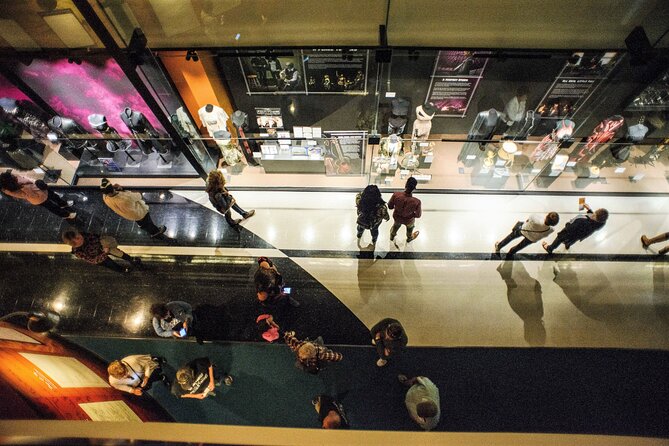
The museum is not made up only of glass cases. Films, music, and interactive elements break up the reading and help keep the visit moving.
Be sure to stop for the films. They provide a broader sense of the music than a single label can, and they give you a break from reading names and dates. The visual material also helps younger visitors stay interested, particularly when the older displays are less familiar.
The modern sections keep the museum from feeling stuck in the past. Displays connected to Dolly Parton and Taylor Swift show how country music continues to change and how artists can reach audiences far beyond a traditional country base.
That said, the balance will not suit everyone. If your favorite performer is not represented in a large display, you may find the coverage uneven. The museum has room for many stars, but it cannot give equal space to every singer, songwriter, or instrumentalist.
If you are not a country fan, the history and design may still carry the visit. The museum offers a useful look at American music, entertainment, clothing, recording, and celebrity culture. If you want only a fast collection of famous faces, however, the amount of reading may feel like work.
Another self-paced route in the USA:
- Gettysburg Battlefield Self-Guided Driving Audio Tour
★ 4.5 · 910 reviews - Joshua Tree National Park Self-Guided Driving Audio Tour
★ 4.5 · 762 reviews - San Francisco: Alcatraz, Ferry & Audio Tour w/ Night Option
★ 4.4 · 617 reviews - Ultimate Acadia National Park Self-Guided Driving Audio Tour
★ 4.0 · 521 reviews
How long to spend inside
The stated visit time is about two to three hours, and that is a sensible target for most people. It gives you enough time to see both floors, read selected displays, listen to the audio guide, and watch some films without rushing every stop.
You can shorten the visit to around an hour and a half if you focus on the major objects and skip much of the written material. At the other extreme, a careful visit can take about four hours, especially if you stop for videos, read the personal stories, and listen to many audio entries.
I would allow three hours if this is a priority in your Nashville plan. That gives you room for the museum’s large amount of information without turning the experience into a race.
The layout can feel scattered. Finding the stairs or elevator is not always obvious, and the two floors do not always create a clear route. Take a moment near the start to get your bearings, then decide whether you want to follow the exhibits in order or focus on certain performers.
Crowds can also affect your pace. Popular displays may make it hard to stand in one place for a long audio segment. Going early in the day may give you more space, and the museum is open from 9:00 a.m. to 5:00 p.m. every day during the listed 2025 and 2026 periods.
Is the $36.95 admission a good value?
At $36.95 per person, this is not a cheap pass-through attraction. The value depends on how you visit it.
If you spend only an hour looking at a few costumes, the price may feel high. If you stay for two to four hours, use the audio guide, watch films, and take time with the cars, instruments, letters, and artist displays, the admission makes more sense.
I see the ticket as a good buy for someone who wants a substantial indoor activity in Nashville rather than a quick photo stop. It is also useful when you want to book ahead and have one major attraction already set in your schedule.
The museum includes enough variety to work for mixed-interest groups. A country fan can follow favorite performers, while a history-minded companion can focus on American music, songwriting, stage design, and cultural change. Still, someone who dislikes museums or has little interest in music may find the reading-heavy format slow.
A small café inside the museum can help you stretch the visit. It gives you a place to pause and eat at what has been described as a reasonable price, rather than leaving just because you need a break.
Getting there and handling the practical details
The museum is near public transportation, which is useful in central Nashville. Driving may be less convenient because parking elsewhere can cost as much as $30 for every two hours, according to the practical advice provided with the experience.
I would compare the cost of parking with Uber or Lyft before leaving your hotel. That is especially true if you plan to spend three or four hours inside. A parking fee can quickly add a large extra cost to a ticket that already costs $36.95.
One parking option mentioned is Publix parking, but conditions and rules can change. Treat any private or retail parking suggestion carefully, and check the signs when you arrive rather than assuming it is free for museum visitors.
At the entrance, have your booking voucher ready. The admission process is straightforward, and the desk can print the ticket or tickets from the voucher.
The experience is self-guided. You do not join a fixed group or follow a named guide, so you can move at your own pace. Most people can participate, and the museum is suitable for families, couples, and older teens who enjoy music and exhibits.
The cancellation policy is friendly if your plans are uncertain. You can cancel at least 24 hours before the start time for a full refund. Changes or cancellations made within 24 hours are not accepted for a refund, and the cut-off follows local time. The experience also requires good weather, with a different date or full refund offered if it is canceled because of poor weather.
Who will enjoy this museum most
I would recommend it first to country music fans, music teachers, history-minded visitors, and anyone who wants to understand Nashville beyond its live bars and performance venues.
It is particularly good for older teens and adults who enjoy reading about artists and looking closely at objects. Families can enjoy it too, but children who need constant movement may lose interest during the longer text sections.
You do not need to be a devoted country fan to get something from the museum. The displays cover careers, clothing, cars, instruments, songwriting, and entertainment, so the visit has value beyond the music itself.
The experience is less suitable if you dislike self-guided museums. There is no guide leading you from room to room, and the amount of information can feel overwhelming. If you prefer a short, tightly directed tour, you may leave feeling that the museum is too large and loosely organized.
A better way to plan your visit
Give yourself a clear goal before you enter. You might follow the story of country music, concentrate on the performers you already know, or use the museum to discover artists from earlier and more recent periods.
I would begin with a broad walk through the main displays, then return to the exhibits that catch your attention. Use the audio guide for those stops, and watch the films instead of trying to read every label.
Do not rush past the less famous names. The museum is at its best when it connects the major stars with the songwriters, musicians, and industry figures behind them. That is where the visit becomes more than a collection of celebrity clothing.
Set aside time for the iconic cars and costumes, but do not make them your entire plan. They are memorable, yet the films, letters, instruments, and timeline provide the context that gives those objects meaning.
Should you book the Country Music Hall of Fame admission?
Book it if you want a serious Nashville museum visit with flexible timing, strong visual displays, and enough material for two to four hours. The audio guide is worth using, especially if you want more than the basic labels, and the five language choices make the experience accessible to a wider range of visitors.
Think twice if you want a fast attraction with little reading, or if you are hoping every favorite artist will have a major display. The layout can be confusing, the handheld audio may feel awkward, and the museum can become crowded.
For most music fans, history lovers, and first-time Nashville visitors, I would make room for it. Arrive early, use public transportation or a ride service if parking prices are high, watch the films, and give the exhibits enough time to tell their stories.
FAQ
How much does admission cost?
Admission costs $36.95 per person and includes entry to the Country Music Hall of Fame and Museum with an audio guide.
How long does the visit take?
The approximate visit lasts two to three hours. You can shorten it to about an hour and a half, or spend around four hours if you read extensively, watch films, and use the audio guide at many exhibits.
What languages are available for the audio guide?
The audio guide is available in English, French, Spanish, German, and Japanese.
What are the opening hours?
The museum is open Monday through Sunday from 9:00 a.m. to 5:00 p.m. during the listed 2025 and 2026 dates.
Is the experience self-guided?
Yes. You explore the museum at your own pace rather than joining a guided group.
Can I cancel for a refund?
You can cancel at least 24 hours before the experience start time for a full refund. Cancellations or changes made less than 24 hours before the start time are not refunded or accepted.
Latest audio tours in the USA
- Sequoia National Park Self-Guided Audio Tour★ 4.5 · 9 reviews
- Sequoia and Kings Canyon Audio Tour Self Guide National Park Tour★ 5.0 · 3 reviews
- Kings Canyon National Park Self-Guided Audio Tour★ 4.0 · 4 reviews
- Sedona, Arizona Self-Guided Audio Tour★ 4.0 · 36 reviews
- Sedona & Red Rock State Park Self-Guided Driving Audio Tour★ 3.0 · 30 reviews
- Haunted Savannah Self-Guided Walking Audio Tour★ 4.5 · 3 reviews
- Downtown Seattle Self-Guided Walking Audio Tour★ 4.5 · 6 reviews
- Uncover Seattle: Self-Guided Audio Tour★ 3.5 · 7 reviews
Nashville Audio Tours, compared.

The Heart of Downtown Nashville: A Self-Guided Audio Tour
Read our review →


Nashville Music City Smart Phone Self-Guided Audio/App Walking Tour
Read our review →
Nashville’s Famous Ghosts Self Guided Audio Walking Tour
Read our review →
Nashville’s Bicentennial Capitol Mall State Park: A Self-Guided Audio Tour
Read our review →Browse the lists this tour appears in