
Reviewed · BARCELONA
Colonia Guell & Gaudi’s Crypt Admission Ticket with Audioguide
The most unusual part of this outing is not simply Gaudí’s Crypt. It is the chance to see the whole worker village that gave the church its purpose. Colònia Güell was built by Eusebi Güell for employees at his nearby textile mill, so the houses, school, co-operative, gardens, and administrative buildings form one carefully planned community.
I like the freedom of the self-guided format, since you can set your own pace and spend extra time at the Crypt. I also like the contrast between the modest worker homes and the ambitious modernist details, including turrets and trencadís mosaic tilework.
The main catch is location. Colònia Güell is outside Barcelona proper, and you need a train rather than the city metro. The site is rewarding for Gaudí fans, but it is not the best choice if you want a quick central Barcelona attraction.
Key points to know before you go
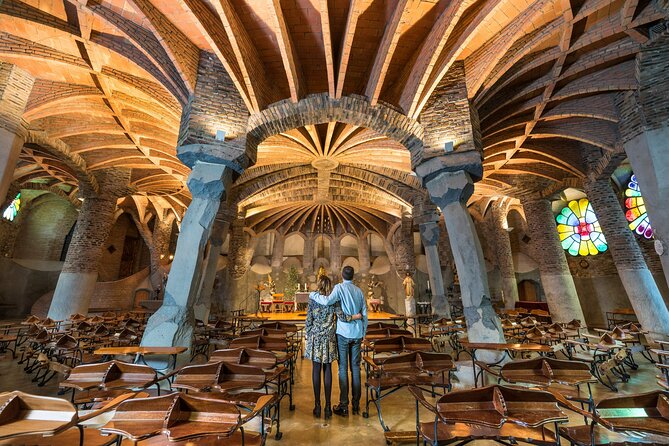
- Gaudí’s Crypt is the main event: See the UNESCO-listed church where Antoni Gaudí tested ideas later used in the Sagrada Família.
- Colònia Güell is more than one building: Your admission covers the former textile village, including homes, a school, gardens, shops, and co-operative buildings.
- The visit is self-guided: You collect an audioguide, map, and keepsake guidebook at the information and visitor center.
- Plan for about two hours: The audio tour concludes after roughly two hours, but you may remain in the area longer.
- Use the train, not the metro: The site is outside Barcelona city limits, so allow extra time for the journey.
- The price is modest: At $12.07 per person, the ticket offers good value if you want context around Gaudí rather than only a quick church visit.
Why Colònia Güell makes Gaudí’s Crypt more meaningful
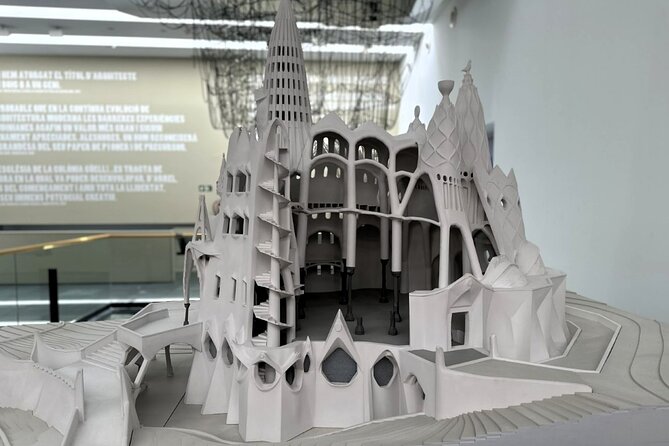
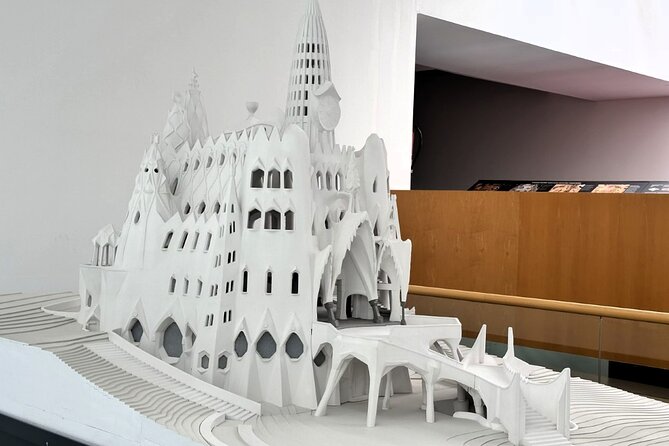
Many people know Gaudí through the Sagrada Família, Park Güell, or the houses in central Barcelona. Colònia Güell gives you a quieter look at the setting in which his ideas developed. The Crypt was designed in 1882, and Gaudí used the project to test structural and decorative concepts that later informed his larger work.
That connection gives the visit its real point. You are not seeing a finished version of the Sagrada Família. You are seeing an earlier, more compact experiment, one shaped by a hillside and by the needs of a working community.
I find the village context especially useful. The church was not placed in isolation as a grand monument. It was part of a planned estate created around a textile factory. As you walk between the buildings, the project becomes easier to understand as a social and architectural undertaking, not simply a Gaudí stop.
The exhibition adds more background on the workers’ lives and the ideals behind the village. That is valuable if you want to know why the estate was built and how its buildings related to one another. Without that context, the Crypt can feel like an interesting structure reached after a long trip. With it, the whole visit has a clearer shape.
More Audio Tours in Barcelona
- Barcelona: Sagrada Familia Entry Ticket with Audio Guide
★ 4.6 · 105,312 reviews - Barcelona: Casa Batlló Entry with Self-Audioguide Tour
★ 4.7 · 25,359 reviews - Casa Batllo Admission Ticket with Intelligent Audio Guide
★ 4.5 · 3,168 reviews
Starting at the information and visitor center
You make your own way to the Colònia Güell information and visitor center. There, you pick up the audioguide, a map of the town, and a keepsake guidebook before beginning the walk.
This arrangement suits independent visitors. You do not need to follow a guide at a fixed pace, and there is no large group moving from stop to stop. You can pause when you want, replay information if needed, or spend less time on buildings that interest you less.
The tradeoff is that you need to manage your own visit. This is not a guided tour with someone explaining the architecture in person or answering questions as you go. The audioguide provides structure, but you still need to read the map, follow the route, and keep an eye on the time.
The ticket offers a choice of departure times when you book. That helps you fit the outing around other Barcelona plans, but the selected time is tied to your visit. Since the journey takes you outside the city, I would avoid scheduling anything too tightly afterward.
Walking through the 19th-century worker village
The village is the first major part of the experience. You walk among terraced worker houses, gardens, the school, shops, the historic factory, administrative buildings, and the co-operative headquarters.
These details matter because they show how daily life was organized. The factory was the economic center, while the homes and public buildings supported the people who worked there. The result is a place where architecture and social planning sit side by side.
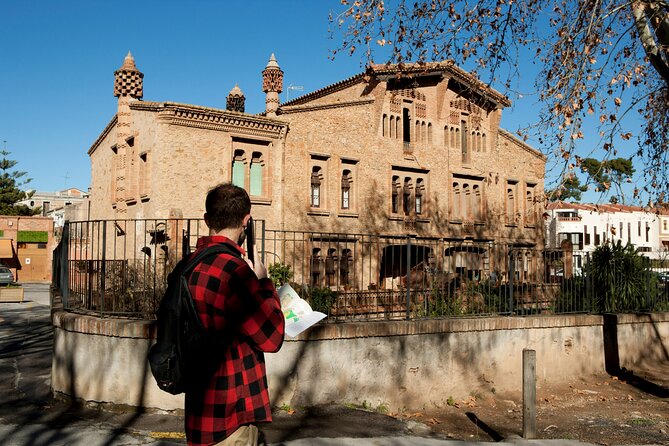
Look for the mix of Catalan folk design and modernist touches. Turrets add movement to otherwise practical buildings, while trencadís mosaic tiling brings color and irregular texture. The effect is less concentrated than in Gaudí’s best-known Barcelona buildings, but it rewards close attention.
I would not rush through the village simply to reach the Crypt. The worker homes and gardens help explain the scale of the project. They also make a useful counterpoint to the church, which is more experimental and visually dramatic.
One important stop is Ca L’Espinal, a notable building by Joan Rubió. Its presence reminds you that Colònia Güell was not the work of Gaudí alone. Eusebi Güell commissioned several modernist architects for the estate, creating a broader architectural setting around the Crypt.
The village walk is also the part most likely to feel ordinary if you are interested only in famous monuments. Some buildings are practical rather than spectacular, and the experience requires a bit of imagination. I would recommend it to anyone who likes architecture, urban planning, or social history. If you want only Gaudí’s most eye-catching forms, you may find the Crypt does most of the work for you.
Inside Gaudí’s Crypt
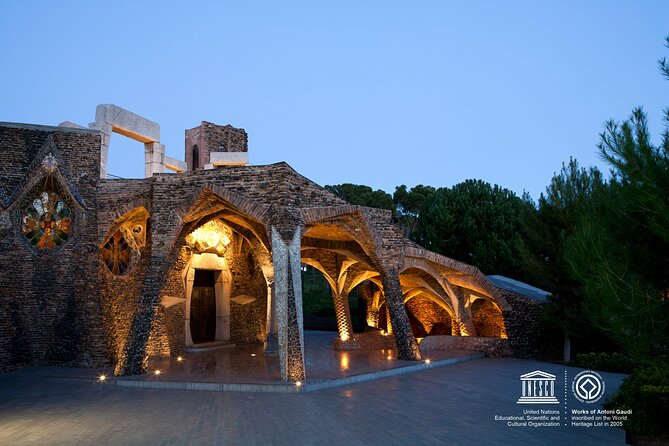
The Crypt is the clear highlight. It was declared a UNESCO World Heritage site in 2005, and its design shows Gaudí working with the slope of the site instead of forcing a conventional church plan onto it.
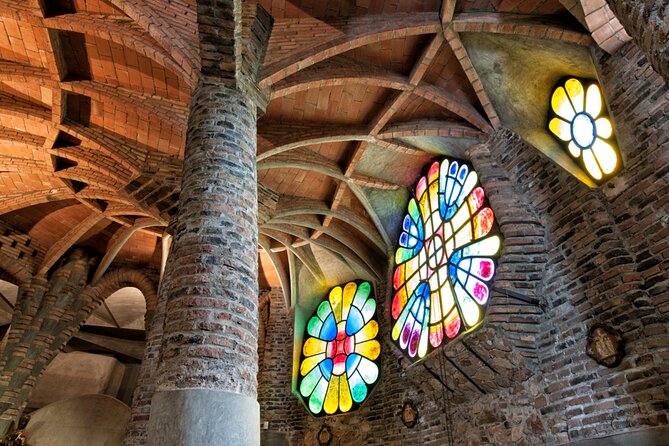
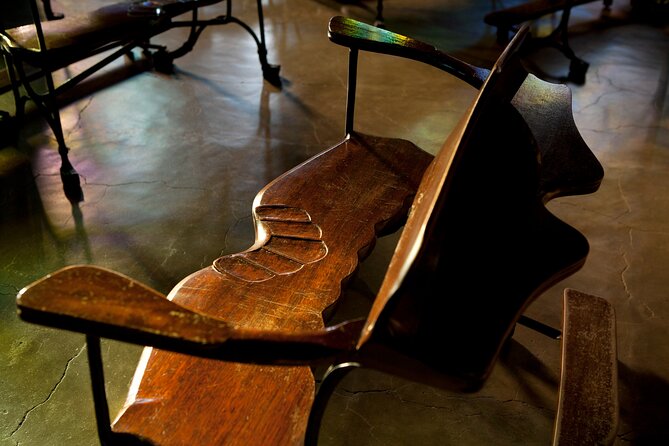
Inside, look at the spiraling columns, flowing arches, mosaics, and the two naves built at different levels. The lower position of the church and the shifting levels create a strong sense of movement. The structure feels tied to the hillside rather than placed on a flat platform.
The arches are especially important. Gaudí’s experiments here were practical as well as visual, and the Crypt offers a chance to see ideas in development. I like that the building does not feel polished into bland perfection. It has an experimental quality, with shapes and supports doing visible structural work.
The interior ambience is one of the strongest reasons to make the trip. Even without a live guide, the space gives you time to look upward, trace the columns, and compare the different levels. The audioguide helps explain how the project relates to the Sagrada Família, but the building itself carries much of the experience.
The church was never completed in the form originally intended, since Gaudí moved on to other major projects and did not return to finish it. That unfinished quality is part of its appeal, though it can also leave you wanting more if you expect a fully realized church complex.
From outside, take time to view the structure before entering. The exterior shows how the church fits the hillside, while the interior reveals the more striking arches and columns. Seeing both sides makes the design easier to read.
Another self-paced route in Barcelona:
- La Pedrera-Casa Mila Admission Ticket with Audioguide
★ 4.5 · 1,032 reviews - Gaudi´s Casa Vicens Skip the Line Ticket with Audioguide
★ 4.5 · 685 reviews - Erotic Museum Admission Ticket with Audioguide
★ 5.0 · 527 reviews - Barcelona: Mies van der Rohe Pavilion Ticket and Audio Guide
★ 4.6 · 380 reviews
How the audioguide changes the visit
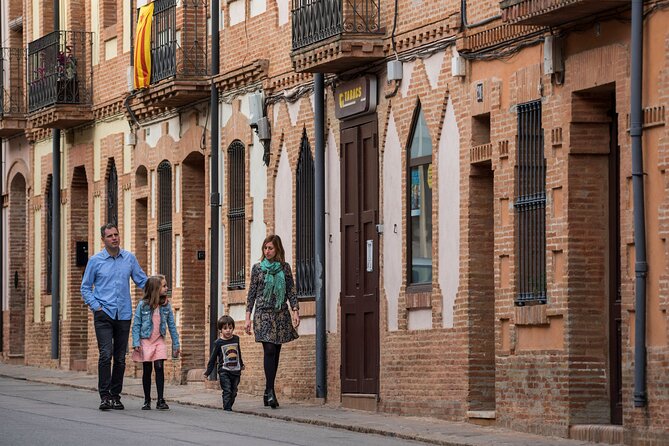
The audioguide keeps the tour low key and flexible. You are not tied to a group, and the audio route gives you information as you move through the village and Crypt.
I would use the map first, then begin the audio once you have a sense of direction. Colònia Güell includes several kinds of buildings, and it is easier to appreciate the route when you know where the village stops and the Crypt begins.
The audio tour lasts about two hours. That is enough time for a well-paced visit, but it is not a strict limit on your stay. After the audio concludes, you are free to spend more time in the area.
The main limitation is language. The experience is offered in English, and a children’s audioguide is not included. Families should keep that in mind, especially if younger children are likely to lose interest during the village portion.
Since no personal guide accompanies you, I would take the description of the audio format seriously. This is best for people who enjoy exploring independently. If you want a lively conversation, detailed questions answered on the spot, or a guide pointing out every small feature, choose a guided experience instead.
Price, timing, and practical value
At $12.07 per person, this is a reasonably priced way to see the Crypt and the surrounding estate. The ticket includes admission, the audioguide, the town map, and a keepsake guidebook. You are paying for access to more than one building, which improves the value.
The price is most attractive if you already plan to spend time in the area. It is less compelling if you see the journey as a long detour for a single short stop. The Crypt is memorable, but the village is what makes the ticket feel like a complete outing.
Allow roughly two hours for the audio route. I would also budget extra time for getting there and returning to Barcelona. The location is outside the city limits, and one practical correction is worth remembering: you need the Barcelona train, not the Barcelona metro.
Wear comfortable shoes. The visit involves walking through the estate and moving between outdoor and indoor sights. The practical information also recommends formal clothes, so dress neatly rather than treating this as a casual hike.
The attraction is near public transportation, and most people can participate. The ticket is mobile, and confirmation is provided at booking. Free cancellation is available if you cancel at least 24 hours before the scheduled start time. Inside that window, refunds are not provided, and changes are not accepted.
Who will enjoy Colònia Güell most
I would recommend this experience to you if you have already seen some of Gaudí’s work and want to understand his design process. The Crypt gives you an important link to the Sagrada Família, while the village shows how modernist architecture could serve everyday needs.
It also suits visitors who prefer independent sightseeing. You choose the pace, avoid a fixed group, and can linger at the buildings that interest you most.
Architecture students, design fans, and people interested in industrial communities should find plenty to examine. The exhibition on workers’ lives adds useful social context, and the mix of architects broadens the visit beyond Gaudí alone.
Families can attend, but the lack of a children’s audioguide is worth considering. Young children may enjoy the unusual columns and mosaics, though the village history and audio commentary may hold their attention less easily.
I would think twice if your Barcelona schedule is already packed. This is not a central city stop that you can fit between two nearby attractions. It asks for transport time and a willingness to explore at a slower pace.
Should you book this Crypt and village visit?
Book it if you want a quiet, affordable look at Gaudí’s working methods and are willing to travel beyond central Barcelona. The Crypt has the strongest visual appeal, but the worker village, school, factory buildings, gardens, and exhibition give the visit its meaning.
Skip it if you want a live guide, a central location, or a fast Gaudí highlight. For everyone else, the $12.07 price makes this a sensible addition to a Barcelona architecture itinerary, especially when you have about two hours plus transport time to spare.
FAQ
Where does the Colònia Güell and Gaudí’s Crypt visit take place?
It takes place at Colònia Güell, outside Barcelona city limits, beginning at the Colònia Güell information and visitor center.
How do I reach Colònia Güell from Barcelona?
You need to use the Barcelona train rather than the Barcelona metro. The attraction is near public transportation.
How long does the experience take?
The audioguide portion lasts approximately two hours. You may stay in the area longer after the audio tour ends.
Is this a guided group tour?
No. You collect the audioguide and explore Colònia Güell and the Crypt independently at your own pace.
What does the ticket include?
It includes admission to Colònia Güell and Gaudí’s Crypt, an audioguide, a map of the town, and a keepsake guidebook.
Is the audioguide available in English?
Yes. The experience is offered in English.
Is a children’s audioguide included?
No. A children’s audioguide is not included.
What can I see at Colònia Güell?
You can see terraced worker houses and gardens, the school, shops, the historic factory, co-operative and administrative buildings, and Ca L’Espinal.
Can I cancel for a refund?
Yes, if you cancel at least 24 hours before the experience start time. Cancellations or changes made less than 24 hours in advance are not accepted and are not refunded.
Latest audio tours in Barcelona
- Self-Guided Audio Tour-The Surrealist Barcelona of Dalí and Gaudí★ 3.5 · 8 reviews
- Self-Guided Audio Tour – Legends of the Gothic Quarter★ 4.5 · 6 reviews
- Barcelona Self-Guided Audio Tour★ 3.0 · 6 reviews
- Montjuïc Cable Car Entry Voucher with Audio Tour on Your Phone★ 3.5 · 37 reviews
- Montjuic Park Walking Tour with Audioguide on Your Smartphone★ 3.0 · 4 reviews
- Self-Guided Audio Tour of Barcelona City★ 3.0 · 2 reviews
- Gaudi and La Sagrada Familia Exterior Self-Guided Audio Tour★ 3.5 · 25 reviews
- Sagrada Familia External Audio Tour – The 3 Iconic Facades★ 5.0 · 3 reviews
Barcelona Audio Tours, compared.
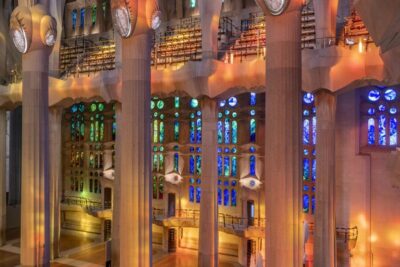
Sagrada Familia Entry Ticket with Audio Guide
Read our review →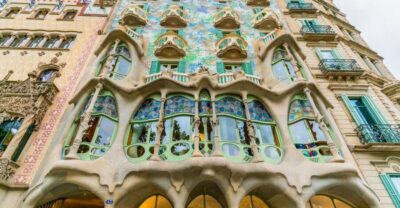
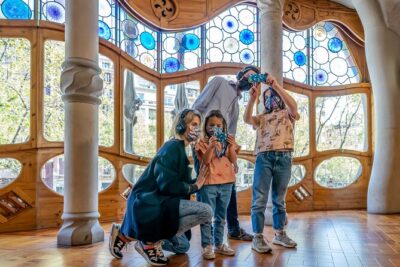
Casa Batllo Admission Ticket with Intelligent Audio Guide
Read our review →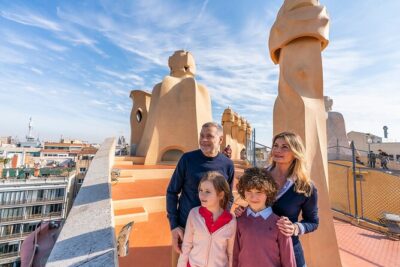
La Pedrera-Casa Mila Admission Ticket with Audioguide
Read our review →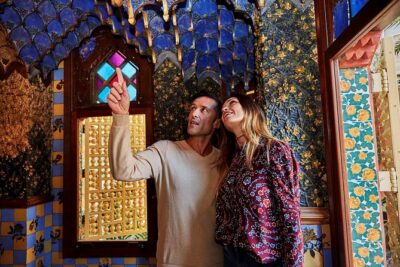
Gaudi´s Casa Vicens Skip the Line Ticket with Audioguide
Read our review →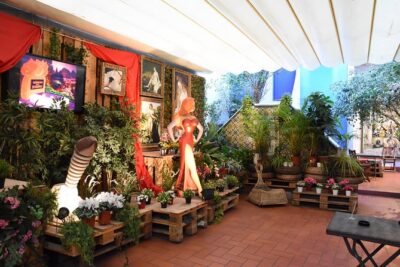
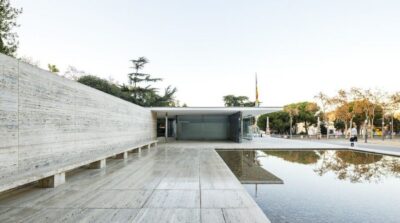
Mies van der Rohe Pavilion Ticket and Audio Guide
Read our review →
Browse the lists this tour appears in