

Reviewed · USA
Civil War Battlefields Self-Guided Audio Driving Tour Bundle
Gettysburg’s Pickett’s Charge, Antietam’s Bloody Lane, Vicksburg’s siege works, Shiloh’s desperate last line, and Yorktown’s surrender all come together in one unusual road trip. You are not simply driving between monuments. The audio places you at the point where decisions were made, soldiers were ordered forward, and ordinary farms became hospitals.
I like the freedom to start, stop, and spread the tour over several days. I also like the price: $39.99 covers everyone in a car of up to four, making it far cheaper than a private guide. The main drawback is that this depends on your phone and correct GPS positioning. One user had an app failure and ended up guiding themselves, so download everything on strong Wi-Fi and begin at the exact starting point.
Key points to know before you go
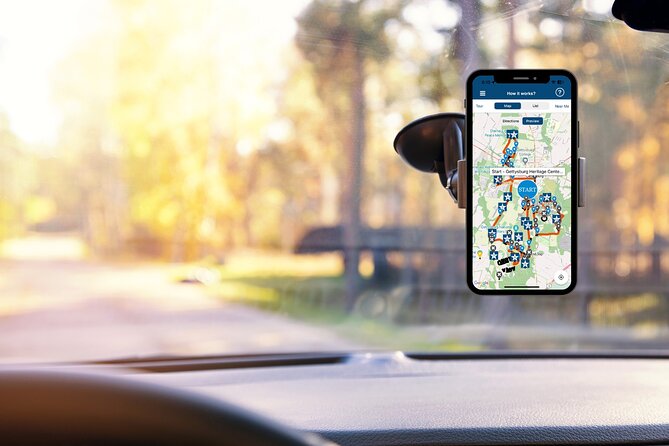
- Five major battlefields: Gettysburg, Antietam, Vicksburg, Shiloh, and Yorktown are covered in one bundle.
- More than 130 audio stories: Gettysburg has 60 or more, with shorter programs at the other sites.
- About one to two hours per battlefield: Add time for walking, photographs, visitor centers, and optional detours.
- $39.99 per car: Up to four people can listen together, and admission is not included at every site.
- Offline operation: Download the tours before arriving, then connect your phone to the car stereo.
- Lifetime access: You can pause the bundle, return on another trip, and use it again without an expiry date.
Five battlefields, one flexible driving plan
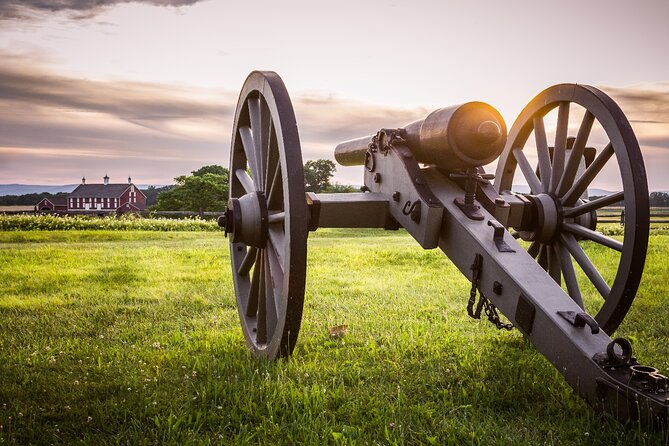
This bundle works best as a loose five-day plan rather than a rushed single trip. Each battlefield has its own route, starting point, and audio program. You can complete one site per day, pause for meals or walks, and return to a section later if the history catches your interest.
The driving portions range from about six miles at Shiloh to more than 19 miles at Gettysburg. The programs are designed to take roughly one to two hours each, but that is only the audio route. You need extra time for parking, monuments, towers, cemeteries, visitor centers, and side trips.
The narrator plays automatically as you approach each point. That hands-free setup is useful because you can keep your attention on the road, though you should follow the posted speed limits and never handle the phone while driving. Bluetooth, USB, or AUX connections let you send the sound through the car.
More Self-Guided Audio Tours in the USA
- Gettysburg Battlefield Self-Guided Driving Audio Tour
★ 4.5 · 910 reviews - Joshua Tree National Park Self-Guided Driving Audio Tour
★ 4.5 · 762 reviews - Ultimate Acadia National Park Self-Guided Driving Audio Tour
★ 4.0 · 521 reviews
Gettysburg: three days of battle in one drive
Gettysburg is the largest and most detailed part of the bundle. The route follows the official auto tour and includes more than 60 stories over roughly 19 miles. If you have only one battlefield day available, this is the section that needs the most time.
Begin at either the Gettysburg Heritage Center or the National Park Visitor Center. The Heritage Center adds a museum visit, though admission is not included. Starting at one of the designated points matters because the app uses your position to trigger the first story.
The opening stops follow the first day of battle. At McPherson’s Ridge, the narration explains how Union and Confederate forces met and how commanders placed their regiments. The Railroad Cut then shifts attention to battlefield tactics and the skirmish that took place there.
The Eternal Light Peace Memorial offers a quieter moment. Its Maine granite base and Alabama limestone pillar symbolize the reunification of the country. At Oak Ridge, you can use the observation tower for a broad view of the fields while the audio returns to the afternoon fighting.
Small human details keep the route from becoming a list of dates and generals. At the 11th Pennsylvania Infantry Monument, you learn about Battlefield Sallie, the regiment’s dog mascot, along with the role of drummers and military music. These details help you picture the army as a collection of young men, animals, songs, and routines rather than a set of arrows on a map.
The route then moves toward the second and third days of battle. The North Carolina and Virginia monuments introduce the states that sent men into the fight. Gettysburg Auto Tour Stop 5 sets up the second day, while the Longstreet and Warfield observation areas give you a sense of the positions held by both armies.
An optional detour leads to the Eisenhower National Historic Site, the former retreat of President Eisenhower. It overlooks the battlefield and is a good choice if you want to connect the Civil War site with later American history.
Little Round Top is an important limitation at present. Construction work has made it inaccessible, but the audio still provides the story and images of the hill, including its strategic importance and the soldiers who fought there. You should not expect to walk onto the site during this tour.
The route continues through Devil’s Den, the Wheatfield, the Peach Orchard, and the Trostle Farm. At the Trostle home, the family fled so quickly that dinner remained on the table. At the George Weikert Farm, the family returned to find their property used as a battlefield hospital. These stops show the battle’s cost to local civilians.
The Pennsylvania Memorial honors nearly 35,000 Pennsylvanian soldiers. Spangler’s Spring and Culp’s Hill then carry the story into the night fighting. At East Cemetery Hill, you hear how close the Union came to losing during a Confederate nighttime attack.
The final stage brings you to Pickett’s Charge and the high-water mark of the Confederacy. The route ends at the National Cemetery, where Lincoln delivered the Gettysburg Address. This is a fitting finish, but allow time to stop, walk, and think. Five minutes of audio cannot replace a proper visit to the cemetery.
Antietam: a compact route with a heavy story
Antietam National Battlefield covers about nine miles and includes more than 38 audio stories. Admission is not included, and the stated fee is $20 per booking.
The route begins with the Mansfield Monument and moves through the West Woods, Mumma Farm, and the Irish Brigade Monument. You hear how Major General Joseph Mansfield was mortally wounded while trying to understand the fighting, then follow the Union advance into woods where Confederate artillery turned a planned attack into a desperate struggle.
At Mumma Farm, the Confederates burned the property as they withdrew so Union forces could not use it for cover. The Irish Brigade Monument recalls the Irish American soldiers who fought at the Bloody Lane, one of the most emotionally powerful parts of the route.
Piper Farm introduces the Confederate command post. Burnside Bridge then shows the brutal imbalance of the attack, with 13,000 Union soldiers trying to take a crossing defended by about 500 Confederates. The McKinley Monument adds a small personal story about the future president’s conduct after the fighting.
Several optional detours let you widen the visit. You can see the Hawkins’ Zouaves Monument, Tolson’s Chapel and School, the Piper House, Mount Calvary Cemetery, and Antietam National Cemetery. Since many of these stops require extra driving or walking, you can choose them based on your time and interest.
The Antietam program is shorter than Gettysburg, but its subject is no lighter. I would plan at least half a day if you want to use the optional stops instead of simply following the audio route.
Vicksburg: siege warfare and a river strategy
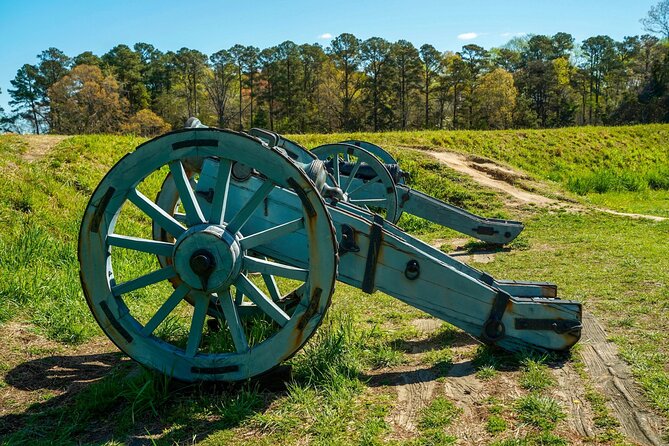
Vicksburg National Military Park covers more than 15 miles and includes over 44 stories. The stated admission fee is $20 per booking. The route is especially useful for understanding that the Civil War was fought on rivers and supply lines, not just on open fields.
The Memorial Arch recalls a 1917 reunion where former soldiers from both armies sat together in peace. The Minnesota, Michigan, Illinois, Wisconsin, and West Virginia monuments then introduce the men who fought here and the states they represented.
At Logan’s Approach, the audio explains the Union attempt to move toward a Confederate position by digging a trench and placing 2,200 pounds of gunpowder in a mine. The story brings siege engineering into clear focus. At the Wisconsin Memorial, look for Old Abe, the real war eagle carried by the 8th Wisconsin Infantry. The bird reportedly accompanied the regiment through 42 battles before receiving an honorable discharge.
The African American Monument is essential. It honors Black soldiers who fought for the Union and their freedom, while also explaining the unequal treatment they faced in segregated units, pay, and equipment. This gives the tour a needed human and social dimension beyond troop movements.
Grant’s Memorial and the U.S. Navy Monument explain how the campaign worked. Grant’s army receives much of the attention, but the Navy carried troops down the Mississippi, passed Confederate defenses, and helped move the army across the river.
The route ends at the Vicksburg National Cemetery, where about 17,000 Union soldiers are buried. Fort Hill provides a view toward the river and explains why the position was so secure. The Missouri, Mississippi, Alabama, and Kentucky memorials close the loop with stories of divided loyalties and state identity.
More Driving Audio Tours in the USA
- Ultimate Lake Tahoe Self-Guided Driving Audio Tour
★ 4.5 · 435 reviews - Scenic Newport, RI Self-Guided Driving Audio Tour
★ 4.5 · 325 reviews - Arches National Park Self-Guided Driving Audio Tour
★ 4.5 · 288 reviews - Yellowstone National Park Self-Guided Driving Audio Tour
★ 4.5 · 249 reviews
Shiloh: a shorter route with intense battlefield moments
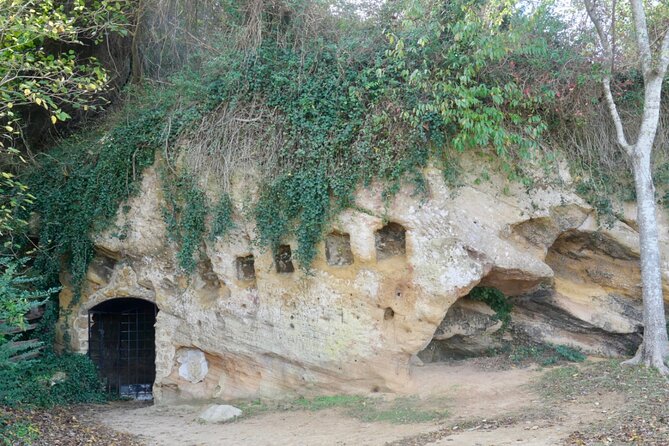
Shiloh is the smallest route, at about six miles with more than 34 stories. Start at the Shiloh Battlefield Visitor Center. The short driving distance makes this the easiest site to combine with a museum visit and several walks.
The Iowa State Monument introduces the memorial style found throughout these parks. At Grant’s Last Line, the audio brings you to the point where about 20,000 Union troops gathered at dusk in a desperate effort to stop the Confederate advance. Heavy guns had to be dragged into place, and the position represented a last chance rather than a carefully planned victory.
The Michigan State Memorial recalls the 353 Michigan soldiers killed, wounded, or missing at Shiloh. At the Daughters of the Confederacy Monument, you hear about General Albert Sidney Johnston, the Confederate commander who led the attack.
Shiloh Church and Cemetery are the final listed stops. You can see a modern church and a replica of the original one-room log church. The audio places General Sherman and his men near the cabin, linking the simple structure with the larger battle around it.
Because the route is compact, Shiloh is a good place to slow down. The audio takes about one to two hours, but you will get more from it if you stop at the monuments and allow time for the visitor center.
Yorktown: an unexpected Revolutionary War finish
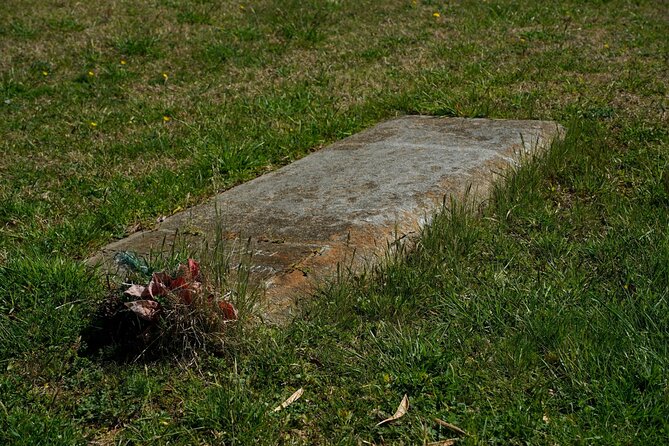
Yorktown is not a Civil War battlefield. It covers the final phase of the American Revolution and makes the bundle broader than its title suggests. The route is about ten miles with more than 20 stories, beginning at the Yorktown Battlefield Visitor Center.
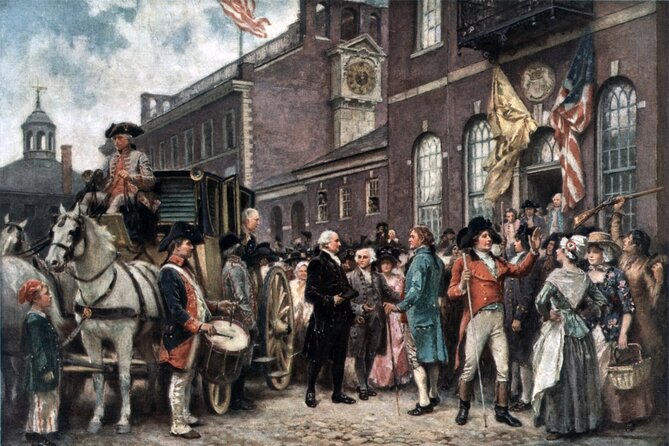
At the Moore House, you hear about the surrender discussions between representatives of Cornwallis and Washington. Washington’s Headquarters then connects the site with the planning of the final battle.
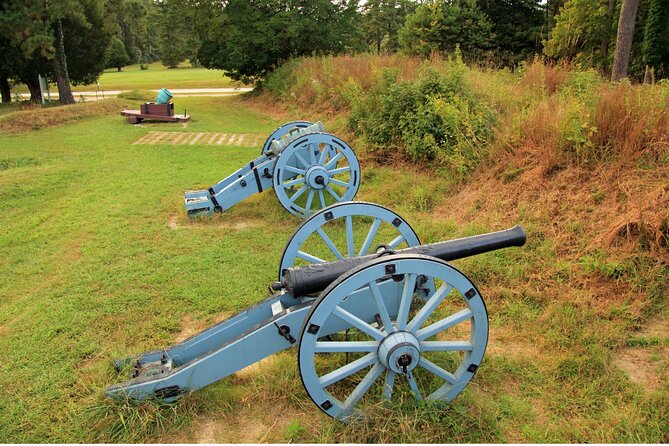
The French contribution receives its own section at French Artillery Park and Grand French Battery. These stops help explain the combined American and French effort rather than presenting Yorktown as an American victory achieved alone.
Yorktown National Cemetery is a surprising stop because it is a Civil War burial ground, not a Revolutionary War cemetery. The final stop is the Yorktown Victory Monument, a natural ending for the Revolutionary War portion.
If your main goal is Civil War history, Yorktown may feel out of place. If you appreciate a broader military history trip, it adds variety and shows how the same historic region carries several layers of American memory.
What $39.99 really buys you
At $39.99 per group of up to four, the price is strongest when four people share one car. That works out to about $10 per person for the entire bundle, before park admission. Even for two people, it remains inexpensive compared with a private guide.
You still need to budget for the $20 admission charge listed for Antietam and the $20 charge for Vicksburg. Gettysburg and Shiloh list free route access, while some museums and historic sites may charge separately. The exact cost depends on which optional stops you enter.
The real value is the lifetime access. You can use the bundle across several trips, pause it during a long road journey, or revisit a battlefield later without buying another tour. That makes the purchase more useful for people who live nearby or plan repeat visits.
The app matters more than the price
Download the separate Action Tour Guide app before leaving strong Wi-Fi or cellular service. After booking, you receive setup instructions and a password by email and text. Search your messages for audio tour if you do not see them quickly.
Start at the correct point. If you begin somewhere else, the GPS narration may become confused. Launch the version that matches your starting point and direction, then let the app trigger stories as you drive.
The app works offline after the tour is downloaded. It is recommended for iPhone with iOS 15 or later, Android version 9 or later, or an iPad or tablet with GPS and cellular service. Apple CarPlay works for audio playback, while Android Auto support is still forthcoming.
Support is generally available from 5 AM to 5 PM Eastern Time. The app has had at least one serious failure, so I would also keep a basic map or park brochure in the car. That small precaution protects the day if your phone refuses to cooperate.
Who should book this bundle
I would choose this for a family or small group that wants privacy, flexibility, and control over the pace. It suits history fans who prefer a clear narrative while driving, and it works well for people who dislike fixed departure times.
It is less suitable if you want a live historian who can answer questions, adjust the route in real time, or lead long walks. It also demands a driver who can manage navigation safely and a phone that meets the app requirements.
The route is private, but not guided in person. You drive yourself, choose your stops, and decide how much time to spend at each monument.
Should you book it?
Book it if you want an affordable audio framework for several historic sites and are comfortable managing your own car, phone, and schedule. Gettysburg and Vicksburg offer the fullest programs, while Antietam and Shiloh reward extra time on foot.
Skip it if you expect a human guide or if you cannot download and operate a GPS-based app. For most self-directed road trippers, the lifetime access and per-car pricing make this a sensible buy, provided you begin at the correct location and carry a backup plan for technical trouble.
FAQ
How long does the full bundle take?
The bundle is designed for about five days, with one battlefield program per day. Each individual route takes about one to two hours of audio time, not including museums, walking, photographs, meals, or optional detours.
How much does the tour cost?
The price is $39.99 per group of up to four people. It is priced per car rather than per person.
Are park admission fees included?
No. The listed admission fee is $20 per booking for Antietam National Battlefield and $20 per booking for Vicksburg National Military Park. Some museums and historic sites may also have separate admission charges.
Which languages are available?
The tour is offered in English.
Does the tour expire?
No. The bundle provides lifetime access with no expiry date. You can use it on different trips and revisit the routes.
Do I need cellular service while touring?
You need strong Wi-Fi or cellular service to download the tour. After downloading, the audio and maps work offline.
Where does the tour begin?
Gettysburg begins at either the Gettysburg Heritage Center or the National Park Visitor Center. Antietam begins at Antietam National Battlefield, Shiloh at the Shiloh Battlefield Visitor Center, and Yorktown at the Yorktown Battlefield Visitor Center. Vicksburg begins within Vicksburg National Military Park.
Can I cancel for a full refund?
Yes, if you cancel at least 24 hours before the experience start time. Cancellations made within 24 hours are not refunded, and changes within that period are not accepted.
Latest audio tours in the USA
- Sequoia National Park Self-Guided Audio Tour★ 4.5 · 9 reviews
- Sequoia and Kings Canyon Audio Tour Self Guide National Park Tour★ 5.0 · 3 reviews
- Kings Canyon National Park Self-Guided Audio Tour★ 4.0 · 4 reviews
- Sedona, Arizona Self-Guided Audio Tour★ 4.0 · 36 reviews
- Sedona & Red Rock State Park Self-Guided Driving Audio Tour★ 3.0 · 30 reviews
- Uncover Seattle: Self-Guided Audio Tour★ 3.5 · 7 reviews
- Haunted Savannah Self-Guided Walking Audio Tour★ 4.5 · 3 reviews
- Downtown Seattle Self-Guided Walking Audio Tour★ 4.5 · 6 reviews
Driving Audio Tours, compared.



Ultimate Acadia National Park Self-Guided Driving Audio Tour
Read our review →



Browse the lists this tour appears in