
Reviewed · USA
Bryce Canyon National Park Self-Guided Driving Audio Tour
Bryce Canyon’s hoodoos are so strange that a little explanation makes a big difference. This self-guided drive connects the famous overlooks with stories about geology, Paiute traditions, Mormon settlers, wildlife, and the slow work of ice and water. You listen in your own car, with no group and no fixed schedule.
I like the low price of $16.99 per car, especially for a family or group of four. I also like the year-round, now lifetime access, which lets you split the route over several visits instead of racing through it in one afternoon. The main drawback is the app: you must download it and the tour before entering the park, and some users have had trouble with setup, GPS tracking, pausing, or stopping playback.
Key points
- A 60-mile route with more than 30 audio stories covers Bryce Canyon’s main overlooks and the long drive to Rainbow Point.
- GPS-triggered narration lets you keep your eyes on the road instead of handling the phone at every stop.
- Geology gets center stage, from Claron limestone and hoodoos to glaciers and the Grand Staircase.
- The tour works offline, but only after you download it in strong Wi-Fi or cellular service.
- One purchase covers the whole car, making it far cheaper than a private guide for most groups.
- The route ends at Rainbow Point, while the final Red Canyon story helps frame the park as you leave.
A useful audio companion for Bryce’s strange rock towers
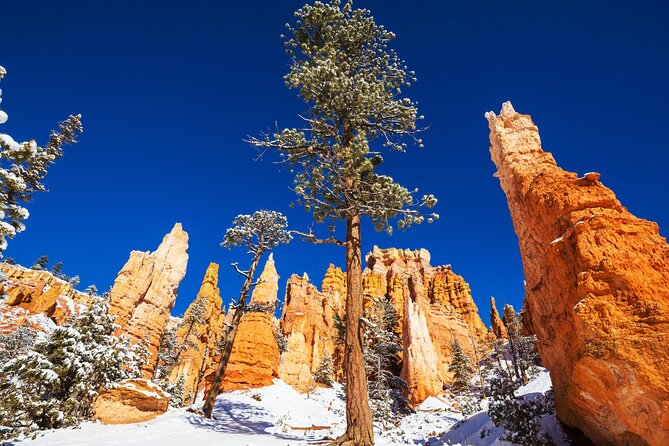
Bryce Canyon is not really a canyon in the usual sense. It is a series of giant, horseshoe-shaped amphitheaters cut into the eastern edge of the Paunsaugunt Plateau. The orange, pink, and white formations are made from the Claron Formation, a soft limestone shaped into fins, windows, slot canyons, and hoodoos.
That distinction matters because the scenery can look almost unreal from the first overlook. The audio guide gives you a way to connect the colors and shapes with the forces that made them. It also gives the drive a steady rhythm, with short stories tied to specific points along the road.
The route takes about one to two hours if you simply drive between the stops. You will need more time if you walk at the viewpoints, take photographs, wait for parking, or stop for food. The stated route runs more than 60 miles and includes over 30 audio stories, so do not treat the one to two hour estimate as a full park visit.
This is a private experience. No guide meets you at the Visitor Center, and no other group joins your car. You follow the route with your own vehicle, starting near Bryce Canyon Visitor Center and finishing at Rainbow Point.
More Self-Guided Audio Tours in the USA
- Gettysburg Battlefield Self-Guided Driving Audio Tour
★ 4.5 · 910 reviews - Joshua Tree National Park Self-Guided Driving Audio Tour
★ 4.5 · 762 reviews - Ultimate Acadia National Park Self-Guided Driving Audio Tour
★ 4.0 · 521 reviews
Getting the Action Tour Guide app ready before the park

The most important practical advice is simple: set up the tour before you reach Bryce Canyon. After booking, you receive instructions and a password by email and text. Search for audio tour if the message is hard to find.
You then download the separate Action Tour Guide app, enter the password, and download the tour while you still have strong Wi-Fi or cellular service. Bryce Canyon can have weak or unreliable reception, so waiting until you are inside the park is asking for trouble.
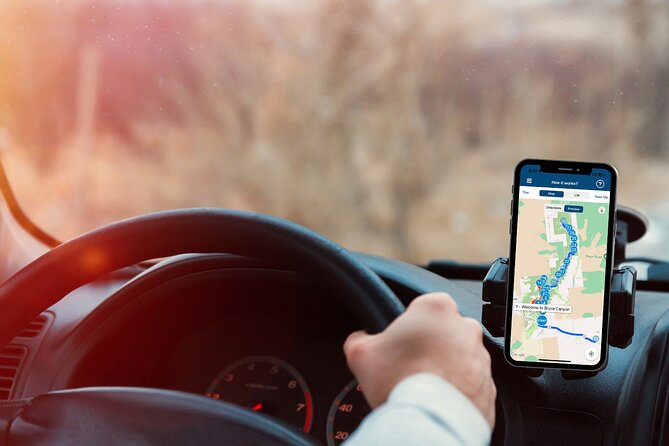
Once you reach the starting point, open the app and select the version that matches your starting point and direction. Enter the first story point, and the audio should begin automatically. The following stories play as you move along the route.
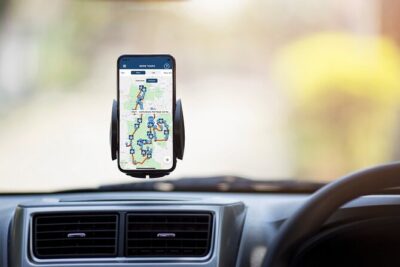
The GPS system is designed to keep the experience hands-free. Connect your phone to the car stereo by Bluetooth, USB, or AUX. Apple CarPlay is supported for audio playback, while Android Auto support is still listed as forthcoming. The recommended devices are an iPhone running iOS 15 or later, an Android phone running version 9 or later, or an iPad or tablet with GPS and cellular capability.
The app is not perfect. A few problems have been reported with the first launch, unclear directions from the booking platform, restarting after a stop, and the GPS sending the car in a large loop. If the audio keeps running after you finish, close the app from your recent applications. If something goes wrong, contact the provider’s support team rather than asking at the park Visitor Center, since National Park Service staff do not manage this private app.
Visitor Center and the first look at Bryce Canyon
The route begins just before the Bryce Canyon Visitor Center in Bryce Canyon City. This opening section introduces the name Bryce Canyon, the Paiute people who lived here, and the basic shape of the park.
The timing works well if you are new to Bryce. You get a short introduction before reaching the main overlooks, rather than being dropped into a string of scenic stops with no context. You can also use this opening drive to decide how much walking you want to add.
The park entry fee is not included. You need a separate park pass or admission payment, and that cost should be added to the tour price when planning your budget.
Fairyland Point, a strong opening detour
Fairyland Point is the first major detour. The overlook gives you a broad preview of the hoodoos, cliffs, and amphitheater formations that define Bryce Canyon.
This is a good early stop because it shows the scale of the area before you focus on individual formations. The audio keeps the stop short, about five minutes in the listed schedule, but you can pause it and stay longer for pictures.
One caution: the route is built around driving, not long walks. If Fairyland Point inspires you to hike, you will need to manage the app yourself and allow extra time. The guide can point you toward what you are seeing, but it is not a hiking escort.
More Driving Audio Tours in the USA
- Ultimate Lake Tahoe Self-Guided Driving Audio Tour
★ 4.5 · 435 reviews - Scenic Newport, RI Self-Guided Driving Audio Tour
★ 4.5 · 325 reviews - Arches National Park Self-Guided Driving Audio Tour
★ 4.5 · 288 reviews - Yellowstone National Park Self-Guided Driving Audio Tour
★ 4.5 · 249 reviews
Sunrise Point and the Bryce Amphitheater
Sunrise Point is one of the park’s most famous viewpoints. From here, the rock formations spread below you, with trails leading into the amphitheater. The short audio segment explains what makes this area special without trying to turn the stop into a long lecture.
Next comes the Bryce Amphitheater, where the canyon curves in a giant semicircle below the rim. This is the central showpiece of the route, and the audio helps you read the formations rather than seeing them only as a wall of orange rock.
If you plan to walk the rim or descend into the amphitheater, this is where the one to two hour estimate begins to stretch. The tour gives you freedom to pause, but you need to watch the app after returning to the car so a story does not restart or jump ahead.
Sunset Point and the science behind hoodoos
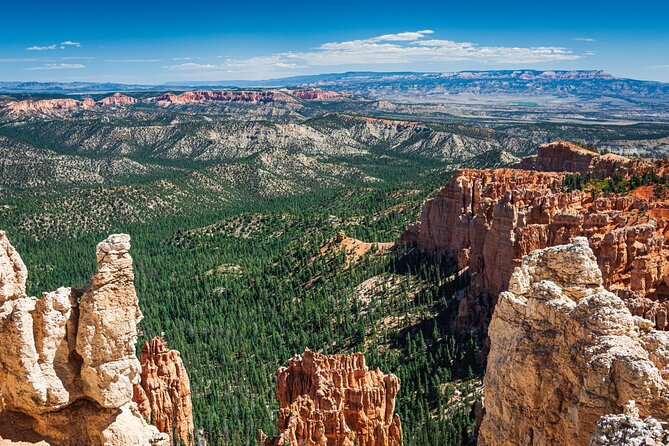
Sunset Point looks across the same broad amphitheater from another angle. Here, the narration focuses on hoodoos and the long process that shaped them.
The useful part is the scale. Ice, water, and erosion work slowly, but the result is dramatic: narrow spires, windows, fins, and walls that appear stacked one behind another. The explanation gives names to the forces at work without requiring a geology lesson before your trip.
Sunset Point is also a sensible place to compare the views with Sunrise Point. The tour treats them as separate stops, and they do offer different angles. You should not assume that one makes the other unnecessary.
Inspiration Point and Bryce Point
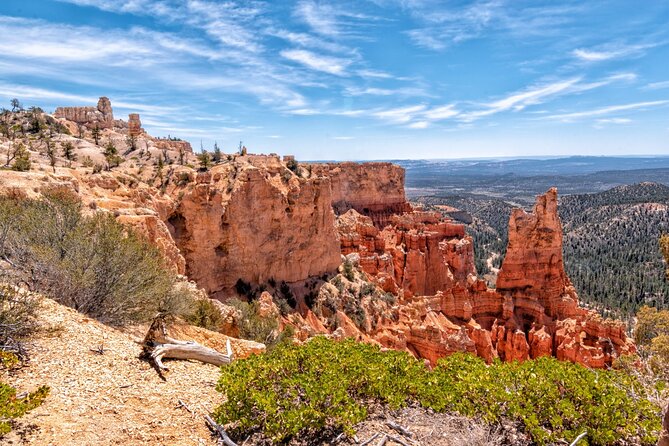
At Inspiration Point, the route turns toward Paiute traditions and stories about the origin of the hoodoos. This adds a cultural layer to the geology. The land is not only a set of rock formations, and the Paiute explanation gives you a different way to think about the shapes below.
Bryce Point offers one of the fullest views of the main amphitheater. The audio also covers Mormon settlers, who followed the Paiute and tried to make a living in a difficult climate.
Bryce Point is especially useful around sunrise, when the first light catches the tops of the hoodoos and moves across the amphitheater. The tour does not make sunrise mandatory, but the stop’s location gives you a reason to plan around early light if your schedule allows.
Paria View and the end of the ice age
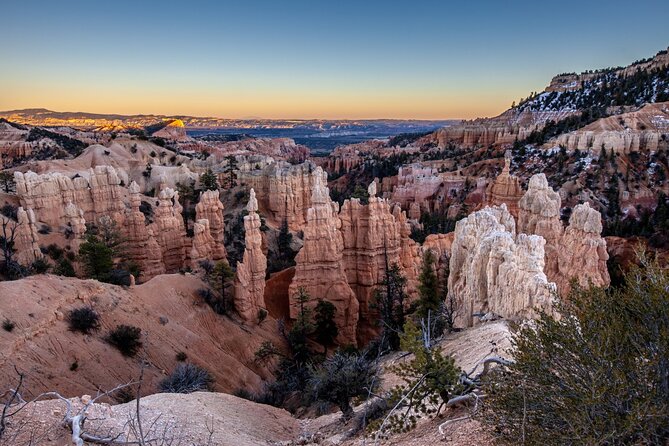
Paria View shifts attention from human stories to the last ice age. The audio describes how warming around 12,000 years ago melted enormous glaciers and sent large amounts of water down through the canyon system.
This is a useful connection because Bryce’s formations can look fixed and permanent. The story reminds you that the park is still being shaped, even if the change is too slow to watch during a visit.
The stop is brief, so you can treat it as a scenic pause rather than a major hike. If you are driving the route late in the day, keep an eye on road and park conditions. Some sections may be closed during seasonal or temporary changes, and the audio cannot rewrite itself when the road situation changes.
Swamp Canyon and a less crowded stretch of the drive
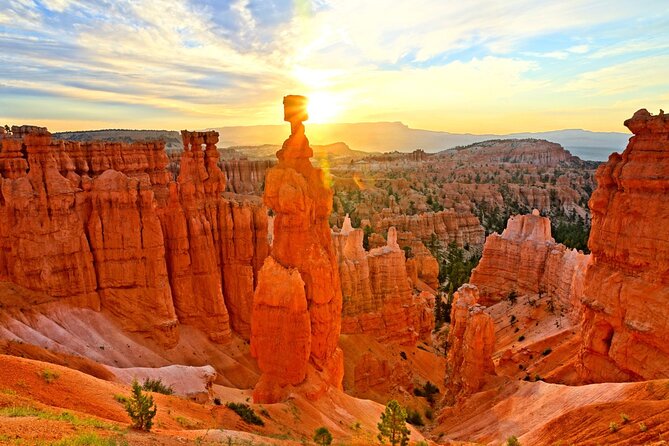
Swamp Canyon Overlook takes you into a quieter section of the park. The story here turns to Butch Cassidy, Sundance, and the difference between legend and fact.
This section gives the drive some variety. The main amphitheater delivers the biggest views, but the less-trafficked road helps you see that Bryce is more than its most photographed rim. The Butch Cassidy material also provides a change of subject after several geology-focused stops.
Do not expect every stop to feel equally dramatic. Swamp Canyon is valuable as part of the longer route, especially if you want a fuller view of the park, but people with only a short window may prefer to focus on the central amphitheater and Rainbow Point.
Farview Point and Natural Bridge
Farview Point earns its name through broad views, but the audio adds another subject: clean air and bristlecone pines. These trees are among the oldest on Earth, and their presence helps explain why the high country feels so open and clear.
Natural Bridge follows with an unusual arch and rock formation. After a series of hoodoos, the change in shape is welcome. You get another example of erosion at work, this time in a form that looks more like a bridge than a tower.
The scheduled audio time at both stops is short. You can listen from the car or step out for a look, but do not rush if photography matters to you. The app is meant to move with your day, not dictate every second.
Agua Canyon and Ponderosa Point
At Agua Canyon, two hoodoos called The Hunter and The Rabbit draw attention. The names are part of the park’s human habit of finding familiar forms in odd natural shapes, even though the formations do not literally resemble a hunter and rabbit very clearly.
The narration then turns to wildlife, including rabbits and deer, and the ways animals cope with hot summers and bitter winters. This is one of the better sections for families because it links the scenery to living things rather than focusing only on stone.
Ponderosa Point takes you toward the deeper reaches of Bryce Canyon. Junipers spread across the views, and the route feels farther removed from the busy central viewpoints. If you have already seen the main amphitheater, this stretch helps make the park feel larger and more varied.
Black Birch Canyon, Rainbow Point, and Yovimpa
Black Birch Canyon introduces Bryce’s night sky and amateur astronomy. The park is known for strong stargazing conditions, and the subject makes sense here, where the road moves away from the busiest central stops.
Rainbow Point and Yovimpa mark the far end of the drive. From these overlooks, you can see hoodoos, the basin, and high cliffs, along with the upper step of the Grand Staircase. This enormous geological structure descends south toward the Grand Canyon in Arizona.
The final section is a good reason not to stop the tour after the central amphitheater. The last 10 miles to Rainbow Point can feel long, especially if you are eager to leave, but the audio gives the drive a purpose and keeps the scenery connected.
The route information lists Rainbow Point as the end point. Plan your fuel, food, and return route with that in mind, since the tour is not a circular shuttle and does not bring you back to the Visitor Center.
Red Canyon gives the drive a fitting finish
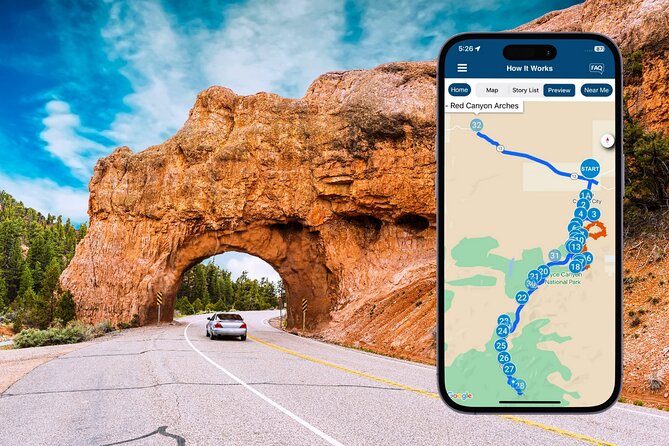
The Red Canyon story describes two arches beside the road. They look natural, but workers tunneled through solid rock in 1914 to create space for the road.
That detail is a neat closing note. It shows how people have adapted roads to the red-rock country, and it gives you a final point of comparison after seeing naturally formed arches, bridges, fins, and hoodoos inside the park.
The route’s starting and ending information can feel slightly confusing because Red Canyon is presented as a final story while Rainbow Point is listed as the end point. Follow the app’s directions and check the route before leaving. If the GPS behaves oddly, stop safely and reset it rather than trying to troubleshoot while driving.
Is $16.99 good value for your group?
At $16.99 per group of up to four, the price is easy to justify for a family or small group. A couple pays less than the cost of many live sightseeing options, and four people can share one purchase instead of buying four individual tickets.
The value comes from flexibility. You can pause for lunch, stop for photographs, skip a story, or divide the route over multiple days. The access is now described as lifetime, with no expiry, so you can use it on a later trip as well.
That flexibility also makes the tour useful as a first-day orientation. You can drive the route in the afternoon, learn what each viewpoint offers, and choose hikes for the next day. It is not a replacement for time on the trails, but it can help you spend that time more wisely.
The free National Park Service app is a fair alternative to consider. It may be enough if you want basic park information at no cost. This paid tour makes more sense if you prefer a narrated drive, location-based playback, a suggested route, and stories that continue as you travel.
Who should book this Bryce Canyon audio tour?
I would choose this for:
- Families who want a simple way to keep children interested during the longer drives.
- Couples and small groups who prefer their own car to a fixed group tour.
- First-time visitors who want help understanding the geology and choosing viewpoints.
- People who want to visit at their own pace and return to the audio later.
- Drivers who are comfortable downloading an app and connecting a phone to the car stereo.
I would think twice if you want a live guide who can answer questions, change the route instantly, or adapt the commentary to your interests. I would also be cautious if you are not comfortable with phone setup, since the app is essential and the park’s weak signal can make last-minute fixes difficult.
Final verdict: a good-value route with one important condition
Book it if you want a private, inexpensive introduction to Bryce Canyon and you are willing to prepare the app before arriving. The geology stories, Paiute traditions, settler history, wildlife notes, and astronomy material give the drive more substance than a simple list of viewpoints.
Do not book it expecting a live guide or a flawless substitute for park planning. Download everything at home, check current road conditions, bring your park pass, and allow extra time for walks and photographs. With that preparation, $16.99 buys a useful audio companion for the whole car, and the lifetime access gives you room to use it again.
FAQ
How long does the Bryce Canyon audio tour take?
The driving portion takes about one to two hours, but the route is more than 60 miles and includes over 30 audio stories. Plan additional time if you stop for photos, walk at overlooks, take breaks, or explore trails.
Where does the tour start and end?
It starts near the Bryce Canyon Visitor Center in Bryce Canyon City and ends at Rainbow Point, Utah. Red Canyon is included as a final story along the route.
Is the park entrance fee included?
No. You must pay the separate Bryce Canyon National Park entry fee or use an applicable park pass.
Do I need cell service during the tour?
You need strong Wi-Fi or cellular service to download the app and tour before arrival. After downloading, the tour works offline.
How does the audio begin?
Go to the starting point, open the Action Tour Guide app, and enter the first story point. GPS-triggered audio should begin automatically, with later stories playing as you reach the next locations.
Can I cancel for a refund?
You can cancel at least 24 hours before the local start time for a full refund. Cancellations or changes made within 24 hours are not refunded.
More National Park Audio Tours in the USA
- Self-Guided GPS Audio E-Bike Tour Hawaii Volcanoes National Park
★ 4.5 · 131 reviews - Shenandoah National Park Self-Guided Driving Audio Tour
★ 4.5 · 109 reviews - Self-Guided Audio Driving Tour in Glacier National Park
★ 4.5 · 101 reviews - Rocky Mountain National Park Self-Guided Driving Audio Tour
★ 4.5 · 92 reviews
Latest audio tours in the USA
- Sequoia National Park Self-Guided Audio Tour★ 4.5 · 9 reviews
- Sequoia and Kings Canyon Audio Tour Self Guide National Park Tour★ 5.0 · 3 reviews
- Kings Canyon National Park Self-Guided Audio Tour★ 4.0 · 4 reviews
- Sedona, Arizona Self-Guided Audio Tour★ 4.0 · 36 reviews
- Sedona & Red Rock State Park Self-Guided Driving Audio Tour★ 3.0 · 30 reviews
- Haunted Savannah Self-Guided Walking Audio Tour★ 4.5 · 3 reviews
- Downtown Seattle Self-Guided Walking Audio Tour★ 4.5 · 6 reviews
- Uncover Seattle: Self-Guided Audio Tour★ 3.5 · 7 reviews
Driving Audio Tours, compared.

Ultimate Acadia National Park Self-Guided Driving Audio Tour
Read our review →


Browse the lists this tour appears in