
Reviewed · FLORENCE
Best of Santa Maria Novella Basilica: No-Wait Audio Tour
Santa Maria Novella is not just a church you step into for a quick look at the famous façade. Inside, you’ll find a remarkable meeting of Dominican faith, Florentine power, and art by Masaccio, Giotto, Botticelli, and Ghirlandaio. The portable audio guide gives you time to follow those stories at your own speed.
I like the priority entrance, which saves you from waiting in the main ticket line, and I like that the visit includes both the basilica and cloisters. The main drawback is that this is self-guided, so you will not have a person beside you to answer questions. The experience also is not suitable for wheelchair users.
Key points at a glance
- Masaccio’s Trinità: See the work that helped change Renaissance painting.
- Ghirlandaio’s Tornabuoni Chapel: Study detailed scenes of Florence’s wealthy families and their world.
- A detailed portable audio guide: The guide explains the art, Dominican history, and Medici and Strozzi connections.
- Priority access: Collect your ticket and audio guide behind the basilica, then enter through a separate entrance.
- Cloisters included: Move beyond the main nave into quieter spaces with medieval and Renaissance frescoes.
- Extra Florence guide: Use the included city app for a Santa Maria Novella district route outside the church.
Why Santa Maria Novella deserves two hours
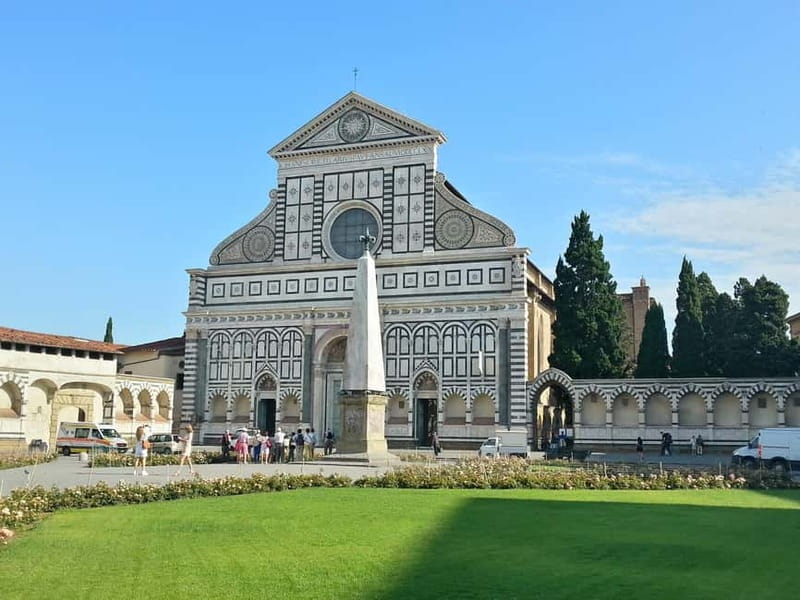
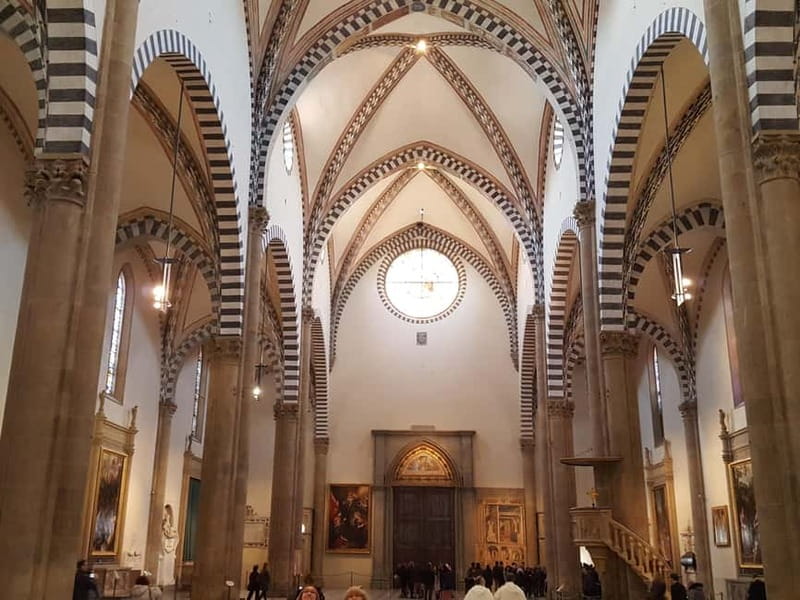
Florence has no shortage of famous churches, but Santa Maria Novella offers an unusually concentrated lesson in the city’s artistic and religious life. Its façade is the first clue. The orderly marble design later inspired Michelangelo, and the interior continues that balance between older Romanesque and Gothic forms and the cleaner proportions of the Renaissance.
You will not see everything as one grand picture. The basilica works better as a sequence of stops. The nave leads your eye forward, chapels pull you to the sides, and the cloisters change the mood from public church to enclosed religious complex.
That makes the audio guide useful. A quick walk can leave you with a blur of names and painted walls. The recorded commentary gives each major work a place in the story, so you can pause when something catches your eye instead of trying to keep up with a group.
The planned visit lasts about two hours. That is enough time for the principal works and cloisters without turning the church into an all-day art study. If you like to read every panel or sit for long periods, you may want to allow extra time if opening arrangements permit, but the supplied duration gives you a sensible first visit.
More Church Audio Tours in Florence
- Florence Duomo Cathedral with Host & Audio Guide (Interior Only)
★ 3.5 · 702 reviews - Florence: Duomo Cathedral Timed Entry Ticket & Audio App
★ 3.7 · 472 reviews - Florence: Duomo Cathedral Hosted Entry with Audio Guide
★ 4.3 · 452 reviews
Collecting your ticket behind the basilica
The meeting point is at Piazza Stazione number 4, behind Santa Maria Novella, at the ticket office. Show your voucher there and collect both your entry ticket and dedicated audio guide.
This detail matters. The meeting point is not simply the most obvious place on the front square, so give yourself time to find the rear-side office. Once you have the ticket, you use a separate entrance for priority access rather than joining the regular ticket queue.
The package includes the pre-booking reservation and agency fees. At $29 per person, the price is not the cheapest way to enter a church in Florence, but you are paying for more than admission. You receive priority access, a portable guide, and entry to the cloisters. For a first visit, that combination can make sense, especially when your time in Florence is tight.
You do not need a phone application or personal earphones for the main visit. The audio equipment is provided as a dedicated portable device. That is a small but welcome point for visitors who do not want to manage a downloaded tour while also taking photographs and finding their way around.
The nave, façade, and Renaissance order
Begin with the exterior façade, the part of Santa Maria Novella that first catches the eye from the square. Its geometric marble design gives the church a calm, measured appearance. The connection to Michelangelo adds a useful bit of context before you enter, since the façade helps explain why this building mattered to later artists.
Inside, look at the way the older Gothic structure is brought into a more ordered Renaissance setting. The long nave draws you toward the altar, while the side chapels offer smaller scenes and details. The effect is not a single style frozen in time. It is a building shaped by several periods of Florentine taste, devotion, and patronage.
Your audio guide should help you notice how the church served more than one purpose. It was a place for Dominican preaching and worship, but it was also a place where powerful families commissioned art and made their presence felt. The Strozzi and Medici connections add a political layer to what might otherwise seem like a purely religious visit.
I suggest listening to a section, then looking in silence for a minute or two. The guide is detailed, and the experience works best when you do not rush from one track to the next.
Masaccio’s Trinità and the birth of a new style
Masaccio’s Trinità is one of the essential stops. The work is known for its forceful sense of space and its place in the development of Renaissance painting. Even without a specialist’s training, you can see why it changed expectations: the painted setting feels built rather than flat, drawing you toward the sacred scene.
The audio commentary is particularly valuable here because the painting rewards close attention. You can consider how the figures are arranged, how the architectural setting frames them, and how the work connects religious subject matter with a new interest in believable space.
Do not treat this as a quick photo stop. Give your eyes time to adjust to the details. The painting’s importance is not only that it is old or famous. It represents a shift in how artists asked you to look at a wall image, making the surface suggest a deeper world.
Photography rules apply throughout the visit, and flash photography is not allowed. That is especially important in front of major frescoes and paintings. Follow the restrictions and keep your attention on the work rather than on getting a perfect phone image.
More Church Audio Tours in Italy
- Florence: Cathedral & Brunelleschi’s Dome Ticket & Audio App
★ 4.4 · 148 reviews - Florence : Giotto’s Bell Tower and Cathedral with Audio Guide App
★ 3.5 · 4 reviews - Rome: St. Peter’s Basilica & Dome Entry Ticket & Audio Tour
★ 4.2 · 7,537 reviews - Florence: Cathedral & Brunelleschi’s Dome Ticket & Audio App
★ 4.4 · 6,973 reviews
Giotto, Brunelleschi, and the power of a crucifix
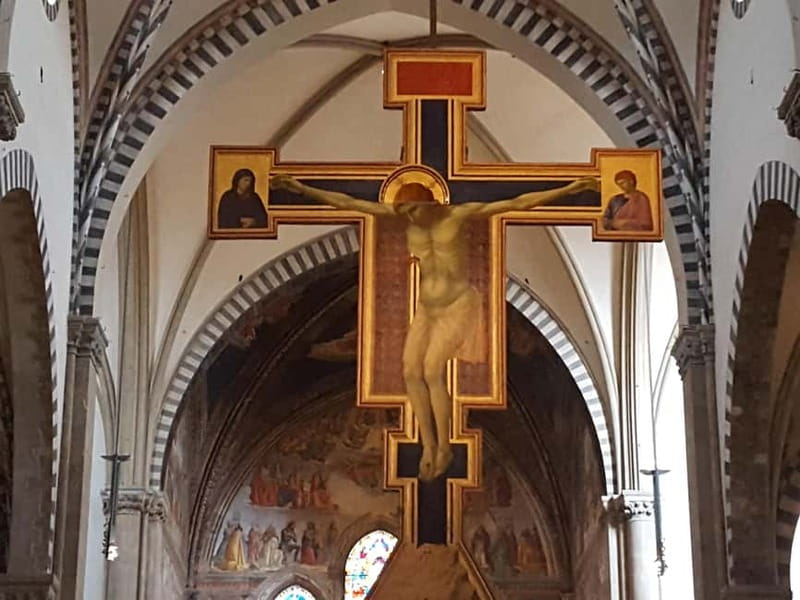
Giotto’s Crucifix provides a very different experience from Masaccio’s carefully constructed illusion of space. Giotto’s work carries the emotional weight of medieval religious art, and its directness helps you see how Florentine painting changed over time.
You will also encounter Brunelleschi’s elegant reinterpretation. Seeing these works in the same visit gives the audio guide a clear teaching opportunity. Instead of hearing isolated facts about three famous names, you can compare their approaches to the same central religious subject.
This is one of the strongest reasons to choose a guided audio visit over entering without context. The basilica contains enough famous names to overwhelm you. A good sequence turns those names into a story about changing ideas, from medieval devotion to Renaissance structure and human feeling.
The commentary also connects art to the people who commissioned and cared for it. That keeps the visit from becoming a list of artists. Florence’s churches were shaped by families, friars, and civic power, and Santa Maria Novella shows those forces working together.
The Tornabuoni Chapel and Ghirlandaio’s Florence
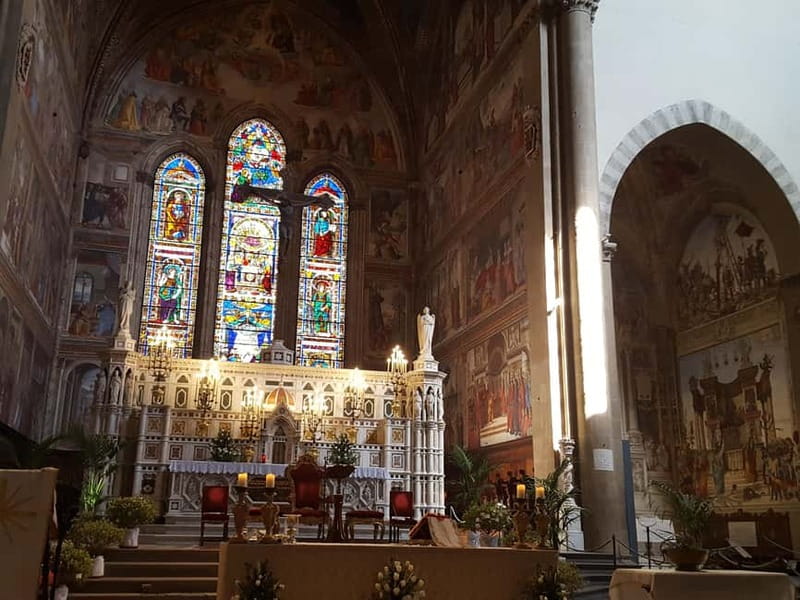
The Tornabuoni Chapel is a major highlight. Ghirlandaio filled it with scenes that present Florence’s golden age through detailed figures, clothing, architecture, and daily life. He was also a mentor to the young Michelangelo, which adds another thread to the building’s artistic story.
Look beyond the central religious scenes. The chapel includes portraits and visual clues about the upper class that paid for such work. You can see how commissioning a chapel allowed a family to express faith, status, memory, and influence all at once.
This is also where the audio guide’s human stories earn their keep. The chapel is not only about technique. It is about the people who wanted their world recorded within a sacred setting. The result gives you a picture of Renaissance Florence that feels more personal than a simple list of dates.
The chapel can attract attention because of its detail, so do not be surprised if you need to move aside or wait for a clear view. Your self-guided format gives you flexibility. You can listen from one position, then return to details that caught your eye.
Botticelli, Uccello, and the quieter corners
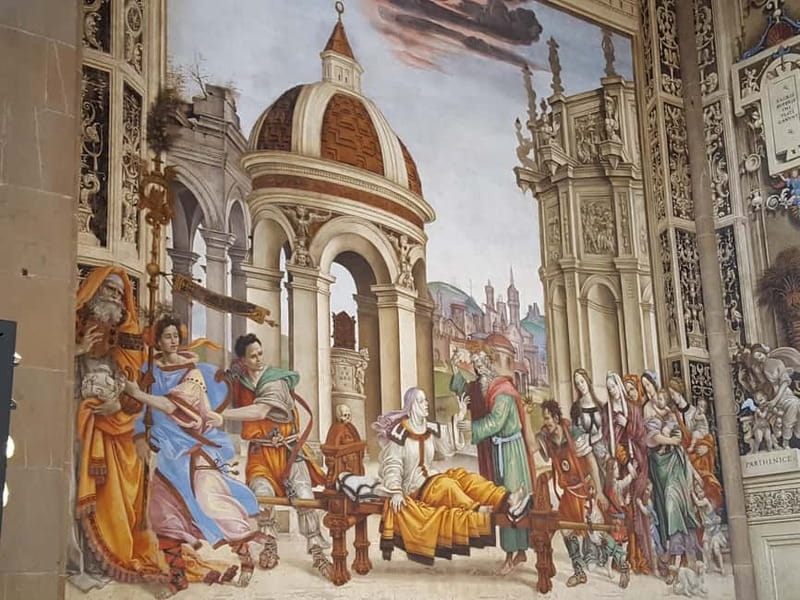
The visit includes Botticelli’s intimate Nativity, a smaller-scale work with a more personal feel than the grand chapel decoration. It is a useful reminder that Santa Maria Novella is not only about monumental scenes. Smaller works can carry a different kind of concentration.
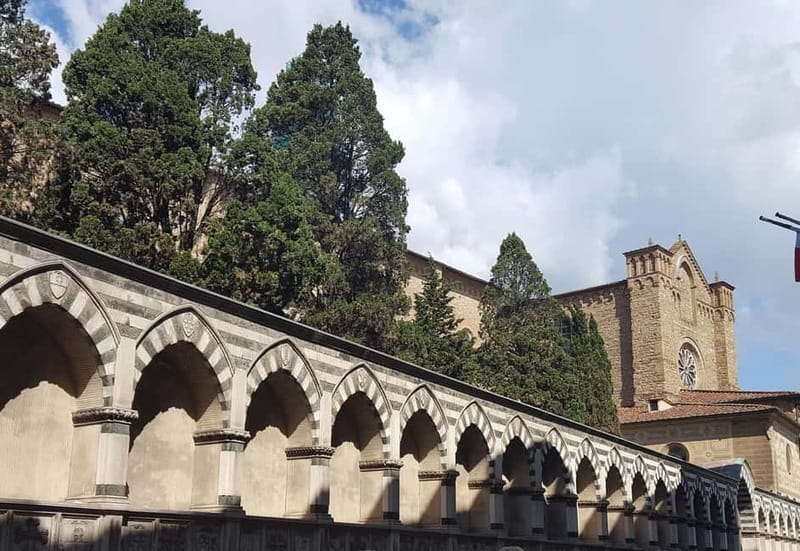
You will also enter the Green Cloister, associated with Paolo Uccello. The cloister changes the pace of the visit. Instead of looking straight ahead down a decorated church interior, you move through a more open, sunlit setting where frescoes and architecture share attention.
The Green Cloister is one of the places where comfortable shoes help. You are walking for much of the two-hour visit, and the experience includes several connected spaces rather than a single room. Wear clothing suitable for a place of worship as well. Shorts and sleeveless tops are not allowed.
The cloisters also make the ticket more valuable than a basic church entry. They give you a different view of the complex and offer a calmer pause between the major art stops. The atmosphere is not separate from the history. These spaces show how the Dominican community lived and worked around the basilica.
Dominican life, Medici politics, and family ambition
Santa Maria Novella still has Dominican friars who preach there today. That continuing religious role gives the visit more weight than a tour of a former church used only as a museum. You are looking at art in a place that remains connected to its original purpose.
The audio guide explains how the friars influenced Florence’s spiritual and political life. That is important context because the city’s religious institutions were also public spaces where ideas, alliances, and authority took shape.
Family patronage adds another layer. The Strozzi and Medici names appear in the story of the basilica and its art. Their involvement was not simply a matter of generosity. Commissioning major works could show piety, social rank, taste, and political reach.
I like this angle because it gives the building some tension. The art is beautiful, but beauty was often tied to power. You can admire the paintings while also noticing who had the money and influence to place them in such prominent settings.
The result is a visit that works for art lovers and for anyone curious about how Florence operated. You do not need to know the city’s political history in advance. The guide supplies the framework as you move through the building.
What the audio guide is like in practice
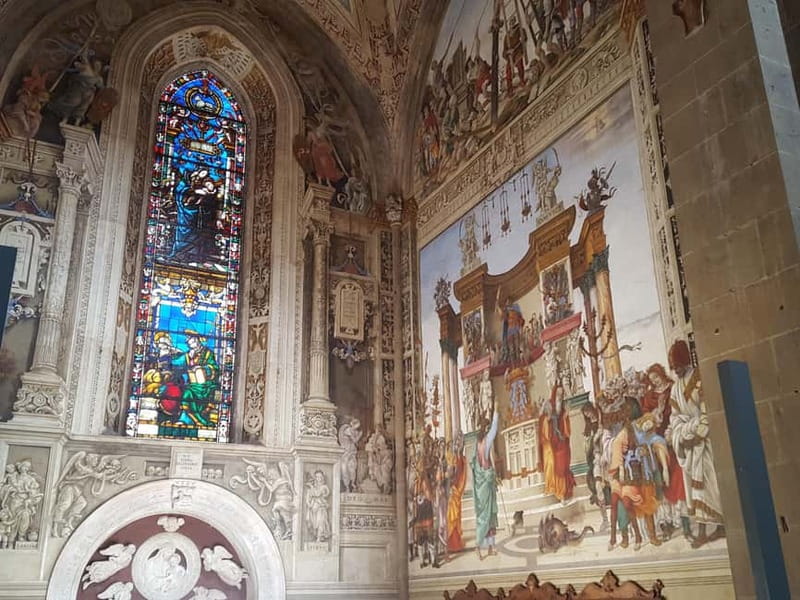
The guide is described as detailed, and that is the main feature praised in the available feedback. You receive an official portable device at the ticket office, so the visit does not depend on a mobile application or your own earphones.
You control the pace. Stop the commentary when you want to study a painting, skip ahead if a section is less important to you, or linger in the cloisters. This format suits independent visitors who dislike being hurried through a chapel.
The tradeoff is simple: no person is there to adapt the explanation to your interests. If you have a very specific question about an artist or restoration, you will need to make your own notes and research later. The experience is also not designed as a social group tour, so it lacks the conversation that some people enjoy.
For many visitors, the organization is worth the tradeoff. The equipment, ticket, and separate entry are handled together, and the audio guide gives the basilica a clear route instead of leaving you to guess which work matters most.
The included Florence district route
Your package also includes a Florence city guide app with an alternative route through the Santa Maria Novella district. This is separate from the portable audio guide used inside the basilica.
That extra route is useful because the neighborhood outside the church has more to offer than the station and the main square. You can use the guide to continue your visit after leaving the cloisters, giving the $29 price a little more reach.
The supplied information does not specify the exact stops or length of this outside route, so treat it as an added planning tool rather than a substitute for a full Florence tour. It is especially handy if you want to stay in the area and build a half-day around Santa Maria Novella.
Who should book this experience
I would choose this tour if you want the major artworks explained but do not want to join a group led at a fixed pace. It suits first-time Florence visitors, independent art lovers, and anyone with only a few hours for Santa Maria Novella.
It is also a good fit if you want the cloisters included and prefer not to arrange separate admission details. The portable device is practical for people who do not want to use their own phone or earbuds.
You may want a different option if you need wheelchair access, want a live guide, or prefer a short, unstructured look inside the church. The two-hour visit is not difficult in concept, but there is walking and standing, and appropriate dress is required.
Book ahead if priority access matters to your schedule. The experience allows cancellation up to 24 hours before the start for a full refund, and you can reserve now and pay later, which helps if your Florence plans are still shifting.
Is the $29 price worthwhile?
At $29, this is a fair package for a major Florence church if you will use the audio guide and visit the cloisters. Basic admission alone would not give you the same structure, and the separate entrance can save valuable time during a busy day.
The value is strongest when you are interested in the art rather than simply checking the building off a list. Masaccio, Giotto, Ghirlandaio, Botticelli, and Uccello are significant names, and the guide helps connect their work to Dominican life and Florentine family power.
It is less compelling if you already know Santa Maria Novella well or plan to spend only a few minutes inside. In that case, the detailed commentary may feel like more than you need.
Should you book Santa Maria Novella with the audio guide?
Yes, if you want a well-organized, self-paced visit to one of Florence’s most important churches. The strongest reasons are the priority entry, included cloisters, and detailed portable commentary, with the district route as a useful extra.
Go in with comfortable shoes, covered shoulders and legs, and at least two hours to give the major works proper attention. If you need step-free access or a live expert beside you, choose another format. For independent visitors who want art, faith, and family politics in one focused stop, this is a sensible way to experience Santa Maria Novella.
FAQ
Where do I meet for the Santa Maria Novella audio tour?
Meet at Piazza Stazione number 4, behind the basilica, at the ticket office. Show your voucher there to receive your entry ticket and portable audio guide.
What does the $29 price include?
The price includes entry to Santa Maria Novella Basilica and Cloisters, the reservation ticket and agency fees, priority access, the official portable audio guide, and a Florence city guide app with a Santa Maria Novella district route.
Do I need my phone or personal earphones?
No. The main visit includes a dedicated portable audio guide, and personal earphones or a mobile application are not required.
How long does the experience last?
The duration is two hours. Starting times vary, so check availability when choosing your visit.
Is this a live guided tour?
No. This is a self-guided visit using a portable audio guide. No physical guide accompanies you.
What clothing and photography rules apply?
Appropriate clothing is required because Santa Maria Novella is a place of worship. Shorts and sleeveless tops are not allowed, and flash photography is prohibited.
Latest audio tours in Florence
- Florence: Uffizi Gallery Audio Guided Tour led by Tour Leader★ 3.5 · 6 reviews
- Uffizi Combined Ticket:UFFIZI, PITTI, BOBOLI & digital audioguide★ 4.0 · 26 reviews
- Florence: Uffizi Gallery Reserved Ticket & Digital Audio Guide★ 4.5 · 3 reviews
- Florence: Uffizi Gallery Timed Entry Ticket with Audio★ 3.0 · 3 reviews
- Accademia Gallery Skip the line Tickets with Audio Guide★ 4.0 · 10 reviews
- Uffizi Gallery Audio-Guided Visit with optional Accademia Gallery★ 3.5 · 42 reviews
- Florence Walking Tour with Audioguide on Your Smartphone★ 4.5 · 9 reviews
- Florence Baptistery & Opera Museum Audioguided tour with guide★ 3.5 · 41 reviews
Church & Cathedral Audio Tours, compared.
St. Peter’s Basilica & Dome Entry Ticket & Audio Tour
Read our review →
Basilica Cistern Fast-Track Entry and Audio Guide
Read our review →
Cathedral & Brunelleschi’s Dome Ticket & Audio App
Read our review →
Vatican & Sistine Chapel Ticket with Optional Audio Guide
Read our review →
St. Mark Basilica Ticket, Audioguide+History Gallery
Read our review →
Skip the Line: Vatican & Sistine Chapel Ticket with Audio Guide
Read our review →
St. Peter’s Basilica with Optional Dome Ticket & Audioguide
Read our review →
Browse the lists this tour appears in