
Reviewed · ATHENS
Acropolis Parthenon Entry Ticket and Virtual Reality Audio Tour
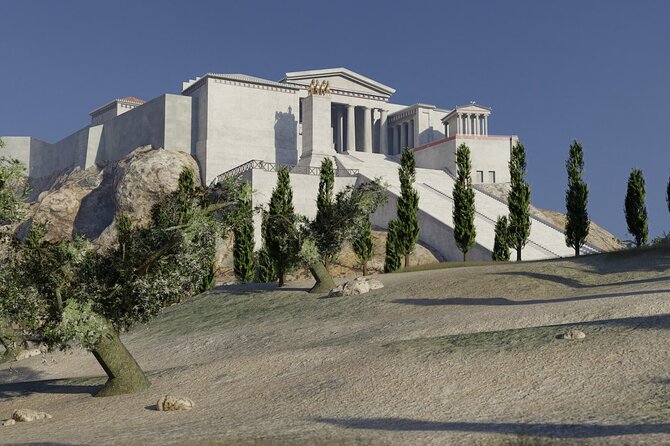
The clever part of this Acropolis visit is the virtual reconstruction. You see the Parthenon as it looks today, then use the app to picture its former colors, buildings, and setting. I like the freedom to pause, wander, and return to a story instead of keeping up with a live guide. I also like the clear map and route, which help you make sense of a large site.
The main drawback is that this is not a guided tour with a person beside you. You must bring your own mobile phone and earphones, and at $54.42 per person, the value depends on how much you want the digital layer. Go early for cooler weather and fewer crowds, and wear shoes with a firm grip.
Key points to know before you book
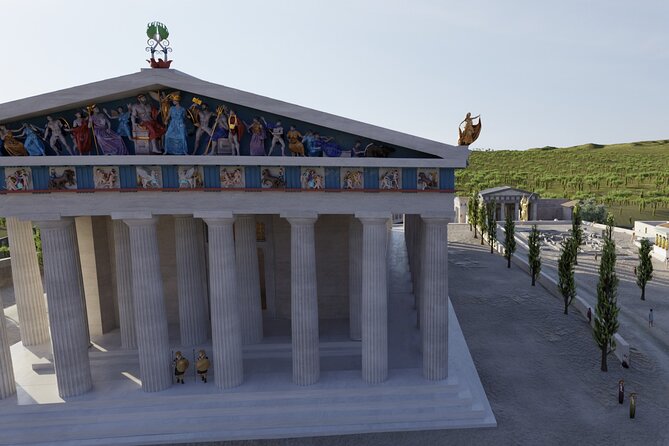
- VR shows the ancient Acropolis beside the ruins you see today, giving the Parthenon and other monuments more context.
- The route begins at the South Slope, taking in the Theater of Dionysus before reaching the hilltop monuments.
- You set your own pace, with about two hours planned for the Acropolis, temples, and Odeon.
- The app includes commentary in nine languages, while the experience is offered in English.
- You need your own phone and earphones, since neither is supplied.
- Early morning is the smart choice, especially in warm weather, because the stone paths can be slick and exposed.
Why the VR approach works at the Acropolis

The Acropolis can be hard to read at first. You see weathered marble, scattered columns, and broad foundations, but the original buildings are gone or altered. A virtual reality guide can bridge that gap in a way a simple plaque often cannot.
Here, the app combines audio commentary with 3D images and a map. As you move from monument to monument, you can picture how the site once looked. That matters most at the Parthenon, where the surviving structure is powerful but incomplete. The digital reconstructions help you imagine its former scale and appearance without pretending the modern ruins are unchanged.
I also appreciate the self-guided format. You can stop for a view, listen again, take photographs, or spend longer at the Caryatids of the Erechtheion. You are not tied to a guide’s speaking pace or to a group that has already moved on.
Still, the technology is only useful if you have a charged phone, working earphones, and enough patience to follow the app. This is a sightseeing aid, not a personal historian. If you want lively conversation, detailed questions answered on the spot, or help managing a family group, a live guide may suit you better.
The total visit lasts about two hours. That is enough for the main route, though the Acropolis deserves unhurried attention. You will need to make your own choices about how long to pause at the viewpoints, temples, and theater.
More Audio Tours in Athens
- Athens: Cape Sounio & Poseidon Temple Trip with Audio Guide
★ 4.4 · 4,521 reviews - Athens: Acropolis Ticket with Audio Guide
★ 4.0 · 3,575 reviews - From Athens: Delphi Full Day V.R. Audio Guided Tour
★ 4.6 · 3,028 reviews
Starting at the Theater of Dionysus
The meeting point is at the South Slope of the Acropolis, on Dionysiou Areopagitou in central Athens. The route begins with the Theater of Dionysus, a fitting first stop because it connects the Acropolis to one of ancient Greece’s most lasting cultural gifts: theater.
This is one of the oldest theaters in the world and was dedicated to Dionysus, the god associated with wine and theater. As you listen to the audio, picture performances taking place before a large audience in the stone seating below the Acropolis.
The theater gives your visit a human scale. The Parthenon is grand and formal, but this first stop reminds you that the Acropolis was not only a place of temples. It was also linked to performance, public life, religion, and civic identity.
The app’s route helps you get oriented before the climb becomes more demanding. You can listen as you walk, though you should keep your attention on the uneven ground rather than stare at your screen. The supplied information does not promise a separate live introduction, so expect the app to provide the explanation from the beginning.
Reaching the Parthenon and its wide views
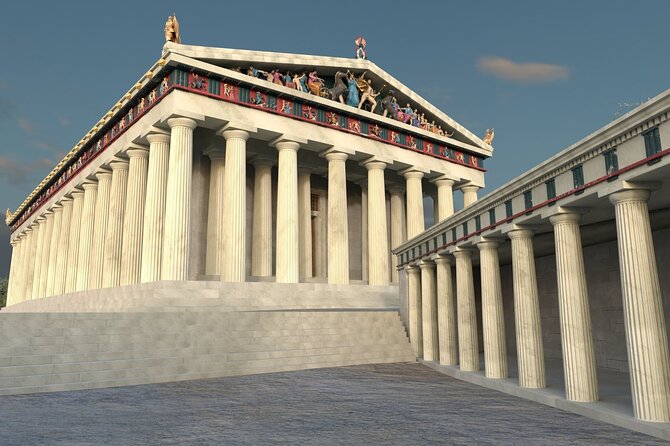
The Parthenon is the heart of the visit. Dedicated to Athena, the city’s patron goddess, it represents the architectural and political ambition of classical Athens. No photograph quite prepares you for its position above the city.
The building is not intact, and restoration work may shape what you see on the day. That is part of the experience. You are looking at an ancient monument that has survived centuries of change, damage, and reuse. The VR scenes give you a way to picture its earlier form while keeping the present ruins in view.
I would spend time here without audio playing. Look closely at the columns, the remaining sculptural details, and the way the temple frames Athens below. Then return to the app for the historical explanation. This two-step rhythm works better than trying to absorb everything through headphones.
From the Acropolis, you can see Athens spreading across the plain, with mountains around the city and the Aegean Sea in the distance. The views are one of the strongest reasons to allow extra time. The virtual scenes can also suggest how the setting appeared in ancient times, adding a useful layer to the panorama.
Go early if you can. One review describes an early morning visit as a good way to avoid heat and crowds, and that advice makes practical sense. The site is exposed, and the paths are made of stone. Comfortable shoes are essential, water is a good idea, and you should take care on slick sections.
Passing through the Propylaea
The Propylaea is the monumental entrance to the Acropolis. It was designed as more than a practical gateway. Its scale prepared visitors for the sacred precinct above.
The entrance also gives the app a chance to explain how ancient visitors approached the hill. You do not simply arrive at the Parthenon. You pass through a carefully planned threshold, moving from the city below into a space filled with temples and civic meaning.
The route description allows about an hour for the first group of sights, including the Acropolis, the Theater of Dionysus, the Parthenon, and the Propylaea. Do not read that as a strict schedule. The audio tour is self-guided, so you can adjust the pace according to heat, crowds, and your interest in architecture.
The Propylaea can be a crowded area, especially when several groups arrive together. The map is useful here because it tells you where to go next, reducing the chance that you will spend your limited time simply finding the next monument.
Another self-paced route in Athens:
- Athens: Acropolis Museum Ticket with optional Audio Guide
★ 4.4 · 2,652 reviews - Athens: Peloponnese Highlights Day Trip and V.R. Audio Guide
★ 4.5 · 1,425 reviews - Athens: Acropolis Museum Ticket with Audio Guide
★ 4.1 · 835 reviews - Athens: National Archaeological Museum Ticket w/ Opt. Audio
★ 4.4 · 713 reviews
The Temple of Athena Nike and the Erechtheion
After the main gateway, the tour turns to two very different temples. The Temple of Athena Nike is small compared with the Parthenon, but its purpose is direct. It honored Athena as the goddess of victory and expressed the ambitions and resilience of Athens.
Its compact size makes it easy to overlook. I would not. The app’s reconstruction helps explain why a small temple could carry such political and religious weight. This is a good example of where a virtual guide adds value beyond pointing out the largest building.
The Erechtheion is known for its Caryatids, the female figures used as architectural supports. Their unusual design makes this one of the most memorable stops on the hill. The audio connects the building to the myths of Athena and Poseidon, giving you a better sense of why this site mattered to ancient Athenians.
The second portion of the route is planned for about 30 minutes. That may be enough for a focused visit, but the Erechtheion rewards close attention. Look at the different forms and levels of the building rather than treating it as a quick photograph stop.
The virtual material is especially helpful here because the Erechtheion is not as immediately recognizable as the Parthenon. The stories give the structure a purpose, and the map keeps the sequence clear.
The Odeon of Herodes Atticus
The Odeon of Herodes Atticus is the final major stop listed on the route. Built by Herodes Atticus as a venue for music and theater, it remains connected to performance today.
The theater’s steep shape and preserved structure make it easy to understand as a working performance space. The app explains its acoustic design and its role in Athenian culture. You can also consider how remarkable it is that the venue still hosts performances.
Allow roughly 30 minutes here. The Odeon is viewed from above rather than treated like a separate modern theater visit, so the experience is mainly about its setting, design, and connection to the Acropolis.
This is a strong closing stop because it brings the route back to performance. You began at the Theater of Dionysus and finish with another theater, this time built in the Roman period. The two sites show that the Acropolis area continued to matter long after the classical age.
What $54.42 includes, and what it does not
The price is $54.42 per person. It includes the Acropolis and Parthenon entry ticket, the virtual audio guide application, and a multilingual self-guided tour.
That price can be reasonable if you want a digital guide and prefer not to arrange the ticket separately. The entry ticket is the essential part, and the app gives you a planned route through the major sights. You are also paying for convenience and the visual reconstructions, not for a live person.
The value is less clear if you already have a good guidebook, do not care about virtual images, or prefer to explore without audio. There is no reduced admission option, so children and other eligible visitors cannot receive a lower price through this experience.
Transportation to the Acropolis is not included. You must make your own way to the South Slope meeting point. The location is near public transportation, which helps, but the experience itself begins at the site rather than at a hotel or transport hub.
You also need to bring your own phone and earphones. Those are small details, but they matter. Without them, you may not be able to use the main feature you are paying for.
The activity can have up to 50 participants. Since the tour is self-guided, that does not mean you will be walking in a single guided group, but it does mean the experience may feel less personal than a small private visit.
Practical advice for a smoother visit
Wear shoes with a firm sole. The stone paths can be slick, and the climb is not difficult for most people, but the surface deserves attention. Carry water, especially in warm weather, and plan for direct sun.
Start early if your schedule allows. The site is more comfortable before the day becomes hot, and a quieter visit makes it easier to hear the audio and look carefully at the monuments.
Charge your phone before leaving. Download or open the application as directed in your booking information, and bring earphones that are comfortable for about two hours. The app provides instructions in multiple languages, and the tour content is available in nine languages. The booking is offered in English, so check the language arrangement carefully when making your choice.
Keep your eyes off the screen while walking. Listen first, then stop in a safe place to view the 3D images. The best use of this technology is to compare the virtual scene with the actual ruin, not to spend the whole visit staring at a phone.
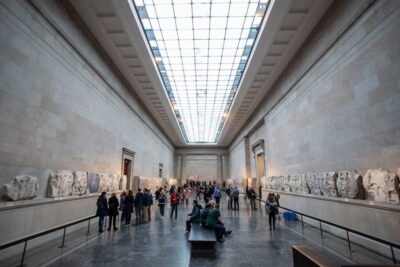
Leave room in your day for the Acropolis Museum. It is nearby and offers useful context for the sculptures, architecture, and stories connected with the hill. The museum also gives you a cool indoor break after the exposed stone paths.
The activity requires good weather. If poor weather cancels it, you are offered another date or a full refund. You can cancel for a full refund up to 24 hours before the start time. Cancellations or changes within 24 hours are not refunded or accepted.
Who will get the most from this Acropolis visit
I would choose this for a first visit to Athens if you want structure without a live guide. The map and route make the large site easier to follow, while the self-guided format lets you linger at the Parthenon or move along when you are ready.
It suits independent sightseers, couples, and families with older children who enjoy visual explanations. The virtual reconstructions can make damaged or incomplete buildings easier to understand, and the audio keeps the visit from becoming a parade of names and dates.
It is also a good match for anyone who wants to photograph the site and still learn something. You can pause the commentary, take your picture, then continue without holding up a group.
I would hesitate if you want a personal conversation with a historian, a tightly managed schedule, or special help for reduced admission. The tour is not a live lesson, and the price does not include transport, equipment, or a discount option.
The booking pattern suggests people plan this experience well ahead, with reservations made about 93 days in advance on average. That is useful planning advice for a popular Athens sight, though you should still choose the time of day with heat and crowd levels in mind.
Should you book the VR Acropolis tour?
Book it if you want the Acropolis ticket combined with a clear route, audio commentary, and 3D views of ancient Athens. The strongest parts are the freedom to explore at your own pace, the helpful map, and the chance to picture the Parthenon and other monuments as they once appeared.
Skip it if you only want entry, already have your own detailed guide, or strongly prefer a live expert. At $54.42, this is not the cheapest way onto the Acropolis, but it offers more than a bare admission ticket.
For most independent visitors, the best plan is simple: arrive early, bring water, wear secure shoes, charge your phone, and let the app guide you without allowing it to rush you. The stones, stories, and views deserve time away from the screen.
FAQ
Where does the Acropolis VR audio tour start?
It starts at the South Slope of the Acropolis of Athens, at Dionysiou Areopagitou, Athina 105 58, Greece.
Where does the activity end?
The activity ends back at the meeting point.
How long does the experience last?
The visit lasts approximately two hours.
What sights are included?
The route includes the Theater of Dionysus, the Parthenon, the Propylaea, the Temple of Athena Nike, the Erechtheion, and the Odeon of Herodes Atticus.
Is a live guide included?
No. This is a self-guided experience with a virtual audio guide application. There is no live guide or instructor.
Are a phone and earphones provided?
No. You need to bring your own mobile phone and earphones.
In how many languages is the app available?
The virtual application provides insights in nine languages and includes multilingual instructions. The experience itself is offered in English.
Can I cancel for a full refund?
Yes. You can cancel at least 24 hours before the experience start time for a full refund. Cancellations within 24 hours are not refunded. If poor weather causes cancellation, you are offered another date or a full refund.
Latest audio tours in Athens
- Temple of Olympian Zeus: Self-Guided Audio Tour on your Phone (without ticket)★ 4.0 · 8 reviews
- Athens Ticket Pass: Acropolis & 6 Sites with 5 Audio Guides★ 3.5 · 84 reviews
- E-ticket for Kerameikos with Audio Tour on Your Phone★ 5.0 · 4 reviews
- Ancient Agora of Athens: A Self-Guided Audio Tour★ 3.5 · 3 reviews
- Self Guided Tour In Athens With 100 Captivating Audio Stories★ 4.0 · 4 reviews
- Private Audio Guided Walking Tour in Athens★ 3.5 · 2 reviews
- Audioguided tour of Athens’ alternative neighbourhood of Exarchia★ 5.0 · 2 reviews
- Athens Hop-On Hop Off w/ Acropolis & Acr.Museum tickets & 3 audio★ 3.0 · 5 reviews
Athens Audio Tours, compared.

Cape Sounio & Poseidon Temple Trip with Audio Guide
Read our review →

Acropolis Museum Ticket with optional Audio Guide
Read our review →
Peloponnese Highlights Day Trip and V.R. Audio Guide
Read our review →
National Archaeological Museum Ticket w/ Opt. Audio
Read our review →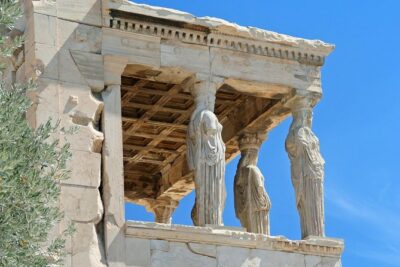
Acropolis & Parthenon Entrance Ticket w/optional SG Audio Tours
Read our review →Browse the lists this tour appears in