
Reviewed · NEW YORK CITY
A Gilded Age Audio Guide: New York’s Millionaire Row
New York’s Fifth Avenue was once a private parade ground for America’s richest families. This self-guided walk follows that old Millionaire Row from the Metropolitan Club to The Met, linking mansions, private clubs, Central Park views, and the fortunes of men such as J.P. Morgan and James B. Duke. The GPS narration tells you where to walk and what to look at, so you can explore without keeping up with a group.
I like the freedom to start and stop whenever you want, and I like how the app keeps talking between landmarks instead of leaving you with long silent stretches. The clear directions, automatic audio cues, restroom notes, and offline maps make the tour easy to manage.
The main drawback is simple: you need your own smartphone and headphones, and the tour is offered only in English. Since the route takes about 80 to 100 minutes and ends at The Metropolitan Museum of Art, comfortable shoes and a bit of extra time are wise.
Key points about the Millionaire Row walk
- GPS-triggered storytelling: The app detects your position and begins the right story as you reach each location.
- A direct Fifth Avenue route: Walk from East 60th Street past clubs, mansions, Madison Avenue, Central Park, and The Frick Collection.
- A strong finish at The Met: The tour ends outside one of New York’s greatest museums, making it easy to continue your day with art.
- Good value at $14.99: You receive lifetime access, offline maps and audio, and a virtual playback option.
- Built for independent exploring: Pause for photographs, stop for a break, answer a phone call, or replay a section without holding up a group.
- A look at surviving mansions: The route shows that important traces of Millionaire Row still remain along Fifth Avenue and the Upper East Side.
Why Fifth Avenue makes such a good history walk
The appeal of this tour is not simply that it takes you past expensive buildings. It shows how New York’s richest citizens tried to turn money into social power, public respect, and permanent architecture.
During the Gilded Age, Fifth Avenue became the preferred address for families who wanted to display their wealth. The clubs and mansions along this route were not random grand buildings. They formed a social world, with membership rules, family connections, charitable gifts, and carefully managed public images.
You can still see fragments of that world today. Some buildings remain in use as clubs or museums. Others survive as exterior facades among modern shops and offices. The audio guide helps connect those pieces, so you are not simply walking past a doorway and wondering what used to be there.
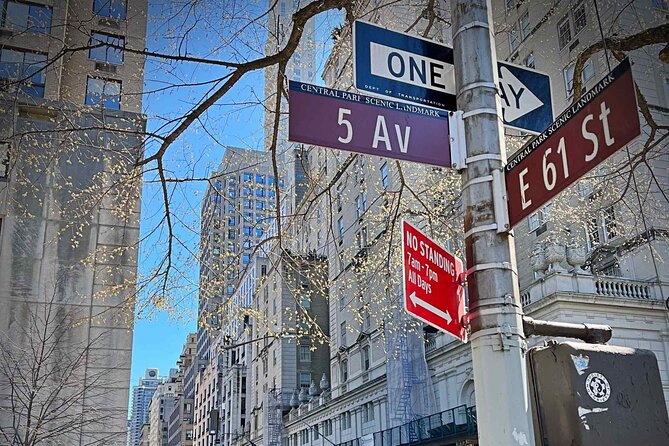
The route begins on East 60th Street and finishes at The Met. That gives you a clear northbound walk with a useful destination at the end. You are not asked to return to the starting point, which saves time and makes the experience easy to combine with other plans.
More Audio Tours in New York City
- Skyline Night Bus Audio Narrated Tour Experience
★ 4.5 · 138 reviews - NYC: St. Patrick’s Cathedral Official Self-Guided Audio Tour
★ 3.5 · 45 reviews - Statue Of Liberty & Ellis Island Skip The Queue Audio Guide Tour
★ 5.0 · 19 reviews
Starting at the Metropolitan Club on East 60th Street
The tour starts outside the Metropolitan Club, founded by J.P. Morgan. This is an effective opening because the building introduces the central subject right away: wealth, influence, and exclusive social life.
J.P. Morgan was more than a wealthy banker. His name became tied to the financial power that helped shape modern New York. Starting at his club places you at the edge of a world where business leaders, old families, and political figures met behind private doors.
The audio guide uses this first stop to set the mood for the walk. You get context before moving along Fifth Avenue, which is helpful if you are not already familiar with the Gilded Age or New York’s old social hierarchy.
Take a moment to get your bearings before pressing ahead. The directions are designed to begin the tour when you reach the correct spot, and the app then guides you from one stop to the next. You will want your phone charged and your headphones ready before you start.
Walking Fifth Avenue beside old mansions and modern luxury
Fifth Avenue is still associated with high-end shopping and costly real estate, but this walk asks you to look past the storefronts. The same avenue that now carries shoppers and city traffic once displayed private mansions built for a small number of families.
That contrast gives the walk much of its interest. You may see a luxury shop where a mansion once occupied a prominent corner, then find a surviving residence only a short distance away. The audio helps explain how the avenue changed as land values rose and private homes became difficult to maintain.
The route is self-guided, so you control the pace. If a facade catches your eye, you can stop without worrying about a group. If the street feels crowded, you can pause the narration and continue a few minutes later.
The guide also warns you when you move off course. That is especially useful in a city where a small wrong turn can place you on the wrong block. The GPS function gives the tour a practical edge that a printed walking guide cannot match as easily.
The Knickerbocker Club and the rules of elite New York
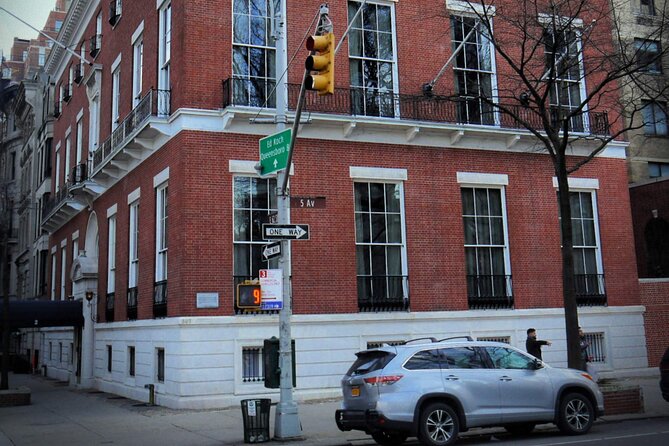
The Knickerbocker Club represents another side of Millionaire Row. The Metropolitan Club connects the route to J.P. Morgan, while the Knickerbocker Club points to the private social network that helped define old New York.
Private clubs were places where status could be protected and reinforced. Membership mattered, and the buildings themselves helped create a sense of separation from ordinary city life. As you pass the club, listen for the details about the people and customs tied to this part of Fifth Avenue.
This section is also a good reminder that the walk is about social history as much as architecture. You are not only counting stories of wealth. You are seeing how business success, family background, club membership, and public reputation worked together.
The tour does not require you to enter private buildings. Most of the experience comes from the street, where you can observe the exterior and hear the story through your headphones.
Another self-paced route in New York City:
- Guided Tour (with Audio) Hamilton Musical in Lower Manhattan NYC
★ 5.0 · 11 reviews - New York City’s Financial District: A Self-Guided Audio Tour
★ 4.5 · 8 reviews - West Village’s Flappers, Freaks & Punks: A Self-Guided Audio Tour
★ 5.0 · 4 reviews - New York’s Iconic Central Park: A Self-Guided Audio Tour
★ 4.0 · 4 reviews
Central Park and The Arsenal
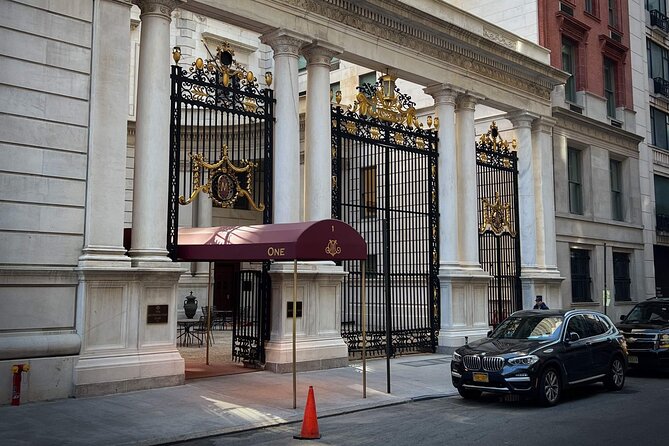
Central Park provides a change of mood along the route. The park offered wealthy Fifth Avenue residents a peaceful setting near their homes, but it also became part of the public face of the avenue.
You will catch a glimpse of Central Park as the tour explains its role in this district. The open space is a useful contrast to the dense city blocks and formal residences. It also helps explain why this stretch of Fifth Avenue became so desirable.
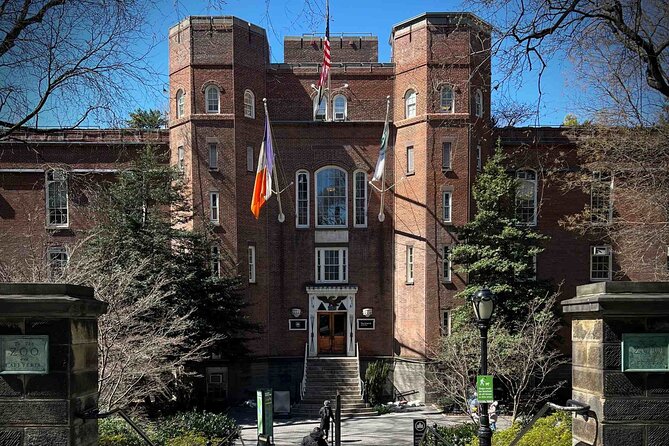
The Arsenal is another change in tone. This historic building once served as a military arsenal and now houses the Central Park Conservancy. Its former military purpose gives it a different character from the mansions and clubs.
I like this part of the route because it shows that the district is not made up only of private wealth. Public institutions, park administration, military history, and civic life are all mixed into the same few blocks.
The Beekman Mansion and surviving Gilded Age homes
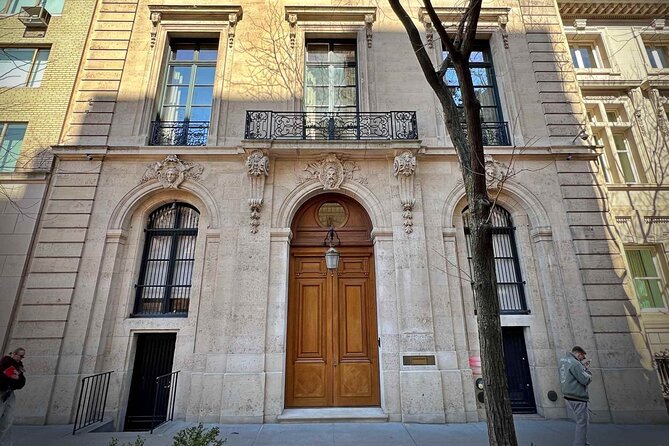
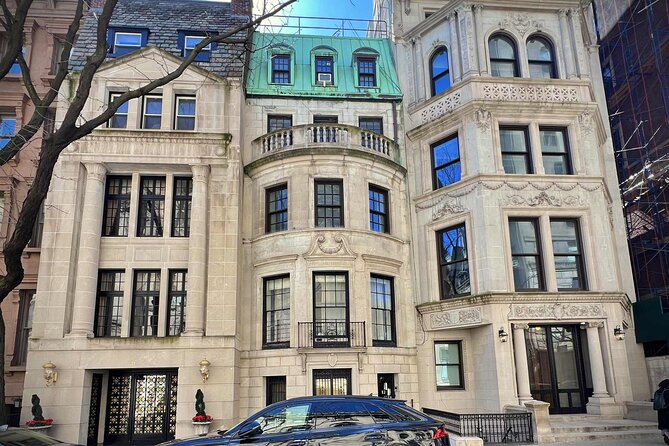
The Beekman Mansion gives you another example of the grand residences once associated with prominent New York families. Buildings such as this help correct a common assumption that all the city’s Gilded Age mansions disappeared.
Some did vanish, replaced by apartments, offices, shops, or newer landmarks. Yet several important homes remain, and the tour points you toward them in a way that gives the street a stronger sense of time.
The value here is in comparing the homes rather than treating them as identical. Each residence reflected the taste, fortune, and ambitions of its owners. The audio guide explains those differences while you look at the architectural details from the sidewalk.
If architecture is your main interest, allow yourself extra time at these stops. The stated duration is about 80 to 100 minutes, but the self-guided format means you can linger longer without missing a meeting point.
The Emily Thorn Vanderbilt Sloane White Mansion
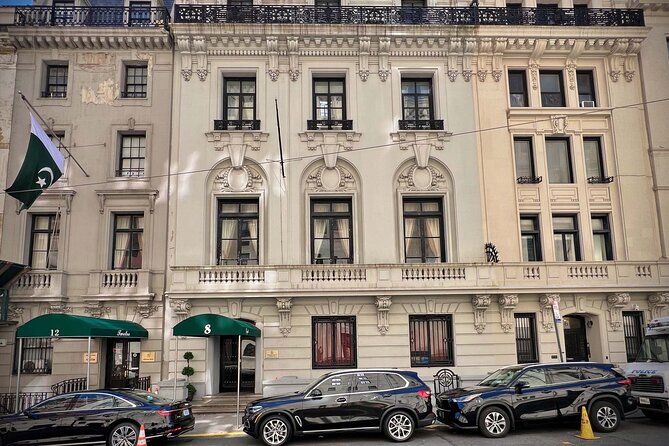
The Emily Thorn Vanderbilt Sloane White Mansion adds another name from New York’s powerful families. Its scale and design reflect the social position of the people who lived in this part of the city.
Names matter on this walk. The Vanderbilts, Morgans, Dukes, Fricks, Harknesses, and other families were not simply rich individuals living in large houses. Together, they formed a group that shaped finance, industry, culture, charity, and city planning.
The audio guide makes those connections easier to follow. Instead of hearing a separate fact at every address, you begin to see recurring patterns: money made in industry or finance, marriage into another influential family, a mansion built to signal arrival, and later efforts to preserve a public reputation.
That human side keeps the route from becoming a dry architecture lesson. You are walking through the choices and rivalries of people who wanted their names attached to New York for generations.
The Frick Collection and Henry Clay Frick
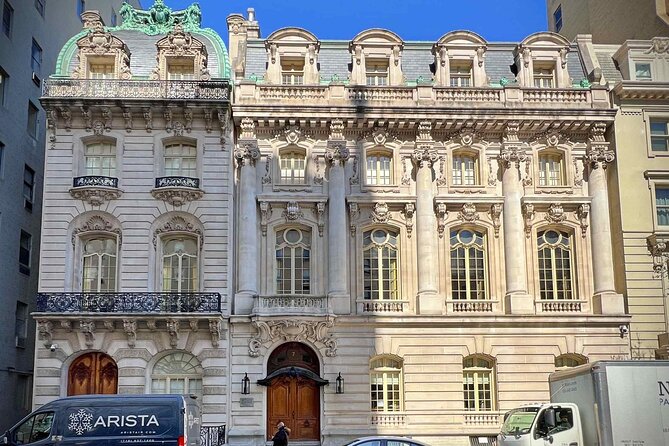
The Frick Collection is one of the route’s major stops. It occupies the former residence of industrialist Henry Clay Frick and now holds a notable collection of European masterpieces.
The building is important for two reasons. First, it shows how a private home could be designed on a scale that now feels more like a museum. Second, it links the story of industrial wealth with art collecting and cultural prestige.
You may choose to visit The Frick separately, but admission to the museum is not included in the audio tour. The walking experience takes you past the site and explains its place in the story. If you plan to go inside, allow additional time beyond the tour’s estimated duration.
I find this a useful point in the route because it shows how Gilded Age fortunes were later presented to the public. A private residence becomes a cultural institution, and a collector’s taste becomes part of New York’s identity.
Richard Morris Hunt and the architects of wealth
The Richard Morris Hunt Memorial honors the architect who helped shape New York’s built environment. This stop shifts attention from the owners to the professionals who gave their ambitions physical form.
A mansion was a social statement, but it also required an architect capable of handling scale, materials, decoration, and urban placement. Hunt’s work connects individual family stories to the wider development of Fifth Avenue.
This stop is worth hearing even if you do not normally seek out architecture. It explains why so many buildings along the route feel formal and deliberate. Their size and style were meant to announce status from the street.
The memorial also gives the walk a broader frame. The avenue was not shaped only by bankers and industrialists. Architects, builders, planners, artists, and civic groups all played a part.
Herbert N. Strauss House and Edward S. Harkness House
The Herbert N. Strauss House and Edward S. Harkness House continue the series of Upper East Side residences. These stops reward slow looking, especially if you enjoy noticing entrances, stonework, windows, and the way a house occupies its block.
The Strauss House represents the polished grandeur associated with the period. The Harkness House adds another example of how wealth could be expressed through a carefully designed urban home.
You do not need specialist training to enjoy this section. The narration gives you a reason to look, then points out what matters. The GPS cues are especially useful here because they can tell you when to stop and which side of the street deserves your attention.
The route is not a formal group tour, so you can replay a passage if a bus, conversation, or traffic noise interrupts it. That control is one of the strongest practical advantages of the format.
Madison Avenue, Stuyvesant Fish, and James B. Duke
Madison Avenue brings you onto another well-known New York thoroughfare, now associated with upscale shops, luxury boutiques, and elegant storefronts. Here, the modern commercial scene sits beside stories from the city’s old social and political circles.
The Stuyvesant Fish section adds a personal name to the route. Fish was a prominent figure in New York’s Gilded Age social and political life, and his story helps show that influence did not come from business alone. Social position and civic connections mattered too.
The James B. Duke House gives the walk another powerful industrial figure. Duke made his fortune in tobacco and became known as a philanthropist. His former mansion displays the kind of Beaux-Arts architecture that made these homes feel almost ceremonial.
This stretch is a strong reminder that the route is not only about vanished millionaires. It also traces how fortunes were converted into buildings, charities, institutions, and public memory.
Ending at The Metropolitan Museum of Art
The tour ends at The Metropolitan Museum of Art, at 1000 Fifth Avenue. This is a practical and satisfying finish. You arrive at a major cultural institution rather than an ordinary intersection, with an easy option for continuing your day.
The Met holds collections covering thousands of years, so you could spend hours inside. The audio tour does not include museum admission, and the tour ends outside the museum, but the location makes it simple to add a visit if your schedule allows.
You might also use the end point as a natural pause before exploring Central Park or the Upper East Side. Because the audio guide includes lifetime access and a virtual playback option, you can also listen to the material from another location before or after your walk.
The ending works especially well for a first visit to New York. You get architecture, social history, public space, and art in one northbound outing.
How the GPS audio format works in real use
This is not a live tour with a guide waiting at a fixed departure time. You download the app, follow the directions to East 60th Street, and begin when you are ready.
The GPS system cues the appropriate story as you reach each stop. It can tell you when to cross, where to look, and when you have wandered away from the route. That reduces the need to keep checking a map.
You receive offline access to the audio, maps, and geographic data. That matters in a crowded city, where phone service can be uneven or where you may prefer not to use mobile data continuously.
You also receive unlimited lifetime use. The tour can be used before or after the booked date, and the virtual playback feature lets you listen like an audiobook from anywhere. Those extras improve the value for anyone who wants to review the stories later.
Bring your own phone and headphones. The tour is offered in English, and the activity does not provide those items.
Price, timing, and who gets the best value
At $14.99 per person, the tour costs less than many live city walks. The value comes from the combination of the route, the automatic narration, the offline access, and the ability to reuse it later.
It is especially good value if you dislike fixed departure times or want to stop often. You are not paying for a guide’s presence, but you also avoid the limits of a group schedule. You can answer a call, take a break, pause for lunch, or stop for photographs.
The walk lasts about 1 hour 20 minutes to 1 hour 40 minutes. That estimate assumes you keep moving at a normal sightseeing pace. Since there are many buildings to inspect, you may want more time if architecture is a priority.
The activity is private in the sense that only your group participates. You can also participate alone. Most people can take part, service animals are allowed, and the start is near public transportation.
One important practical point is the cancellation rule. The experience is non-refundable and cannot be changed after booking, so choose your date carefully.
Should you book this Fifth Avenue tour?
Book it if you want a focused New York walk with strong storytelling, clear directions, and no pressure to match a guide or group. It suits solo visitors, couples, history fans, architecture enthusiasts, and anyone who prefers to explore independently.
The best features are the GPS cues, the detailed narration, and the route’s finish at The Met. The app can warn you when you stray, point out restrooms, and let you pause or rewind. Those small tools make a real difference during a city walk.
Skip it if you want to enter every mansion, receive live conversation, or hear the tour in another language. Most of the buildings are viewed from outside, and your phone and headphones are essential.
For $14.99, this is a smart way to spend part of a clear day on Fifth Avenue. You get a story about money, architecture, social power, and public memory, all while walking through one of New York’s most famous addresses.
FAQ
Where does the audio tour start?
It starts outside the Metropolitan Club on East 60th Street in New York City.
Where does the tour end?
The tour ends at The Metropolitan Museum of Art, 1000 Fifth Avenue, New York, NY 10028.
How long does the tour take?
The expected duration is approximately 1 hour 20 minutes to 1 hour 40 minutes.
What language is the audio guide offered in?
The tour is offered in English.
Is this a guided group tour?
No. It is a self-guided GPS walking tour, and only your group participates.
Do I need a smartphone and headphones?
Yes. A smartphone and headphones are not included, so you need to bring your own.
Can I pause the tour?
Yes. You can pause, rewind, resume, and stop whenever you want while exploring at your own pace.
Can I use the tour offline?
Yes. Offline access is provided for the audio, maps, and geographic data.
Is the tour refundable or changeable?
No. The experience is non-refundable and cannot be changed for any reason after booking.
Latest audio tours in New York City
- Boho Greenwich Village: A Self-Guided Audio Tour★ 5.0 · 3 reviews
- The Battery: A Self-Guided Audio Tour from Bowling Green Park to Stone St★ 5.0 · 3 reviews
- West Village’s Flappers, Freaks & Punks: A Self-Guided Audio Tour★ 5.0 · 4 reviews
- New York City’s Financial District: A Self-Guided Audio Tour★ 4.5 · 8 reviews
- Self-Guided Audio Tour of New York City★ 4.5 · 2 reviews
- New York’s Iconic Central Park: A Self-Guided Audio Tour★ 4.0 · 4 reviews
- Broadway: A Self-Guided Audio Tour of the World’s Iconic Theatre District★ 4.5 · 3 reviews
- Guided Tour (with Audio) Hamilton Musical in Lower Manhattan NYC★ 5.0 · 11 reviews
New York City Audio Tours, compared.

Skyline Night Bus Audio Narrated Tour Experience
Read our review →
NYC: St. Patrick’s Cathedral Official Self-Guided Audio Tour
Read our review →
Statue Of Liberty & Ellis Island Skip The Queue Audio Guide Tour
Read our review →
Guided Tour (with Audio) Hamilton Musical in Lower Manhattan NYC
Read our review →
New York City’s Financial District: A Self-Guided Audio Tour
Read our review →
New York City’s High Line: A Self-Guided Audio Tour
Read our review →
New York’s Iconic Central Park: A Self-Guided Audio Tour
Read our review →
West Village’s Flappers, Freaks & Punks: A Self-Guided Audio Tour
Read our review →Browse the lists this tour appears in