
Reviewed · ATHENS
Athens: Acropolis Entry Ticket & VR Audio Guided Tour
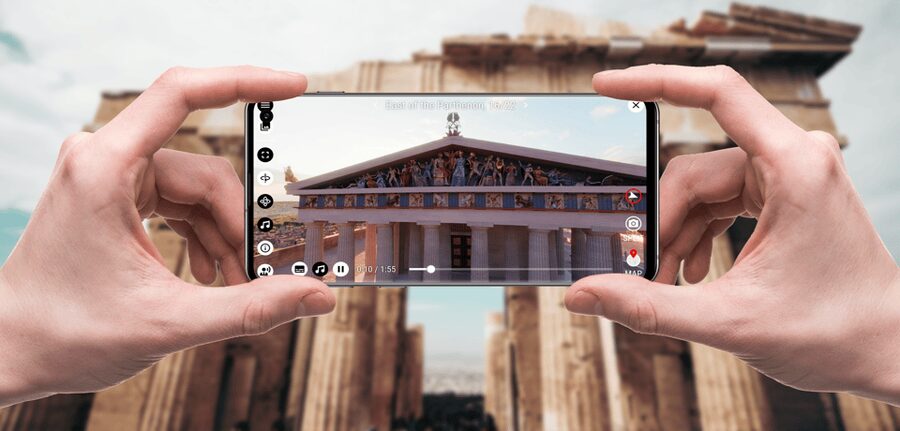
The clever idea here is simple: pair a reserved Acropolis ticket with a phone-based audio and virtual reality guide. You walk at your own pace, starting at the Theater of Dionysus and continuing up to the Parthenon, while the app shows how the hill may have looked in ancient times. I like the freedom and the visual context, but the phone can also become a nuisance in the bright Athenian sun.
I especially like two things: the timed entry helps you plan around Athens’ busiest sight, and the audio guide is offered in a wide range of languages. The main drawback is that this is not a live guided tour. You must manage the app yourself, and the audio may restart or drain your battery if the phone struggles to keep up.
Key points to know before booking

- Reserved entry time: You enter only at your chosen time, or within a 15-minute window before or after it.
- Five major Acropolis sights: The route includes the Parthenon, Theater of Dionysus, Propylaea, Temple of Athena Nike, and Erechtheion.
- Virtual reality on your phone: The app offers views of the Acropolis and nearby areas as they may have appeared in ancient times.
- Self-guided format: There is no live guide or instructor, so you control the pace and route.
- Many language choices: The guide is listed in English, Spanish, German, Italian, Polish, Russian, Chinese, French, Portuguese, Arabic, and Japanese.
- Bring your own equipment: You need a charged smartphone and headphones. Baby strollers and pets are not allowed.
What the $53 Acropolis ticket really gives you

At $53 per person, this is more than a basic admission ticket. You are paying for entry to the Acropolis, a timed reservation, and a digital guide with audio and virtual reality features.
That price can make sense if you want a simple way to arrange your visit and do not need a human guide. You receive the ticket by email or WhatsApp, along with instructions for downloading the application. The reservation removes some of the uncertainty from visiting Athens’ most popular ancient site.
Still, you should look closely at what you are buying. There is no live guide, and the audio does not automatically begin every time you reach a point of interest. You need to select the right stop in the app and keep an eye on your phone.
If you are eligible for free or reduced admission, this option may not be good value. It includes a regular adult ticket, and the booking does not issue reduced-price or free tickets. In that case, contact the Acropolis ticket office directly before paying for this package.
More Audio Tours in Athens
- Athens: Cape Sounio & Poseidon Temple Trip with Audio Guide
★ 4.4 · 4,521 reviews - Athens: Acropolis Ticket with Audio Guide
★ 4.0 · 3,575 reviews - From Athens: Delphi Full Day V.R. Audio Guided Tour
★ 4.6 · 3,028 reviews
Arriving at the Acropolis entrance
You can enter from the main entrance or the south entrance of the Acropolis. The instructions tell you to present your PDF ticket on your phone or as a printout.
Your ticket and app information should arrive the day before your visit by email or WhatsApp. Check your spam folder if the email is missing, and make sure the email address and mobile number you provide are correct when booking.
The timed entry matters. You are allowed in only during your selected slot, with a 15-minute window before or after that time. You cannot change the date or time once selected, so check your Athens plans carefully before confirming.
The separate entrance arrangement is intended to help you avoid the standard ticket line, but it does not mean you can arrive whenever you like. A reserved ticket solves one problem, not all problems. You still need to reach the correct entrance at the correct time with your ticket ready.
The experience is listed as wheelchair accessible. Baby strollers are not allowed, and pets are not permitted. The supplied information does not describe the exact route conditions for every mobility need, so anyone requiring specific assistance should confirm details before booking.
Starting at the Theater of Dionysus

The route begins at the Theater of Dionysus, on the southern slope of the Acropolis. This is a fitting first stop because it connects the hill not only with temples, but also with public performance and civic life.
The theater is associated with the ancient festivals held in honor of Dionysus. Here, drama was not a private pastime. It was part of the public life of Athens, performed before large audiences in a setting tied closely to the city’s religious calendar.
The audio guide can help you understand why this lower section matters before you reach the famous monuments above. I recommend listening here rather than rushing straight uphill. The site becomes easier to appreciate when you see the Acropolis as a whole complex, not just as a backdrop for the Parthenon.
This is also where the self-guided format becomes clear. The application provides information, but you decide when to listen, pause, or move on. If you want a guide who points out small details in real time, this package will feel limited.
The Parthenon and the view from the summit
The Parthenon is the main reason most people come, and it deserves time rather than a quick photograph. Built for Athena, the goddess of wisdom and warfare, it is the central monument on the Acropolis and a UNESCO World Heritage Site.
The building you see today is not a perfectly preserved temple. Its columns, sculpture, and surrounding structure reflect centuries of change and damage. The audio commentary gives you a framework for understanding what the monument was designed to do and why Athena mattered so much to Athens.
The virtual reality feature is most useful here. Instead of looking only at the surviving stone, you can use the app to picture the Acropolis and its surroundings in an earlier period. That comparison helps explain the gap between the weathered remains in front of you and the active religious center that once occupied the hill.
The summit also gives you broad views over Athens, the nearby mountains, and the Aegean Sea in the distance. I would save a few minutes to look away from the temple. The city views show how closely the ancient hill remains tied to modern Athens.
Bright sun can be a real issue. One person found the phone screen hard to read outdoors, and the application used a large amount of battery. A phone with a high charge is essential, and headphones are strongly recommended. You do not want to hold your phone up constantly just to hear the next section.
Another self-paced route in Athens:
- Athens: Acropolis Museum Ticket with optional Audio Guide
★ 4.4 · 2,652 reviews - Athens: Peloponnese Highlights Day Trip and V.R. Audio Guide
★ 4.5 · 1,425 reviews - Athens: Acropolis Museum Ticket with Audio Guide
★ 4.1 · 835 reviews - Athens: National Archaeological Museum Ticket w/ Opt. Audio
★ 4.4 · 713 reviews
Propylaea and the Temple of Athena Nike
The Propylaea is the monumental gateway to the Acropolis. It is not simply an entrance in the modern sense. Its scale and design were meant to make your arrival feel important as you passed from the city below into the sacred area above.
The structure is also a good reminder that the Acropolis was carefully planned. Your route is not a random walk among ruins. The approach, gateway, temples, and views work together to create a formal arrival.
Nearby, the Temple of Athena Nike is smaller than the Parthenon but easy to appreciate because of its position by the entrance. It was dedicated to Athena in her role as a bringer of victory. The audio guide is helpful here because a small temple can be overlooked when the larger buildings draw your attention.
The app’s commentary may include short facts and curiosities, but you need to choose the location manually. It does not reliably activate as you pass each monument. If you are using the audio, I suggest stopping at each major point, selecting the relevant section, and then putting the phone away while you listen.
The Erechtheion and its unusual design
The Erechtheion offers a different view of Acropolis architecture. While the Parthenon has a strong sense of order and symmetry, the Erechtheion is more complex, with multiple sacred areas brought together in one building.
Its most recognizable feature is the porch supported by sculpted female figures, commonly known as the Caryatids. The building’s uneven form reflects the importance of several sacred traditions connected to this part of the hill.
This is a stop where a good audio explanation earns its keep. Without context, the Erechtheion can look like a smaller and less complete temple beside the Parthenon. With the right explanation, you begin to see why it was designed differently and why its details matter.
The virtual reality component can also help here by giving you a better sense of the original setting. The app cannot replace standing beside the stone itself, but it can help you picture the buildings as parts of a working religious center rather than isolated ruins.
The Odeon of Herodes Atticus below the hill
The Odeon of Herodes Atticus is a large ancient theater on the southern slope of the Acropolis. Its curved seating area and imposing stone structure make it one of the most memorable sights near the main route.
It was built as a venue for performances, adding another layer to the Acropolis area’s connection with music, drama, and public gatherings. From above, you get a useful view of how the theater sits beneath the summit.
Depending on the route and the amount of time you spend at each stop, you may see the Odeon as part of the wider Acropolis visit rather than as a separate stop with a long pause. The two-hour duration gives you a useful framework, but it is not a command to leave after exactly two hours. The description presents the visit as self-guided, so you can take your time within the access rules.
How well does the audio and VR app work?
The technology is the main selling point, and it has clear strengths. You get commentary in a long list of languages, including English, Spanish, German, Italian, Polish, Russian, Chinese, French, Portuguese, Arabic, and Japanese. The instructions are also provided in multiple languages, which makes setup easier for many visitors.
The virtual reality scenes offer something a standard audio guide cannot. They help you picture the ancient Acropolis with more of its buildings and surroundings intact. That visual comparison can make the surviving ruins easier to understand.
But the app requires attention. You must download it, select the correct location, and keep the phone working throughout the visit. Audio may return to the beginning after you select a point, which can be frustrating. A poor connection or a bright screen can force you to focus on the device instead of the monument.
Bring headphones, charge your phone fully, and consider carrying a portable charger if you have one. A portable charger is not listed as an included item, so you would need to provide it yourself. Headphones are not included either.
I would treat the application as a useful extra, not the entire reason to book. The Acropolis itself is the star. The app works best when you listen briefly, look carefully, and then put the phone down.
Who will get the most from this visit?

This tour suits you if you want independence but still want more context than a plain entry ticket provides. It is a good fit for people who prefer to stop when they like, move past less interesting sections, and avoid following a group leader.
The wide language selection is another strong point. If you are more comfortable listening in a language other than English, this may be easier than joining a live tour with limited language options.
Families with older children may also find the virtual reality scenes useful, especially if a child needs help connecting the ruined buildings with their ancient appearance. Remember that baby strollers are not allowed, so this is not a convenient choice for families relying on one.
I would be more cautious if you dislike phone-based tours or want a person to answer questions. You will not have a live instructor, and the app may require troubleshooting at the very place you hoped to enjoy without technical distractions.
Timing, cancellation, and practical planning
The stated duration is two hours, which is enough for a focused visit to the principal sites. You may need more time if you stop often for photos, read every section, or want to linger over the views.
Choose your time slot with care. The date and entry time cannot be changed after selection, and entry is limited to the chosen time plus or minus 15 minutes. Your ticket should arrive the day before, so check email, spam folders, and WhatsApp before leaving for the Acropolis.
Cancellation is allowed up to 24 hours before the visit for a full refund. That gives you some flexibility, but it does not protect you from choosing the wrong date or arriving outside your entry window.
Should you book this Acropolis experience?
Book it if you want a prearranged adult ticket, self-guided freedom, and phone-based historical context in several languages. The virtual reality feature adds a useful visual layer, and the timed entry makes it easier to fit the Acropolis into a short Athens schedule.
Skip it if you qualify for free or reduced admission, need a live guide, or dislike relying on your phone. At $53, the package offers convenience and technology, but not personal guidance.
My practical verdict is cautious approval. The ancient sites and views are unquestionably the main reward, while the app is a helpful companion when it behaves properly. Go with a full battery, headphones, the correct PDF ticket, and realistic expectations about a self-guided visit.
FAQ
What does this Acropolis experience include?
It includes entry to the Acropolis and Parthenon, a virtual reality application, and a multilingual self-guided audio tour.
Is there a live guide?
No. The experience includes a self-guided audio tour and virtual reality application, but no live guide or instructor.
Which languages are available?
The listed languages are English, Spanish, German, Italian, Polish, Russian, Chinese, French, Portuguese, Arabic, and Japanese.
How long does the visit last?
The stated duration is two hours. You control the pace of the self-guided visit.
Can I enter at any time?
No. You must enter during your selected time slot, or within 15 minutes before or after that time.
Where can I enter the Acropolis?
You can use the main entrance or the south entrance of the Acropolis. Follow the entrance instructions sent with your ticket.
What should I bring?
Bring your PDF ticket, a charged smartphone, and headphones. The headphones are not included.
Can I get a reduced-price ticket?
No. This option includes a regular adult ticket. If you qualify for free or reduced admission, contact the Acropolis ticket office directly.
Latest audio tours in Athens
- Athens Ticket Pass: Acropolis & 6 Sites with 5 Audio Guides★ 3.5 · 84 reviews
- Temple of Olympian Zeus: Self-Guided Audio Tour on your Phone (without ticket)★ 4.0 · 8 reviews
- E-ticket for Kerameikos with Audio Tour on Your Phone★ 5.0 · 4 reviews
- Ancient Agora of Athens: A Self-Guided Audio Tour★ 3.5 · 3 reviews
- Self Guided Tour In Athens With 100 Captivating Audio Stories★ 4.0 · 4 reviews
- Private Audio Guided Walking Tour in Athens★ 3.5 · 2 reviews
- Audioguided tour of Athens’ alternative neighbourhood of Exarchia★ 5.0 · 2 reviews
- Athens Hop-On Hop Off w/ Acropolis & Acr.Museum tickets & 3 audio★ 3.0 · 5 reviews
Athens Audio Tours, compared.

Cape Sounio & Poseidon Temple Trip with Audio Guide
Read our review →

Acropolis Museum Ticket with optional Audio Guide
Read our review →
Peloponnese Highlights Day Trip and V.R. Audio Guide
Read our review →
National Archaeological Museum Ticket w/ Opt. Audio
Read our review →
Acropolis & Parthenon Entrance Ticket w/optional SG Audio Tours
Read our review →Browse the lists this tour appears in