Reviewed · TUCSON
Downtown Tucson: An Audio Tour by an Author and Historian
Tucson’s past unfolds block by block on this self-guided walk, beginning at the old Presidio San Agustín del Tucson Museum and ending at El Charro Café, the city’s oldest Mexican restaurant and home of the chimichanga. The route connects Spanish colonial Tucson with its adobe homes, early-20th-century mansions, and downtown landmarks.
I like the easy one-hour format, which gives you a focused introduction without taking up half a day. I also like the offline access, since you can download the audio, map, and geodata before setting out. The main concern is practical: a few people have had trouble receiving or finding the access code, so check your email and text messages before you arrive.
Key points at a glance
- Start at a former Spanish fort: The route opens outside the Presidio San Agustín del Tucson Museum, once an 11-acre military settlement.
- See Tucson’s adobe tradition: Casa de Cordova and other Sonoran row houses show how early residents built homes suited to the region.
- Walk past grand Main Avenue homes: The J. Knox Corbett House and other mansions reflect the work of architects Henry Trost and David Holmes.
- Use your phone as the guide: VoiceMap provides the narration, route map, and location data for Android and iOS.
- Finish with Tucson food history: The walk ends at El Charro Café, associated with the creation of the chimichanga.
- Go at your own pace: You can pause the audio, inspect buildings, and stop at Café a la C’Arte along the way.
A short route through three centuries of Tucson
This tour works because it gives you a clear historical progression. You begin with Tucson as a Spanish military outpost, move through adobe homes and Mexican-era neighborhoods, and finish among the refined residences and civic buildings of the late 19th and early 20th centuries.
The walk takes about one hour to one hour and 15 minutes. That timing allows for the spoken segments and a few pauses to look at buildings. Your exact pace will depend on how often you stop, take photos, or pause the narration.
This is not a traditional group walk with a person waiting at each corner. You use the VoiceMap app and your own headphones, so you decide when to begin, when to pause, and how long to look around. That makes the experience a good fit if you dislike rigid schedules or want to avoid being attached to a large group.
The tradeoff is that you need to manage the technology yourself. Your smartphone and headphones are not included. Download the route before arriving, confirm that the code works, and bring enough battery for the walk.
More Audio Tours in the USA
- Los Angeles: Hop-On Hop-Off Bus Tour with Audio Guide
★ 3.7 · 2,030 reviews - City Sightseeing Hop-On Hop-Off Bus Tour with Audio Guide
★ 3.0 · 1,083 reviews - Medieval Torture Museum Ticket with Audio Guide and Ghost Hunting
★ 5.0 · 962 reviews
Starting at the Presidio San Agustín del Tucson Museum
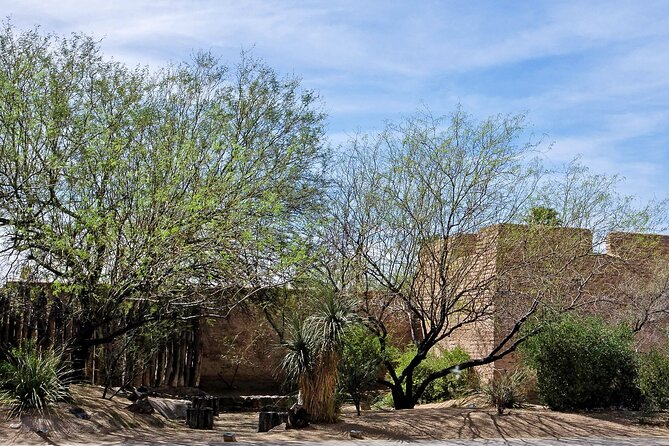
The route begins at 197 North Church Avenue, outside the Presidio San Agustín del Tucson Museum. This location gives the tour a strong opening because the story starts with Tucson’s earliest Spanish settlement rather than with a later downtown building.
The Presidio was once an 11-acre Spanish fort. The audio explains what daily life was like for early settlers in the late 1700s, helping you picture the practical side of colonial life. You are not simply hearing dates and names. You are using the fort as a starting point for understanding how Tucson first developed.
This opening is especially useful if you know little about the city. It establishes the Spanish foundation before the route moves toward adobe homes, commercial streets, and grand residences. If you have already visited the museum, you can use the audio as a wider walking connection between the fort and downtown architecture.
The route begins outdoors, so you do not need to plan around a museum admission as part of the tour. Personal admission costs are not included, and the tour does not provide transportation between stops.
Casa de Cordova and Tucson’s adobe homes
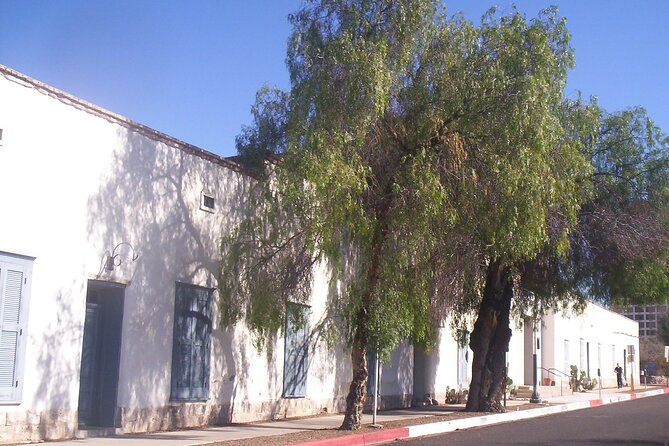
From the Presidio area, you pass Sonoran row houses built from adobe bricks. Casa de Cordova is the key example mentioned along the route. The building was restored and dedicated by First Lady Betty Ford in 1974, giving it an extra connection to the preservation movement of the modern era.
This is one of the most useful parts of the walk because adobe can otherwise become an abstract architectural term. Seeing the homes in place lets you consider how Tucson’s climate, materials, and Spanish and Mexican traditions shaped ordinary housing.
The route does not treat architecture as decoration alone. It connects construction methods with daily life and the people who lived in these homes. That context helps explain why a modest adobe row house can be as important to Tucson’s story as a much larger mansion.
You will pass these buildings rather than take part in a guided interior visit. Plan your expectations accordingly. The value is in the setting, the narration, and the ability to pause outside for a closer look.
The mansions on Main Avenue
The walk then moves toward what historians call the mansions on Main Street, including the Tucson Museum of Art. This section changes the mood of the route. You move from military Tucson and practical adobe housing to the larger homes associated with wealth, civic ambition, and architectural change.
The Tucson Museum of Art gives the route a useful cultural landmark, even if you do not enter. The audio helps place the building and surrounding homes within the story of downtown rather than treating them as isolated sights.
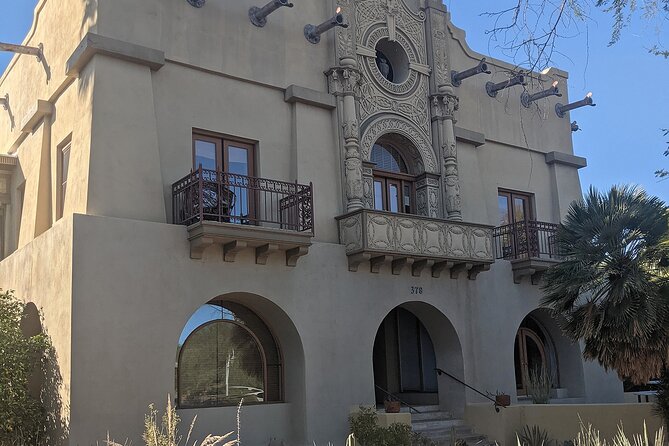
The route also passes the J. Knox Corbett House. Like many of Main Avenue’s sophisticated residences from the 1890s and early 1900s, its appearance reflects the work of architects Henry Trost and David Holmes. Their names are worth noting because they help explain why several Tucson buildings share a polished, carefully designed character.
I like this part of the route for the contrast. Tucson is often reduced to desert scenery and cowboy imagery, but these homes show another side of the city. They reveal ambition, changing tastes, and the arrival of architectural ideas that differed from the earlier adobe tradition.
Keep in mind that the tour is experienced from the sidewalk. You will hear about the houses and examine their exteriors, but the supplied information does not promise interior access.
Another self-paced route in the USA:
- Gettysburg Battlefield Self-Guided Driving Audio Tour
★ 4.5 · 910 reviews - Joshua Tree National Park Self-Guided Driving Audio Tour
★ 4.5 · 762 reviews - San Francisco: Alcatraz, Ferry & Audio Tour w/ Night Option
★ 4.4 · 617 reviews - Ultimate Acadia National Park Self-Guided Driving Audio Tour
★ 4.0 · 521 reviews
A pastry stop at Café a la C’Arte
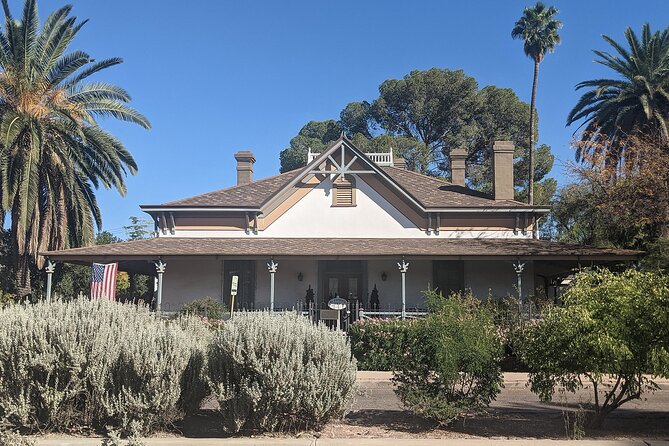
The route passes Café a la C’Arte, where you can find pastries. Food is not included in the $8.99 price, but this is a practical place to consider a pause if it is open when you walk by.
Because the audio tour is self-guided, you do not have to rush past the café to keep up with anyone. Pause the narration, look at the menu, and resume when you are ready. This small bit of flexibility is one of the better reasons to choose an independent audio walk over a tightly timed group tour.
Opening hours for individual businesses are not supplied, so do not build your entire schedule around a pastry stop. Treat it as an optional break rather than a guaranteed part of the experience.
Parks, homes, and stories along the way
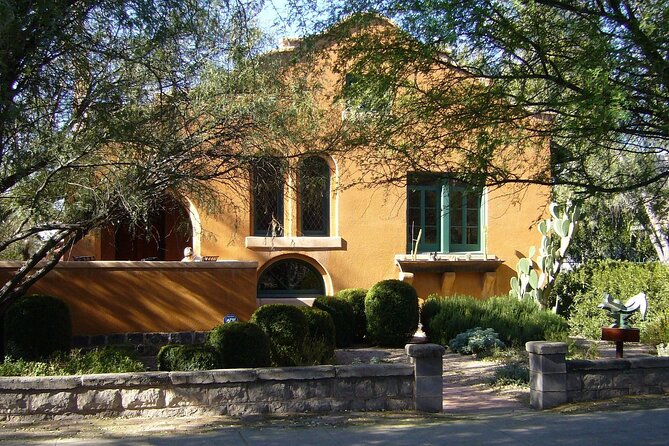
The route passes Christopher Franklin Carroll Centennial Park, with the audio explaining the park as you walk. This gives you a change from house facades and allows the route to include a public space within its account of downtown.
You also pass the Franklin House and hear about its original owners. Details like this give the route a human scale. Instead of seeing an old building only as an architectural object, you get a sense of the people connected with it.
El Presidio Bed and Breakfast is another stop along the way. The narration explains what the property was like under different owners. This kind of ownership story can be particularly helpful when a building has changed function over time. It reminds you that historic properties are not frozen in one period. They are used, altered, renamed, and sometimes preserved for entirely different purposes.
These stops are heard while walking, so the tour does not appear to include scheduled visits inside the houses or bed-and-breakfast. If you want a detailed interior tour, you will need a separate activity.
Ending at El Charro Café and the chimichanga
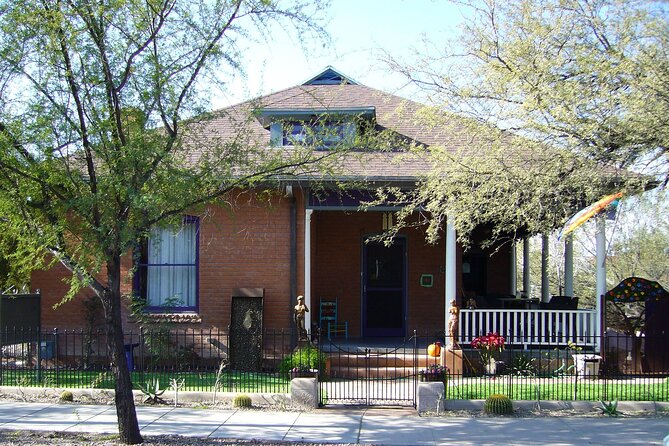
The final stop is in front of El Charro Café at 311 North Court Avenue. The restaurant is identified as Tucson’s oldest Mexican restaurant and as the home of the chimichanga.
That ending makes sense. After starting with the Spanish fort and passing homes shaped by Tucson’s Mexican and American periods, the tour finishes with a living food tradition. You can stop for a meal or simply use the restaurant as the end point for the walk. Food and drinks are not included.
The ending is also convenient for anyone who wants the audio tour to lead into an independent lunch or dinner plan. The tour itself finishes outside the restaurant, so confirm its current hours separately if you hope to eat there.
What the $8.99 price really buys you
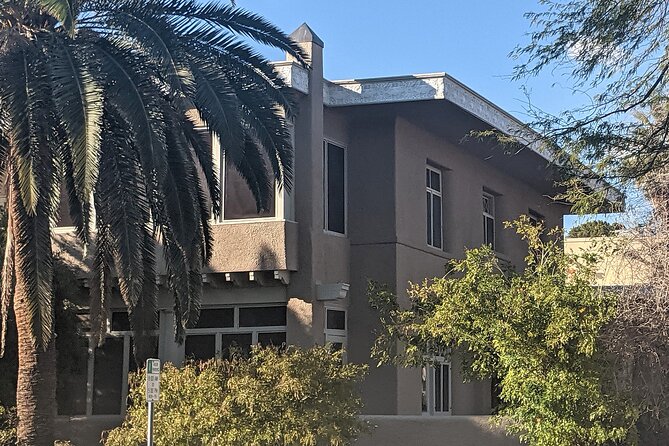
At $8.99 per person, this is a low-cost way to get a structured introduction to downtown Tucson. You receive lifetime access to the English tour, plus offline audio, maps, and geodata through the VoiceMap app.
The value is strongest if you want historical context but do not need a live guide. A private tour gives your group the route without other participants, and the self-guided format lets you stop for photos, food, or extra time at a building.
The price does not cover a smartphone, headphones, meals, admissions, or transportation. Those omissions are easy to manage, but they matter when comparing the cost with a conventional guided walk.
I would not choose this tour mainly for entertainment or social interaction. There is no guide beside you to answer questions, and the experience depends on your phone working properly. I would choose it for a compact introduction to Tucson’s architecture and for the freedom to set your own pace.
Setting up VoiceMap before you walk
The app is available for Android and iOS. You need to redeem the tour with the access code supplied after booking, then download the content before you begin.
This step deserves attention. Some bookings have involved delayed or missing codes, while the provider has indicated that codes were sent by email and SMS. Check both channels, including spam or junk folders, before heading to the starting point. If the code has not arrived, contact VoiceMap support before your planned start time rather than discovering the problem on the sidewalk.
Offline access is a major advantage once setup is complete. You can use the audio, map, and geodata without relying on a live mobile connection. It also helps reduce the chance of losing the route while walking.
Bring charged headphones and keep the volume low enough to remain aware of traffic and other people. Since the tour is self-guided, you are responsible for crossing streets and choosing safe places to pause.
Who will get the most from this walk
I would recommend this tour to you if you enjoy history, architecture, and independent sightseeing. It suits couples, solo visitors, and small private groups that want a short introduction before exploring more of downtown on their own.
It can also work well with a dog, since service animals are allowed and the route takes place outdoors. You will need to handle your own pet care and follow local rules, but the format does not place you in a shared group.
The walk is likely to appeal to people who want more than a list of addresses. The strongest material connects the Presidio, adobe row houses, mansions, public spaces, and restaurant history into one story.
You may prefer a live guide if you want spontaneous questions answered, a firm walking pace, or help interpreting details that catch your eye. You may also want another plan if food is central to your Tucson visit, since Café a la C’Arte and El Charro Café are passed or reached but meals are not part of the tour.
Practical timing and cancellation details
The published duration is about one hour to one hour and 15 minutes. Allow extra time if you stop for pastries, photographs, or a meal at the end.
The meeting point is 197 North Church Avenue, and the endpoint is El Charro Café Downtown at 311 North Court Avenue. The route is near public transportation, though no transportation is included. Most people can participate, and service animals are allowed.
You can cancel for a full refund up to 24 hours before the experience start time. Cancellations or changes made within 24 hours are not accepted for a refund, and the cut-off follows local Tucson time.
Should you book this Tucson audio tour?
Book it if you want an affordable, independent walk that explains how Tucson developed from a Spanish fort into a city of adobe homes, elegant residences, public parks, and enduring food traditions. The best features are the clear historical progression, the architectural focus, and the ability to pause or wander without holding up a group.
Skip it if you want a live person, interior access, included food, or a fully hands-off experience. The phone setup is part of the deal, and the access code should be confirmed before you set out.
For $8.99, I think it is a sensible choice for a first look at downtown Tucson, especially if you download everything in advance and leave room for a pastry stop or a meal at the finish.
FAQ
How long does the Tucson audio tour take?
The tour takes approximately one hour to one hour and 15 minutes, depending on your walking pace and how long you pause at the buildings and stops.
Where does the tour begin?
It begins outside the Presidio San Agustín del Tucson Museum at 197 N Church Ave, Tucson, Arizona 85701.
Where does the tour end?
The tour ends in front of El Charro Café Downtown at 311 N Court Ave, Tucson, Arizona 85701.
What language is the audio tour offered in?
The tour is offered in English.
Do I need to bring my own phone and headphones?
Yes. A smartphone and headphones are not included. The VoiceMap app is available for Android and iOS.
Can I use the tour without mobile data?
Yes. Offline access to the audio, maps, and geodata is included once you download the tour content.
Is food included?
No. Food and drinks are not included. The route passes Café a la C’Arte and ends at El Charro Café, but any purchases are your responsibility.
Can I cancel for a refund?
You can receive a full refund if you cancel at least 24 hours before the experience start time. Cancellations within 24 hours are not refundable.
Latest audio tours in the USA
- Sequoia National Park Self-Guided Audio Tour★ 4.5 · 9 reviews
- Sequoia and Kings Canyon Audio Tour Self Guide National Park Tour★ 5.0 · 3 reviews
- Kings Canyon National Park Self-Guided Audio Tour★ 4.0 · 4 reviews
- Sedona, Arizona Self-Guided Audio Tour★ 4.0 · 36 reviews
- Sedona & Red Rock State Park Self-Guided Driving Audio Tour★ 3.0 · 30 reviews
- Haunted Savannah Self-Guided Walking Audio Tour★ 4.5 · 3 reviews
- Downtown Seattle Self-Guided Walking Audio Tour★ 4.5 · 6 reviews
- Uncover Seattle: Self-Guided Audio Tour★ 3.5 · 7 reviews
USA Audio Tours, compared.


City Sightseeing Hop-On Hop-Off Bus Tour with Audio Guide
Read our review →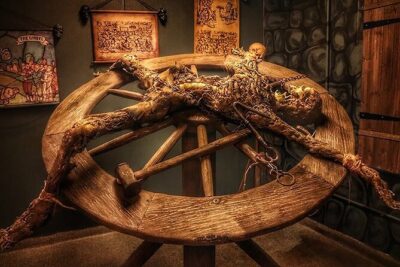
Medieval Torture Museum Ticket with Audio Guide and Ghost Hunting
Read our review →

Ultimate Acadia National Park Self-Guided Driving Audio Tour
Read our review →