

Reviewed · TUCSON
Saguaro NP and Mt. Lemmon Self Guided Driving Audio Tour Bundle
Mount Lemmon gives you one of Arizona’s biggest surprises: a drive that climbs from cactus country to cool pine forests and an alpine ski area. I like the climate change you can watch unfold, and I like the freedom to stop for hikes, photos, lunch, or nothing at all. The audio explains odd rock formations, Cold War radar history, and desert plants as you go.
The main catch is the app. It needs to be downloaded over strong Wi-Fi or cellular service before you set out, and a few users have had trouble with GPS timing, repeated narration, or crashes. Test it before leaving town, and keep your own map or directions handy.
Key points to know before you go

- One price covers the car: The $24.99 fee applies to a group of up to four people, not each passenger.
- Three major drives in one bundle: Follow Mount Lemmon Scenic Byway, West Saguaro National Park, and East Saguaro National Park.
- More than 40 audio stories: The app covers overlooks, trails, geology, wildlife, Indigenous history, and local characters.
- Use it at your own pace: Pause for a picnic, skip a stop, or spread the drives over several days.
- Offline operation matters: Download the app and tour files before reaching the mountains or park roads.
- Tickets are separate: Park admission, attraction entry, reservations, food, and other costs are not included.
Why Mount Lemmon is the star of the bundle

The Mount Lemmon Scenic Byway is the strongest reason to buy this experience. You begin near Tucson’s hot Sonoran Desert and climb roughly 6,000 feet toward Mount Lemmon. That change is not just a number on a sign. Plants, temperatures, rock formations, and views keep shifting as the road rises.
The route takes about two to three hours if you simply drive and stop at the main points. Add a hike, a picnic, or a long photo break and you can easily use much of a day. The narration plays automatically as you approach each location, so you do not have to keep checking a screen while driving.
Early stops introduce the foothills. Soldier Trail offers a challenging five-mile out-and-back walk with about 2,000 feet of climbing. It is useful to know this is not a casual stroll. Babad Do’ag Scenic Overlook gives you a wide view over Tucson, while its 4.5-mile trail passes saguaros, chollas, and ocotillos.
At Molino Canyon Vista, the plants begin to change. Native grasses, tall ocotillos, desert broom, and pink fairy duster replace some of the lower desert vegetation. The explanation helps you notice that you are not simply driving uphill. You are passing through several plant zones on one road.
Bug Spring Trail is a much bigger commitment. The 10-mile out-and-back route takes about five hours and climbs from desert foothills to pine forest, with creek crossings along the way. You do not need to hike it to enjoy the drive, but its description makes clear why sensible shoes, water, and time matter if you choose to walk.
More Self-Guided Audio Tours in the USA
- Gettysburg Battlefield Self-Guided Driving Audio Tour
★ 4.5 · 910 reviews - Joshua Tree National Park Self-Guided Driving Audio Tour
★ 4.5 · 762 reviews - Ultimate Acadia National Park Self-Guided Driving Audio Tour
★ 4.0 · 521 reviews
Picnic stops and wide-open views
Middle Bear Picnic Area is one of the better places to use the tour’s flexibility. Ponderosa pines shelter the picnic tables beside Bear Canyon, and the opposite slope shows the rough shapes created by erosion and landslides. Pack food if you want a quiet meal without adding a restaurant stop to your day.
Manzanita Vista shifts the focus to plant life. Manzanita trees have smooth red bark and twisted branches, and the narration explains how they survive with little water and poor soil. This is the kind of small detail that makes a drive more interesting. You begin looking for the red trunks instead of seeing only a blur of green and brown.
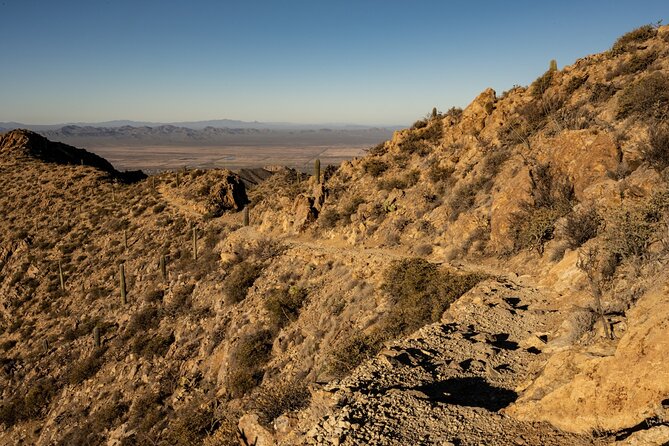
Windy Point Vista is the big visual payoff on the lower and middle section of the route. From here, you can see from the desert floor toward the mountain summit, taking in the range of plant zones in one view. The turnout can be busy, so use the audio as a prompt, then park safely and give yourself time to look.
Geology Vista Point and Hoodoo Vista focus on tall rock spires called hoodoos. Duck Head Rock adds a lighter moment, since the formation resembles a duck’s head and bill. These stops work well for families because the shapes are easy to spot, and the stories give children something specific to search for.
Rose Canyon Lake offers a different pace. Fishing is allowed there, and the setting is quieter than some of the more famous points along the route. Entry rules or permits are not included in the tour price, so check current requirements before planning a fishing stop.
Higher ground, old radar, and alpine Mount Lemmon
The Palisades Visitor Center gives you a practical restroom stop. Butterfly Trail is another serious hike, extending 11 miles, with an unofficial side route to the wreck of an F86 fighter jet from 1957. The aircraft story is one of the more unusual pieces of the drive, but the side trail is not presented as a standard short walk, so plan carefully.
At Aspen Vista, you reach nearly 8,000 feet. On a clear day, the view can extend about 50 miles to the Galiuro Mountains, across a valley cut by the San Pedro River. This is a good place to pause and recognize how far you have climbed from Tucson.
Red Ridge Trail gets its name from iron-rich soil that has weathered to a brick color. The route is a moderate 10-mile hike, so most people will treat the trailhead as a scenic stop rather than a full outing. The explanation of rust-colored soil gives the red dirt a useful bit of context.
Mount Lemmon Ski Valley is a surprising sight in southern Arizona. You can ski here in winter, a reminder that the mountain’s climate is far removed from the cactus country below. Nearby, the Mount Lemmon SkyCenter occupies a site that once served as a Cold War radar station. From 1956 to 1966, it was reportedly the world’s highest continuously operating radar station, with about 80 men living there.
That history gives the upper section more character than a simple scenic drive. You are not just looking at trees and rocks. You are seeing how the mountain served science, defense, recreation, and transportation at different times.
West Saguaro National Park, from Gates Pass to Signal Hill

The West Saguaro route begins with a very different mood. Instead of a long mountain climb, you get broad desert views, dense stands of cactus, and old movie-country associations.
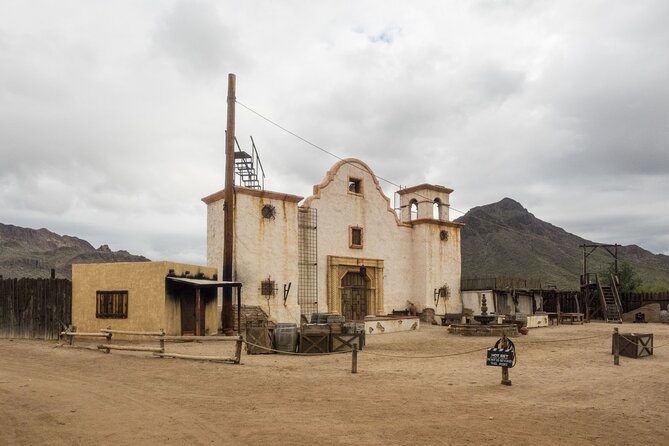
Old Tucson is connected with the area’s film history and remains open to the public as a separate attraction. Admission is not included. Gates Pass Scenic Lookout offers views of Tucson’s ancient rock formations, while Brown Mountain Trail gives you a moderately challenging five-mile loop that takes less than two hours for many hikers. Coyote sightings have been reported along the trail, and the audio notes that their calls can echo across the park.
The Arizona-Sonora Desert Museum is another separate attraction near the King Canyon Trail. The museum requires its own admission, so decide ahead of time if you want to build it into your schedule. King Canyon Trail is a moderately challenging seven-mile route that takes about four hours, making it better for a dedicated hike than a quick stop.
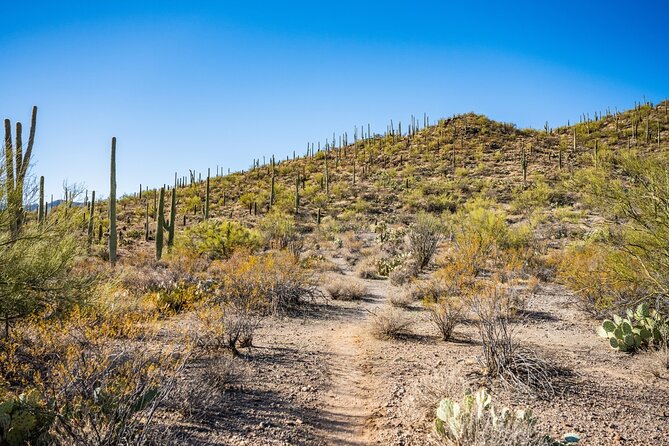
For a shorter walk, the Desert Discovery Nature Trail covers about half a mile and passes many saguaro cacti. The route also introduces the fact that several cactus species are edible, though that does not mean you should pick or taste plants along the trail.
Hugh Norris Trail is a demanding nine-mile route often used by horseback riders. Its name comes from Hugh Norris, a 20th-century tribal police officer who searched for students avoiding the Fort Yuma Indian School. Valley View Overlook Trail is much easier: about one mile and roughly 20 minutes, with construction by the Civilian Conservation Corps in the 1930s.
Signal Hill is one of the most meaningful stops in the western park. About 200 petroglyphs made by the Hohokam remain on the rocks. The narration connects the site with Indigenous traditions and the idea that the placement of each carving carried meaning. Treat the rock art with care, and do not touch or climb on the marked surfaces.
More Driving Audio Tours in the USA
- Ultimate Lake Tahoe Self-Guided Driving Audio Tour
★ 4.5 · 435 reviews - Scenic Newport, RI Self-Guided Driving Audio Tour
★ 4.5 · 325 reviews - Arches National Park Self-Guided Driving Audio Tour
★ 4.5 · 288 reviews - Yellowstone National Park Self-Guided Driving Audio Tour
★ 4.5 · 249 reviews
East Saguaro National Park and Cactus Forest Drive
The eastern tour starts at Rincon Mountain Visitor Center on Old Spanish Trail. From there, you follow Cactus Forest Drive through a large concentration of saguaros and other cactus species.
The Sonoran Desert Overlook introduces the Hohokam, ancestors of the O’odham people. The story explains how communities gradually shifted from mobile hunting and gathering toward settled farming, adapting their lives to a demanding desert setting.
At the Cactus Forest Overlook, you see more than saguaros. The park contains about 25 cactus species, including prickly pears and chollas. That variety matters because the famous saguaro can otherwise make the desert seem less complex than it is.
Mica View Trail is a practical choice if you want a moderate walk without committing to a full day. The four-mile loop takes less than 90 minutes according to the route information and includes a picnic spot with views toward the Rincon and Santa Catalina Mountains. Watch for Gila woodpeckers and gilded flickers, two birds specifically associated with the stop.
Cactus Forest Trail is a longer 10-mile route that takes about three and a half hours. Along the way, you can see lime kilns dating to 1880. Loma Verde Trail is easier, a 3.7-mile loop taking about an hour and 15 minutes, with a seasonal stream and a gradual downhill section through the cactus forest.
Garwood Dam adds a human story to the eastern park. Josephine and Nelson Garwood bought 450 acres in 1945. While building a larger house three years later, they noticed that Wildhorse Canyon held water. The result is a reminder that water, not just cactus, shapes life in this part of Arizona.
Riparian Overlook may give you the best broad view of the cactus forest. The audio adds a sly note: you can see across the saguaro wilderness, but you cannot see rattlesnakes from up there. The Rincon Mountains bring more history, including the account of a Cessna 310 caught in a thunderstorm in 1984.
Javelina Rocks is the final wildlife-themed stop. Javelina are dog-sized animals with coarse salt-and-pepper hair, short legs, and pig-like noses. Tanque Verde Ridge Trail closes the route with a moderately challenging three-mile hike that takes less than two hours.
How the app works, and where it can fail

After booking, you receive setup instructions and a password by email and text. Search for audio tour if the message is hard to find. Download the separate Action Tour Guide app, enter the password, and download the tour while you have a strong connection.
Once you reach the starting point, open the app and select the correct tour and direction. The first story should begin when you reach its GPS point. The next story plays as you continue along the route, allowing hands-free use through your car stereo.
Connect by Bluetooth, USB, or AUX. Apple CarPlay is supported, while Android Auto support is still being developed according to the supplied information. An iPhone with iOS 15 or newer, an Android device with version 9 or newer, or an iPad or tablet with GPS and cellular service is recommended.
The system is not flawless. One person had trouble getting the narration to start, another dealt with repeated information and GPS lag, and another reported crashes that required restarting the phone. Those problems are serious because mountain roads are not the place to troubleshoot an app.
Download everything before you leave, start the tour in town if possible, and keep the phone charged. Drive at the speed limit, since audio timing works best at the intended pace. If the app fails, you can still follow the route with ordinary directions, but you will lose the main benefit of the purchase.
Price, timing, and who should buy it
At $24.99 per group of up to four, the math is favorable for a couple, family, or small group sharing one car. A guided bus tour would usually give you less control over stops and timing, while this bundle lets you pause, skip a trail, or spread the experience across more than one day.
The full outing is described as roughly four to five hours, but that assumes a fairly steady drive. Mount Lemmon alone can take two to three hours, and the two Saguaro routes deserve their own time if you plan to walk. Lifetime access with no expiration makes the purchase more useful if you return to Tucson.
You should also budget separately for park admission, Old Tucson, the Arizona-Sonora Desert Museum, fishing requirements, food, and any reservations. The audio price gets you guidance, not entry to paid attractions.
This works best for independent drivers who like context but do not want a fixed group schedule. It also suits repeat visitors because you can return to a missed stop. It is less suitable if you dislike smartphone setup, need a live guide, or expect every GPS trigger to work perfectly.
Should you book this Tucson driving tour?
Book it if you want a low-cost way to connect three excellent drives and you are willing to prepare the app before departure. The Mount Lemmon section offers the greatest payoff, especially for its rapid change from desert heat to pine forest, ski slopes, and old radar history.
Choose another option if reliable technology is essential or if you want personal guidance at every stop. My practical advice is simple: download the tour at home, test the narration, connect it to your car, and save the support contact details. Done that way, this is a flexible companion for Tucson’s mountains and cactus country, not a substitute for your own planning.
FAQ
How long does the full experience take?
The complete bundle takes about four to five hours, depending on your driving pace and stops. The Mount Lemmon route alone takes about two to three hours, while hikes and side attractions can add much more time.
How many people does the $24.99 price cover?
The price covers one group of up to four people in the same car. You do not need to purchase a separate tour for each passenger.
Do I need cellular service during the tour?
You need strong Wi-Fi or cellular service to download the app and tour before starting. After downloading, the audio and maps work offline.
Are park admission and attraction tickets included?
No. Entry fees, attraction tickets, reservations, food, and other costs are separate from the audio tour.
Can I use the tour on different days?
Yes. The tour provides lifetime access with no expiration. You can start, pause, and resume it whenever you like, including on later trips.
What happens if the app does not work?
The supplier provides support, and the tour instructions advise contacting support for audio problems. Downloading the tour in advance, testing it before departure, and driving at the posted speed limit can help reduce GPS and playback problems.
Latest audio tours in the USA
- Sequoia National Park Self-Guided Audio Tour★ 4.5 · 9 reviews
- Sequoia and Kings Canyon Audio Tour Self Guide National Park Tour★ 5.0 · 3 reviews
- Kings Canyon National Park Self-Guided Audio Tour★ 4.0 · 4 reviews
- Sedona, Arizona Self-Guided Audio Tour★ 4.0 · 36 reviews
- Sedona & Red Rock State Park Self-Guided Driving Audio Tour★ 3.0 · 30 reviews
- Haunted Savannah Self-Guided Walking Audio Tour★ 4.5 · 3 reviews
- Downtown Seattle Self-Guided Walking Audio Tour★ 4.5 · 6 reviews
- Uncover Seattle: Self-Guided Audio Tour★ 3.5 · 7 reviews
Driving Audio Tours, compared.


Ultimate Acadia National Park Self-Guided Driving Audio Tour
Read our review →



Browse the lists this tour appears in