
Reviewed · USA
St. Augustine’s Lost Souls: a Smartphone Audio Ghost Tour
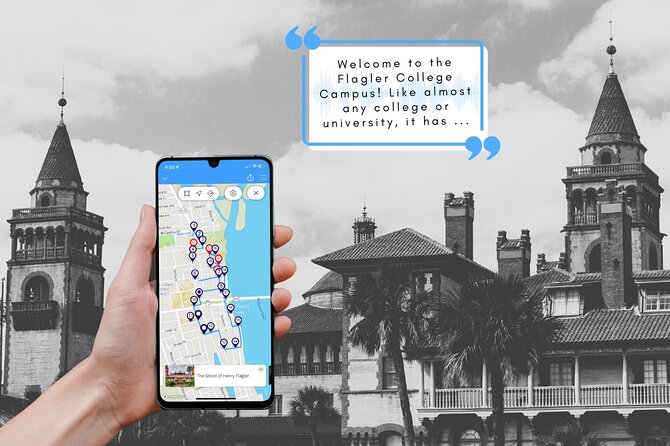
St. Augustine’s Lost Souls turns the oldest city in the continental United States into a self-guided ghost walk. Over about 2.5 miles, your phone leads you past cemeteries, old boarding houses, restaurants, Flagler College, and the Castillo de San Marcos while an audio narrator tells the spooky tale at each stop.
I like the freedom to pause for dinner, enter a historic site, or wander down a side street and return to the route later. I also like the low $10.99 price, especially for a family or private group. The main drawback is the app: most of the route is clear, but a few directions can feel vague in the crowded old city, so download everything first and keep the map open.
Key points before you set out
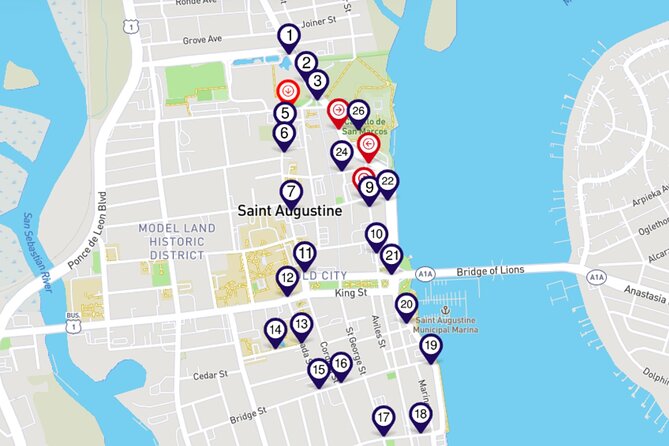
- Nineteen stops cover the old city: The route includes Huguenot Cemetery, Tolomato Cemetery, Flagler College, several historic inns, the Bridge of Lions, and the Castillo de San Marcos.
- The tour is self-paced: Audio plays automatically near points of interest, and you can stop for food or paid attractions without losing the tour.
- You need comfortable shoes: The walk lasts about three hours and covers roughly 2.5 miles on old streets and walkways.
- The ghost stories come with local history: Tales include yellow fever victims, bootleggers, lost lovers, a strange sea creature, and the spirits linked to Flagler College.
- Download before arrival: The tour works without a signal or mobile data after the content is downloaded on Wi-Fi.
- Admission is mostly separate: The walking route is included, but tickets for Flagler College, the Castillo de San Marcos, and suggested sites are not.
Starting at the visitor center and Huguenot Cemetery

The tour begins at the St. Augustine and St. Johns County Visitor Information Center at 10 S Castillo Drive. From there, you head toward the old city and the first story, at Huguenot Cemetery.
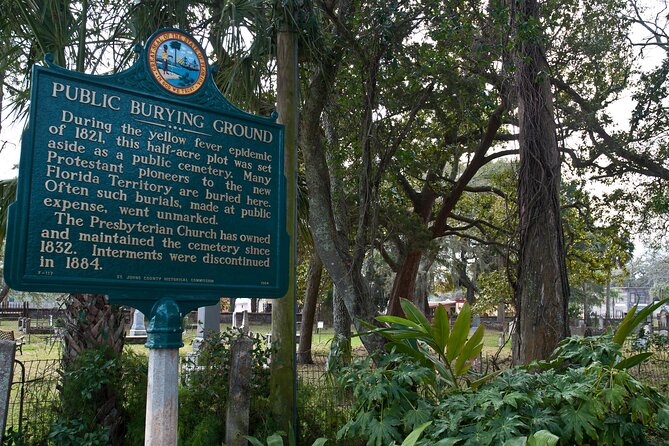
Established in 1821, Huguenot Cemetery became the final resting place of many yellow fever victims. The narration focuses on Little Elizabeth and the cemetery’s reputation as one of St. Augustine’s most haunted places. You do not need to buy a ticket to view the area from the route, but the stop is best treated as a quick orientation rather than a long visit.
Next comes the Old City Gates near City Gate Spirits. The story uses the gates as a fitting entrance into the supernatural side of St. Augustine. The idea of portals and doorways to the other side gives the tour a clear opening theme, moving you from the visitor center into the old streets.
This early section is easy to follow if your phone is ready. It can also be noisy, especially on a busy afternoon, so headphones are useful. They are optional because the audio can play through your phone speaker.
More Smartphone Audio Tours in the USA
- Self-Guided GPS Audio E-Bike Tour Hawaii Volcanoes National Park
★ 4.5 · 131 reviews - Santa Fe Historic Downtown Smart Phone Audio App Self Guided GPS Walking Tour
★ 4.5 · 112 reviews - Ultimate Portland Self-Guided Driving GPS Audio Tour
★ 4.0 · 56 reviews
Two cemeteries and the first old inns
Tolomato Cemetery follows a few minutes later. The narration points out that Huguenot may have the bigger ghostly reputation, but Tolomato has an important claim of its own: it is described as the oldest planned cemetery in America.
The tour does not simply ask you to look at a graveyard and move on. It sets up a comparison between the two burial grounds, which gives the walk a sense of place. You hear why these quiet, enclosed spaces matter to St. Augustine’s ghost lore.
At Casa de Sueños, the subject shifts from cemeteries to a building that has changed use over time. The Spanish-style structure on Cordova and Saragossa streets was built in 1904 as a private residence and later became an inn. The story, titled Randolph’s Casa de Sueños, uses the building’s owners and changing identity as part of its mystery.
You then pass Scarlett O’Hara’s on Hypolita Street. The old wooden structure is actually two buildings joined together, and the story centers on heartbreak. This is a good example of the tour’s format: you get a short stop, a visible building, and a compact tale rather than a long lecture.
Bootleggers, heartbreak, and old waterfront buildings
Casablanca Inn, once known as the Matanzas Hotel and the Bayfront Boarding House, brings in a darker chapter. Built in 1914, the inn takes its Spanish name from the nearby river and bay. The narration links that name to the story of bootlegging, giving the stop a stronger crime-and-secrets feel than the cemetery tales.
At Harry’s Seafood, Bar & Grille, the story turns to Catalina and Bridgette. The red building with the old stone wall dates to the mid-1700s, even though the restaurant itself opened much later. That contrast matters: you are not just hearing about a themed restaurant. You are looking at a modern business inside a building with centuries of use behind it.
I like this middle section because you can stop for a meal without abandoning the experience. The tour is not tied to a group departure, so you can pause the audio, eat, and return to the route. That makes the $10.99 fee more useful than a fixed one-hour ghost talk if you want to build the walk into a full afternoon.
Flagler College and its lost souls

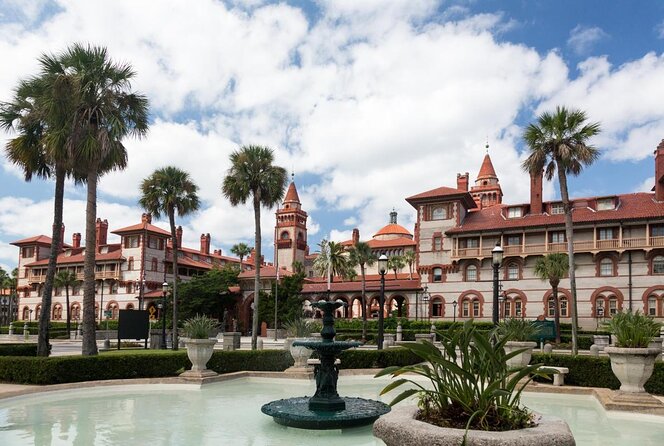
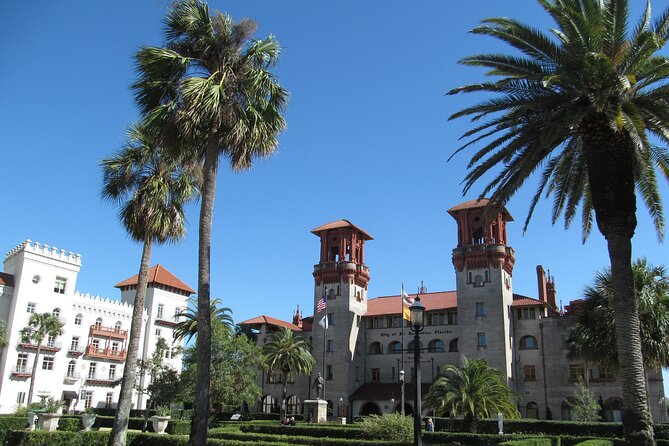
Flagler College supplies some of the most recognizable sights on the route. You first walk along the campus and hear about the ghost of Henry Flagler. The stories reach back to the time before the college existed, when the buildings had a different role.
At Ponce de Leon Hall, the narration adds more lost souls to the Flagler story. You will see the entrance and the statue of Flagler, but this audio walk does not include admission to the college. If you want to go inside, you must purchase a separate ticket, and access may depend on opening conditions.
This is one place where expectations matter. The route lets you see the exterior and hear the stories while you continue walking. It is not a substitute for a guided interior tour of Flagler College.
The app’s automatic playback is helpful here. When you approach a stop, your phone can vibrate and begin the narration. That feature is especially useful when the street is noisy or you do not want to stare at your screen the whole time.
Another self-paced route in the USA:
- Los Angeles: Hop-On Hop-Off Bus Tour with Audio Guide
★ 3.7 · 2,030 reviews - City Sightseeing Hop-On Hop-Off Bus Tour with Audio Guide
★ 3.0 · 1,083 reviews - Medieval Torture Museum Ticket with Audio Guide and Ghost Hunting
★ 5.0 · 962 reviews - Gettysburg Battlefield Self-Guided Driving Audio Tour
★ 4.5 · 910 reviews
The Penny Farthing Inn and the St. Augustine monster

Across the street, Penny Farthing Inn begins a pair of stories about paranormal inns. The cream-colored building with blue trim was built in 1893. Admission is not included, and the tour treats the inn as an exterior stop.
The next story is not tied to one building. At Cordova and Bridge streets, you hear about the St. Augustine monster, a strange urban legend connected to an event in November 1896 on Anastasia Island. You can keep walking while the narration plays, which gives the stop a different rhythm from the cemeteries and buildings.
The route later turns right toward St. George Street. Pay attention to this instruction, since the old city has one-way streets, narrow walkways, and plenty of distractions. If you get turned around, use the live GPS map and the written transcript rather than guessing.
St. Francis Inn and the Oldest House

St. Francis Inn is described as St. Augustine’s oldest inn. Built in 1791 during the second Spanish colonial period, the house served as both a residence and a kind of fortress. The story here follows lost lovers, a natural fit for a building with such a long domestic history.
The stop at the González-Alvarez House, commonly called the Oldest House, adds another important landmark. Built in 1723, it is described as the oldest surviving Spanish colonial residence in Florida. The long white building, green doors, and green shutters make it easy to identify from the street.
This is where the tour works best as both a ghost walk and a quick introduction to old St. Augustine. Even if you are not fully convinced by the supernatural claims, the buildings give the stories a physical setting. You can see the age and changing uses of the city while listening to tales about the people connected to them.
The Marin House, Margaret’s Manor, and the lighthouse story
Bayfront Marin House is a large yellow building with a history reaching back to property acquired by Francisco Marin in the 1780s. The current inn developed later, and the narration focuses on a solitary party at the Marin House.
At O.C. White’s Seafood & Spirits, the story moves to Margaret’s Manor. The stone building with green trim dates to 1790, though it was not always in its current location. That detail adds a bit of historical movement to the route. Buildings in an old city are not always fixed in place or purpose.
The Bridge of Lions and Cathedral Place introduce the St. Augustine Lighthouse story. The lighthouse may be the city’s most famous haunted location, but this tour does not take you to the lighthouse. It is about half an hour away on Anastasia Island, so the audio tells the story from downtown instead.
That is worth noting before booking. If the lighthouse is your main goal, you need a separate plan. This tour gives you the legend without the visit.
Casa de la Paz, Agustin Inn, and the final fort
Casa de la Paz is a vacant building with the sort of appearance that naturally suits a ghost story. Built in 1915 as a private residence for J. Duncan Puller, it later became associated with phantom cries. The stop depends on looking at the building from outside, since access is not part of the experience.
Agustin Inn supplies another lodging story. The building began as a two-story Victorian home, completed in 1904 for businessman Bernard Masters. The tale of the inn’s grumpy ghost keeps the tone lighter than the more tragic stories earlier in the walk.
The final stop is the Castillo de San Marcos, the oldest masonry fort in the continental United States. Its thick walls and stern profile make a strong ending for a ghost tour, even before the narration begins. Admission to the fort is not included, so plan to buy a ticket separately if you want to explore the interior.
The tour then returns to the starting point. The listed stops are each about five minutes, but the full outing takes around three hours once you include walking, pauses, photos, food, and optional admissions.
What the $10.99 price really buys you
At $10.99 per person, this is a modest-cost way to add structure to an evening or afternoon in St. Augustine. A family of four pays about $44 before any attraction tickets, but the tour can be kept and used at a flexible time rather than tied to one departure.
You are paying for the audio route, GPS directions, written information, and customer service by phone and email. You are not paying for a live guide, attraction admission, transportation, or a personal escort through the city.
That distinction is important. One piece of customer support information incorrectly suggested that the fort ticket was included, but it is not. The Castillo, Flagler College, and other paid sites remain separate expenses. If you want a simple, low-cost walk with stories, the price is fair. If you expect a fully guided experience with entry to historic buildings, it will feel limited.
Making the app work for you
Download the tour on Wi-Fi before you start. Once it is stored on your phone, you should not need a signal or mobile data during the walk. Bring a charged smartphone, and use headphones if street noise makes the speaker hard to hear.
The GPS map shows the route and your location, and the narration is meant to play automatically at each point. The written transcript is a useful backup, especially if traffic, crowds, or nearby conversations drown out the audio.
The route is generally simple, but the old city can be confusing. One-way streets, alleys, bridges, and dense pedestrian traffic can make a direction such as go forward less obvious than it sounds. Check the map at turns, and do not assume every instruction means you should cross a bridge or enter a building.
You can also take side trips. Pause the tour for dinner, a drink, a historic site, or a photo stop, then return to the next point. That flexibility is one of the strongest reasons to choose this format.
Who should book this ghost walk
I would choose this tour for families, couples, and small private groups that want ghost stories without joining a scheduled crowd. It also suits people who like to control the pace and mix sightseeing with food.
It is a good match for older children who can manage a 2.5-mile walk, though some cemetery and death stories may be unsettling. Comfortable shoes are essential. The route is not presented as a strenuous hike, but three hours on old streets is still a lot of time on your feet.
I would be more cautious if you want a polished, highly personal guide or need precise turn-by-turn help at every corner. The audio format gives you freedom, but it also makes you responsible for your phone, route, and timing.
Free cancellation is available when you cancel at least 24 hours before the start time. Changes or cancellations within 24 hours are not refundable.
Should you book St. Augustine’s Lost Souls?
Book it if you want a low-cost way to connect St. Augustine’s cemeteries, inns, restaurants, college buildings, and fort with spooky local stories. The strongest features are the flexible timing, automatic audio, written transcript, and the chance to stop for food or paid attractions.
Skip it if your priority is entering the lighthouse, Flagler College, or Castillo de San Marcos, since those admissions are separate and the lighthouse is not on the walking route. Also skip it if you dislike navigating with a phone.
For most people, the best approach is simple: download the tour at home, charge your phone, wear good shoes, start before the streets get too crowded, and keep the GPS map handy. At $10.99, it offers a useful layer of atmosphere and history for a walk through St. Augustine’s old center.
FAQ
How long does the tour take?
The tour takes approximately three hours, including 19 stops and about 2.5 miles of walking.
Where does the tour start?
It starts at the St. Augustine and St. Johns County Visitor Information Center, 10 S Castillo Drive, St. Augustine, Florida.
Where does the tour end?
The activity ends back at the starting point.
Is this a live guided tour?
No. This is a smartphone audio tour with GPS directions and automatically triggered commentary. Only your group participates.
What language is offered?
The tour is offered in English.
Do I need mobile data during the tour?
No. You can download the tour on Wi-Fi before starting, then use it without a signal or mobile data.
Do I need headphones?
Headphones are optional. The audio can play through your phone’s speaker, though headphones may help in noisy areas.
Are attraction tickets included?
No. Admission tickets for attractions such as the Castillo de San Marcos, Flagler College, and other recommended sites are not included.
Is the lighthouse part of the walking route?
No. The tour tells the story of the St. Augustine Lighthouse, but the lighthouse itself is about half an hour away on Anastasia Island and is not visited.
Can I cancel for a refund?
Yes. You can receive a full refund if you cancel at least 24 hours before the experience start time. Cancellations within 24 hours are not refunded.
Latest audio tours in the USA
- Zion National Park Self-Guided Audio Tour★ 4.0 · 2 reviews
- St. Augustine City Self-Guided Walking Audio Tour★ 4.5 · 3 reviews
- Historic St Augustine Audio Self Guided App GPS Tour★ 4.0 · 13 reviews
- Self-Guided Haunted Ghost Walking Audio Tour in St. Augustine★ 4.5 · 16 reviews
- Badlands National Park Self-Guided Audio Tour★ 4.0 · 3 reviews
- Badlands National Park Self-Guided Driving Audio Tour★ 4.5 · 61 reviews
- Badlands and Mount Rushmore Self-Guided Audio Tour Bundle★ 5.0 · 4 reviews
- Sequoia National Park Self-Guided Audio Tour★ 4.5 · 9 reviews
Smartphone Audio Tours, compared.
Colosseum & Forum with Audio Guide App -Optional Arena
Read our review →
Timed Entry to Michelangelo’s David + Audio App
Read our review →
Cathedral & Brunelleschi’s Dome Ticket & Audio App
Read our review →
Michelangelo’s David Priority Ticket & Audio App
Read our review →
Uffizi Priority Ticket & Masterpieces Audio App
Read our review →
Castel Sant’Angelo Entry Ticket & Digital Audioguide
Read our review →
Pantheon Priority Entry Ticket & Audio Guide App
Read our review →Browse the lists this tour appears in