
Reviewed · USA
Olympic National Park Self-Guided Driving Audio Tour
Olympic National Park is too large for one neat scenic loop, and that is the most important thing to understand here. This is a GPS-guided driving tour with a main route of more than 43 miles, over 33 audio stories, and several added routes for Hurricane Ridge, the Hoh Rain Forest, Rialto Beach, Ruby Beach, and the west side of the peninsula.
I like paying once for a whole car rather than buying four tickets. I also like the freedom to stop for a short walk at Madison Falls, linger by Lake Crescent, or skip a section when time is tight. The catch is that the full collection is much larger than the advertised five to six hours, and the app can be fussy if you do not download everything before reaching the park.
Key points to know before you book
- The main route begins at the Olympic National Park Visitor Center in Port Angeles and ends near the Sol Duc Trailhead.
- The Elwha Valley and Lake Crescent are the strongest core stops, with short walks, river views, and useful park context.
- Bonus routes cover major far-flung sights, including Hurricane Ridge, the Hoh Rain Forest, Rialto Beach, Ruby Beach, and Forks.
- The $16.99 price covers one group of up to four people, making it far cheaper than a private guide.
- Download the Action Tour Guide app and audio before leaving strong service, then connect your phone to the car stereo.
- A park pass is required and not included, and full use of every route can take much longer than five or six hours.
What this Olympic audio tour really covers
I would treat this as a flexible set of self-guided routes rather than one simple half-day drive. The principal route takes about two to three hours of audio and driving, while the added sections reach much farther around Olympic National Park.
The main path introduces the park at the Visitor Center, then heads toward the Elwha Valley and west toward Lake Crescent and Sol Duc. Other recorded sections point you toward Hurricane Ridge, the Hoh Rain Forest, Rialto Beach, Ruby Beach, Forks, Bogachiel State Park, and La Poel.
That distinction matters. You cannot realistically see every named stop, take the walks, and circle the peninsula in five hours. One particularly useful lesson is that Olympic National Park is best experienced partly on foot. There is no single car road crossing the park, so a full visit can involve long drives between separate areas and many short or vigorous walks.
The app uses your phone’s GPS to begin stories as you approach each point. Once it works, you can leave the phone alone and listen through Bluetooth, USB, AUX, or compatible car audio. The narrator offers directions, park background, local stories, geology, and practical context, though the balance between useful park facts and folklore is not always perfect.
More Self-Guided Audio Tours in the USA
- Gettysburg Battlefield Self-Guided Driving Audio Tour
★ 4.5 · 910 reviews - Joshua Tree National Park Self-Guided Driving Audio Tour
★ 4.5 · 762 reviews - Ultimate Acadia National Park Self-Guided Driving Audio Tour
★ 4.0 · 521 reviews
Starting at the Visitor Center in Port Angeles
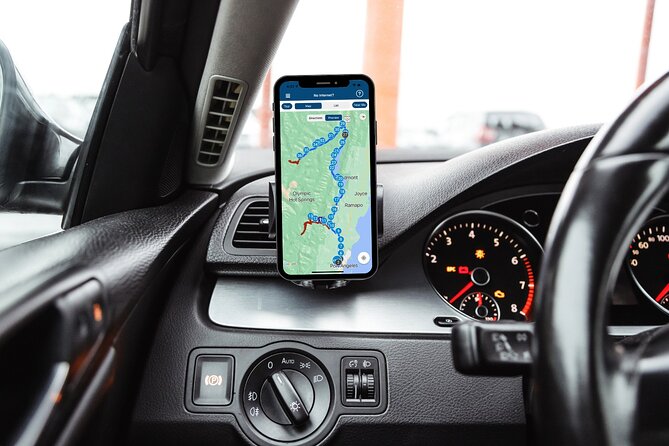
The Olympic National Park Visitor Center at 3002 Mount Angeles Road is the official starting point. This is not a staffed tour meeting. You simply arrive, open the Action Tour Guide app, select the correct version, and let the first story begin.
Starting at the named point is important. The GPS system is designed to follow the route from there, and several technical complaints came from people who tried to begin elsewhere or expected the app to know which route they had chosen.
I would arrive with the app already installed, the password entered, and all audio downloaded. Do this while you have strong Wi-Fi or cellular service. The park includes areas with weak or nonexistent service, so postponing setup until you are inside the park is asking for trouble.
The Visitor Center section gives you an introduction to Olympic National Park’s four broad regions: the Pacific coast, alpine country, temperate rain forest, and drier eastern forests. It also explains the park’s three major ecosystems, from subalpine meadows to lowland forest and rugged ocean shore.
Madison Falls and the Elwha River
Madison Falls is a good early stop because it gives you a satisfying sight without demanding much time or effort. The paved trail runs less than 100 meters to a roughly 50-foot waterfall, and the route is wheelchair accessible.
The falls usually appear as a light, horsetail-shaped flow. A taller fall lies above it, but you cannot reach that upper section. I would budget about 30 minutes here, including the walk and photographs.
The next Elwha River section adds more meaning to the drive. The river runs about 45 miles from the Olympic Mountains north to the Strait of Juan de Fuca, with most of its course inside the national park. The audio places this river within the wider story of the valley and its changing relationship with dams.
At the Glines Canyon Dam Overlook, you get a look at the former 210-foot concrete arch dam, built in 1927. The eastside overlook is a particularly worthwhile stop for anyone interested in how a major structure once altered a protected river corridor. Allow about 45 minutes if you want time for the view and the audio.
This portion is one of the tour’s most useful sections because it combines scenery with a clear subject. It is not simply a string of scenic pullouts. You get a reason to pay attention to the river, the valley, and the old dam site.
Lake Sutherland and Lake Crescent
Lake Sutherland lies about 17 miles west of Port Angeles and just east of Lake Crescent. It drains through Indian Creek toward the Elwha River. The stop is scheduled for about 50 minutes, which gives you time to pause beside the water rather than merely hear about it through the windshield.
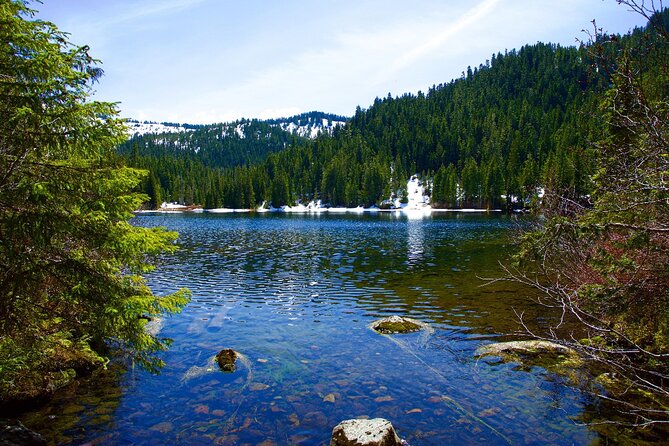
Lake Crescent is the bigger draw. It is a deep lake entirely within Olympic National Park, close to U.S. 101 and the small community of Piedmont. The road makes this one of the easier places to add a scenic pause to your day.
The audio is useful here because it keeps the drive moving while allowing you to stop when the setting catches your attention. You are not tied to a guide’s timetable, and you can pause the narration for a picnic, a photograph, or a short walk.
Still, do not assume every listed lake stop is a formal viewpoint with facilities. The experience depends on your own planning, and some sections are better understood as GPS-triggered commentary along the road rather than a series of fully developed attractions.
More Driving Audio Tours in the USA
- Ultimate Lake Tahoe Self-Guided Driving Audio Tour
★ 4.5 · 435 reviews - Scenic Newport, RI Self-Guided Driving Audio Tour
★ 4.5 · 325 reviews - Arches National Park Self-Guided Driving Audio Tour
★ 4.5 · 288 reviews - Yellowstone National Park Self-Guided Driving Audio Tour
★ 4.5 · 249 reviews
Marymere Falls and Meldrim Point
Marymere Falls is near Lake Crescent and offers a short stop of about 15 minutes in the planned route. It is a natural place to stretch your legs after the longer lake sections.
Meldrim Point, also near Lake Crescent and close to Ovington, is another brief audio stop. These shorter sections work well for a relaxed day because you can take them as prompts rather than obligations.
I like this part of the tour for its flexibility. You can listen while driving, then decide on the spot if a trail or viewpoint deserves extra time. But the app does not replace trail information or a park map. You still need to judge time, road conditions, daylight, and your own walking ability.
Sol Duc Valley and the route’s endpoint
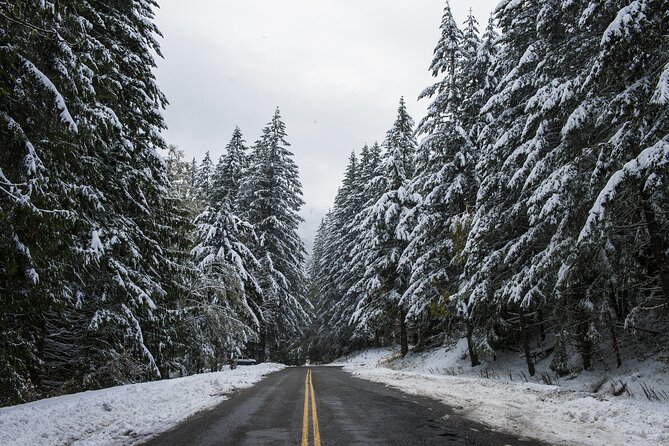
The Sol Duc Valley lies in the northwest part of the park. The tour’s stated endpoint is the Sol Duc Trailhead on Sol Duc Road, near Port Angeles.
The Sol Duc section is brief at about 15 minutes in the supplied timing, but it serves as an important route marker. Some visitors had trouble reaching the audio for the Hoh section after skipping Sol Duc, so I would not casually jump between sections without learning how the app selects alternate tour versions.
The tour allows you to pause and resume over multiple days. That is a major advantage here. If you are using this as part of a longer Olympic Peninsula trip, you can complete the Port Angeles and Lake Crescent sections one day, then return to the app for a western or coastal route later.
The endpoint should not be confused with the end of your entire Olympic visit. Olympic National Park has no road that neatly joins every major sight, and Sol Duc is only one portion of the park.
The Hoh Rain Forest and the western side
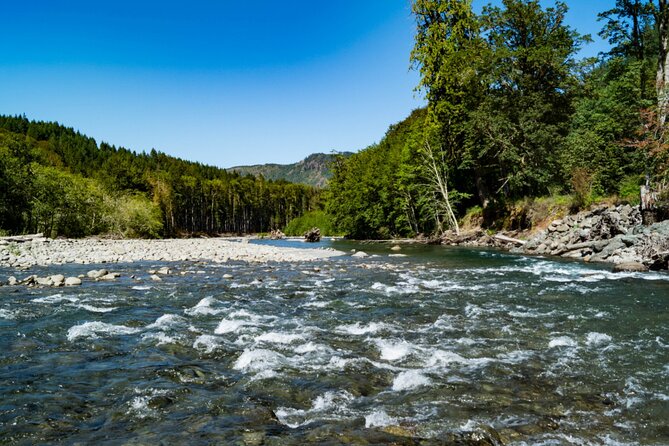
The Hoh Rain Forest is one of the largest temperate rain forests in the United States. Its low-elevation valley follows the Hoh River for about 24 miles, from roughly 394 to 2,493 feet in elevation. Glaciers helped form the valley thousands of years ago.
The Hoh section is best treated as a separate bonus route, not a quick add-on to the Port Angeles drive. The distance between park regions can consume much of your day, and the Hoh area deserves time outside the vehicle.
You may hear audio while approaching the forest and then continue listening as you walk. That is a better use of the tour than trying to rush through the area from the driver’s seat. The supplied material lists the Hoh Rain Forest twice, which appears to reflect repeated coverage rather than two entirely different forests, so check the app carefully before assuming you have found a new route.
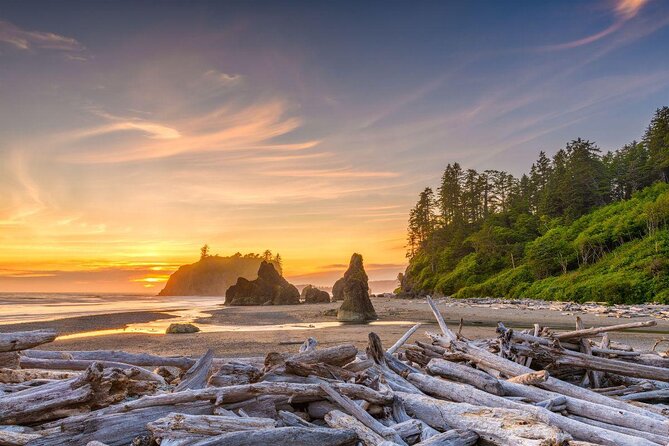
Rialto Beach and Ruby Beach offer a different kind of Olympic experience. Rialto sits on the Pacific coast, while Ruby Beach is known for heavy driftwood and numerous sea stacks. These are not quick scenic substitutes for the inland routes. Ocean stops need time for walking, watching the surf, and handling uneven ground.
The western route also includes Forks Timber Museum, Bogachiel State Park, and the Forks area. The museum focuses on regional forestry and sits near the local tourist office. Bogachiel State Park covers 127 acres along the Bogachiel River, about four miles south of Forks on Highway 101.
Hurricane Ridge and the alpine routes
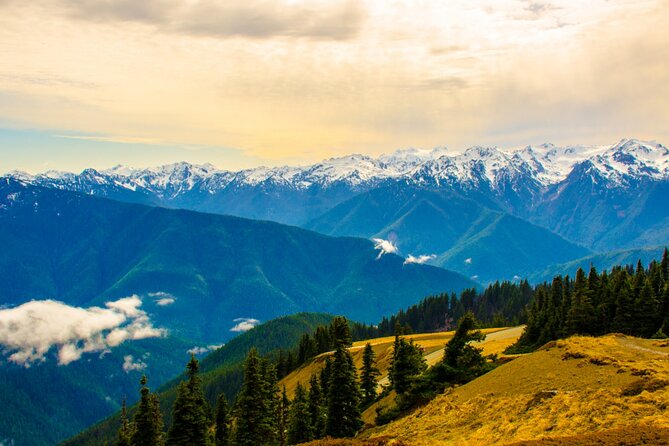
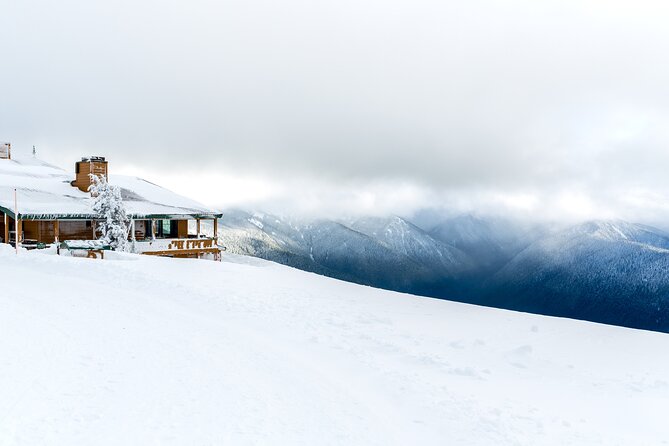
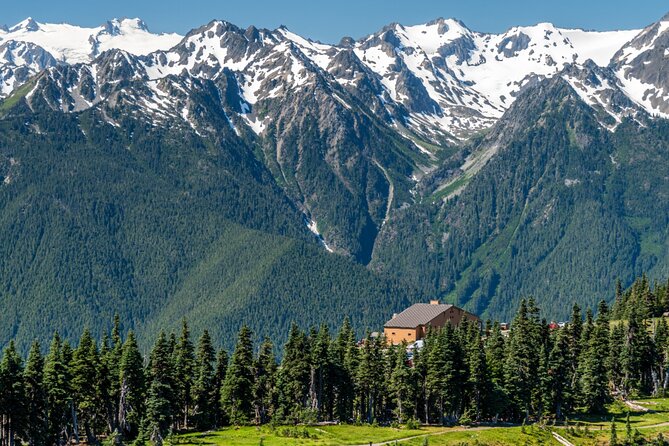
Hurricane Ridge is the park’s high-country section, and it can feel like a separate trip from the rain forest and coast. The added audio points include viewpoints along Hurricane Ridge Road, a short alpine walk with views and possible wildlife and wildflowers, and a more vigorous hike with broad views from the top.
I would not squeeze Hurricane Ridge into the final hour of a long peninsula loop. The material includes both family-friendly walking and more demanding hiking, so check the exact stop and allow time for your chosen trail.
This bonus route was one of the more successful parts of the experience for many people because the audio helps turn a scenic drive into a guided progression. The view itself does the heavy lifting, but a pleasant narrator and automatic location prompts can make the road feel more purposeful.
The practical weakness is route clarity. GPS can tell the app where you are, but it does not always make a viewpoint obvious far enough in advance. Keep your eyes on the road, obey the speed limit, and do not try to operate the phone while driving.
Price, setup, and the value of a private car tour
At $16.99 per group of up to four, the price is hard to criticize if the app works properly. A family of four pays less than $5 per person, and you keep lifetime access with no expiry. You can use the tour on later trips and pause it across several days.
That price also explains what this is not. You are not hiring a human guide who can answer questions, adjust the route in real time, or fill every quiet stretch with local detail. The audio is prerecorded, and some sections are brief.
The app has earned an overall rating of 4.1 from 40 ratings, which reflects that split. The strongest praise centers on accurate directions, a pleasant professional voice, automatic playback, useful education, and the freedom to stop whenever you wish. The sharpest criticism concerns short commentary, unclear stopping points, repeated material, and technical failures.
CarPlay deserves special attention. Full CarPlay support was not available at the time of the supplied information, and at least one user had trouble getting stories to start correctly through it. Use Bluetooth, USB, or AUX instead, and test the sound before leaving Port Angeles.
The app is recommended for iPhone devices running iOS 15 or later, Android 9 or later, or an iPad or tablet with GPS and cellular capability. Apple CarPlay playback may work in limited ways, but you should not depend on it.
A national park pass is required and is not part of the $16.99 price. You also pay your own transportation and any costs at places outside the free admission stops.
Who should book this tour
I would choose this tour if you like exploring independently but want more structure than a paper map provides. It suits families, couples, and small groups sharing one car, especially if everyone wants to stop often and avoid a fixed bus schedule.
It is also a good fit for repeat visitors who want to hear more context on a familiar drive. Lifetime access makes the purchase more useful if Olympic National Park is part of several trips.
I would hesitate if you want a long, detailed lecture at every stop. Some audio stories are short, and the content can lean toward folklore when you would prefer more geology, park management, or local history.
I would also hesitate if you are not comfortable preparing the technology yourself. No one meets you at the starting point, and support cannot rescue a phone that was never set up or downloaded before entering a weak-service area.
Should you book the Olympic National Park audio tour?
Book it if you want a low-cost driving companion, you are willing to download it properly, and you understand that the named bonus routes are separate additions rather than one quick loop. The Elwha Valley, Lake Crescent, and Hurricane Ridge sections offer the best balance of useful narration and easy scenic access.
Skip it if you expect a live guide, detailed commentary at every mile, or flawless CarPlay operation. For the best result, start at the Visitor Center, test your audio, save the content offline, and plan only the regions you can enjoy without racing around the peninsula.
FAQ
How much does the Olympic National Park audio tour cost?
The tour costs $16.99 per group of up to four people. It is priced per car group rather than per person.
How long does the tour take?
The experience is advertised as approximately five to six hours, while the main route itself is described as more than 43 miles with over 33 audio stories and about two to three hours to complete. The added routes to Hurricane Ridge, the Hoh Rain Forest, the beaches, and Forks can make the full experience much longer.
Where does the tour start and end?
It starts at the Olympic National Park Visitor Center at 3002 Mount Angeles Road in Port Angeles. The stated endpoint is the Sol Duc Trailhead on Sol Duc Road.
Do I need a national park pass?
Yes. A pass is required to enter Olympic National Park, and it is not included with the audio tour.
Will the audio work without cell service?
Yes, if you download the tour while you have strong Wi-Fi or cellular service. After downloading, the app is designed to work offline with location-based audio and maps.
Is this a guided group tour?
No. It is a private, self-guided activity for your own group. No guide meets you at the starting point, and the audio begins through the Action Tour Guide app as you reach the programmed locations.
More National Park Audio Tours in the USA
- Self-Guided GPS Audio E-Bike Tour Hawaii Volcanoes National Park
★ 4.5 · 131 reviews - Shenandoah National Park Self-Guided Driving Audio Tour
★ 4.5 · 109 reviews - Self-Guided Audio Driving Tour in Glacier National Park
★ 4.5 · 101 reviews - Rocky Mountain National Park Self-Guided Driving Audio Tour
★ 4.5 · 92 reviews
Latest audio tours in the USA
- Solvang City Personalized Self-Guided App Tour★ 3.0 · 6 reviews
- Essential Downtown SLO: A Self-Guided Audio Tour★ 4.5 · 27 reviews
- Silicon Valley Self-Guided Driving Audio Tour for Tech Lovers★ 4.0 · 24 reviews
- Self-Guided Audio Tour of the Golden Gate Bridge★ 3.5 · 3 reviews
- The Ghosts of San Francisco Haunted Audio App Walking Tour★ 5.0 · 2 reviews
- Point Reyes National Seashore Self Guided Driving Audio Tour★ 4.0 · 9 reviews
- San Francisco Self-Guided Audio Drive: Explore at Your Own Pace★ 4.0 · 9 reviews
- Explore Coronado Island on a Self Guided Audio Tour★ 5.0 · 2 reviews
Driving Audio Tours, compared.


Ultimate Acadia National Park Self-Guided Driving Audio Tour
Read our review →


Browse the lists this tour appears in