
Reviewed · PALM SPRINGS
Self-Guided Driving Audio Tour in Joshua Tree National Park
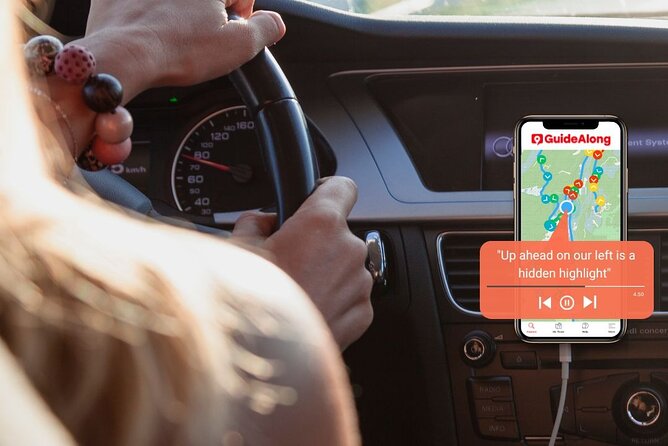
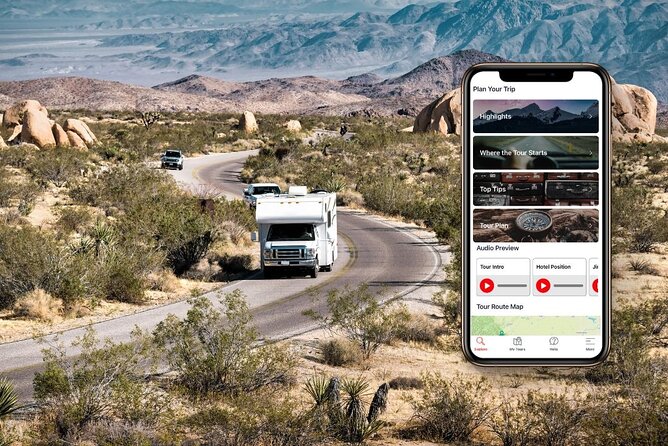
Joshua Tree is best experienced from the driver’s seat, with time to stop when a rock formation catches your eye. This GuideAlong, also known as GyPSy Guide, tour uses your phone’s GPS to trigger stories, directions, and park facts as you move through the desert.
I like the flexible route and the fact that one $19.99 purchase covers a vehicle of up to eight people. I also like the practical offline setup, since cell service can be unreliable inside the park. The main catch is that you must download and redeem the tour before driving, and the separate park fee adds to the cost.
Key points to know before you go
- 185-plus GPS-triggered points: Stories and directions play automatically as you approach sights.
- One purchase covers up to eight people: The $19.99 price can be excellent value for a full car.
- Choose your own pace: Stop for hikes, skip sights, pause the audio, and resume later.
- Download before leaving Palm Springs: The tour works offline once stored in the GuideAlong app.
- Plan for a long day: The suggested experience takes about 15 to 16 hours, though you control the schedule.
- Park admission costs extra: The supplied information lists a $15 per-person park fee, separate from the audio tour.
Why this Joshua Tree audio tour works well
A national park can be hard to read while driving. You want to know which turn leads to a viewpoint, how long a walk takes, and why a pile of granite matters, but stopping to consult a map every few minutes gets old. This tour handles that basic problem by tying the narration to your location.
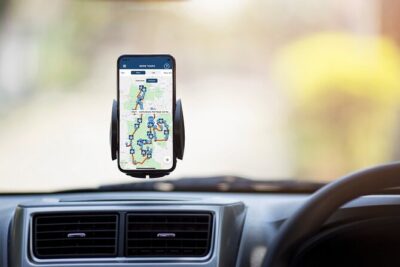
As you drive, the app uses your phone’s GPS chip to recognize where you are. It then plays commentary about the sight ahead, local stories, history, directions, and practical suggestions. You do not need to keep staring at a screen, which lets you focus on the road and the scenery.
The narration is not limited to one fixed schedule. You can start near Palm Springs, enter the park, stop for a nature walk, and continue when ready. You can also pause the tour and resume it later. That matters in Joshua Tree, where a short drive can become a long stop once you find good rocks, a picnic area, or an open view.
The tone includes humor as well as facts. That keeps the drive from feeling like a string of dry signs. The commentary also tracks your position after you stop, which is useful when you leave the car for a hike and return to the route.
This is not a guided group outing. There is no bus, driver, or person walking with you. You provide the car, park admission, food, water, and hiking decisions. In return, you get privacy and control.
More Self-Guided Audio Tours in the USA
- Gettysburg Battlefield Self-Guided Driving Audio Tour
★ 4.5 · 910 reviews - Joshua Tree National Park Self-Guided Driving Audio Tour
★ 4.5 · 762 reviews - Ultimate Acadia National Park Self-Guided Driving Audio Tour
★ 4.0 · 521 reviews
The Palm Springs start and the long park day
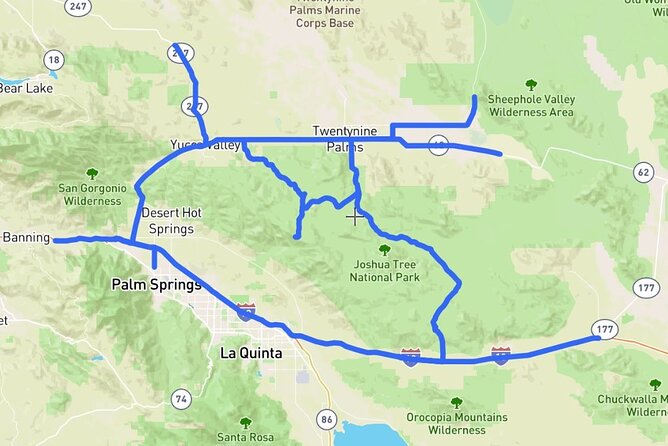
The listed starting point is 3796 North Indian Canyon Drive in Palm Springs. The tour is available around the clock, and its purchase has no expiry date. You can use it on a different day if your plans change, rather than being tied to one exact departure time.
The suggested experience lasts about 15 to 16 hours. That is a full day, not a quick afternoon loop. The listed stop times add up to a substantial visit, and you will need to account for the drive from Palm Springs, time at the entrance, meals, short walks, and photo stops.
You do not need to follow every suggested stop. If you have only part of a day, choose two or three places that fit your interests. If you have a full day, the route gives you plenty to do, from easy nature trails to broad mountain views and unusual cactus gardens.
The tour can also fit different driving directions. One recorded experience used it from the Cottonwood entrance toward the Joshua Tree exit, with the narration matching the car’s position. Read the route details before setting out, since the order of sights may depend on where you enter and which way you drive.
Joshua Tree National Park: more than the trees
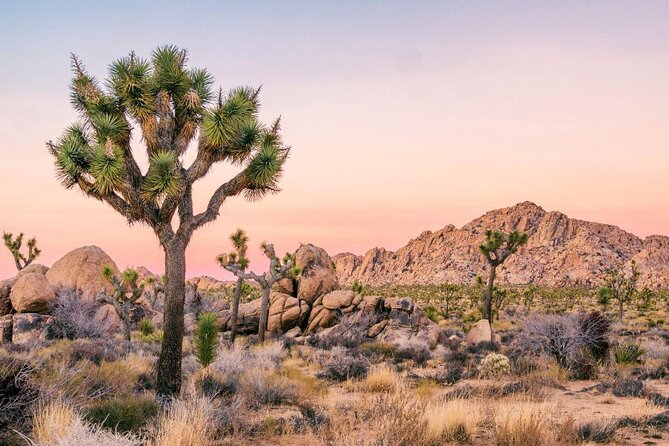
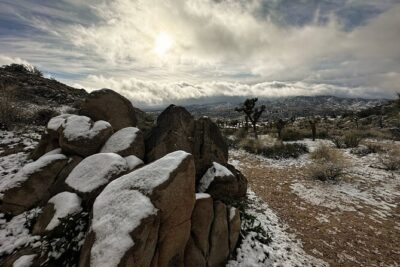
The park takes its name from the twisted, spiky Joshua trees, but the trees are only part of the appeal. You will also see huge granite formations, open desert, mountain views, and signs of the people and ranchers who used this dry country.
The audio guide helps connect those pieces. Instead of seeing a strange rock as just a strange rock, you get context about erosion, local use, wildlife, and the park’s changing scenery. That is especially helpful on a long drive, when the views can begin to blend together.
You should still allow time to stop without an audio prompt. A GPS tour can point out many places, but it cannot predict which view will appeal to you most. The best use of the app is as a guide and storyteller, not as a strict timetable.
Admission is not included. The supplied information lists the park fee as $15 per person. Add that charge to your planning, along with food and drinks, which are also not included.
Arch Rock and Heart Rock: a short walk with a sunset option
Arch Rock is one of the easiest places on the route to understand immediately. A natural granite arch spans about 30 feet near White Tank Campground, surrounded by the rounded rock shapes that define this part of the park.
The listed hike is a 1.4-mile out-and-back walk to Arch Rock. It is short enough to fit into a busy day, but you should allow more than the walking time if you want photos or a closer look at the surrounding formations.
Heart Rock is a useful add-on. The formation is somewhat lopsided, but its outline does suggest a heart, making it a popular place for a couple’s photo or a playful family picture.
Sunset is suggested as a particularly good time to visit Arch Rock. The granite against a pastel sky can give the formation a softer appearance than it has under harsh midday sun. The tradeoff is timing: sunset stops can push a long park day later, so make sure you are comfortable driving afterward.
More Driving Audio Tours in the USA
- Ultimate Lake Tahoe Self-Guided Driving Audio Tour
★ 4.5 · 435 reviews - Scenic Newport, RI Self-Guided Driving Audio Tour
★ 4.5 · 325 reviews - Arches National Park Self-Guided Driving Audio Tour
★ 4.5 · 288 reviews - Yellowstone National Park Self-Guided Driving Audio Tour
★ 4.5 · 249 reviews
Barker Dam: water, ranching, and an easy loop
Barker Dam gives you a different view of Joshua Tree. The basin was enclosed in 1902 to improve water storage for cattle ranchers. It is often called a dam, though the feature is more accurately a natural basin that was walled in.
The trail is a 1.3-mile loop with interpretive panels and some easy scrambling. You can learn about the area while walking, rather than only looking at the rock formations from a roadside pullout.
The trail passes the southern edge of the Wonderland of Rocks, a backcountry area known for its maze of granite shapes. You do not need to enter the backcountry to enjoy the setting. The loop gives you a manageable taste of the rock country, with a bit of local history added to the scenery.
If you want a short walk with a clear purpose, Barker Dam is one of the better choices on the route. The uneven ground and scrambling mean you should still wear sensible shoes.
Cholla Cactus Garden: look closely, do not touch
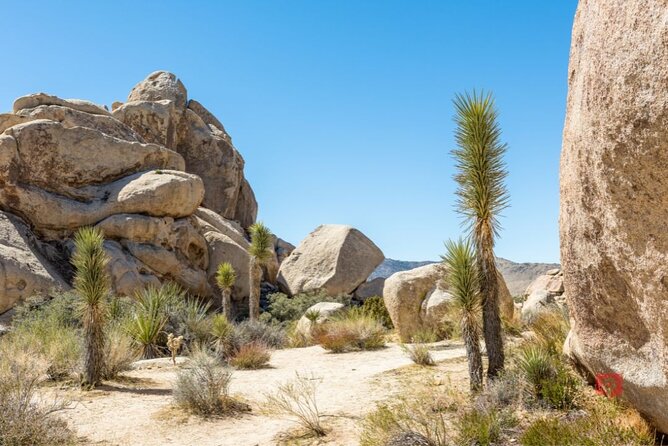
The Cholla Cactus Garden is one of the most unusual stops. Hundreds of cholla cacti cover the area, their spines giving the plants a fuzzy, silver and gold appearance in the light.
The soft look is deceptive. Those so-called teddy bear cacti are covered in spines, and an accidental brush can be unpleasant. Keep your hands and loose clothing away from the plants, and stay attentive on the walking path.
This stop rewards careful observation more than a long hike. The forms change as the light shifts, making it especially appealing near the end of the day. The cactus garden also breaks up the granite-heavy parts of the route, giving you a different sense of the park’s plant life.
It is a good place to slow down. You do not need to rush from one photo to the next. Let the audio explain what you are seeing, then look at the plants themselves.
Hall of Horrors: a little exploration required
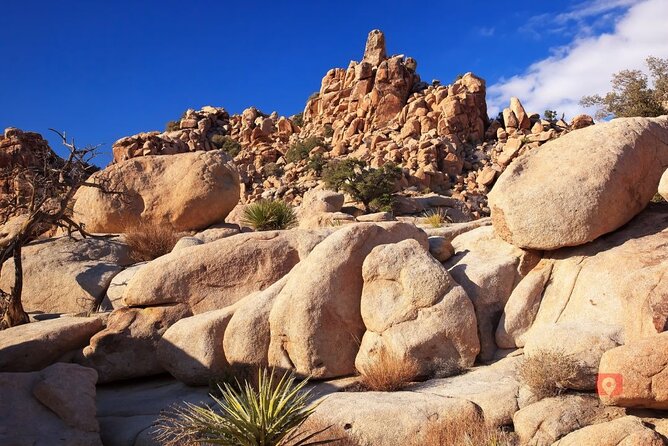
Hall of Horrors is aimed at visitors who enjoy scrambling and poking around rock formations. Several formations sit near the road, with dirt paths and mountain views around them.
The named hall is hidden in the second formation back from the road. To reach it, you circle around the right side of the first formation and explore until you find the narrow, dark corridor. The route is not simply a marked viewpoint where you step out, take one photo, and return to the car.
That uncertainty is part of the appeal, but it is also the drawback. You need to feel comfortable walking on uneven ground and finding your way around the formations. If you want a fully predictable, flat stop, choose another point on the route. If you like a small challenge and unusual photo setting, Hall of Horrors can be memorable.
Hidden Valley and the McHaney Gang connection
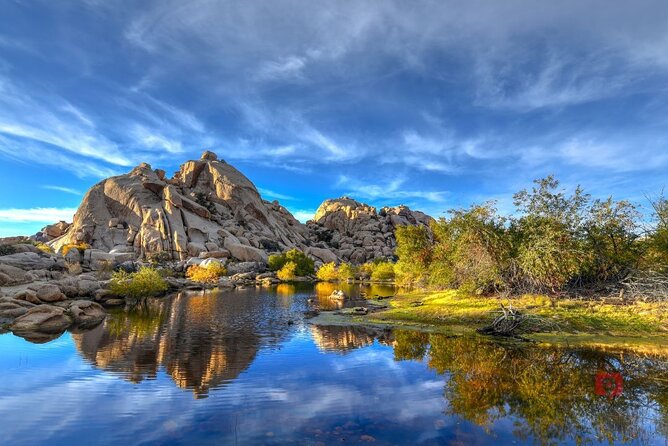
Hidden Valley offers one of the most accessible walks in the park. The one-mile loop follows a dirt and rock trail through a small valley enclosed by granite domes and large rock buttresses.
The route gives you a close look at how the formations shape the setting. Instead of seeing the rocks from a distant viewpoint, you move among them. The trail is short, though the rocky surface means you should not treat it like a paved stroll.
The valley was isolated enough to serve as a hideout for the McHaney Gang, cattle rustlers and outlaws active in the 1870s and 1880s. That story adds a human thread to the walk. You can picture why a narrow, rock-walled valley would have been useful for people trying not to be seen.
Hidden Valley is a strong pick if you want one walk that combines scenery and a memorable story. It is also a practical place to spend time if you are traveling with people who do not want a longer hike.
Keys View: the best wide panorama
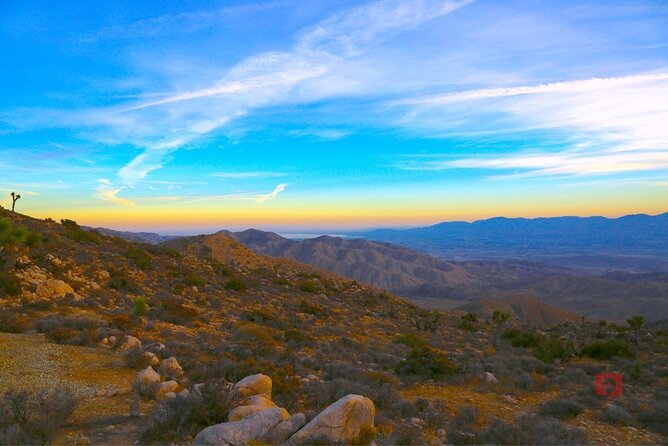
Keys View requires a ten-minute side-trip drive from the main route and climbs to 5,185 feet. It is the highest road in the park, and the payoff is a sweeping view across the Coachella Valley.
From the viewpoint, you can see toward the San Andreas Fault, the Salton Sea, Palm Springs, San Jacinto Peak, and Mount San Gorgonio. The distant peaks may be snowcapped at times, creating a sharp contrast with the dry desert below.
This is the stop where the audio guide’s timing can help most. You hear about the viewpoint as you approach, so you can decide if the side trip fits your schedule. I would not skip it casually if visibility is good. The view gives you a sense of the park’s position within the wider region, not just a close look at rocks and trees.
Conditions can affect the experience. The viewpoint is high compared with much of the park, and distant features are easier to see when the air is clear. The drive is short, but include it in your timing rather than treating it as an instant pullout.
Skull Rock and Split Rock: easy roadside variety
Skull Rock is one of Joshua Tree’s most recognizable formations. Erosion created two hollowed areas that resemble eye sockets, giving the rock its skull-like appearance.
The shape changes from different angles and under different light. That makes it worth walking around rather than taking the first photo you see. The formation is a good quick stop for anyone who wants an unusual image without committing to a longer trail.
Split Rock offers a different kind of spectacle. A huge boulder has been divided in two, and a short hike leads to the formation. There is also a picnic area, so this can be a useful pause for a snack or packed meal.
These stops help you build a sensible day. You can combine a short walk at Split Rock with a meal, then use Skull Rock as a brief photo stop. Since food and drinks are not included, the picnic option matters. Bring what you need rather than assuming you will find a meal along the route.
Using the app without wasting your first hour
The app is simple once it is ready, but the setup is the part you should not leave until you reach the park. After booking, you receive instructions by email and text. Search for the message titled Download Audio Tour, sign in with your preferred Apple or Google account, and redeem the voucher code.
Then download the free GuideAlong app and sign in with that same account. Find the tour under My Tours and download it over WiFi or cellular data before you drive into the park.
Do one more check before leaving:
- Confirm that the Joshua Tree tour appears in My Tours.
- Open it and preview the starting points and route.
- Test the audio through your car speakers or headphones.
- Bring a USB car charger.
- Make sure your phone has enough battery for a full day.
The tour works without internet or cell service after the download. That is a major practical benefit in a large park. GPS can still identify your position through the phone, allowing the narration to play as you drive.
There have been occasional setup frustrations, including difficulty finding a purchased tour in the app. Customer support is available by phone, online chat, and email each day, and the support team has resolved access problems quickly. Still, it is better to fix the issue at home than beside a park entrance.
Price, group value, and who should book
At $19.99 per group of up to eight, the audio tour is priced more like a shared driving aid than eight separate admissions. A couple may find the cost reasonable, while a full car gets especially strong value. You must still pay the separate $15-per-person park fee listed in the tour information.
The flexible purchase also has value. There is no expiry date or fixed time slot, and you can use the tour on another day if your plans change. The route, trip planner, web materials, and PDF planner give you several ways to prepare.
I would recommend it most strongly to:
- First-time Joshua Tree visitors who want context while driving.
- Families or groups sharing one car.
- Independent sightseers who dislike fixed tour schedules.
- Drivers who want offline directions and commentary.
- Visitors planning a full day with several short walks.
I would be less enthusiastic if you want a live guide, a scheduled group outing, or a hike-focused experience. The app can tell you where to stop, but it does not carry water, choose your footwear, or help you scramble over rocks. You remain responsible for the practical side of the day.
One other consideration is communication. The supplied information includes complaints about repeated email and text reminders, including messages at very early hours. That issue concerns booking messages rather than the park narration, but it is worth knowing. The booking also includes free cancellation up to 24 hours before the start time. Within 24 hours, no refund is available.
Should you book the Joshua Tree audio tour?
Book it if you want a private, flexible way to understand Joshua Tree while keeping control of your car and schedule. The best features are the location-based stories, the offline operation, and the group pricing. The commentary can add purpose to a long drive without forcing you to follow a guide’s timetable.
Skip it if you prefer to plan every stop yourself or if you want a person beside you answering questions. Also skip it if you will only spend an hour or two in the park, since the tour is designed for a broad route with several stops.
For most first visits from Palm Springs, I think it is a useful buy. Download everything before you go, bring a charger, budget for park admission, and choose only the walks that fit your energy and daylight. That is how you get the most from the tour without turning Joshua Tree into a race between GPS prompts.
FAQ
How much does the audio tour cost?
The tour costs $19.99 per group, with up to eight people covered by one purchase. Park admission is separate, and the supplied information lists that fee as $15 per person.
How long does the Joshua Tree audio tour take?
The approximate duration is 15 to 16 hours. You control the pace, so you can shorten the day by skipping stops or spread the tour over another schedule.
Does the tour include park admission?
No. Food, drinks, and park admission are not included. The listed park fee is $15 per person.
Does the tour require cell service?
No. You must download the tour in the GuideAlong app first, but the audio works offline after downloading. The app uses your phone’s GPS to trigger commentary.
Where does the tour start and end?
The listed starting point is 3796 North Indian Canyon Drive in Palm Springs. The tour can end anywhere along the route because the commentary is location based and flexible.
Is there a live guide?
No. This is a private, self-guided driving activity. The GuideAlong app provides recorded audio, directions, stories, and tips as you drive.
Can I cancel the booking?
Yes. You can cancel at least 24 hours before the scheduled start time for a full refund. Cancellations or changes made within 24 hours are not refunded.
More National Park Audio Tours in the USA
- Self-Guided GPS Audio E-Bike Tour Hawaii Volcanoes National Park
★ 4.5 · 131 reviews - Shenandoah National Park Self-Guided Driving Audio Tour
★ 4.5 · 109 reviews - Self-Guided Audio Driving Tour in Glacier National Park
★ 4.5 · 101 reviews - Rocky Mountain National Park Self-Guided Driving Audio Tour
★ 4.5 · 92 reviews
Latest audio tours in the USA
- Solvang City Personalized Self-Guided App Tour★ 3.0 · 6 reviews
- Essential Downtown SLO: A Self-Guided Audio Tour★ 4.5 · 27 reviews
- Silicon Valley Self-Guided Driving Audio Tour for Tech Lovers★ 4.0 · 24 reviews
- The Ghosts of San Francisco Haunted Audio App Walking Tour★ 5.0 · 2 reviews
- Self-Guided Audio Tour of the Golden Gate Bridge★ 3.5 · 3 reviews
- Point Reyes National Seashore Self Guided Driving Audio Tour★ 4.0 · 9 reviews
- San Francisco Self-Guided Audio Drive: Explore at Your Own Pace★ 4.0 · 9 reviews
- Explore Coronado Island on a Self Guided Audio Tour★ 5.0 · 2 reviews
Driving Audio Tours, compared.

Ultimate Acadia National Park Self-Guided Driving Audio Tour
Read our review →


Browse the lists this tour appears in