
Reviewed · PALM SPRINGS
Death Valley National Park Self-Guided Audio Driving Tour
Death Valley’s greatest trick is making extreme conditions feel strangely inviting. This self-guided drive carries you across more than 80 miles of salt flats, badlands, colorful rock, and desert history, with more than 55 audio stories playing as you reach each point. You get the freedom of your own car, but with a steady narrator filling in the story behind the scenery.
I like two things right away: the offline GPS playback is made for a park where phone service can vanish, and the $16.99 price covers up to four people in one car. The main caution is technical: you must download the app and tour while you still have strong Wi-Fi or cellular service, and you need to choose the correct starting version.
Key points to know
- More than 55 audio stories cover Death Valley’s geology, borax mining, roads, and major viewpoints.
- Badwater Basin sits 282 feet below sea level, at the lowest point in North America.
- Dante’s View rises more than 5,000 feet above Badwater Basin, giving you one of the best big views in the park.
- The app works offline, but only after you download the tour and test it before entering the park.
- The $16.99 fee covers a whole car of up to four people, making it far cheaper than a private guided outing.
- You control the timing, with the option to pause for walks, food, photographs, and side trips.
A self-guided drive from Death Valley Junction to Badwater
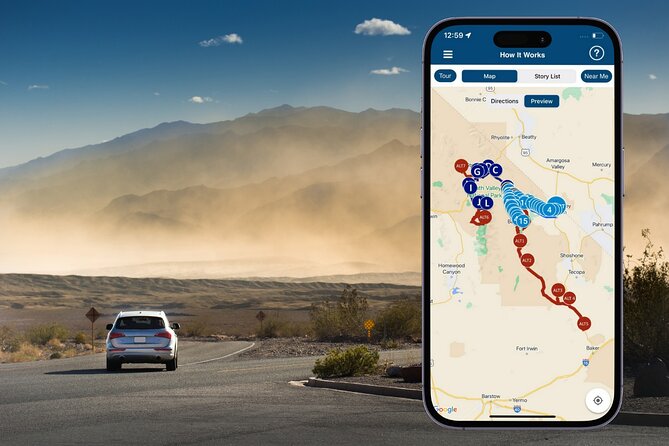
This is not a bus excursion with a fixed departure time. You drive your own car, start at an available entry point, and let the Action’s Tour Guide app trigger each story through your phone’s location.
The advertised route begins at Death Valley Junction and continues through some of the park’s best-known sights. The app also provides versions for other approaches, including Furnace Creek Visitor Center, Beatty’s Entrance, and West Entrance at Towne Pass. That matters because not every visitor enters from the same direction.
The main route takes about four to five hours, though that estimate assumes a fairly direct drive. You can pause the tour whenever you like, and you should. Death Valley is not a place to rush from one audio marker to the next. The best use of this experience is to treat the narration as your road companion, then stop when a view, trail, or strange rock formation deserves more time.
The app is designed for hands-free use. Connect your phone to the car with Bluetooth, USB, or AUX, then keep your eyes on the road. Audio playback works with Apple CarPlay. Android Auto support is described as forthcoming, so Android users should plan to use the phone or another compatible car connection.
More Self-Guided Audio Tours in the USA
- Gettysburg Battlefield Self-Guided Driving Audio Tour
★ 4.5 · 910 reviews - Joshua Tree National Park Self-Guided Driving Audio Tour
★ 4.5 · 762 reviews - Ultimate Acadia National Park Self-Guided Driving Audio Tour
★ 4.0 · 521 reviews
Death Valley Junction and the borax story
The opening at Death Valley Junction sets the mood. The name sounds grim, but the first audio story presents the valley as a place of heat, color, mineral wealth, and surprising drama.
One of the early subjects is borax. The Gold Rush drew hopeful miners west in search of gold, but borax became one of Death Valley’s most important discoveries. The story helps you understand why this dry basin attracted so much human activity despite its punishing conditions.
That historical angle is useful because the scenery can look empty at first glance. The narration gives you a reason to notice the traces of work, transport, and mining that shaped the region. It also keeps the drive from becoming a string of scenic pullouts with no connection between them.
The tour’s automatic start system should make this section easy, provided you are using the correct version for your entry route. The key setup mistake is starting the East Entrance version when you actually entered elsewhere. If that happens, the audio points may not line up with your position, and catching up can be frustrating.
Mars Hill and the strange colors of Death Valley

Mars Hill is a small feature with a name that explains the visual impression. Deep ochre stone, bare ground, and unusual formations can make parts of Death Valley seem more like another planet than Southern California.
I like this stop because it encourages you to look closely rather than simply admire the view from a distance. The narration connects the rusty color of the rocks to volcanic deposits containing iron oxides and chlorite. That is different from the sedimentary deposits that helped color the badlands near Zabriskie Point.
This distinction gives the drive some useful geology without turning it into a classroom lecture. You begin to see that Death Valley’s colors are not one simple story. Different minerals and different periods of volcanic or sedimentary activity produced the reds, yellows, browns, and greens spread across the valley.
The audio format works well here because the relevant details can be easy to miss from the roadside. You may not stop for long, but the explanation adds meaning to a feature that could otherwise pass by unnoticed.
Dante’s View and the biggest panorama
Dante’s View is one of the high points of the route, both literally and visually. The viewpoint rises more than 5,000 feet above Badwater Basin near the Black Mountains, giving you a broad view over the salt flats and toward the Panamint Mountains.
This is a place to pause the audio and take your time. The view is well suited to photographs, but it also helps you understand Death Valley’s scale. From above, the basin looks like a long, pale trough framed by darker mountain ranges.
Sunset can be especially appealing here, with the changing light reaching across the salt flats and mountains. The tour allows you to linger instead of forcing you onward, which is one of its main advantages over a tightly scheduled group outing.
You should still check current road conditions before committing to every stop. Death Valley access can change quickly, and some roads may be closed during repairs or after flooding. The supplied travel notice specifically warns about closures affecting Badwater Road, North Highway, and Bonnie Clare Road, along with possible limits on pedestrian and bicycle access.
More Driving Audio Tours in the USA
- Ultimate Lake Tahoe Self-Guided Driving Audio Tour
★ 4.5 · 435 reviews - Scenic Newport, RI Self-Guided Driving Audio Tour
★ 4.5 · 325 reviews - Arches National Park Self-Guided Driving Audio Tour
★ 4.5 · 288 reviews - Yellowstone National Park Self-Guided Driving Audio Tour
★ 4.5 · 249 reviews
Twenty Mule Team Canyon and the old freight routes
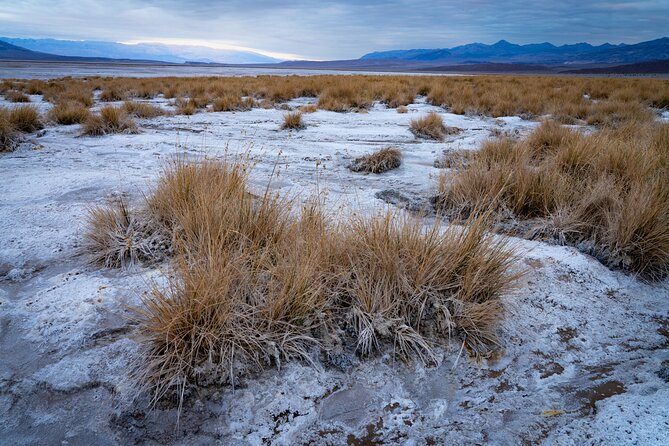
Twenty Mule Team Canyon adds a dose of history and a lot of scenery. Its name recalls the wagon trains once used to move borax through the valley, linking the mineral story to the practical problem of hauling heavy loads across rough desert ground.
The road winds between saffron-colored hills and badlands. Early morning and sunset can bring out stronger orange tones on the rock faces, so the timing of your visit can change the mood of this short section.
This is one of the places where the audio helps you slow down mentally, even if you are still driving. Instead of seeing only a twisting road through bare hills, you get a picture of the labor and transport systems that made borax production possible.
Road conditions matter here, and the tour is not a substitute for common sense. Stay within the posted limits, use caution, and do not assume every side road is suitable for every vehicle. The app works best when you follow its route and speed guidance rather than trying to improvise while driving.
Zabriskie Point and the work of erosion
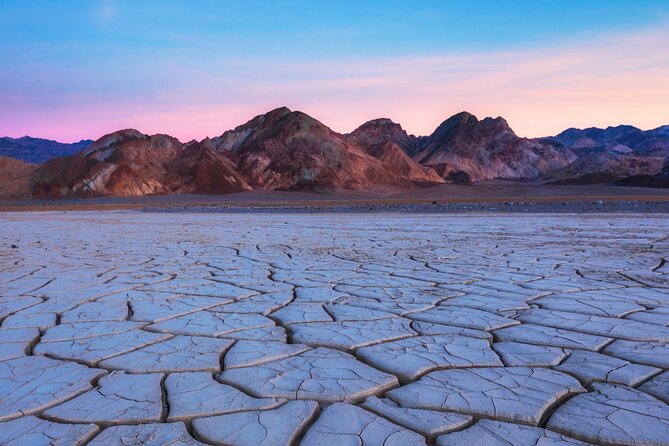
Zabriskie Point is among Death Valley’s most recognizable viewpoints. From the Amargosa Mountain Range, you look down over folded badlands, pale salt flats, and the Panamint Mountains beyond.
The view is a clear lesson in erosion. Ridges, gullies, and sharp folds spread across the foreground, while the distant mountains give the scene a strong sense of scale. The audio explains how the badlands received their color from sedimentary deposits, helping you connect the shapes and colors to the valley’s geological past.
This is a popular stop, so you may find more people here than at quieter pullouts. That is not necessarily a drawback. The viewpoint is easy to appreciate, and the tour gives you enough background to make the stop worthwhile even if you have only a short window.
I would plan extra time for Zabriskie Point if photography matters to you. The tour itself may take only a few minutes at the audio marker, but the view deserves more than a quick glance from the car.
Furnace Creek Visitor Center and the heat check
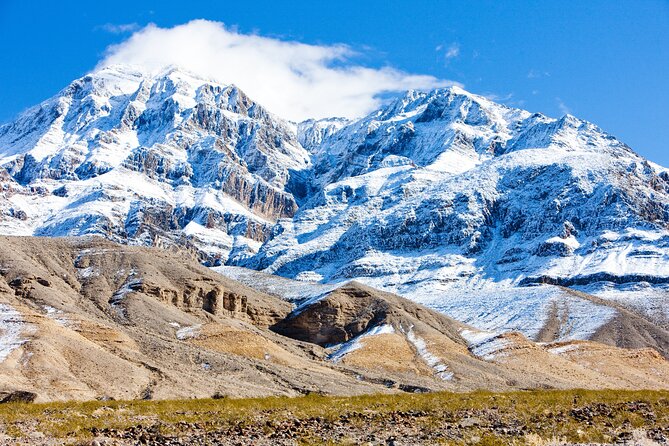
Furnace Creek Visitor Center is a practical pause in the middle of the drive. You can find snacks, water, and restrooms here, along with a large digital thermometer outside.
The thermometer makes a memorable photo, but it also delivers a useful reality check. Death Valley’s heat is not just part of the park’s reputation. At the valley’s lowest points, conditions can be severe, and a simple stop for water and shade can make the rest of the drive much more comfortable.
The visitor center is also a good place to confirm current conditions before continuing. Since roads and access can change, official park alerts remain important even when the app has already been downloaded.
The tour does not include your park pass. You must pay the separate entrance fee, which provides access to Death Valley National Park for seven consecutive days. That pass is worth remembering if you plan to return to a viewpoint, hike on another day, or split this long drive across more than one visit.
Golden Canyon and an optional walk
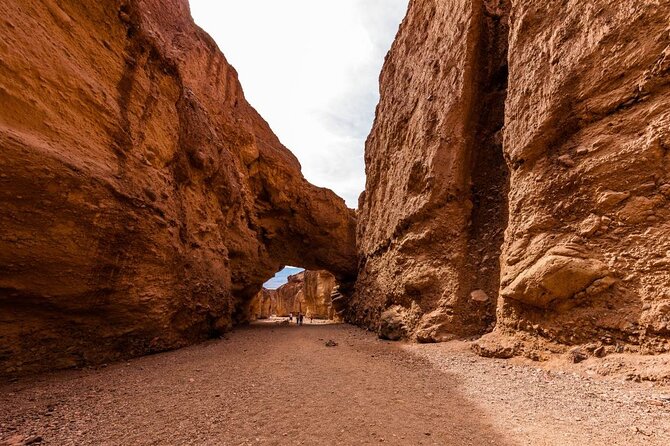
The Golden Canyon trail can be reached from the Furnace Creek area. The out-and-back route is about three miles total and takes around one hour.
This is a good example of how the tour can support a flexible day rather than dictate one. You can pause the narration, leave the car, and spend time walking through the canyon before returning to the route.
The trail is described as popular, so you are likely to encounter other hikers. The information provided does not give a detailed difficulty rating or seasonal safety guidance, so you should rely on current park advice and conditions before setting out, especially during hot weather.
If you skip the walk, you still get value from the drive. If you enjoy short hikes, Golden Canyon gives the tour a welcome change of pace after several viewpoints and roadside stops.
Artist’s Palette and Devils Golf Course
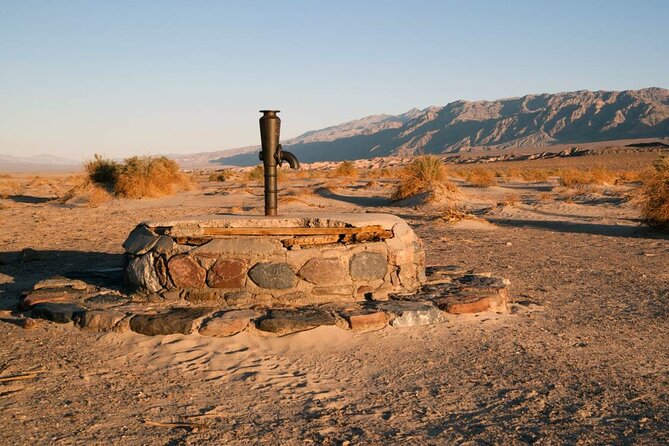
The Artist’s Palette is one of the most visually surprising parts of the route. Reds, yellows, pinks, and other mineral colors spread across the hills, creating a scene that can look painted rather than formed by nature.
The tour points you toward the best viewing area and explains that volcanic deposits helped create the unusual colors. This is a strong stop for anyone who likes geology, photography, or simply strange natural sights.
Nearby Devils Golf Course offers a sharp contrast. Instead of smooth fairways and green grass, you get rough, broken salt formations and a surface that looks hostile to both golfers and walking shoes. The access road is rugged and unpaved, so you should drive carefully and check conditions before proceeding.
These two stops work well together because they show how varied Death Valley can be within a short stretch. One looks almost artistic, the other harsh and chaotic. The narration gives both places enough context to make them more than quick photo stops.
Badwater Basin, the lowest point in North America
Badwater Basin is the grand finale for many visitors. Its salt flats spread across about 200 square miles, and the basin sits 282 feet below sea level, the lowest point in North America.
The scale can be difficult to grasp from the roadside. The white salt surface stretches across a broad open basin, framed by mountains and marked by the dry geometry of mineral deposits. I recommend giving yourself time here, even if your audio story is short.
This is also the stop where heat management matters most. Carry water, avoid treating the salt flats like a casual stroll during extreme conditions, and check official alerts before setting out. The tour provides information and navigation, but it cannot replace park safety guidance.
Badwater makes a fitting ending because it gathers the main themes of the drive in one place: water that disappeared, minerals left behind, enormous geological forces, and people who found ways to work in a difficult environment.
Why the offline app matters so much
The app’s offline function is the most important practical feature. Death Valley has areas with little or no cellular service, so downloading the tour after you arrive is a risky plan.
After booking, you receive setup instructions and a password by email and text. Search for the audio tour message, download the separate Action’s Tour Guide app, enter the password, and download the route while you still have strong service. I would also connect the phone to the car before entering the park and confirm that the audio plays.
The app uses GPS to trigger stories automatically. You do not need to tap each stop while driving, and you can pause or skip sections. If audio problems occur, support is available, but it is much easier to solve connection and download issues before you reach the park.
The different starting versions deserve special attention. Choose the route that matches your planned entrance, such as Death Valley Junction, Furnace Creek, Beatty, or Towne Pass. This single step can prevent the most common navigation problem.
Is $16.99 good value?
At $16.99 per group of up to four, the price is strong. A full car pays one fee, not four separate admission charges, so the cost per person can be very low for a family or small group.
You still pay the national park entrance fee separately, and the tour does not provide a driver or in-person guide. That means the value comes from the narration, route planning, GPS prompts, and flexibility.
I see it as a good middle option. You get more background than you would from driving alone, but you keep control of your stops and schedule. You also avoid the cost and fixed pace of a private guided vehicle.
The lifetime, no-expiry access adds value if you return to Death Valley or want to split the route across multiple days. It also gives you a chance to retry the tour if your first setup goes wrong.
Who should book this Death Valley tour?
I would choose this tour if you want a simple introduction to the park’s major sights and prefer driving yourself. It suits couples, families, and small groups who want to share one affordable audio guide.
It is also a good fit if you like history and geology but do not want a formal lecture. The stories cover borax, volcanic deposits, erosion, salt flats, and the human effort behind the old mule routes.
I would be more cautious if you dislike phone-based tours or do not want to prepare before the drive. The experience depends on downloading the correct route, connecting your phone, and checking road conditions in advance.
FAQ
How long does the Death Valley audio driving tour take?
The route takes approximately four to five hours and covers more than 80 miles. Your day may take longer if you stop for photographs, food, the Golden Canyon walk, or side trips.
How many audio stories are included?
The tour includes more than 55 audio stories triggered along the route.
Does the tour work without cell service?
Yes, the tour is designed to work offline after you download it. You must download the app and tour while you have strong Wi-Fi or cellular service.
What app do I need?
You need to download the separate Action’s Tour Guide app. After booking, you receive a password and setup instructions by email and text.
Where can I start the tour?
Available route versions include Death Valley Junction, Furnace Creek Visitor Center, Beatty’s Entrance, and West Entrance at Towne Pass. Choose the version that matches your planned starting point.
Is the park entrance fee included?
No. Death Valley National Park admission is separate. The park pass provides access for seven consecutive days.
Can I pause the tour?
Yes. You can start, pause, and resume the tour at your own pace. You can also skip stories or take breaks for snacks, photographs, and walks.
How many people does one purchase cover?
The $16.99 purchase covers one group of up to four people in the same car.
What is the cancellation policy?
You can cancel for a full refund up to 24 hours before the experience start time. Cancellations or changes made within 24 hours are not refunded or accepted.
Should you book it?
Book this Death Valley tour if you want low-cost guidance without giving up control of your car. The best parts are the automatic offline narration, the coverage of major sights, and the useful stories about borax, geology, and the valley’s extreme geography.
Prepare properly before you go. Download the tour on strong service, select the correct entry point, connect your phone to the car, and check official park alerts for closures. If you do those things, this is a practical way to turn a long desert drive into a more informed and memorable visit.
More National Park Audio Tours in the USA
- Self-Guided GPS Audio E-Bike Tour Hawaii Volcanoes National Park
★ 4.5 · 131 reviews - Shenandoah National Park Self-Guided Driving Audio Tour
★ 4.5 · 109 reviews - Self-Guided Audio Driving Tour in Glacier National Park
★ 4.5 · 101 reviews - Rocky Mountain National Park Self-Guided Driving Audio Tour
★ 4.5 · 92 reviews
Latest audio tours in the USA
- Solvang City Personalized Self-Guided App Tour★ 3.0 · 6 reviews
- Essential Downtown SLO: A Self-Guided Audio Tour★ 4.5 · 27 reviews
- Silicon Valley Self-Guided Driving Audio Tour for Tech Lovers★ 4.0 · 24 reviews
- Self-Guided Audio Tour of the Golden Gate Bridge★ 3.5 · 3 reviews
- The Ghosts of San Francisco Haunted Audio App Walking Tour★ 5.0 · 2 reviews
- San Francisco Self-Guided Audio Drive: Explore at Your Own Pace★ 4.0 · 9 reviews
- Point Reyes National Seashore Self Guided Driving Audio Tour★ 4.0 · 9 reviews
- Explore Coronado Island on a Self Guided Audio Tour★ 5.0 · 2 reviews
Driving Audio Tours, compared.


Ultimate Acadia National Park Self-Guided Driving Audio Tour
Read our review →


Browse the lists this tour appears in