

Reviewed · USA
Wright Brothers Carolina Dunes Self-Guided Driving Audio Tour
The most appealing thing about this tour is its mix of first-flight history and coastal scenery. In one outing, you can walk around Jockey’s Ridge, visit the Wright Brothers National Memorial, pass through Kitty Hawk and Duck, and finish near Corolla’s famous wild horses.
I like the $14.99 per car price, especially for a group of up to four, and I like the freedom to stop for a pier, a boardwalk, a lighthouse, or lunch without waiting for a guide. The main catch is the app. You must download it properly before setting out, and a few users had trouble with audio timing, map functions, and accidental skipping.
Key points to know before you go
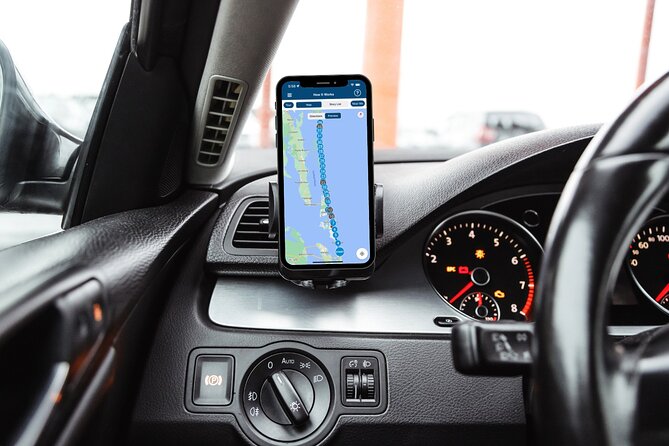
- 37-mile route: Plan on roughly two to three hours of driving and listening, before adding time at the stops.
- One purchase covers four people: At $14.99 per group, this is far cheaper than four individual tickets for a conventional tour.
- Strong historical focus: The Wright brothers, early gliders, Kitty Hawk, and the 1903 flight receive the clearest attention.
- Offline operation: Download the tour over strong Wi-Fi or cellular service before arriving, then use it without a signal.
- Flexible pacing: Pause for photos, skip places that do not interest you, or spread the route over several days.
- App setup matters: Connect your phone to the car by Bluetooth, USB, or AUX, and follow the route and speed limit to keep the narration in sync.
Why this Outer Banks drive works

This is not a standard point-to-point transfer with background chatter. It is a private audio tour designed to give your drive a sense of place. The narration begins automatically as you reach each location, then guides you toward the next story.
That format suits the Outer Banks particularly well. The area stretches along narrow roads with beaches, marshes, neighborhoods, historic sites, and small towns spread out over many miles. A human guide cannot easily give every group the same amount of time at each place. Here, you decide.
The route takes about two to three hours, but that estimate mainly covers driving and audio. Add time for the Wright Brothers National Memorial, Jockey’s Ridge State Park, Avalon Pier, Currituck Beach Lighthouse, Duck, or Corolla, and this can become a half-day outing.
The narrator is not identified by name in the tour details, but the tone is built around short, accessible stories. The best sections give you enough context to make a place more interesting without turning the drive into a long lecture. One particularly useful quality is restraint. The Wright brothers’ story is presented in manageable pieces, which can leave you curious enough to spend more time at the memorial.
More Self-Guided Audio Tours in the USA
- Gettysburg Battlefield Self-Guided Driving Audio Tour
★ 4.5 · 910 reviews - Joshua Tree National Park Self-Guided Driving Audio Tour
★ 4.5 · 762 reviews - Ultimate Acadia National Park Self-Guided Driving Audio Tour
★ 4.0 · 521 reviews
Starting near Whalebone Junction and Nags Head
The tour begins in the Nags Head area. The listed starting point is Cape Hatteras National Park Road, while the first story directs you toward the Whalebone Junction Information Center and the Outer Banks Visitors Bureau.
This opening section introduces the Carolina sand dunes, shipwrecks, nature, and first flights. It sets up the whole route as more than an aviation tour. You are moving through a coastal region shaped by wind, water, settlement, hunting, and invention.
Before you roll, get the app ready. Search your email and text messages for the audio tour instructions and password. Download the separate Action Tour Guide app while you have a strong connection. Once the route is stored on your phone, it works offline, which matters in parts of the Outer Banks where service may be inconsistent.
I would not treat the first few minutes as a time to troubleshoot. Open the app, select the correct tour version if more than one appears, connect the phone to your car stereo, and make sure location services are active. If you are driving alone, set everything up before moving. A passenger can handle the phone more easily, but the tour is intended to work for a solo driver too.
Jockey’s Ridge, where dunes meet aviation
Jockey’s Ridge State Park is one of the most memorable early stops. Its broad sand dunes and maritime forest give you a quick sense of the Outer Banks as a place of shifting ground and strong wind.
The audio connects the park’s natural setting with local heritage, Native American history, and aviation. That link is useful because the Wright brothers’ success was not just about clever machinery. Wind, open ground, gliding tests, and careful observation all mattered.
You can stop here for a walk and stretch your legs. The tour does not include admission to attractions, so any entry fee or reservation requirement is your responsibility. The park itself is a good example of why this experience works better when you leave room in your schedule. Listening from the car gives you the story, but walking among the dunes gives you the scale.
If your group includes children, this may be one of the easier stops to enjoy without a formal museum visit. If you prefer a tightly timed drive, you can continue after the audio story. That choice is built into the experience.
The Wright Brothers National Memorial and the birth of powered flight

The Wright Brothers National Memorial is the central reason many people will book this route. Here, the audio turns from broad regional history to the Wright brothers’ experiments, persistence, and first powered flight.
The memorial is in Kill Devil Hills, not technically in Kitty Hawk. That distinction matters. In 1903, Kill Devil Hills was not an official town, so Kitty Hawk received much of the credit for the flight. The tour explains this local wrinkle while helping you understand why both names appear so often in Outer Banks aviation history.
Set aside real time for this stop. The audio can prepare you for the site, but it cannot replace walking around the memorial grounds and visiting the museum. Entry is not included, so check the attraction details separately before you go.
This is also where the tour earns much of its value. Instead of simply telling you that the Wright brothers flew here, it frames the flight as part of a longer process involving gliders, repeated attempts, and practical problem-solving. The storytelling is short enough to keep your attention during the drive, yet detailed enough to make the memorial feel more meaningful.
One useful tip is to follow the recommended driving speed. The stories trigger according to your location, and going too fast can cause the audio to move ahead of you. A user specifically reported sentences being cut off at the end of stops. The operator’s advice is simple: stay near the posted speed shown in the app.
More Driving Audio Tours in the USA
- Ultimate Lake Tahoe Self-Guided Driving Audio Tour
★ 4.5 · 435 reviews - Scenic Newport, RI Self-Guided Driving Audio Tour
★ 4.5 · 325 reviews - Arches National Park Self-Guided Driving Audio Tour
★ 4.5 · 288 reviews - Yellowstone National Park Self-Guided Driving Audio Tour
★ 4.5 · 249 reviews
Avalon Pier adds an easy ocean break

Avalon Pier is an optional turn on E. Sportsman Drive. The 440-foot wooden pier offers ocean views, fishing, restaurants, and shops.
This is not a major historical stop, and that is part of its value. After museums and long stretches of road, you may want an uncomplicated place to walk, look at the water, and buy food. The audio gives you the choice without forcing a fixed stop.
If your schedule is tight, continue along the route. If you are building a relaxed family day, Avalon Pier can break up the driving. The tour allows you to pause without losing your place, so you can give the pier ten minutes or much longer.
The Wright brothers’ garage and early experiments

The Wright Brothers Garage Monument points to one of the brothers’ early work sites. The story uses the garage as a reminder that major inventions often begin with ordinary tools, small workspaces, and repeated experiments.
This stop is brief, but it adds a human scale to the flight story. The memorial presents the finished achievement. The garage connection points back to the work before the headlines.
Do not expect a full museum experience here. The value lies in the context supplied by the narration and the chance to connect the brothers’ local life with their aviation work. It is a quick roadside addition, not a place that needs a long visit.
Kitty Hawk Woods and the name behind the first flight
As you pass through Kitty Hawk, the audio explains why the town is linked so closely with the Wright brothers. The first flight took place a few miles south, in Kill Devil Hills, but Kitty Hawk was the recognized town in the area at the time.
Kitty Hawk Woods Reserve brings a different side of the Outer Banks into view. Instead of focusing only on beaches and aviation, the route moves through a protected natural area. The story gives you a reason to pay attention to the vegetation and quieter surroundings as you drive.
This is a good section for listeners who want more than a string of famous names. The tour connects local geography with the way historical credit is assigned. It also shows how quickly the setting changes, from dunes and beaches to wooded reserve areas.
Duck Town Park Boardwalk and a useful pause

The Duck Town Park Boardwalk is an optional stop with waterfront trails, shops, and restaurants. Turn toward the Town of Duck if you want to visit, or continue straight if you are focused on reaching Corolla.
Duck works well as a meal or coffee break because the route gives you flexibility. You can listen to the story, park, walk for a while, and resume later. You are not trying to catch up with a bus or meet a guide at a particular minute.
The drawback is that the audio cannot tell you which shop or restaurant will suit your group. It introduces the area, but you still need to make your own choices. That is normal for a self-guided tour, and some people will prefer it.
Pine Island Audubon Sanctuary and the cost of the feather trade
Farther north, Pine Island Audubon Sanctuary protects 2,600 acres and provides habitat for hundreds of bird species. The audio also explains the damage caused by the hunting craze that once swept through the region.
This is one of the more useful environmental stories on the route. It adds a warning to the scenic drive. The Outer Banks is not only a vacation setting. It is also a fragile home for birds and other wildlife, and past human fashions had serious consequences.
You may not have a long visit at the sanctuary itself, depending on your route and schedule. Even from the car, the story changes how you see the preserved land around you. It is a quieter section than the Wright brothers material, but it gives the drive better balance.
Whalehouse Club and the era of wealthy hunting lodges
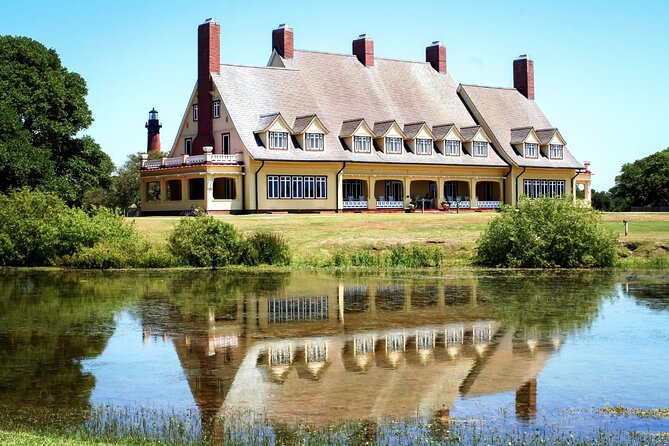
The route explains how wealthy Americans came to this part of the Outer Banks for hunting in the late 1800s and early 1900s. Edward Collings Knight Jr., an heir to fortunes in sugar, railroads, and steamships, bought a large tract here with his second wife in 1920.
Their 22,000-square-foot home became known as the Whalehouse Club. Designed in the Art Nouveau style, it served as a private residence and hunting lodge for the Knights and their friends.
This story helps explain why some parts of the northern Outer Banks feel different from the busy beach towns farther south. The region has layers of wealth, private land, hunting culture, conservation, and resort development. You may not be able to enter every site discussed, but the narration gives the surroundings a longer time frame.
Currituck Beach Lighthouse and the road toward Corolla
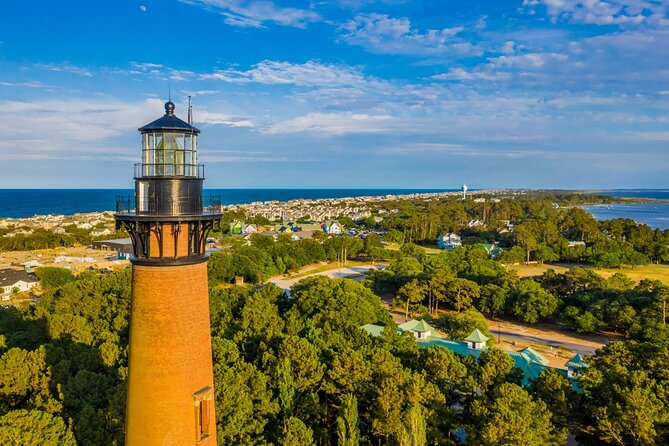
Currituck Beach Lighthouse is one of the route’s strongest visual stops. Completed on December 1, 1875, it is a first-order lighthouse, meaning it was built as the largest class of lighthouse at the time.
The details make the structure easier to appreciate. Its Fresnel lens is about eight and a half feet tall and six feet wide, with a light visible from 21 miles away. The tower rises 162 feet.
The tour tells you when to turn if you want to visit. Since admission is not included, check the current access details separately. Even if you only see the lighthouse area from outside, the story gives the building a practical purpose rather than treating it as a pretty object.
This is another place where you should not rush. If the lighthouse interests you, pause the app, explore, and restart when you are ready. The lifetime access means you can also return to the route on another trip.
Corolla and the wild horses at the end of the route
The drive finishes in Corolla, a small community with about 500 local residents and a much larger summer population. Beyond the houses, Corolla Beach opens into a broad stretch of sand known for water sports and wild horses.
The horses are a major draw, but the tour does not include a wildlife excursion or guarantee a sighting. Treat the audio as an introduction to the area, not as a horse-watching service. If you plan to seek out the herd, follow local rules and use only permitted access.
Ending in Corolla gives the route a satisfying change of pace. You begin with dunes, aviation, and Nags Head, then move through towns, woods, historic sites, and the lighthouse before reaching a more remote-feeling beach community.
Price, timing, and the real value
At $14.99 for up to four people, the price is the tour’s clearest strength. One purchase covers the car, so a group of four pays less than $4 each. Even for two people, the cost is modest compared with a private guide or a full-day organized excursion.
The value depends on using the flexibility. If you simply drive the route without stopping, you will receive background stories at a low price, but you will miss much of what makes the Outer Banks worth seeing. I would plan this as a flexible half-day, even though the driving portion is listed at two to three hours.
You receive lifetime access with no expiry. You can use it on another Outer Banks trip, pause it for several days, or replay sections that interested you. That makes the purchase more useful than a single-use timed activity.
The tour is offered in English. It is a private activity for your own group, not a shared bus ride. Attraction tickets, reservations, and entry fees are not included.
App problems you can prevent
The biggest weakness is technical rather than scenic. One user could not get the app working at all, while another reported that the map did not function properly, the audio got out of sync, and bumps caused the program to skip forward.
You can reduce that risk by doing the following before leaving:
- Download the Action Tour Guide app over strong Wi-Fi or cellular service.
- Find the password in the booking email and text message.
- Open the correct tour and confirm your planned starting point and direction.
- Connect your phone to the car through Bluetooth, USB, or AUX.
- Keep the phone secure so movement does not trigger unwanted skips.
- Follow the route and the speed limit shown in the app.
- Contact support if the audio fails.
The app supports iPhones running iOS 15 or later, Android devices running version 9 or later, and iPads or tablets with GPS and cellular connectivity. Apple CarPlay is supported. Android Auto support is listed as forthcoming, so do not count on that feature unless it is confirmed at the time you book.
Who should book this Outer Banks tour
I would choose this tour if you have a rental car, want Wright brothers history, and prefer deciding your own stops. It is especially useful for families and small groups because everyone can listen together and the price is per vehicle.
It also suits people who like a little structure but dislike fixed schedules. You get directions, stories, and suggested places, yet you can stop for photos or food whenever you want.
I would be more cautious if you are uncomfortable setting up phone apps, driving alone while managing navigation, or expecting a polished live guide. The operator has refunded some users who could not make the app work, but it is still smarter to test the download before your trip begins.
Should you book it?
Book it if you want a low-cost way to connect the Wright brothers with the wider Outer Banks. The strongest parts are the first-flight stories, Jockey’s Ridge, the Wright Brothers National Memorial, Currituck Beach Lighthouse, and the freedom to set your own pace.
Skip it if you want admission tickets, a person beside you answering questions, or a tour that requires no phone setup. For everyone else, $14.99 buys a useful framework for a long coastal drive, with enough flexibility to make the day your own.
FAQ
How long does the Wright Brothers Carolina Dunes tour take?
The driving tour takes approximately two to three hours. Extra time is needed if you visit Jockey’s Ridge, the Wright Brothers National Memorial, Avalon Pier, Duck, Currituck Beach Lighthouse, or other stops.
How much does the tour cost?
The price is $14.99 per group, covering up to four people in one car.
Where does the tour start and end?
The listed starting point is Cape Hatteras National Park Road in Nags Head, North Carolina. The route ends at Corolla Beach, 1312 N Beach Access Road, Corolla.
Does the tour work without cell service?
Yes. You must download the tour while you have strong Wi-Fi or cellular service. After downloading, the audio and offline maps work without a connection.
Are attraction admission fees included?
No. Entry tickets, attraction passes, and reservations are not included in the tour price.
Can I pause the tour or use it on another day?
Yes. The tour offers lifetime access with no expiry. You can pause it, take breaks, use it over several days, or return to it on another trip.
What devices and audio connections are recommended?
An iPhone with iOS 15 or later, an Android device with version 9 or later, or an iPad or tablet with GPS and cellular connectivity is recommended. You can connect the phone to your car stereo through Bluetooth, USB, or AUX.
Latest audio tours in the USA
- Sequoia National Park Self-Guided Audio Tour★ 4.5 · 9 reviews
- Sequoia and Kings Canyon Audio Tour Self Guide National Park Tour★ 5.0 · 3 reviews
- Kings Canyon National Park Self-Guided Audio Tour★ 4.0 · 4 reviews
- Sedona, Arizona Self-Guided Audio Tour★ 4.0 · 36 reviews
- Sedona & Red Rock State Park Self-Guided Driving Audio Tour★ 3.0 · 30 reviews
- Haunted Savannah Self-Guided Walking Audio Tour★ 4.5 · 3 reviews
- Downtown Seattle Self-Guided Walking Audio Tour★ 4.5 · 6 reviews
- Uncover Seattle: Self-Guided Audio Tour★ 3.5 · 7 reviews
Driving Audio Tours, compared.



Ultimate Acadia National Park Self-Guided Driving Audio Tour
Read our review →



Browse the lists this tour appears in