
Reviewed · USA
Outer Banks Self-Guided Driving Audio Tour
The Outer Banks are best understood from behind the wheel, where one turn brings a lighthouse, a life-saving station, a fishing village, or a huge sweep of sand. This self-guided tour connects those scattered sights with stories about shipwrecks, hurricanes, pirates, birds, wild horses, and the Wright brothers. You drive the route, and the audio starts as you reach each location.
I especially like the pay-per-car price, which covers a group of up to four, and the freedom to stop for photos, meals, ferries, or a beach walk without waiting for a guide. The main catch is the technology: you must download the tour over strong service or Wi-Fi, and the GPS audio works best if you begin at the marked starting point and keep to the route.
Key points to know before you go
- More than 40 miles and 35-plus stories: Plan on roughly two to three hours of driving time, not counting longer stops.
- One purchase covers the car: At $24.99 per group of up to four, the cost is low compared with a private guide or group excursion.
- The route ties together far-flung sights: Hear stories about Bodie Island Lighthouse, Cape Hatteras, Hatteras village, Kitty Hawk, Duck, and Corolla.
- The app works offline: Download everything before setting out, then use GPS without cellular service.
- You set the pace: Pause the tour, skip a stop, take a side trip, or return to it on another day.
- Allow time for setup: The passcode, separate app, phone connection, and starting point all matter.
Why a driving tour fits the Outer Banks
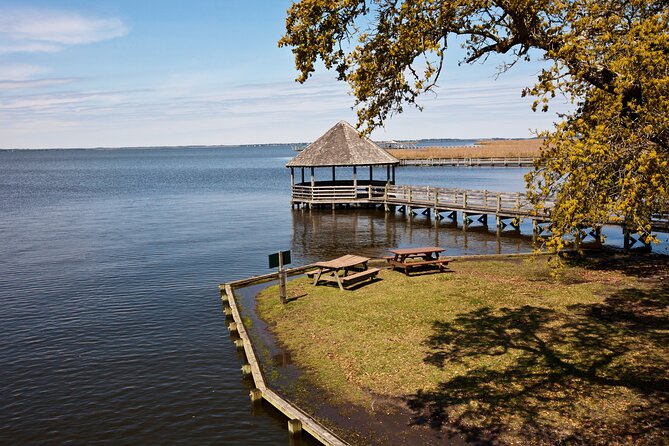
The Outer Banks are not one compact town with a walkable historic center. They are a long chain of barrier islands, beaches, waterways, villages, wildlife areas, and scattered historic sites. A car is the practical way to see them, but driving can also turn into a blur of dunes and roadside signs.
This audio tour gives those miles a storyline. As you travel, your phone uses GPS to trigger short recordings at points along the road. You do not need to stare at a screen while driving, and the audio is designed to play hands-free. Connect your phone to the car through Bluetooth, USB, or AUX, and let the narrator provide context while you watch the road.
The route covers more than 40 miles and includes more than 35 audio stories, with the listed stops ranging from the Nags Head area to Hatteras, Kitty Hawk, Duck, and Corolla. The stated driving time is two to three hours, but that is best treated as the time for the audio route itself. If you climb a lighthouse, visit a museum, walk a boardwalk, take a ferry, or stop at the beach, you will need much longer.
The narrator’s name is not provided, so you should think of this as a polished audio guide rather than a live tour with a named local host. That distinction matters. You gain privacy and flexibility, but you cannot ask questions or change the route to suit your interests.
More Self-Guided Audio Tours in the USA
- Gettysburg Battlefield Self-Guided Driving Audio Tour
★ 4.5 · 910 reviews - Joshua Tree National Park Self-Guided Driving Audio Tour
★ 4.5 · 762 reviews - Ultimate Acadia National Park Self-Guided Driving Audio Tour
★ 4.0 · 521 reviews
From Whalebone Junction to Bodie Island
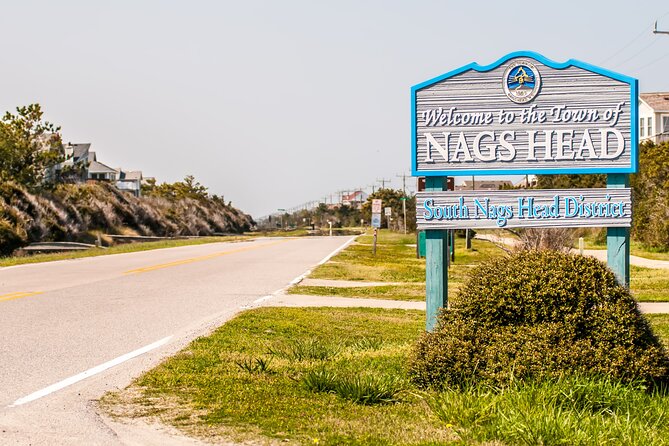
The suggested opening area is the Whalebone Junction Information Center, near the Outer Banks Visitors Bureau and Cape Hatteras National Seashore. This is a sensible place to get your bearings before the road stretches south. The opening sets up the themes that follow: shifting sand, lost settlements, shipwrecks, and pirate stories.
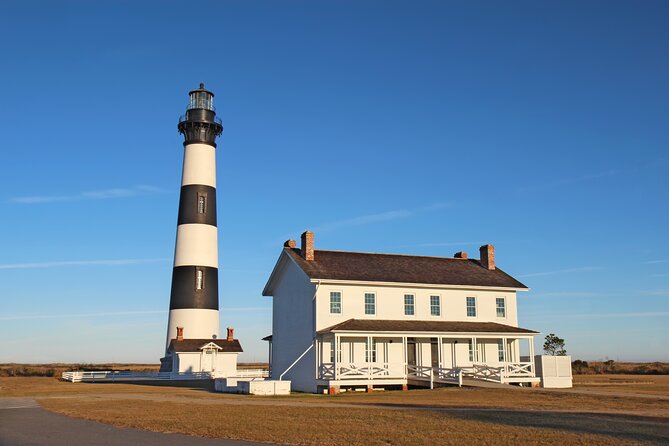
Bodie Island Lighthouse is an early highlight. The audio tells the story of the Laura Barnes, a four-masted schooner that ran aground in 1921 during thick fog and rough weather. The crew survived, but the ship broke apart on the beach. Some remains still lie in the sand, a useful reminder that this coast is not just pretty scenery. It is a place where weather and water have repeatedly changed the outcome of a voyage.
The stop itself is brief, with free admission listed for the tour point. If you want to tour the lighthouse or enter any separate attraction, those costs and opening hours are not included. That is a pattern throughout the experience: the audio points you toward places, but you decide which ones deserve a longer stop.
Oregon Inlet and the Graveyard of the Atlantic
The drive across Oregon Inlet gives the tour one of its best geographical lessons. The inlet connects Pamlico Sound with the Atlantic Ocean and was created by a hurricane in 1846. The story of the ship Oregon adds a touch of maritime oddity: during the storm, the vessel was lifted and deposited on a sandbar.
The nearby Herbert C. Bonner Bridge crosses a huge stretch of Pamlico Sound. You will hear that the sound is about 80 miles long, up to 18 miles wide, and surprisingly shallow, with a maximum depth of about 26 feet. Rivers from the mainland feed it, creating the second-largest estuary in the United States after Chesapeake Bay. The shallow water supports commercial fishing, including crabs, oysters, and clams.
These recordings are useful because they explain what you are seeing from the car. Without that context, the water beside the road can seem like an empty blue expanse. With it, you understand the sound as a working body of water shaped by rivers, storms, and shifting inlets.
The Oregon Inlet Life-Saving Station is another important stop. Before radar, GPS, and sonar, sailors had to approach this coast with very little help. Shipwrecks were so common that the Outer Banks earned the name Graveyard of the Atlantic. The life-saving station story puts a human face on that danger and introduces the crews who watched the shore and helped rescue stranded sailors.
Pea Island, beaches, and rescue stations
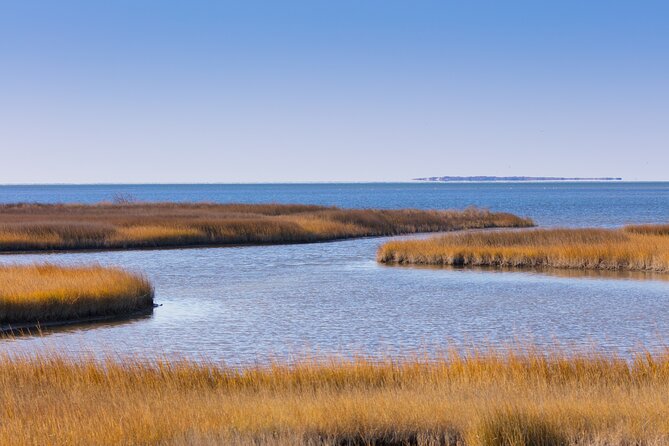
The route then moves through the 13-mile Pea Island National Wildlife Refuge. This protected strip is part of the Atlantic Flyway, a coastal route used by migratory birds. The audio explains the refuge as a stopping place for birds moving up and down the coast, giving you a reason to look beyond the road and sand.
Pea Island Beach offers a straightforward break. The beach is large enough that it may not feel crowded even when it is popular. You can pull over, sit on the sand, and take in the coast without turning the stop into a major excursion.
Jughandle Bridge provides another piece of practical coastal engineering. The bridge does not simply take you from one island to another. It carries the road around a difficult stretch of water and terrain, a reminder that transportation here has to work with shifting sand and inlets rather than a fixed mainland grid.
At the Chicamacomico Life-Saving Station Historic Site and Museum, the audio introduces the beach apparatus used by rescue crews. This is a good example of the tour’s approach. Instead of giving you only dates and names, it raises a practical question: how did rescuers reach a ship before modern equipment? If you have time, this is one of the stops worth pairing with an in-person visit.
More Driving Audio Tours in the USA
- Ultimate Lake Tahoe Self-Guided Driving Audio Tour
★ 4.5 · 435 reviews - Scenic Newport, RI Self-Guided Driving Audio Tour
★ 4.5 · 325 reviews - Arches National Park Self-Guided Driving Audio Tour
★ 4.5 · 288 reviews - Yellowstone National Park Self-Guided Driving Audio Tour
★ 4.5 · 249 reviews
Cape Hatteras, Hatteras village, and Blackbeard
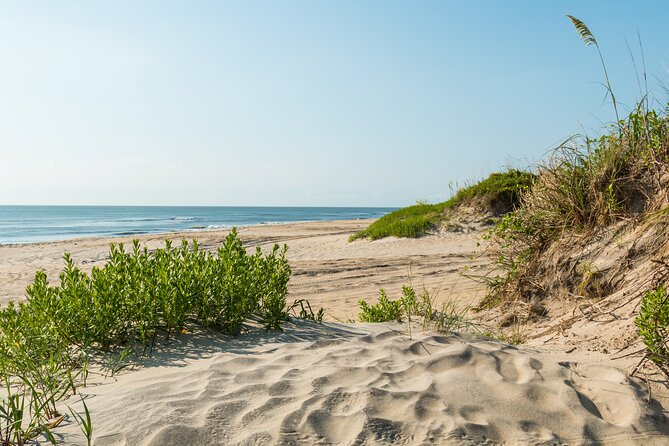
The Cape Hatteras section brings together one of the Outer Banks’ most recognizable towers and some of its most dramatic natural features. The Cape Hatteras Lighthouse story follows the earlier lesson about Bodie Island Lighthouse, whose original construction caused it to lean. The contrast helps you notice that lighthouses are not all alike, and that building on a storm-prone coast has never been simple.
Cape Point is where moving sand and maritime history meet. The audio treats the point as a place shaped by storms, currents, and the long record of ships passing nearby. The stop is more about setting and context than a single building, so it works best if you are willing to get out and experience the shore.
Hatteras village feels quieter and more local than the better-known northern towns. The population is around 400, and fishing is central to daily life. The roads curve and wander rather than following a tidy grid. If you want a pause from developed beach strips, this is one of the more appealing parts of the route.
Teach’s Lair Marina continues the pirate thread. Its name refers to Edward Teach, better known as Blackbeard, whose name appears throughout the Outer Banks. The marina is easy to spot as a collection of boats, but the value here comes from the connection between a modern harbor and the area’s enduring Blackbeard stories.
At the Hatteras Ferry Terminal, you can learn about service to Ocracoke Island. Ferries run three or four times daily depending on the season, and you can board on foot or with a car. The audio tour does not include ferry tickets or reservations, so check the current schedule before building a ferry ride into your day.
The WWII British Sailor Cemetery offers a quieter stop. The story connects the Outer Banks to the Battle of the Atlantic, when German U-boats attacked cargo ships leaving North Carolina. The cemetery gives that distant conflict a physical place on the island.
Jockey’s Ridge, Kitty Hawk, and the first flight

Jockey’s Ridge State Park is one of the route’s strongest visual stops. It contains the tallest sand dune system in the eastern United States. The audio explains how storms can push sand inland while winds from the mainland move it in another direction, creating large dunes on an already sandy barrier island.
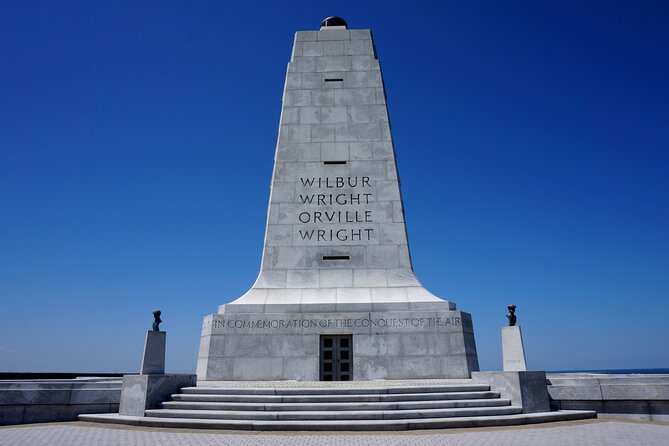
You can also turn toward the Wright Brothers National Memorial. The site includes full-scale aircraft models, markers showing the distances of the early flights, and other material about the experiments that led to powered flight. This is not just a quick roadside photo stop. Give it extra time if aviation history interests you.
The Wright Brothers Garage Monument adds another layer to the story. The brothers’ early work began in a garage, and the tour directs you toward the site connected with their experiments. The stop is a useful reminder that the famous flight grew from repeated testing, building, and small improvements.
The Kitty Hawk Woods Reserve comes next in the northern section of the route. The audio clears up a common point of confusion: the first flight is often linked with Kitty Hawk, but the brothers actually flew a few miles south, in what is now Kill Devil Hills. Kitty Hawk received the credit because Kill Devil Hills was not an official town in 1903.
Avalon Pier offers a more casual break. The 440-foot wooden pier has ocean views, fishing, restaurants, and shops. If you want a simple place to stretch your legs, it is easier than turning a historic site into a long stop.
Duck, Pine Island, and Corolla

Duck Town Park Boardwalk is a good place to pause for waterfront walking, shops, and restaurants. The audio gives you a clear choice: turn toward the town or keep driving. That flexibility is a strength of the format. You are not forced to spend time at every stop just because it appears on the route.
Pine Island Audubon Sanctuary protects 2,600 acres and provides habitat for hundreds of bird species. The story also touches on the hunting craze that once reduced bird populations in the area. This stop adds conservation history to the tour and gives you another reason to pay attention to the marshes and shoreline.
Corolla marks the northern end of the route. Its year-round population is around 500, but summer brings a much larger seasonal crowd. The town is known for watersports, a small-town feel, and wild horses on Corolla Beach. The audio introduces the horses, but the tour does not include a separate horse-watching excursion, so do not assume you will see them from the car.
Currituck Beach Lighthouse is an impressive final landmark. Completed in 1875, it is 162 feet tall, and its large Fresnel lens can send light about 21 miles. The explanation of the first-order lighthouse classification helps you understand why this tower was built on such a large scale.
Nearby, the Whalehead Club tells a different kind of coastal story. The 22,000-square-foot Art Nouveau house was built for Edward Collings Knight Jr. and his wife as a hunting lodge. Their wealth came from sugar, railroads, and steamships, and the property reflects a period when affluent families came to the Outer Banks for sport rather than year-round life.
Price, app setup, and practical limits
At $24.99 per group of up to four, this is inexpensive if you fill the car. Four people pay less than $6.25 each, and even two people get a useful private guide for a modest total cost. The price is especially fair for families or friends who would otherwise buy several tickets for a group tour.
The purchase includes the audio stories, GPS-triggered playback, offline maps, and lifetime access with no expiration. You can use it on a later trip, replay it, or split the route across several days. Attraction admission, ferry costs, reservations, food, and other personal expenses are separate.
The app setup deserves attention. After booking, look for the access instructions and password in your email and text messages. Download the separate Action’s Tour Guide app, enter the password, and download the tour while you have strong Wi-Fi or cellular service. The tour will then work offline.
Start at the designated point and use the version that matches your starting location and direction if more than one appears. The audio triggers within a GPS radius, so driving too fast, starting elsewhere, or leaving the route can cause missed recordings.
A few technical details matter. The app is recommended for iPhone with iOS 15 or later, Android version 9 or later, or an iPad or tablet with GPS and cellular connectivity. CarPlay is not currently supported, and Android Auto support is still forthcoming. You can still play the audio through Bluetooth, USB, or AUX. One user had trouble getting the route to appear and another could not download the app, so test the passcode and download before leaving your lodging.
The tour has a 4.6 rating from 28 reviews, with 93 percent recommending it. The strongest praise centers on the clear information, easy pacing once started, restaurant visibility along the route, and the ability to cover both the quieter south side and the busier northern towns. The repeated warning is equally clear: setup can be frustrating if you skip the starting point or lose service.
Free cancellation is available until 24 hours before the scheduled start time. Cancellations within 24 hours are not refunded.
Is this Outer Banks audio tour worth booking?
I would book it if you have a car, want historical context without joining a group, and prefer to decide your own stops. It is particularly useful on a first visit, when the distance between lighthouses, wildlife areas, villages, and aviation sites can make the region feel scattered.
I would skip it if you want a live guide, deep museum interpretation, or reliable help with every turn. The tour cannot answer questions, and the app requires a little preparation. Download it early, connect the phone to your stereo, begin at the marked point, and keep the driver focused on the road.
For a low group price and lifetime access, this is a practical way to give structure to a long Outer Banks drive. Just treat the two to three hours as driving time, not a complete day of sightseeing.
FAQ
How long does the Outer Banks audio tour take?
The driving route takes approximately two to three hours. You will need additional time for beaches, museums, lighthouse visits, boardwalks, meals, ferry rides, and other stops.
How much does the tour cost?
The price is $24.99 per group, covering up to four people in one car.
Does the tour include attraction admission or ferry tickets?
No. Attraction passes, entry tickets, reservations, and ferry costs are not included.
Will the tour work without cell service?
Yes, after you download the tour over strong Wi-Fi or cellular service. The app includes offline maps and uses GPS for location-triggered audio.
How do I start the audio?
Download Action’s Tour Guide app, enter the password sent by email and text, go to the designated starting point, and open the tour. The first story should begin automatically when you reach its location.
Can I use the tour on another day or trip?
Yes. The tour offers lifetime access with no expiration. You can pause it, return to it later, and use it on future trips.
Latest audio tours in the USA
- Sequoia National Park Self-Guided Audio Tour★ 4.5 · 9 reviews
- Sequoia and Kings Canyon Audio Tour Self Guide National Park Tour★ 5.0 · 3 reviews
- Kings Canyon National Park Self-Guided Audio Tour★ 4.0 · 4 reviews
- Sedona, Arizona Self-Guided Audio Tour★ 4.0 · 36 reviews
- Sedona & Red Rock State Park Self-Guided Driving Audio Tour★ 3.0 · 30 reviews
- Downtown Seattle Self-Guided Walking Audio Tour★ 4.5 · 6 reviews
- Uncover Seattle: Self-Guided Audio Tour★ 3.5 · 7 reviews
- Haunted Savannah Self-Guided Walking Audio Tour★ 4.5 · 3 reviews
Driving Audio Tours, compared.



Ultimate Acadia National Park Self-Guided Driving Audio Tour
Read our review →



Browse the lists this tour appears in