

Reviewed · MILAN
Self Guided Tours In Milan With 100 Captivating Audio Stories
Milan is easy to walk through, but its details can pass you by. This browser-based guide puts 100 short audio stories on your phone, from the Duomo and Galleria Vittorio Emanuele II to old churches, fashion streets, and the modern towers of Porta Nuova. I like the freedom to start anywhere and stop whenever you wish, and I like the low $3.60 price for a private guide you can use for one hour or spread across several days.
The strongest practical point is ease: no app download, no meeting time, and no group to keep up with. The tradeoff is that you need your own smartphone, headphones, and mobile connection, since offline access is not included. The stop list also repeats a few locations, so this works best as a flexible bank of stories rather than one perfectly ordered walking route.
Key points to know before you book

- One browser link covers 100 Milan stories: You can choose major sights, churches, neighborhoods, and modern architecture instead of following one fixed path.
- Start with the Duomo and Galleria: These central sights give you a quick introduction to Milan’s religious, royal, and commercial identity.
- Use it in short sessions: The activity can last from about one to eight hours, making it useful during a free afternoon or a longer city stay.
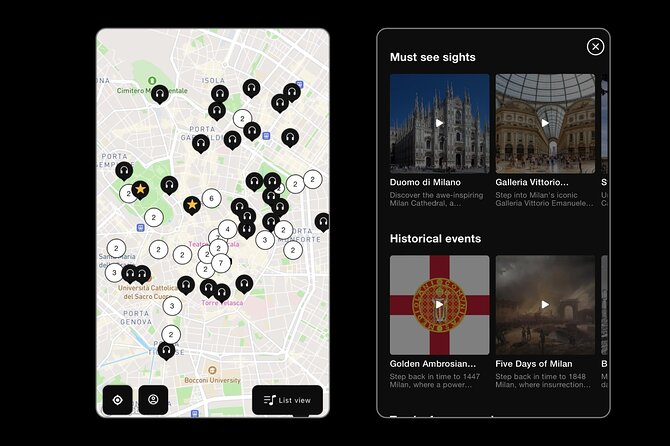
- No in-person guide is involved: You explore privately, with narration, soundscapes, and a map on your own phone.
- The price is unusually low: At $3.60 per person, it costs far less than most conventional guided walks, though you give up live questions and personal interaction.
- Plan your data and headphones: Offline use is not available, and the tour is not recommended for people with hearing impairment.
A pocket guide for Milan’s biggest sights
The central cluster is the easiest place to begin. The Duomo di Milano receives a 20-minute story about the cathedral’s construction, faith, and human effort. You can pair it with the nearby Piazza del Duomo, where Milan’s public life unfolds around the great square.
The Duomo story is useful because the building can feel overwhelming at first. A short explanation gives you something to look for beyond the famous facade and spires. Admission to the audio stop is free, but this does not include entry to the cathedral or its rooftop areas.
Next, step into the Galleria Vittorio Emanuele II, also covered by a 20-minute story. The arcade is more than a shopping passage. Its glass roof, grand scale, and connection to Italy’s first king give it a place in Milan’s civic story.
I would use these two stories early in your visit, especially if you have only a few hours. They are close together, easy to reach by public transportation, and likely to give you the quickest sense of the city’s public face.
The nearby Piazza della Scala adds the world of opera and high culture, while Corso Vittorio Emanuele II leads you through one of the city’s major central streets. One caution: the supplied description for that stop refers to Rome’s Victor Emmanuel II National Monument, not Milan’s Corso Vittorio Emanuele II. Treat that story as a content point to check rather than a precise guide to the Milan street.
More Self-Guided Audio Tours in Italy
- Naples: Pompeii Self Guided Audio Tour
★ 3.9 · 211 reviews - Matera: Sassi di Matera Historical Self-Guided Audio Tour
★ 3.6 · 183 reviews - Self Guided Audio Tour-Coliseum & the Gladiator’s Legends
★ 3.5 · 49 reviews
Brera, the castle, and Milan’s artistic side
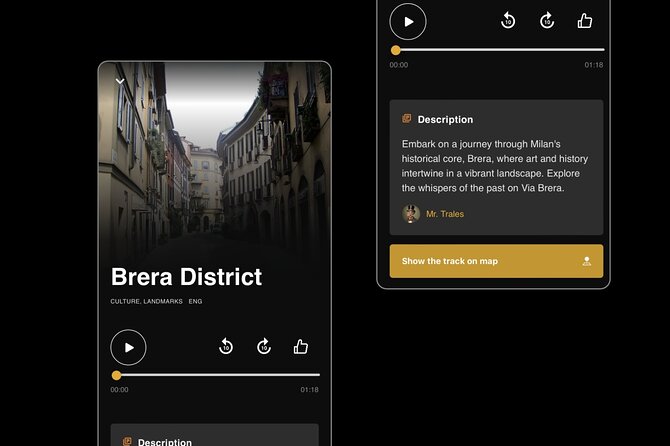
The Brera District is one of the best areas for using an audio guide at your own pace. The story focuses on Via Brera and the area’s connection with art and older Milan. You can pause for a coffee, browse the side streets, or continue when you are ready.
Brera appears twice in the stop data, which suggests that some locations may have more than one story or that the route contains repeated entries. That is not a major problem, but it means you should use the map and story titles rather than assume every item is a separate sight.
At Castello Sforzesco, a 10-minute story covers the fortress and its past. The castle is a natural link between Milan’s political power and its artistic life. Nearby Parco Sempione gives you a change of pace, with a 10-minute story about the park as a green area in the center of the city.
The Arco della Pace, described through the historic Porta Sempione, adds another story in this same general area. I like this section for visitors who want more than designer shops and polished central streets. You can connect the castle, park, and arch in one outing, though the guide does not promise a fixed walking order or navigation instructions between every stop.
Leonardo, old churches, and quiet discoveries
Santa Maria delle Grazie is included through a 10-minute story about the church and Leonardo da Vinci’s Last Supper. This is one of Milan’s most important art stops, but the audio story does not include admission to see the painting. You should treat it as background and orientation, not as a ticket.
The church list is one of the guide’s strongest features. It includes San Maurizio al Monastero Maggiore, Santa Maria presso San Satiro, San Marco, Santa Maria della Passione, San Fedele, San Babila, San Giorgio al Palazzo, and Santa Maria Incoronata.
These short stories can help you notice places you might otherwise walk past. Santa Maria presso San Satiro is presented through its famous architectural illusion. San Fedele connects with writer Alessandro Manzoni. Santa Maria Incoronata has a distinctive story involving two churches joined together in the fifteenth century.
You also get stories for the basilicas of Sant’Ambrogio, San Lorenzo, and Sant’Eustorgio. Sant’Ambrogio is especially useful for understanding Milan’s religious identity, while San Lorenzo and Sant’Eustorgio bring you into the older southern part of the center.
The drawback is length. Ten minutes is enough for a focused introduction, but not for a full art or architectural visit. I would listen outside, enter where appropriate, and then decide which buildings deserve more of your own time.
From medieval Milan to finance and fashion

Piazza Mercanti offers a story about medieval Milan, merchants, and craftsmen. It is a good counterpoint to the Duomo and Galleria because it shifts your attention from grand nineteenth-century spaces to the city’s commercial beginnings.
Piazza Missori and Piazza Affari show two different sides of Milan. The former includes a story about the Palazzo dell’INPS and its architect Marcello Piacentini. The latter focuses on Borsa Italiana in the Mezzanotte Palace and the city’s financial role.
The University of Milan adds another stop centered on learning and public life. These locations may not be top priorities on a first visit, but the short format lets you sample them without committing to a long lecture.
For fashion, the guide covers Via Monte Napoleone, Piazza San Babila, and the Quadrilatero della Moda. Via Monte Napoleone is presented as one of Europe’s most expensive addresses, while the Quadrilatero story explains the connection between luxury retail, Italian style, and Milan’s identity as a fashion capital.
I would not book this tour only for shopping advice. It does not promise store recommendations or discounts. Its value here is context, helping you understand why these streets matter even if you are only window-shopping.
More Self-Guided Audio Tours in Milan
- Athens: Acropolis Ticket & Optional Self-Guided Audio Tours
★ 4.1 · 2,542 reviews - Gettysburg Battlefield Self-Guided Driving Audio Tour
★ 4.5 · 910 reviews - Joshua Tree National Park Self-Guided Driving Audio Tour
★ 4.5 · 762 reviews - Ultimate Acadia National Park Self-Guided Driving Audio Tour
★ 4.0 · 521 reviews
Porta Ticinese, the Roman columns, and the southern center
The southern part of central Milan gets several useful stops. Porta Ticinese introduces a historic gateway, while the Colonne di San Lorenzo tell the story of ancient Corinthian columns that survived years of change and destruction.
The nearby Basilica di San Lorenzo and Basilica di Sant’Eustorgio give you more religious and architectural context. This area lets you connect Roman remains, medieval faith, and later city life in a relatively compact outing.
Because each story is about 10 minutes, you can listen selectively. If you are tired, skip a stop. If a church catches your eye, pause the audio and spend time looking around. That flexibility is the main difference between this product and a traditional walking tour.
The guide does not provide a human expert to answer questions about restoration, religious practice, or local customs. If you want a conversation, this is not the right format. If you prefer to observe quietly and choose your own pace, it makes good use of a small amount of money.
Porta Nuova and Milan’s modern face
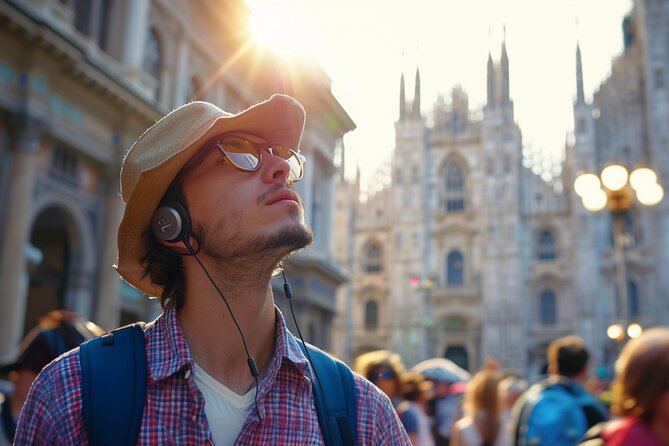
The guide does not limit itself to old Milan. Porta Nuova, Piazza Gae Aulenti, and Bosco Verticale show the city’s newer side.
Porta Nuova is presented as a center of business and innovation. The story also refers to Italy’s tallest skyscraper and the history of plastic. The description is cut short in the supplied details, so I would expect a broad introduction rather than a full architectural study.
At Piazza Gae Aulenti, the story focuses on the elevated modern square and its design. The location appears twice, as does Porta Nuova. This repetition may reflect separate audio entries, but it can also make the full list look longer than the number of unique places.
Bosco Verticale receives a story about the vertical forest towers designed by Boeri Studio. It is a useful stop if you want to compare Milan’s older stone buildings with its newer approach to urban planting and high-rise design.
Porta Nuova is not beside the Duomo in the same way as the Galleria or Piazza della Scala. You will need to use Milan’s public transportation or plan a longer walk between districts. The activity is near public transportation, but the guide does not include transport tickets.
Milano Centrale and the Monumental Cemetery
The Central Station area gets a 10-minute story about Milano Centrale and its architecture. This is a practical addition because many people pass through the station without understanding its place in the city.
The Cimitero Monumentale is described as an open-air museum where sculpture and Milanese history meet. It is a different kind of stop from the shopping streets and piazzas. The audio format suits it well because you can move quietly and take your time.
You should not expect every stop to fit into one neat route. Milan’s attractions are spread across several districts, and the experience allows one to eight hours. I would choose one cluster per outing rather than trying to reach all 100 stories in a single day.
How the web app works in real use
After booking, you activate access by entering the last five digits of your phone number in the promo code field at App.trales.io. The guide then opens in your browser, with a map and one-step access link.
The main advantage is that you do not need to install another app. That saves storage space and removes one common hurdle, especially if you are using a temporary phone plan or trying to keep your device simple.
You do need to bring a charged smartphone and headphones. The guide does not provide either one, and offline access is not included. I would load the guide before setting out, confirm that your phone can play audio, and carry a backup battery if you plan to use it for several hours.
The stories include voice narration and soundscapes. That can make a short visit feel more directed than reading a plaque, but audio also requires attention. Keep the volume low enough to remain aware of bicycles, traffic, and other people around you.
Who gets the best value for $3.60
At $3.60 per person, the price is the clearest selling point. A couple can access a large set of stories for less than the cost of many single museum add-ons. The guide is also private, so you are not paying for seats in a group or adjusting your day to someone else’s schedule.
The strongest use case is a solo visitor, couple, or family that wants a quick introduction without a fixed tour. It also suits someone on a business trip who has only a few spare hours. One positive account described using it for a couple of hours between business commitments and getting a fast sense of Milan.
The guide is less suitable if you want a specialist in art, architecture, food, or local life. It also may not suit you if you have hearing impairment, since participation is based on audio narration. Most people can take part, and service animals are allowed.
The activity is non-refundable and cannot be changed after booking. That matters less at this price than it would for a costly day tour, but you should still book only when you know you can use it.
Should you book this Milan audio tour?
I would book it if you value control, low cost, and a broad set of short stories. Start with the Duomo, Galleria, Piazza della Scala, Brera, and Castello Sforzesco if you want the most efficient first session. Add the churches or Porta Nuova on another outing.
I would skip it if you want a live guide, detailed answers, or a carefully sequenced walking route. The repeated entries and one mismatched description mean you should treat the map as a menu of locations, not a flawless master plan.
For $3.60, the risk is small. Bring headphones, keep your phone online, and use the guide selectively. Its best feature is not that it replaces a human guide. It gives you enough background to look more closely, then leaves Milan in your hands.
FAQ
How much does the Milan audio tour cost?
The price is $3.60 per person.
How long does the experience last?
The activity takes approximately one to eight hours, depending on how many stories and locations you choose.
Do I need to download an app?
No. The guide works directly through your browser.
How do I activate the audio guide?
After booking, submit the last five digits of your phone number in the promo code field at App.trales.io.
Do I need to bring my own equipment?
Yes. You need your own smartphone and headphones. They are not provided.
Is offline access available?
No. Offline access is not included.
Is there a physical guide?
No. This is a self-guided activity with a web app, map, narration, stories, and soundscapes.
Can I start the tour at any time?
Yes. You can start anytime and use the pause and resume features.
Is the activity suitable for people with hearing impairment?
It is not recommended for people with hearing impairment because the experience depends on audio narration.
Latest audio tours in Milan
- Mysteries of Milan: Uncover the city’s lesser-known tales on this audio tour★ 4.5 · 2 reviews
- Milan Walking Tour with Audioguide on Your Smartphone★ 5.0 · 6 reviews
- Milan: Museum of the 900 Fast-Track Entry Ticket & Audio Guide★ 4.0 · 12 reviews
- Milan: Sforza Castle Entry Ticket & Audio Guide★ 3.5 · 13 reviews
- Milano Walking Tour with Audio and Written Guide by a Local★ 4.5 · 13 reviews
- Best of Milan audio tour: From the gorgeous Duomo to Castello Sforzesco★ 5.0 · 2 reviews
- Audio Guide for the Duomo – Milan Cathedral (no ticket)★ 4.0 · 5 reviews
- Milan: Natural History Museum Entry Ticket & Audio Guide★ 4.2 · 25 reviews
Self-Guided Audio Tours, compared.
Acropolis Ticket & Optional Self-Guided Audio Tours
Read our review →


Ultimate Acadia National Park Self-Guided Driving Audio Tour
Read our review →

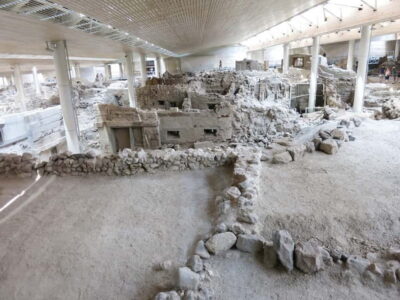
Akrotiri Ticket with Optional Self-Guided Audios
Read our review →
Browse the lists this tour appears in