

Reviewed · MAUI
Self-Guided Audio Driving Tour in Road To Hana
The best thing about this Road to Hana audio tour is that it turns a demanding day of driving into a flexible trip with a friendly voice in the car. Commentary begins near each point of interest, so you hear what to watch for before you pass it, even in areas where phone service disappears.
I like two things in particular: the tour gives you clear driving instructions with GPS-triggered stories, and it lets you set your own pace. You can stop for a smoothie at Twin Falls, skip a crowded viewpoint, or spend extra time at Waiʻānapanapa State Park without waiting for a bus. The main catch is that setup takes more than a simple pay-and-play app, and a full route can take 8 to 16 hours.
Key points to know before you go
- One purchase covers up to eight people: At $19.99 per group, the value is strongest when several people share one car.
- The narrator feels like a companion: Many people refer to the warm voice as Uncle George, while another review identifies the guide as Jim.
- It works offline: Download the tour and GPS-based commentary continues where cellular service does not.
- Waiʻānapanapa requires advance planning: Entry to the black sand beach requires a reservation, and that cost is not included.
- Pipiwai Trail needs extra time: The hike can take two or more hours and requires admission to Haleakalā National Park.
- Start early: An 8 a.m. departure is a practical target if you want several stops and a daylight return.
Why this $19.99 driving guide works so well
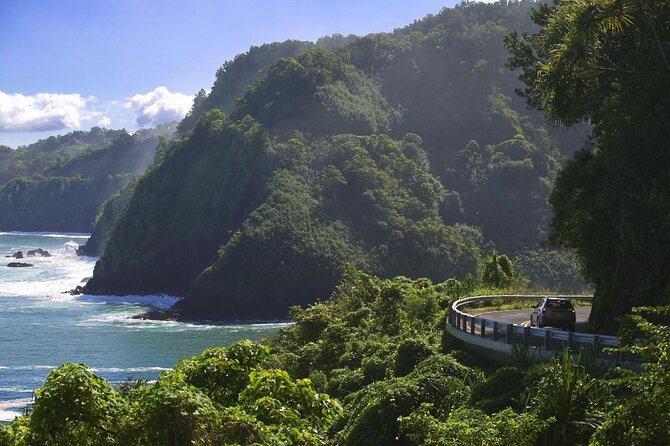
The Road to Hana is not hard to find. The hard part is deciding where to stop, knowing which turnoff matters, and keeping your attention on a narrow road with curves and one-lane bridges.
This audio tour handles much of that mental work. It uses your phone’s GPS chip to trigger commentary based on your position and direction. You do not need to keep checking a map or cell signal. The app can tell you what is ahead, offer background on a place, and explain whether a stop deserves ten minutes or an hour.
That makes it different from a standard recorded podcast. A podcast plays in order. This tour is tied to the road, so it can adjust to your movement and provide guidance near the relevant point. On the way back, it also offers different historical material rather than simply repeating the morning narration.
At $19.99 for a group of up to eight, the price is easy to justify. A couple pays less than $10 each, and a family or group pays only a few dollars per person. You still cover park fees, attraction admission, food, fuel, and reservations, but the guide itself is a modest part of the day’s cost.
More Self-Guided Audio Tours in the USA
- Gettysburg Battlefield Self-Guided Driving Audio Tour
★ 4.5 · 910 reviews - Joshua Tree National Park Self-Guided Driving Audio Tour
★ 4.5 · 762 reviews - Ultimate Acadia National Park Self-Guided Driving Audio Tour
★ 4.0 · 521 reviews
Download it before you leave Maui’s main roads
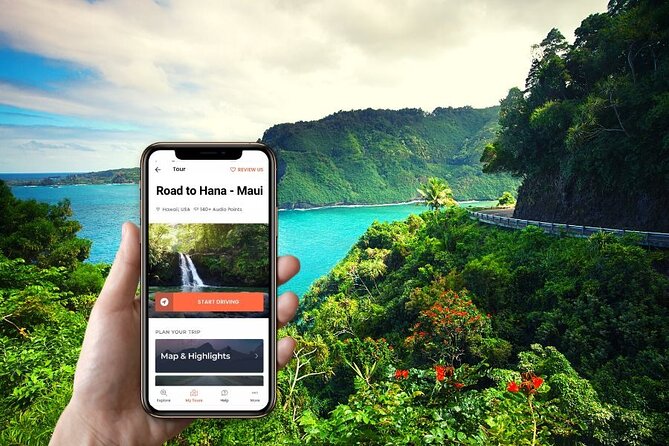
The most important practical step is downloading everything before you start. After booking, look for an email or text with instructions under Download Audio Tour. You redeem the voucher code through your Apple or Google account, download the free GuideAlong app, and then download the Road to Hana tour under My Tours.
This process is not quite as quick as purchasing a map and opening it. One person had trouble getting into the tour and spent more than half an hour trying to find the actual guide. That problem appears to come from voucher redemption rather than the commentary itself, but it is still a real consideration.
Set it up over Wi-Fi or reliable cellular data. Open the app once, check the start point, preview the route, and confirm that the tour is stored on your phone. Bring a USB car charger, since GPS use and audio can drain a battery during a long day.
Once downloaded, the tour works without internet or cell service. That matters here. Parts of the route have weak or no service, and one review notes that even ordinary GPS directions did not always show the road clearly. The GuideAlong system continued to provide location-based narration in those gaps.
Start at HoʻoKipa and Twin Falls
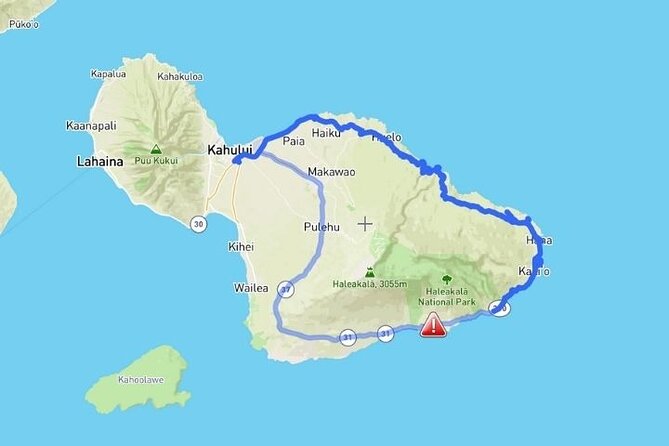
You can begin anywhere along the route, but the tour starts around the Hana Highway near Kula. I would begin early, ideally by 8 a.m., because the day expands quickly once you begin stopping.
HoʻoKipa is a useful first pause. It is known for powerful wind and world-class windsurfing, not calm swimming. You may also see Hawaiian green sea turtles resting near the far right side of the beach. Give them plenty of space and never touch them.
The beach has restrooms, showers, and picnic areas, making it a sensible early stop. The audio commentary adds local context while also warning you about the conditions. That sort of advice is more useful than another generic scenic description.
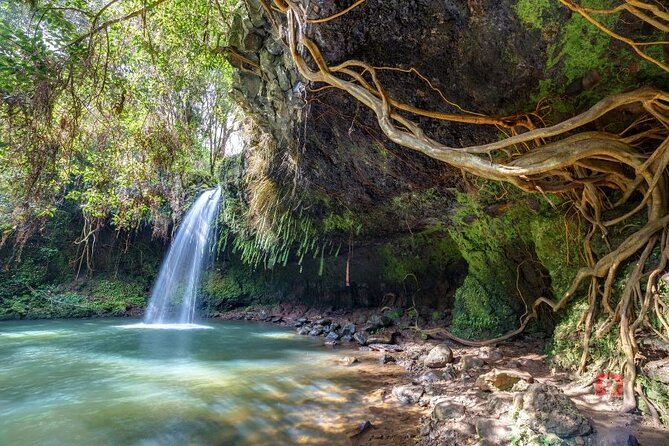
Twin Falls is often the first place where you will want to leave the car for a proper walk. The trail can extend about 1.5 miles, with stream crossings and bamboo forest. You can choose how far to go, but muddy conditions are common, so sturdy footwear is a good idea.
The farm stand is a practical bonus. A tropical fruit smoothie can serve as breakfast or a cool break before the road’s tighter bends. Admission is not included, and the stop can easily take an hour if you hike and linger.
Keʻanae Arboretum and the old taro terraces
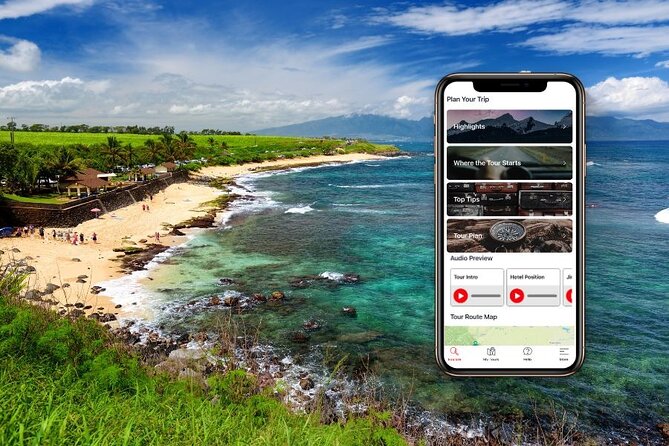
The Keʻanae Arboretum is one of the easiest stops on the route. It costs nothing, and you can see much of it in less than 30 minutes, though a longer walk follows the Piʻinaʻau Stream toward terraces made by ancient Hawaiians for taro cultivation.
The plant collection includes golden-stemmed bamboo, ginger, papaya, and hibiscus. The most memorable trees are the rainbow eucalyptus, whose multicolored bark looks almost painted.
This is exactly the kind of stop that is easy to miss when you drive independently. It does not announce itself with the same force as a waterfall or beach, yet it gives you a closer look at Maui’s plants and older agricultural practices.
Keʻanae Point offers a different view. A lava outflow from Haleakalā formed the flat peninsula, which became a productive place for taro farming. A small church built from coral and lava rock adds a human touch to the rocky coast.
Allow about 20 minutes for the point, but stay longer if the waves are active. The ocean pounds against sharp rock formations, and coconuts can often be found along the shore. Admission information is not included, so check local conditions before entering any marked area.
More Driving Audio Tours in the USA
- Ultimate Lake Tahoe Self-Guided Driving Audio Tour
★ 4.5 · 435 reviews - Scenic Newport, RI Self-Guided Driving Audio Tour
★ 4.5 · 325 reviews - Arches National Park Self-Guided Driving Audio Tour
★ 4.5 · 288 reviews - Yellowstone National Park Self-Guided Driving Audio Tour
★ 4.5 · 249 reviews
Hana Lava Tube and Upper Waikani Falls
The Hana Lava Tube is Maui’s most accessible lava tube and offers a welcome change from open ocean views. You can enter only as far as you feel comfortable, which helps if enclosed spaces make you uneasy.
Allow about 30 minutes. Admission is not included, and the surface inside can feel very different from the paved road outside, so follow posted guidance and use sensible footwear.
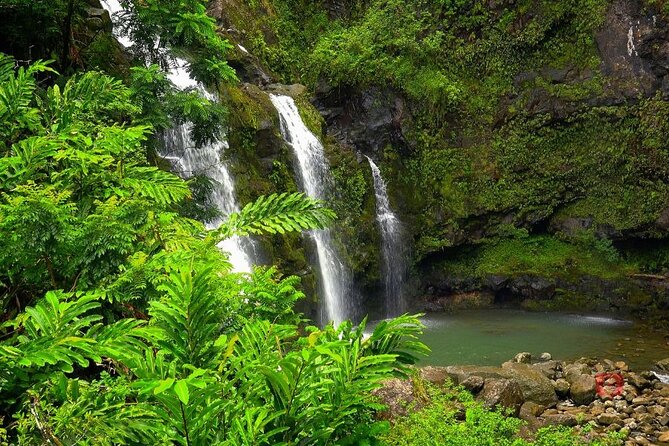
Upper Waikani Falls is commonly called Three Bears Falls. Its appearance changes with rainfall. After heavy rain, the water may look like one broad cascade. With less flow, three separate falls appear, one large, one medium, and one small.
The stop itself may take only 20 minutes. It is a good example of why timing matters on this drive. A waterfall you see in a thin, separate flow may look entirely different after a wet night. The audio guide helps you understand what you are seeing without promising one fixed version of the scene.
Koki Beach, Hamoa Beach, and the coast near Hana
Koki Beach shares a turnoff with Hamoa Beach, making the pair easy to combine. From Koki, look toward Alau Island, an unusual offshore cinder cone about a quarter mile from shore.
The view also connects with Hawaiian stories involving Pele, the goddess of volcanoes, and the demigod Maui. The audio commentary’s cultural material is one of its strongest features. It gives the drive more meaning than a string of photo stops, while keeping the information easy to follow.
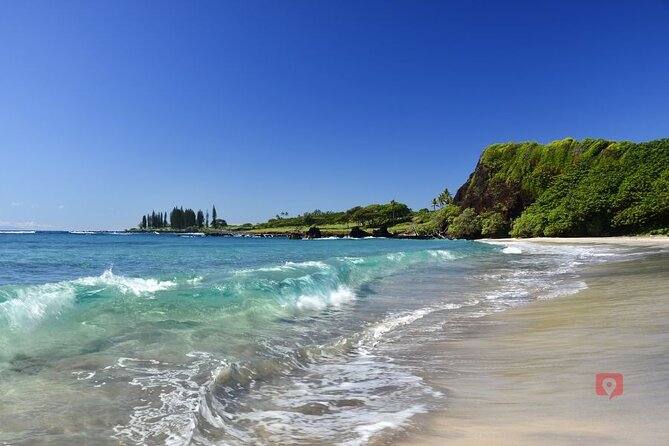
Hamoa Beach is a crescent of sand that works well as a rest stop. You can cool off, sit beneath a tree, or use the public bathrooms and showers. There are no lifeguards, and swimming conditions change, so keep a close eye on children and do not assume the water is safe simply because the beach looks calm.
Plan around 30 minutes at Hamoa, longer if you want a real break. On a long day in the car, that pause can make the final section toward the park much more pleasant.
Waiʻānapanapa State Park needs a reservation
Waiʻānapanapa is the major reservation issue on the route. The park contains Maui’s famous black sand beach, volcanic shoreline, a sea arch, and a blowhole, along with places tied to Hawaiian legend.
Plan to spend about two hours here if you want more than a quick photograph. Follow the signs along the coast and allow time to see the beach and rock formations without rushing.
Entry reservations are required. They are not included in the $19.99 tour price, and you should arrange them in advance rather than assume you can decide at the last minute. This is the single detail most likely to disrupt an otherwise well-planned day.
The audio tour can explain what you are approaching, but it cannot secure your reservation for you. Check the park’s current entry rules when planning your drive, and build the rest of your schedule around your timed arrival.
Pipiwai Trail makes the day much longer
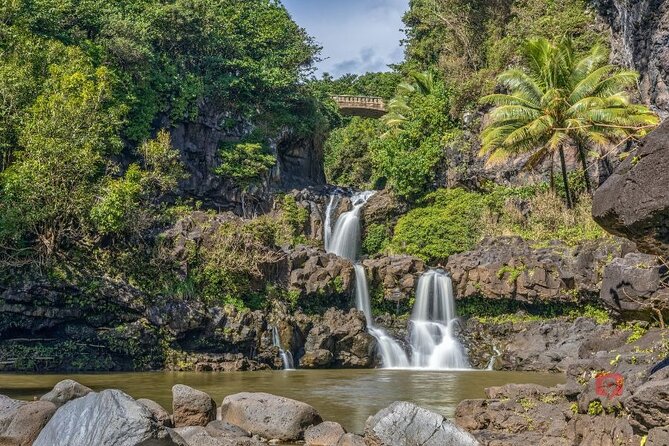
At the end of the route, near the Kīpahulu area of Haleakalā National Park, you will find Pipiwai Trail. It is often the most rewarding hike on the drive, but it changes the schedule from a sightseeing day into a serious outing.
The full trail is about four miles round trip and climbs 650 feet. It is rated moderate, though heat can make it feel strenuous. Along the way, you may reach views of Makahiku Falls, and the bamboo forest is a particularly peaceful section.
Waimoku Falls is the farthest main point. If the climb feels like too much, Makahiku Falls is a sensible place to turn around. Allow at least two hours, and more if you walk slowly or stop often.
Haleakalā National Park admission is separate. You need to show a National Park Service pass or purchase one on arrival. The itinerary information suggests reaching the trail by 2 p.m. to leave enough daylight for the hike and return drive, but an earlier start is wiser if you plan to include several other stops.
One small oddity is that the itinerary lists Pipiwai Trail as two minutes, which clearly describes a navigation point rather than the actual visit. Treat the hike itself as a major time commitment.
How to plan the return drive
A common mistake is to treat the Road to Hana as a short scenic drive with a few quick pictures. It is a full-day outing, and the route can take 8 to 16 hours depending on how many walks and beaches you include.
Use the in-app trip planners for half-day, full-day, or multi-day ideas. If you have only one day, choose a few priorities rather than trying to do every stop. A morning focused on HoʻoKipa, Twin Falls, Keʻanae, and Hana Lava Tube leaves more room for the southern beaches or Waiʻānapanapa.
If Pipiwai Trail is your main goal, protect that time first. If the black sand beach matters most, secure the reservation before building the rest of the route.
Start early and avoid driving the road in darkness. The curves, narrow sections, and one-lane bridges require patience. Pull over for local drivers when appropriate, and do not stop in a way that blocks traffic or creates a hazard.
Who will get the most from this tour
This is a strong fit if you want to drive yourself but do not want to research every stop. It also suits families and small groups who prefer to choose their own breaks instead of following a bus schedule.
Solo drivers should use the commentary as an aid, not as a reason to divide attention. Let a passenger manage the phone, and keep your eyes on the road. The app gives directions and stories, but it does not replace careful driving.
You will get the most value if you enjoy history, plants, waterfalls, and short walks. If you want a silent drive with only your own playlist, the narration may feel too frequent, though you can play music during quieter sections.
The narration includes humor, practical food tips, cultural information, and a different set of stories for the return trip. The voice is warm and conversational. The nickname Uncle George fits the friendly style, and one part of the experience feels less like a formal lecture and more like a helpful relative in the front seat.
Setup, cancellation, and final value
The tour is available in English and is sold as a private activity for your group. It has no fixed date or expiry, so you can change your driving day without rebooking. That is useful if rain, fatigue, or a changed Maui schedule gets in the way.
Free cancellation is available up to 24 hours before the local start time. Within 24 hours, the payment is not refunded.
The 4.6 rating from 87 ratings and 92 percent recommendation figure match the practical strengths of the product: accurate location tracking, useful stop advice, clear narration, and strong value for a carload. The main weakness is the initial app and voucher setup. Give yourself time to solve that before reaching the highway.
Should you book the Road to Hana audio tour?
I would book it if you plan to drive the Road to Hana independently and want more than a printed list of stops. For $19.99 per vehicle group, the location-based directions and offline operation offer excellent value, especially for families or groups of friends.
Skip it if you already have a detailed plan, a confident navigator, and no interest in commentary. Otherwise, download it in advance, charge your phone, reserve Waiʻānapanapa, and start early. The guide will not make the road short, but it can help you use a long Maui day wisely.
FAQ
How much does the Road to Hana audio tour cost?
The tour costs $19.99 per group, with up to eight people covered in one vehicle.
How long does the tour take?
The drive and suggested sightseeing can take about 8 to 16 hours. Your total time depends on how many stops and hikes you choose.
Does the audio tour work without cell service?
Yes. Download the GuideAlong app and the tour before leaving reliable service. After that, the GPS-based commentary works offline.
Where can I start and finish the tour?
You can start and finish anywhere along the tour route. Commentary begins automatically based on your location and direction.
Is entry to Waiʻānapanapa State Park included?
No. Entry is not included, and reservations are required to visit the park.
Do I need to pay separately for Haleakalā National Park?
Yes. Pipiwai Trail is inside Haleakalā National Park. You need to show a National Park Service pass or purchase one on arrival.
What should I bring for the drive?
Bring a fully charged phone, a USB car charger, and suitable footwear for muddy trails. Plan ahead for park reservations and allow plenty of time for the drive.
Latest audio tours in the USA
- Solvang City Personalized Self-Guided App Tour★ 3.0 · 6 reviews
- Essential Downtown SLO: A Self-Guided Audio Tour★ 4.5 · 27 reviews
- Silicon Valley Self-Guided Driving Audio Tour for Tech Lovers★ 4.0 · 24 reviews
- Self-Guided Audio Tour of the Golden Gate Bridge★ 3.5 · 3 reviews
- The Ghosts of San Francisco Haunted Audio App Walking Tour★ 5.0 · 2 reviews
- Point Reyes National Seashore Self Guided Driving Audio Tour★ 4.0 · 9 reviews
- San Francisco Self-Guided Audio Drive: Explore at Your Own Pace★ 4.0 · 9 reviews
- Explore Coronado Island on a Self Guided Audio Tour★ 5.0 · 2 reviews
Driving Audio Tours, compared.



Ultimate Acadia National Park Self-Guided Driving Audio Tour
Read our review →



Browse the lists this tour appears in