
Reviewed · ISTANBUL
Istanbul Self-Guided Audio Tour
Istanbul’s biggest sights are spread across two continents and several neighborhoods, yet this $6 self-guided audio tour links 12 of them in one low-cost package. You can listen at the Blue Mosque, pause for tea, skip a crowded palace, or split the experience across several days. It is less a traditional tour than a flexible sightseeing toolkit.
I like the freedom to choose your own route and the pairing of a single audio playlist with an interactive map. I also like the range: imperial mosques, Byzantine engineering, Ottoman palaces, Bosphorus views, industrial machinery, and miniature monuments all appear here. The catch is that you receive no guide, transport, or admission tickets, and the material is offered in English only.
Key points to know before you book

- Twelve major sights in one playlist: The route covers Istanbul’s best-known historic monuments, plus parks, museums, and a tower.
- About 20 minutes per attraction: The advertised audio segments are designed as short introductions, not full lectures.
- You control the order: Start and finish anywhere in Istanbul, visit only a few stops, or spread the program over as many as six days.
- SoundCloud and Google My Maps do the work: You need a charged phone, internet access, and headphones.
- Admission costs are extra: Entry is free at some open religious sites, while places such as the Basilica Cistern, Topkapi Palace, and Galata Tower charge separately.
- English narration only: No individual guide is named, and the English narration may have an Indian accent.
How this Istanbul audio tour works
Before your selected date and start time, you receive two private links through the booking platform’s messaging system. One opens a SoundCloud playlist with all 12 audio tracks. The other opens a Google My Maps itinerary with headphone icons marking each attraction.
Use a web browser such as Safari or Chrome for the map. The instructions specifically say not to open it in the Google Maps app. Tap an icon, or select the tour title below the map to view the full attraction list. Each stop includes a link to its matching audio track.
This matters because the tour is not GPS guided. It will not automatically tell you when to turn, warn you that you are near a monument, or guide you through public transport. You must choose your own route and open the correct track yourself.
The links remain valid for up to six days. That gives you a useful cushion in a city where weather, ferry schedules, prayer times, queues, and sheer distance can change your plans. You can listen before leaving your hotel, use one track at a site, and save the rest for another day.
Bring headphones or earphones, a fully charged smartphone, and internet access. I would also open both links before setting out. That small bit of preparation will help you decide which stops deserve your time and prevent a technical problem from eating into your sightseeing.
More Self-Guided Audio Tours in Istanbul
- Athens: Acropolis Ticket & Optional Self-Guided Audio Tours
★ 4.1 · 2,542 reviews - Gettysburg Battlefield Self-Guided Driving Audio Tour
★ 4.5 · 910 reviews - Joshua Tree National Park Self-Guided Driving Audio Tour
★ 4.5 · 762 reviews
Blue Mosque and Hagia Sophia: Istanbul’s grand historic center
The Blue Mosque is an easy place to begin because it offers both architectural drama and a chance to slow down. The audio explains Sultan Ahmed’s ambitious project, the mosque’s six minarets, its Iznik tiles, stained-glass windows, geometric designs, and the political tension caused by giving the mosque the same number of minarets as the mosque in Mecca.
The listed visit time is about 20 minutes, though you may need longer if you want to sit quietly or examine the interior. Admission is listed as free. Remember that this is an active place of worship, so your visit should follow the site’s visitor rules and prayer schedule.
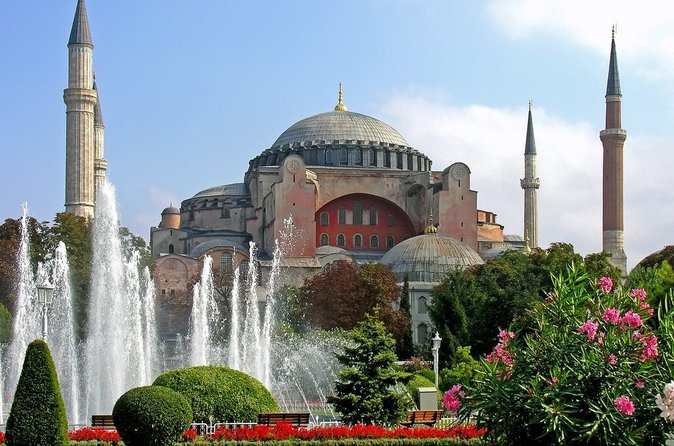
A short walk brings you to Hagia Sophia Grand Mosque, where the audio focuses on 1,500 years of religious and political change. You hear about the great dome, earthquakes, imperial ceremonies, Christian mosaics, Islamic calligraphy, and the layers of worship that remain visible in one building.
Hagia Sophia is valuable even if you have little interest in religious architecture. The building lets you see Christian and Islamic artistic traditions sharing the same walls. The audio can help you notice details that are easy to miss when you are mainly looking upward at the dome.
Both mosque visits are listed as free, but access arrangements can change. Plan your timing with care, and avoid treating these stops as quick photo opportunities. The audio is most useful when you pause, look closely, and let the building set the pace.
Basilica Cistern: Roman engineering below the streets

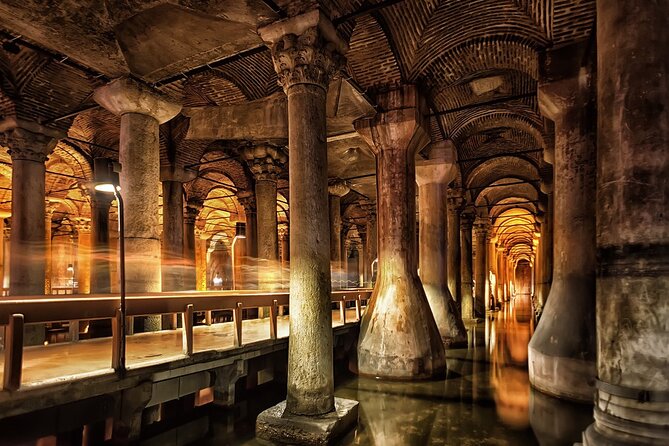
The Basilica Cistern takes you underground into a broad chamber supported by 336 columns. The audio explains how the Roman water system served Constantinople, why the two Medusa heads are positioned as they are, and how the cistern later became a setting for films and concerts.
This is one of the most atmospheric stops on the route. Reflections, dim light, columns, and the sound of water create a very different mood from the open courtyards above. The audio also points to fish, carvings, acoustics, and less obvious corners.
Admission is not included, so check the current entrance price before you go. The tour gives you context, but it does not buy your ticket or help you pass the line. At a popular sight like this, the difference between a cheap audio package and a guided visit is that you must handle every practical step yourself.
The 20-minute track should give you a useful framework. If you like old engineering, underground spaces, or the way modern Istanbul sits on top of earlier cities, this is one of the strongest stops.
Topkapi Palace and Gulhane Park: Power, gardens, and Ottoman court life
Topkapi Palace needs more than the suggested 20 minutes if you want to see its courtyards, Treasury, Harem, and views. The audio covers the palace’s role in Ottoman government, the political influence of the Sultan’s household, diplomatic ceremonies, and court routines.
It also introduces famous objects such as the Topkapi Dagger and the Spoonmaker’s Diamond. These details give the palace a human scale. Instead of seeing only tiled rooms and display cases, you start thinking about wealth, ceremony, succession, and the daily machinery of imperial rule.
Admission is not included. The Harem may also involve its own arrangement or ticketing, so confirm on the day. If you have only a few hours in Istanbul, you will need to choose between a quick overview and a proper palace visit. I would not try to rush every room simply to claim all 12 stops.
Gulhane Park sits beside the palace and offers a needed change of tempo. The audio describes its former role as a private imperial garden, its later connection with reform, journalism, royal leisure, and public life. The park is free to enter, and the walk gives you room to rest after the palace.
I like this pairing because the two stops explain different sides of Ottoman Istanbul. Topkapi shows controlled power behind walls. Gulhane shows how an imperial space became part of the city’s public life.
More Audio Tours in Istanbul
- Istanbul: Daytime or Sunset Sightseeing Cruise & Audio Guide
★ 4.8 · 14,430 reviews - Istanbul: Basilica Cistern Fast-Track Entry and Audio Guide
★ 4.6 · 7,521 reviews - Topkapi Palace and Harem Skip-the-Line-Tickets & Audio Guide
★ 4.3 · 4,745 reviews - Istanbul: Bosphorus Sightseeing Cruise Tour with Audio Guide
★ 4.6 · 4,704 reviews
Kiz Kulesi and Suleymaniye Mosque: Legends across the water
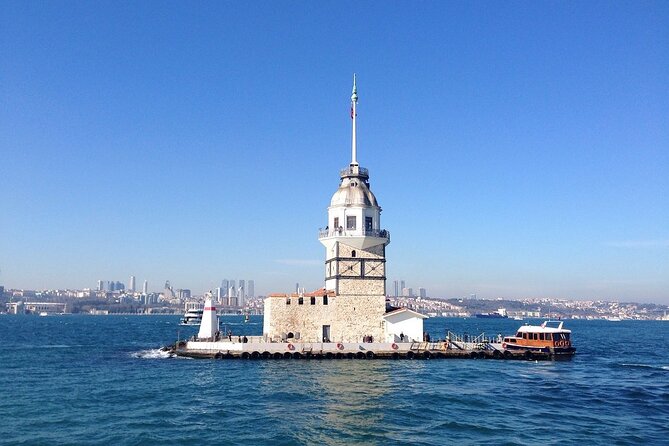
Kiz Kulesi, or Maiden’s Tower, sits on a small island in the Bosphorus. The audio covers the story of the princess and the prophecy, along with the tower’s practical roles as lighthouse, customs station, quarantine center, and defensive post.
The tower is also presented as a symbol of love and a subject of Turkish films, songs, and literature. You may not be able to treat this stop like a normal walk-through attraction, since it is separated from the shore and admission is not included. Think of it as a scenic landmark best understood from the surrounding waterfront unless your own plans include access to the tower.
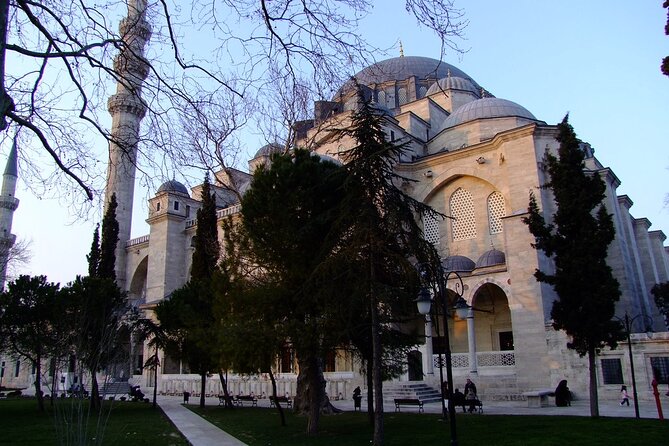
Suleymaniye Mosque gives you another free religious site, this time linked to Sultan Suleiman and the architect Mimar Sinan. The audio discusses mathematical proportions, acoustics, earthquake-resistant construction, calligraphy, Iznik tiles, and the mosque complex’s schools, hospital, and kitchens.
The mosque’s hilltop position also makes this a good place to appreciate Istanbul’s relationship with the Golden Horn and the Bosphorus. The audio’s focus on the social services of the complex is especially useful. It reminds you that Ottoman mosques were not only prayer halls. They were also centers of education, charity, food, and public life.
Galata Tower and Dolmabahce Palace: Two faces of imperial Istanbul
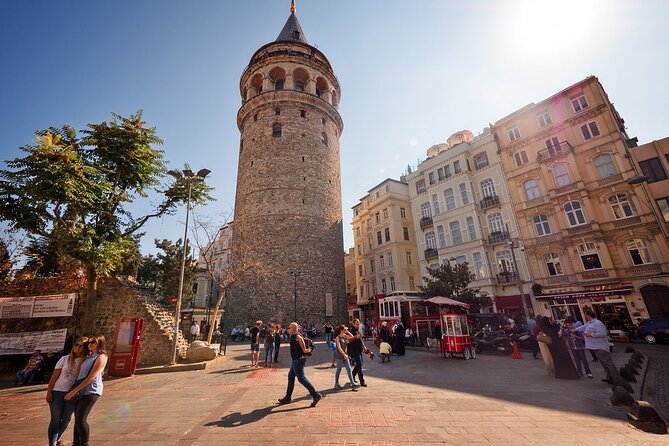
Galata Tower takes you into the city’s Genoese and Ottoman past. The audio covers its use as a watchtower, fire lookout, communication point, and part of Istanbul’s changing skyline. It also tells the story of the aviator who flew between Europe and Asia from the tower area.
The panoramic view is the main reason to go, but the tower’s location also helps you understand how different communities shaped the city. Admission is extra, and queues or access conditions may affect how long the visit takes. The suggested 20-minute audio segment is enough to frame the stop, but not enough to replace time at the viewpoint.
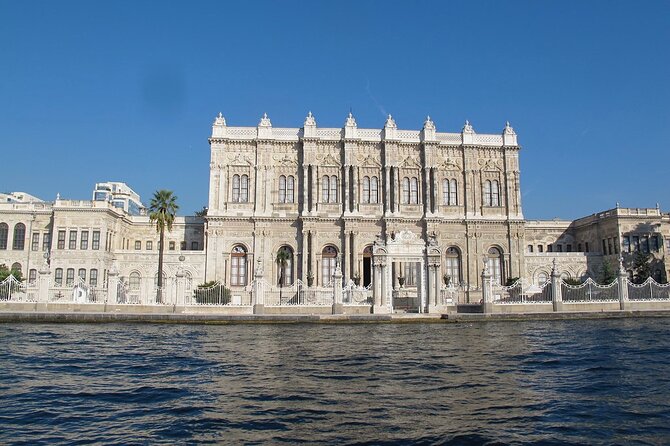
Dolmabahce Palace shows the Ottoman court turning toward European design in the 19th century. The audio describes the palace’s cost, technology, Bohemian crystal chandelier, gold bathtub, political events, and its later connection with Mustafa Kemal Ataturk, the founder of modern Turkey.
This is a useful counterpoint to Topkapi. Topkapi feels tied to older Ottoman court traditions, while Dolmabahce presents imperial power through grand European rooms and modern technology. Admission is not included, and a proper visit will require more than the listed audio time.
If you only have one day, do not force both palaces into a tight schedule. They sit in different parts of the city and represent different eras. Choose the one that matches your interest, then use the rest of your day for nearby sights.
Rahmi M. Koc Museum and Miniaturk: Istanbul beyond palaces
The Rahmi M. Koc Museum offers a welcome break from religious and royal buildings. Its collection includes steam engines, vintage cars, maritime objects, a submarine, restored locomotives, and other machines linked to Turkey’s industrial growth.
The audio turns the objects into examples of changing transport, technology, entrepreneurship, and modernization. This stop will suit you if you prefer working machinery and practical history to decorated interiors. Admission is extra, and the museum deserves more time if you want to read displays or inspect the vehicles closely.
Miniaturk presents around 120 small-scale models of important buildings from Turkey and its earlier civilizations. The audio explains the craft behind the 1:25 scale models and points out architectural details that you might miss at full size.
This is a smart stop for planning the rest of your trip. You can see a broad sample of Turkish monuments in one place, then decide which full-size sites deserve a future visit. It is also a good choice when you want a lighter sightseeing session after several intense historic interiors.
Both museums sit outside the compact Sultanahmet cluster. You will need to arrange your own transport, and admission is not included. The map can show you where they are, but it does not provide pickup, drop-off, or a transport plan.
Emirgan Park: A slower ending beside the Bosphorus

Emirgan Park takes the tour into northern Istanbul, away from the central monuments. The audio covers the park’s former private-estate role, Ottoman hunting parties, rare trees, pavilions, Bosphorus viewpoints, and tulip festivals.
The park is free, and the suggested visit can be a simple walk rather than a tightly scheduled attraction. Spring is especially associated with tulips, though the park’s appeal changes with the seasons. This is a good place to take a break, listen without rushing, and see how Istanbul’s public spaces connect with its imperial past.
Because Emirgan is far from several central stops, you should not treat the 12 attractions as one compact walking route. The package works best when you group sights by area and use public transport between districts. You decide how much planning that requires.
What $6 buys you, and what it does not
At $6 per person, the price is low for 12 audio tracks and an itinerary map. If you use even four or five of the guides, the cost per stop is small. It can be good value for independent visitors who already know how to move around Istanbul and want historical context without paying for a private guide.
The value drops if you expect admission tickets, transport, live explanations, or automatic navigation. Those costs remain yours. Depending on the sights you choose, entrance fees can quickly become far more than the audio tour itself.
The audio is also not a full course in Istanbul’s past. Each attraction is advertised at about 20 minutes, and the material is meant to orient you. One piece of feedback described the explanations as only two or three minutes, while the published information describes tracks averaging about 20 minutes. I would prepare for some variation and use the audio as a guide to what you see, not the only source of information.
The English narration may have an Indian accent. That is not a problem if you care most about clear content and can follow the English comfortably, but it is worth knowing before purchase. English is the only listed language.
Who should book this experience?
I would choose this tour if you like making your own decisions, already feel comfortable using a phone map, and want a cheap introduction to several major sights. It suits independent visitors, repeat visitors, couples with different interests, and anyone who would rather pause or skip than keep up with a group.
It is also useful if your schedule is uncertain. The six-day link validity lets you divide the sights between different parts of a stay instead of racing through them in one day.
I would skip it if you want a person beside you to explain details, arrange transport, handle tickets, or answer questions in real time. It is also a poor fit if your phone battery, internet access, or headphone setup is unreliable.
The tour is private in the sense that only your group uses the activity. Still, it is not a private guided walk. You are buying access to digital material, not the time of a local guide.
Should you book the Istanbul Self-Guided Audio Tour?
Book it for flexibility and low cost, especially if you plan to visit several of these sights anyway. Start with the Blue Mosque, Hagia Sophia, Basilica Cistern, and Topkapi Palace, then add the other stops according to your time and interests.
Do not book it expecting a complete tour service. You must manage transport, entrance fees, timing, and technology yourself. Since the booking is non-refundable and cannot be changed, review the English-only format, six-day access period, and required phone setup before paying.
For the right person, $6 is a sensible way to add structure and context to an independent Istanbul visit. For someone seeking a polished, guided experience, the low price tells you exactly what you are getting: useful audio and a map, but no human guide.
FAQ
How long does the Istanbul Self-Guided Audio Tour take?
The full experience is estimated at about three to nine hours, depending on how many of the 12 attractions you visit and how much time you spend at each one. You can also split it across several days.
Can I choose my own starting and ending points?
Yes. You decide where to begin, which attractions to visit, the order of your route, and where to finish.
How do I receive the audio guides?
You receive private access links through the booking platform’s messaging system. One link opens the SoundCloud audio playlist, and the other opens the Google My Maps itinerary.
Do I need the Google Maps app?
No. The instructions specify using the Google My Maps link in a web browser such as Safari or Chrome, rather than opening it in the Google Maps app.
Are admission tickets included?
No. Entry fees are separate. The Blue Mosque, Hagia Sophia, Gulhane Park, Suleymaniye Mosque, and Emirgan Park are listed as free, while admission is not included for the Basilica Cistern, Topkapi Palace, Kiz Kulesi, Galata Tower, Dolmabahce Palace, Rahmi M. Koc Museum, or Miniaturk.
Is transportation included?
No. Pickup, drop-off, and transportation between attractions are not included. You arrange your own movement around Istanbul.
How long are the audio links valid?
The private links remain valid for up to six days, allowing you to use the guides during a flexible, multi-day visit.
Latest audio tours in Istanbul
- Topkapi Palace Museum Skip The Ticket Line Tickets + Audio Guide★ 3.0 · 2 reviews
- Topkapi Palace and Harem Museum Ticket with Audio Guide★ 3.0 · 2 reviews
- Istanbul: Hagia Sophia Entry Ticket with Digital Audio Guide★ 4.5 · 7 reviews
- Istanbul Walking Tour with Audioguide on Your Smartphone★ 5.0 · 6 reviews
- Istanbul Bosphorus Sightseeing Cruise with Audio Guide★ 5.0 · 67 reviews
- Istanbul: Bosphorus and Golden Horn Cruise with Audio Guide★ 4.5 · 83 reviews
- Hagia Sophia Skip-the-Line Ticket with Audio Guide★ 5.0 · 4 reviews
- Dolmabahçe Palace Fast Entry QR Code Ticket & Audio Guide★ 5.0 · 2 reviews
Self-Guided Audio Tours, compared.

Acropolis Ticket & Optional Self-Guided Audio Tours
Read our review →


Ultimate Acadia National Park Self-Guided Driving Audio Tour
Read our review →

Akrotiri Ticket with Optional Self-Guided Audios
Read our review →
Browse the lists this tour appears in