
Reviewed · UK
Canterbury Cathedral: Entry Ticket with Audio Guide
Canterbury Cathedral packs 1,400 years of English religious and political history into one remarkable site. You’ll see towering medieval architecture, some of the world’s oldest stained-glass windows, the monk-worn Great Cloister, and a crypt with a quiet, ancient feel. The audio guide helps turn a huge building into a sequence of stories about Augustine, kings, monks, and Thomas Becket.
I like the freedom to choose your own route, and I like that the ticket covers more than the main church. The Chapter House, three gardens, historic precincts, and up to three exhibitions give you good reason to stay for two or three hours. The main drawback is the audio guide’s navigation: the information is strong, but missing numbers and signs can leave you backtracking.
Key points to know before you go
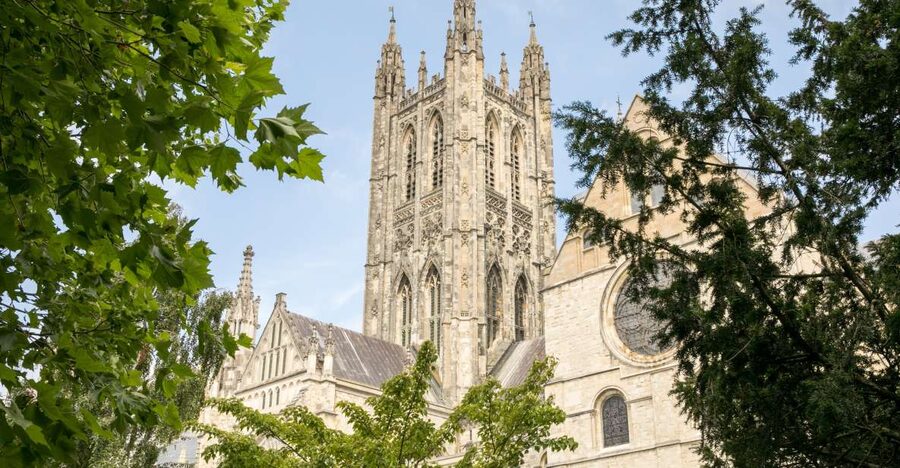
- A 1,400-year story in one site: Begin with Augustine’s mission in 597 and follow the cathedral through fire, rebuilding, pilgrimage, and modern worship.
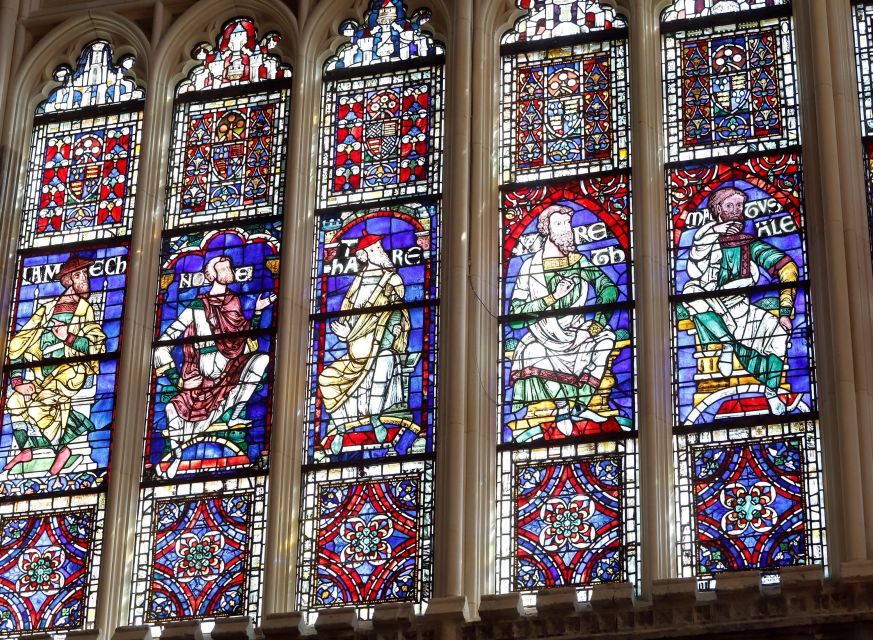
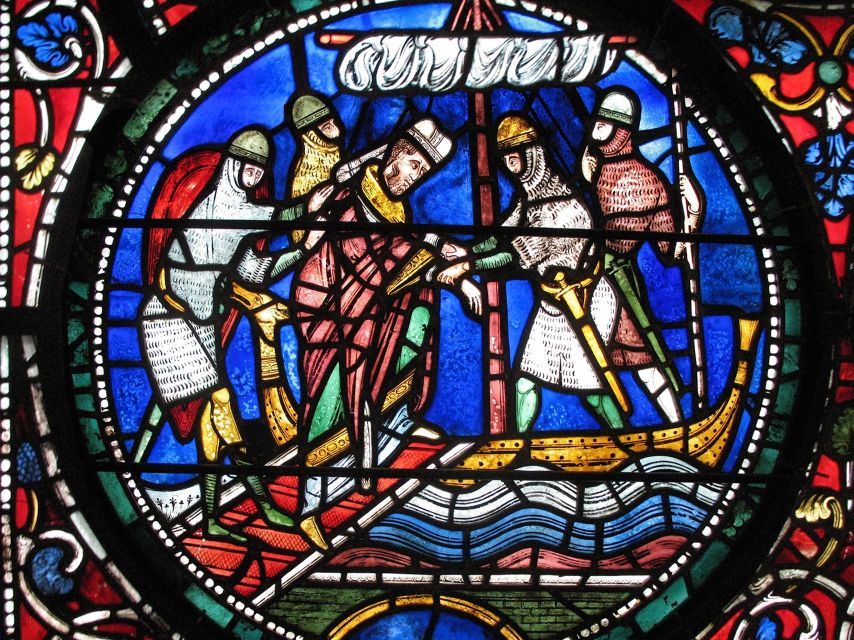
- Ancient stained glass is the star: Look closely at the colorful medieval windows, some of the oldest surviving examples in the world.
- Your ticket reaches beyond the nave: Visit the Chapter House, Great Cloister, three gardens, and up to three exhibitions.
- The audio guide works at your pace: Choose English, French, German, or Japanese, then pause, skip, or revisit sections.
- Plan on two to three hours: You can spend longer if you study the architecture, gardens, exhibitions, and precincts.
- Navigation takes patience: The audio commentary is clear, but discreet numbered markers would make the route easier to follow.
Canterbury’s place in England’s story
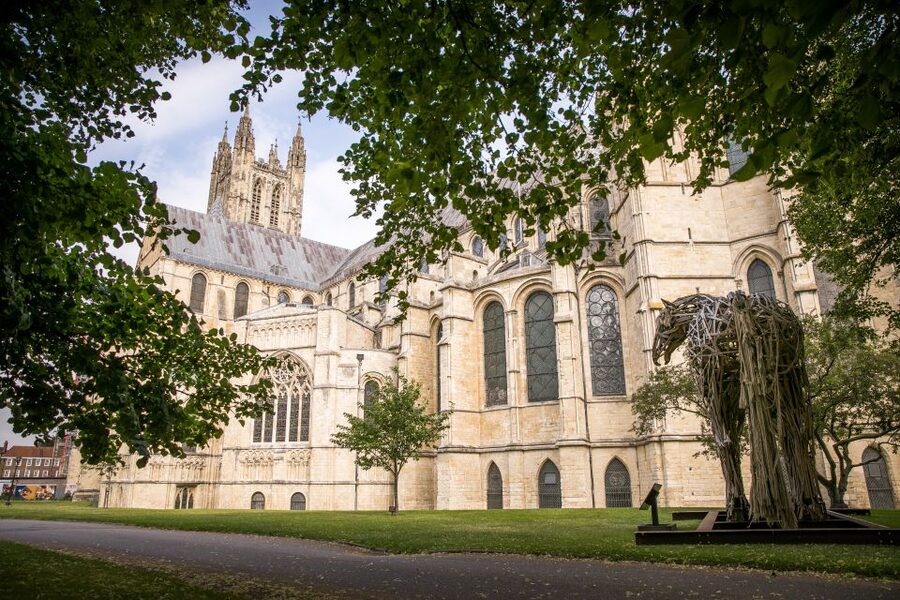
Canterbury Cathedral is not simply an old church with an impressive ceiling. It is the mother church of the worldwide Anglican Communion and the seat of the Archbishop of Canterbury. That gives the building a living role, not just a museum role.
The story begins in 597 AD, when Pope Gregory the Great sent Augustine to England as a Christian missionary. Augustine established his seat, or cathedra, at Canterbury and became England’s first Archbishop. The city then grew into one of Europe’s most important pilgrimage centers.
That pilgrimage story is closely linked with Thomas Becket, whose murder in the cathedral made the site famous across medieval Europe. Geoffrey Chaucer later used the pilgrimage route as the setting for The Canterbury Tales. You do not need to know the book to appreciate the setting, but the cathedral makes more sense when you understand that people once crossed long distances to pray at this very place.
A fire in 1174 led to major rebuilding. Parts of the cathedral were reconstructed in the Perpendicular Gothic style, and the building continued to change as medieval tastes and practical needs shifted. Look up and you’ll see that this is not one neat architectural period. It is a record of building, damage, repair, and ambition spread across centuries.
More Church Audio Tours in the UK
- Westminster Abbey Entrance Ticket Including Audio Guide
★ 4.0 · 661 reviews - Rome: St. Peter’s Basilica & Dome Entry Ticket & Audio Tour
★ 4.2 · 7,537 reviews - Istanbul: Basilica Cistern Fast-Track Entry and Audio Guide
★ 4.6 · 7,521 reviews
Getting started with the handset and headphones
Present your voucher at the cathedral and follow directions to the desk where you receive the media guide set and headset. The ticket includes both the handset and headphones, so you do not need to rely on a phone or mobile data for the commentary.
The audio guide is available in English, French, German, and Japanese. It is designed as a self-guided visit, which means you can pause when you want, move at your own speed, and choose what interests you most. That matters in a cathedral this large. You may want several quiet minutes to look at a window or ceiling before moving on.
The guide provides suggested next steps, but the route is not always obvious. There are no consistent discreet numbers matching every audio stop, and several parts of the building can feel confusing at first. I recommend listening to the opening instructions before rushing ahead, then checking the screen carefully when you finish each section.
The equipment is generally straightforward, though allow a little time at collection to check that your handset is charged and working. If the audio stops or crashes, return to the desk for help rather than trying to struggle through the whole visit without it.
The cathedral interior, from high ceilings to ancient glass
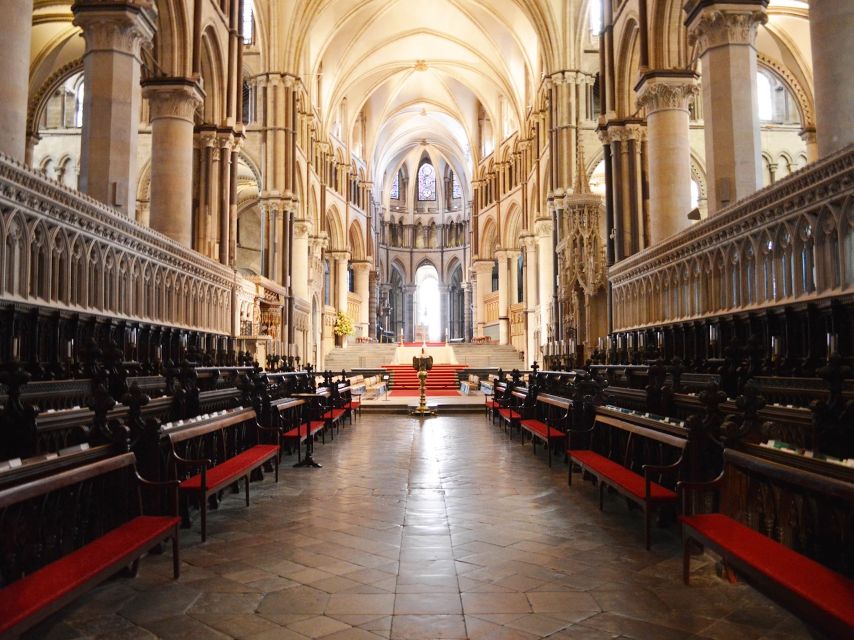
The main cathedral interior gives you the grand first impression. High ceilings, stone columns, long medieval spaces, and changing light make it easy to understand why visitors have been awed by this building for centuries.
The audio commentary gives the structure a human scale. Instead of seeing only stone and ornament, you hear about the royals, monks, and martyrs linked to the cathedral. That context is valuable because the building can otherwise feel like a beautiful puzzle with too many details.
The stained glass deserves slow attention. Some windows are among the oldest in the world, and their color changes as daylight shifts. Do not hurry past them. Listen to the relevant audio section, then look closely at the figures and scenes before moving on.
I also like the fact that you are not forced into a fast group route. You can stop for a longer look, skip a section that does not interest you, or return to a place you missed. One practical weakness remains: the suggested route can send you in a less-than-clear direction, so keep track of where you have already been.
The Chapter House and Great Cloister
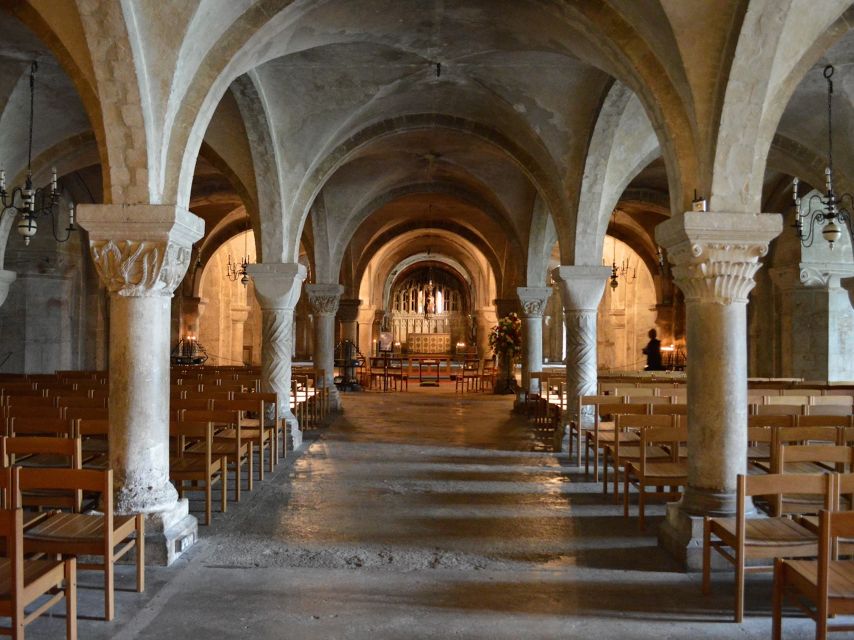
The Chapter House is one of the key stops included with admission. Its detailed ceiling gives you a reason to look upward again, but the room also helps explain how the cathedral community was organized and governed.
The Great Cloister has a different mood. Monks walked these passages for centuries, and the enclosed layout gives the area a quieter, more atmospheric feel than the main church. It is a fine place to pause between the larger stops and absorb the age of the site without a constant stream of commentary.
The cloister also shows how much of Canterbury’s appeal comes from spaces outside the main cathedral. If you only visit the nave and leave, you miss some of the most evocative parts of the ticketed area.
Stone steps and uneven floors appear in places. Some entrances have access ramps, and the cathedral is wheelchair accessible, but the site is historic rather than uniformly level. Lighting levels in the museum areas can also change, so move carefully and allow extra time if you need a slower route.
More Audio Tours in the UK
- London: Emirates Stadium Entry Ticket and Audio Guide
★ 4.7 · 5,513 reviews - London: British Museum Audio Tour & Priority Entrance Ticket
★ 4.5 · 631 reviews - Golden Tours York Hop-on Hop-off Open Top Bus Tour with Audio Guide
★ 4.5 · 468 reviews - Bath: Roman Baths Entry Ticket with Audio Guide
★ 4.7 · 425 reviews
Gardens, exhibitions, and the wider precincts
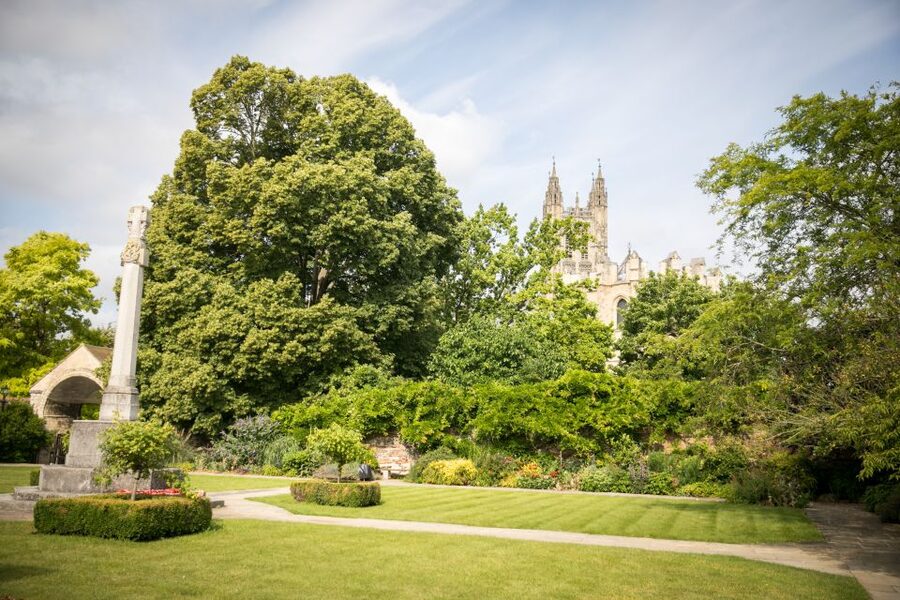
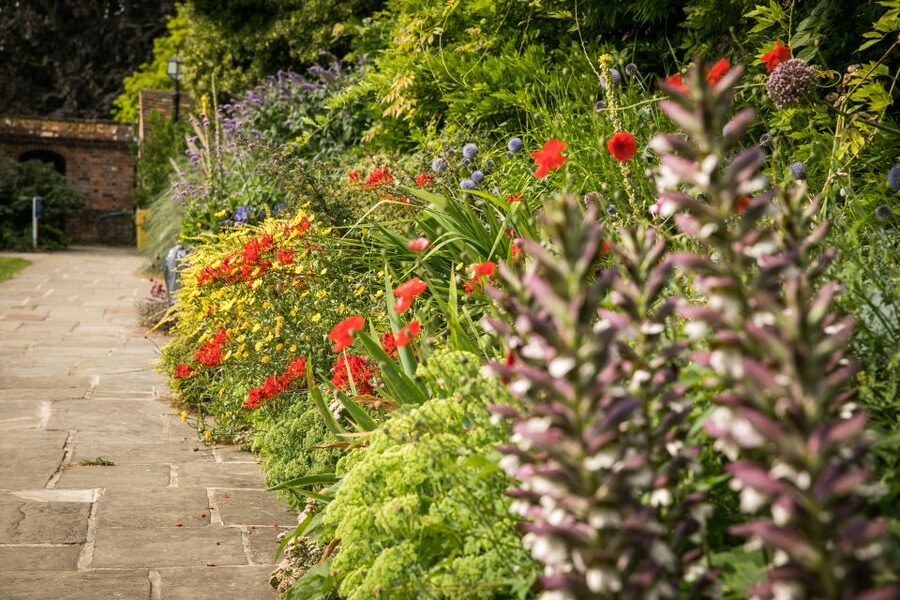
Your entry also covers three public gardens, including a reimagined medieval Herbarium. These spaces provide a useful break from stone interiors and give you another way to think about medieval life.
The Herbarium is especially interesting because it connects the cathedral to practical daily knowledge. Medieval religious sites were not only places of worship. Plants, medicine, food, and routine work were part of life around them. The garden lets you see that side of the story rather than focusing only on bishops and grand ceremonies.
Up to three exhibitions are included around the site. The exact exhibitions may change, and some areas can close at short notice, so treat this part of the visit as an added benefit rather than a fixed sequence. If an exhibition is open, it can help you understand objects and events that are difficult to grasp from the architecture alone.
The historic precincts also reward wandering. You may find that the most memorable moments come between the headline sights: a passage, a garden view, a worn stone surface, or a quiet corner that makes the cathedral feel like a working place instead of a single monument.
How long to allow and how to plan your route
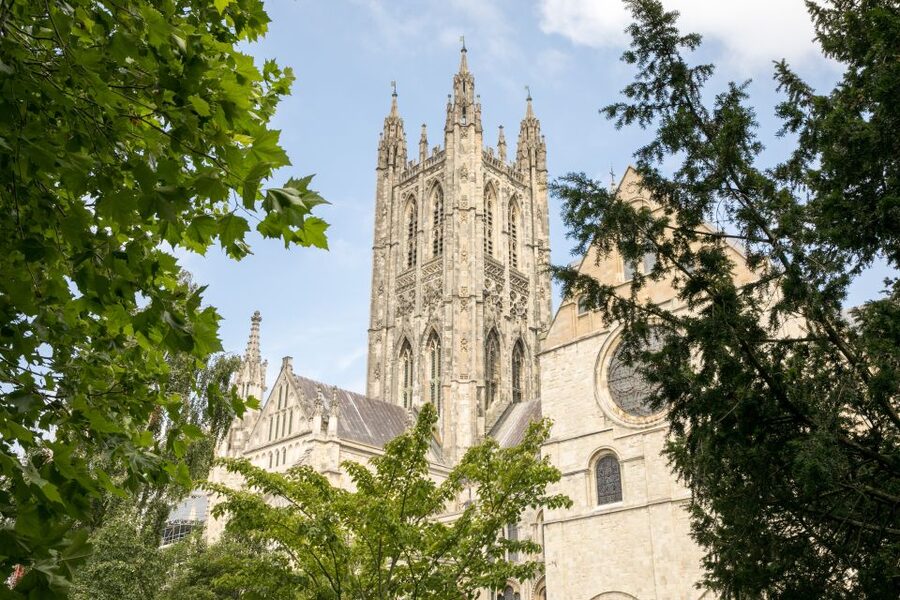
The ticket is valid for one day, and there is no tight time limit once you enter. Two hours is enough for a focused visit to the main cathedral, stained glass, cloister, and Chapter House. Three hours gives you time for the gardens and exhibitions without constantly checking the clock.
Some people spend longer. If you enjoy architecture, church history, or medieval art, you could easily use most of an afternoon. The building has enough detail to reward a second look, particularly if you listen to the audio in short sections instead of trying to absorb everything at once.
I would use this order:
- Start with the main cathedral and its introductory audio sections.
- Focus on the stained glass while the first impressions are fresh.
- Continue to the Chapter House and Great Cloister.
- Visit the gardens and any open exhibitions.
- Return to the interior for places you passed too quickly.
This approach keeps you from spending all your energy on the main nave and then discovering that the gardens or exhibitions are closing. Remember that worship and other cathedral activities can affect access to some areas. Easter services, for example, have limited access during busy periods.
Is the audio guide worth paying for?
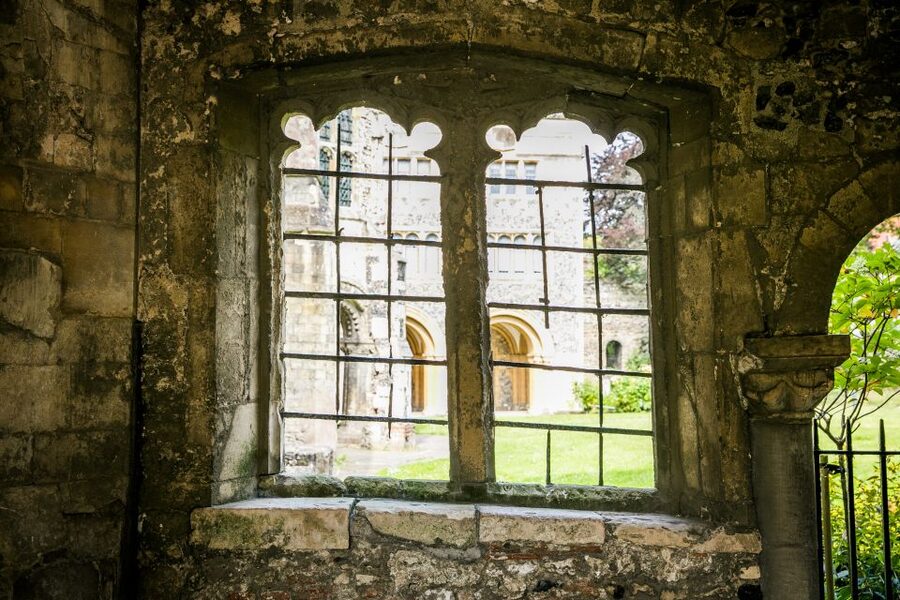
Yes, especially if you do not already know Canterbury’s story. The building is beautiful enough to enjoy without commentary, but the guide explains why specific spaces matter and connects the cathedral to Augustine, pilgrimage, rebuilding, and martyrdom.
The best feature is control. You can choose the next section, take a break, and absorb the information at your own pace. The commentary is described as clear and thorough, and it offers natural stopping points rather than forcing a nonstop lecture.
The weak point is wayfinding. You may hear a useful section but not immediately know which architectural feature it refers to. Corresponding numbers inside the cathedral would improve the experience. Until then, pay attention to the route prompts and do not worry if you need to backtrack.
There have also been occasional equipment problems, including handsets that crash or arrive without enough charge. This is not a reason to skip the guide, but it is a reason to test your device at the desk. Staff can help, and the flexible visit means a short delay will not ruin your day.
What the 31 dollar price gives you
At about $31 per person, this is not a quick look inside a church. You are paying for entry to a major historic site plus the audio equipment and access to several connected areas.
The value depends on how much time you give it. If you stay only 45 minutes, the price will feel high. If you spend two or three hours with the cathedral, cloister, Chapter House, gardens, and exhibitions, it becomes easier to justify.
The audio guide is particularly useful for independent visitors who would otherwise wander without much context. A live guide may suit you better if you prefer to ask questions or follow a fixed explanation, but the self-guided format gives you more control and avoids being tied to a group pace.
The small-group label applies to the limited size of the supported experience, but the core visit is still self-guided. You should expect to explore independently with help available at the welcome desk, not a continuous private tour.
Practical details that affect your visit
There are public car parks nearby, but parking at the cathedral is reserved for Blue Badge holders and depends on availability. Do not plan on driving straight to the entrance and finding general visitor parking there.
Large bags and luggage are not allowed, and random bag searches may take place at entry. Food and drinks, smoking, pets other than assistance dogs, skateboards, scooters, skates, fireworks, weapons, and sharp objects are prohibited.
Children under 16 must stay with an adult at all times. Children’s sit-on wheeled toys and throwing toys are also not permitted.
Commercial photography is not allowed, and photography or video recording is forbidden in the crypt. If you want a photograph of the building, follow the cathedral’s current instructions rather than assuming every area has the same rules.
The attraction is wheelchair accessible, but uneven floors, stone steps, changing light, and historic surfaces mean you should allow extra time. Some routes have ramps, yet not every part feels equally easy to navigate.
Who should book this experience?
I would recommend it to anyone interested in medieval architecture, English religious history, stained glass, pilgrimage, or major church buildings. It also suits independent visitors who prefer to stop and start rather than follow a fixed guide.
Families can enjoy the scale and visual detail, but adults need to stay with children throughout. The amount of information may be too much for very young children unless you keep the visit short and focus on the most striking spaces.
The experience is less suitable if you dislike audio tours or need a perfectly signposted route. You can still enjoy Canterbury Cathedral, but you may find the navigation irritating. I would also check for possible closures or services if you have only a narrow window to visit.
Should you book Canterbury Cathedral with the audio guide?
Book it if you want more than a quick photograph inside a famous church. The cathedral, ancient glass, Great Cloister, Chapter House, gardens, and exhibitions create a full half-day visit, and the audio guide adds the historical links that make the architecture easier to understand.
Go in with realistic expectations. The equipment may need checking, the route can be confusing, and some areas may close at short notice. Yet the freedom to explore at your own pace, plus the sheer amount of history and art included for the price, makes this a strong choice for a thoughtful visit to Canterbury.
FAQ
How long is the Canterbury Cathedral ticket valid?
The entry ticket is valid for one day. Check availability for the available starting times when booking.
What does the ticket include?
It includes entry to Canterbury Cathedral, the audio guide, a handset, and headphones. You also receive access to the Chapter House, Great Cloister, three public gardens, and up to three exhibitions.
Which languages are available for the audio guide?
The audio guide is available in English, French, German, and Japanese.
Do I receive headphones and a handset?
Yes. Present your voucher at Canterbury Cathedral, and you will be directed to the desk where you receive the media guide set and headset.
Is the visit guided by a person?
The included experience is self-guided with an audio handset. Hosts or greeters may be available in English, French, Japanese, or German to assist with the visit.
Is Canterbury Cathedral wheelchair accessible?
Yes, the cathedral is wheelchair accessible. Some areas have uneven floors or stone steps, while some entrances have access ramps.
Can I bring luggage or large bags?
No. Luggage and large bags are not allowed. Random bag searches may take place at entry.
Are children allowed inside?
Yes, but children under 16 must be accompanied by an adult at all times. Children’s sit-on wheeled toys and throwing toys are not allowed.
Can I take photographs inside the cathedral?
Commercial photography is not permitted. Photography and video recording are not permitted at any time in the crypt.
Latest audio tours in the UK
- Stonehenge Private Immersive Audio Guide★ 4.5 · 15 reviews
- Discovering Cheltenham: A Self-Guided Audio Tour★ 4.5 · 23 reviews
- Oxford’s literary legends and landmarks: A Self-Guided Audio Tour★ 3.0 · 4 reviews
- A Guide to the City of Dreaming Spires: A Self-Guided Audio Tour of Oxford★ 5.0 · 2 reviews
- Hadrian’s Wall: A Self-Guided Audio Tour along the Ruins★ 3.5 · 4 reviews
- Whitby’s Historic East Side: An audio tour uncovering the east side’s tales★ 5.0 · 2 reviews
- Durham’s Landmarks and Legends: A Self-Guided Audio Tour★ 4.0 · 35 reviews
- Essential Whitby: Discover the town’s legends on a self-guided audio tour★ 5.0 · 47 reviews
Church & Cathedral Audio Tours, compared.

St. Peter’s Basilica & Dome Entry Ticket & Audio Tour
Read our review →
Basilica Cistern Fast-Track Entry and Audio Guide
Read our review →
Cathedral & Brunelleschi’s Dome Ticket & Audio App
Read our review →
Vatican & Sistine Chapel Ticket with Optional Audio Guide
Read our review →
St. Mark Basilica Ticket, Audioguide+History Gallery
Read our review →
Skip the Line: Vatican & Sistine Chapel Ticket with Audio Guide
Read our review →
St. Peter’s Basilica with Optional Dome Ticket & Audioguide
Read our review →
Browse the lists this tour appears in