
Reviewed · BIG ISLAND
Hawaii Volcanoes National Park Self-Guided Driving Audio Tour
Kīlauea does not need a tour guide to make an impression, but the right narration helps you understand what you are seeing. This self-guided route follows more than 24.5 miles through Hawaii Volcanoes National Park, linking steam vents, pit craters, a lava tube, ancient petroglyphs, and the dramatic Holei Sea Arch with more than 43 GPS-triggered stories.
I like two things right away: the flexible pace and the low per-car price. You can pause for a hike, repeat a story, skip a stop, or take the full drive to the coast without waiting for a bus. The $16.99 price covers a group of up to four, which is far cheaper than paying per person for a guided excursion.
The main drawback is setup. You must download the separate Action Tour Guide app and the tour while you still have strong Wi-Fi or cellular service. The route also works best from the recommended starting point, so this is not the ideal choice if you want to drive it in reverse.
Key points at a glance
- More than 43 stories across 24.5 miles: The route covers the park’s major road corridor from the Entrance Station to Holei Sea Arch.
- GPS-triggered narration: Stories begin as you approach each point, so you can keep your eyes on the road rather than read a guidebook.
- Strong value for families and couples: One purchase covers up to four people in the same car.
- Best stops include Thurston Lava Tube, Pu‘u Loa Petroglyphs, and Holei Sea Arch: Each offers a different look at the park’s volcanic and cultural past.
- Offline access matters: Download everything before entering the park, where cell coverage may be weak.
- Plan on two to three hours for the drive: Longer if you add the Kīlauea Iki Trail, Sulphur Banks Trail, or other walks.
What this Hawaii Volcanoes audio tour actually does
This is not a live tour, and nobody meets you at the entrance. You drive your own car, open the Action Tour Guide app, and follow the route from the park’s Entrance Station near Volcano.
The app uses your phone’s GPS to trigger audio as you reach each story point. That means you can listen through your car stereo with Bluetooth, USB, or AUX. Headphones make more sense when you leave the car for a walk, though you should never handle your phone while driving.
The narration combines geology, local stories, Hawaiian mythology, and human history. You hear about the forces below Kīlauea, the people who lived with volcanic change, the wartime use of Kīlauea Military Camp, and the old marks cut into hardened lava at Pu‘u Loa.
The route is designed for two to three hours of driving, but that estimate does not include a serious hike. The Kīlauea Iki loop alone is 3.3 miles and takes about three hours, with a strenuous elevation change. Treat the audio route as a framework for a park visit, not as a timed bus schedule.
More Self-Guided Audio Tours in the USA
- Gettysburg Battlefield Self-Guided Driving Audio Tour
★ 4.5 · 910 reviews - Joshua Tree National Park Self-Guided Driving Audio Tour
★ 4.5 · 762 reviews - Ultimate Acadia National Park Self-Guided Driving Audio Tour
★ 4.0 · 521 reviews
Why the $16.99 price is strong value
At $16.99 per group of up to four, this is one of those rare tours where the math improves as your group gets larger. A couple pays less than $9 each, and a family of four pays about $4.25 per person.
The comparison with a conventional guided tour is straightforward. You do not pay for a guide, vehicle, or fixed departure time, and you avoid being tied to someone else’s lunch break or photo stop. You also avoid the high per-person price that can make guided excursions expensive for families.
The tradeoff is that you supply the transportation and planning. The park entrance fee is not included, and attraction reservations or other admission costs are not covered. You also need to manage your own time, fuel, food, and hikes.
I see the greatest value here if you already have a rental car and only one afternoon in the park. The audio gives structure to a large area without forcing you into an eight-hour outing. If you have several days and enjoy reading park signs or using official resources, you may prefer to combine this with the free National Park app.
Starting at the Entrance Station and visitor center
Begin at the park’s Entrance Station in Volcano, Hawaii. After passing through the gate, the route moves toward the visitor center area and begins building the basic story of Kīlauea.
Take a moment to get the app running before you drive farther. Confirm that the tour has downloaded, your phone is connected to the car, and the volume is high enough to hear over road noise. This small bit of preparation can prevent the most common problem: trying to find the access email or app password after cell service becomes unreliable.
The tour has a recommended direction. It may track your position if you stray slightly from the route, but the experience is designed to work best when you follow the suggested road and speed. One useful tip is to preview the route and stories before arriving, so you are not learning the app while also watching the road.
Kīlauea Military Camp and the park’s human story
Kīlauea Military Camp is more than a recreational facility for soldiers. During World War II, it was used as an internment camp for prisoners of war and Japanese citizens who had not been accused of wrongdoing.
This stop gives the drive a needed human dimension. The park is famous for craters and lava, but its story also includes fear, military policy, and the treatment of civilians during wartime. Plan about ten minutes for the audio stop, with extra time if you want to look around.
The narration helps you notice why a simple-looking camp matters. Without context, you could easily drive past it and assume it is just another park building.
More Driving Audio Tours in the USA
- Ultimate Lake Tahoe Self-Guided Driving Audio Tour
★ 4.5 · 435 reviews - Scenic Newport, RI Self-Guided Driving Audio Tour
★ 4.5 · 325 reviews - Arches National Park Self-Guided Driving Audio Tour
★ 4.5 · 288 reviews - Yellowstone National Park Self-Guided Driving Audio Tour
★ 4.5 · 249 reviews
Steam Vents and the Sulphur Banks Trail
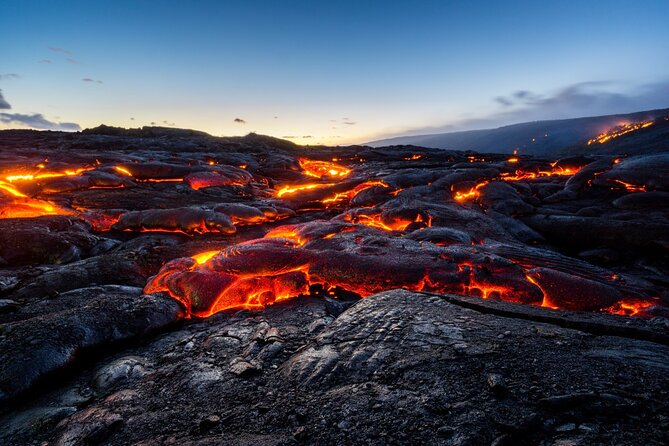
At the Steam Vents, groundwater meets heat stored beneath Kīlauea. The resulting vapor rises through openings in the ground, giving you a visible clue that volcanic heat remains active below the surface.
This is a quick stop, but it is one of the best early lessons in how the volcano works. You are not looking at a lava fountain. You are seeing heat, water, and underground rock interact in a quieter way.
Nearby, the Sulphur Banks Trail offers a short walk through volcanic gases and mineral deposits. The name tells you what to expect. The area can smell strongly of sulphur, so do not judge the walk by the word Banks alone. It is an interesting place for a brief look, but you may not want to linger.
Kīlauea Overlook and Kīlauea Iki Trailhead
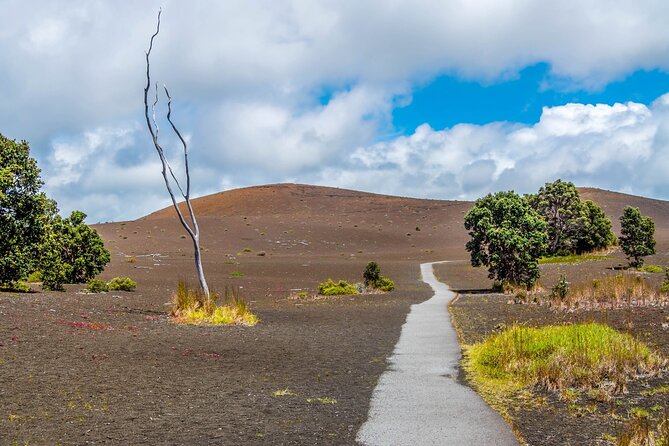
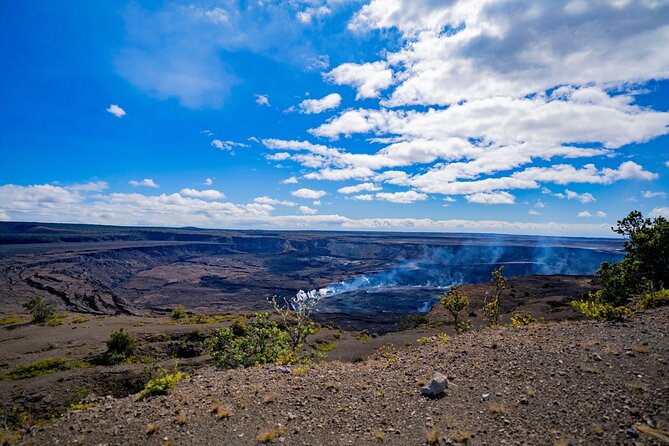
Kīlauea Overlook is one of the major scenic stops. The crater may not resemble the classic cone-shaped volcano from a postcard, but Kīlauea is among the most active volcanoes in the world. The audio gives you useful context for reading the broad crater rather than simply taking a photograph and moving on.
The Kīlauea Iki Trailhead is a more ambitious stop. The 3.3-mile loop crosses Kīlauea Iki Crater and takes about three hours, with elevation changes that can feel strenuous.
This is where you need to separate the driving tour from the hiking itinerary. The audio stop takes roughly ten minutes, but the trail can occupy much of your day. If your time is short, listen to the story, inspect the trailhead, and save the full loop for a return visit.
Thurston Lava Tube, a quick walk underground

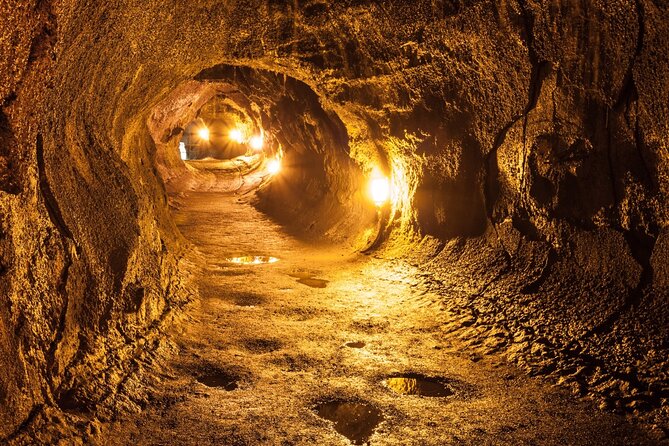
Nahuku, also called Thurston Lava Tube, is one of the route’s most memorable stops. More than 500 years ago, molten lava flowed through the area. The outside cooled and hardened while lava continued moving inside, leaving a tunnel behind.
The result is a cave-like passage that you can explore on foot. It is an easy way to see how a lava flow can create empty space without needing a long hike or technical equipment.
Allow more than the listed ten-minute audio stop if you want to walk through the tube at a relaxed pace. This is also a good place to pause the narration, enjoy the sight, and resume when you return to the car.
Luamanu, Puhimau, and Pauahi craters
The middle section of the drive strings together several volcanic features. Luamanu Crater once held dense forest, but volcanic change transformed it in a single day. That contrast helps you grasp how quickly the ground beneath this part of Hawaii can change.
Puhimau Crater shows another form of volcanic activity. It is a reminder that the park is not just one giant crater, but a collection of vents, cones, pits, and flows shaped at different times.
Pauahi Crater is a steep-sided pit about 330 feet deep and 1,000 feet wide. Look for lava spatter deposits and fumaroles, which release steam and gases. These details reward a slower stop, since the crater’s shape alone may not tell you what makes it significant.
The app is useful here because the features can blend together if you are driving without context. The narration gives each crater a distinct story and helps you compare one volcanic formation with the next.
Pu‘u Huluhulu and Kipuka Puaulu
Pu‘u Huluhulu is a cinder cone, similar to Pu‘upua‘i. Its name means hairy hill, a reference to the low shrubs that cover it and give it a fuzzy appearance from a distance.
The name is a small but enjoyable detail. It also shows how Hawaiian place names often describe what you see, not just who or what happened there.
Kipuka Puaulu offers a different lesson. A kipuka forms when lava surrounds an older patch of vegetation, leaving an island of life inside a newer lava field. The isolated area can develop its own soil, moisture, and plant life.
If you want a walk among older vegetation rather than another crater viewpoint, this is a useful place to stop. The tour explains why the greenery survives in a setting that may otherwise look harsh and recently formed.
Mauna Ulu Lookout and the look of old lava
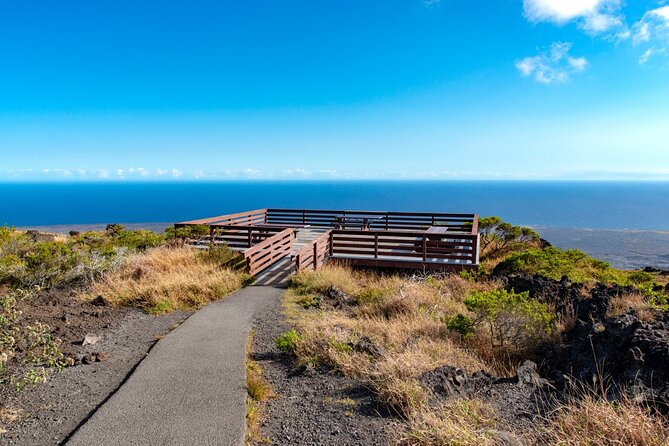
At Mauna Ulu Lookout, a raised platform gives you broad views of the Mauna Ulu lava flow. Much of the surface looks flat and gray, but the details reward close attention.
Look for the toadstool-shaped formations. These odd forms add character to an otherwise stark scene and show how lava can cool into shapes that seem almost sculpted.
This stop is a good reminder that volcanic scenery is not always about fire or dramatic eruptions. Texture, color, and small formations can tell just as much about the flow once you know what to notice.
Pu‘u Loa Petroglyphs and cultural meaning
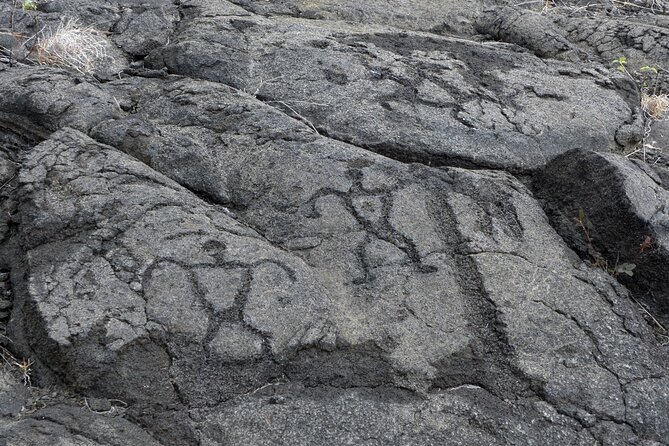
Pu‘u Loa is one of the most important cultural stops on the route. More than 23,000 petroglyphs are etched into hardened lava here.
You do not come only for a scenic view. You come to see how people left marks on volcanic rock and connected their lives to this place. The petroglyphs add a cultural layer that a purely geological tour would miss.
Treat the site with care. The value is in observing the markings, not touching or disturbing them. The audio provides background that helps you understand why this stop deserves more attention than a quick roadside photograph.
Holei Sea Arch, the long drive worth taking
The route ends at Holei Sea Arch on Chain of Craters Road. The sea cliff has been naturally shaped into an arch, creating one of the park’s most photogenic viewpoints.
The drive to the coast takes time, but it is worth protecting room for this final section. If you only have a short visit, the early stops around the visitor center may be all you can manage. If you can continue, the sea arch gives the tour a strong finish and shows how volcanic rock meets the Pacific.
The audio includes Hawaiian mythology along the drive, adding another way to understand the island beyond geology. Do not rush the coast simply to complete the route. Stop, take photographs, and enjoy the change from crater country to ocean cliff.
Volcano Art Center Gallery near the visitor center
The Volcano Art Center Gallery is in a small building separate from the main visitor center. It is a useful optional stop if you want to see work connected to Hawaii’s creative community.
This is not a major part of the driving route, so art lovers should allow extra time rather than expect the audio tour to turn it into a full gallery visit. It works well at the beginning or end of your park outing.
App setup, timing, and practical cautions
After booking, you receive setup instructions and a password by email and text. Search for audio tour if the message is hard to find. Download the separate Action Tour Guide app, enter the password, and download the tour while connected to strong Wi-Fi or cellular service.
The tour works offline after that. This is important because weak service can make last-minute setup frustrating. One past user gave up after spending about 40 minutes trying to access the app without a reliable connection, so do not wait until you are inside the park.
The tour is private by nature. Only your group participates, and you can start, pause, repeat, or skip stories. GPS can help the app catch up if you take a short side trip, but following the intended route and speed makes the narration easier to enjoy.
The advertised access is lifetime with no expiry, allowing use on later trips. The experience is offered in English. Free cancellation is available up to 24 hours before the scheduled start time, but cancellations inside that window are not refunded.
Who should book this tour
I would choose this for couples, families, and independent visitors with a rental car who want structure without a fixed group. It is especially useful if you have two to four hours and want to cover major sights without paying a per-person guide fee.
It also suits a last-minute park visit. You can use it even if you did not plan every stop in advance, provided you complete the app setup before arriving.
I would be more cautious if you dislike phone-based tours, want a live guide for questions, or plan to drive the route in reverse. The app is fairly easy once prepared, but the setup is less forgiving when you are already at the park with weak service.
Should you book the Hawaii Volcanoes audio tour?
Book it if you value freedom, context, and low cost. The narration turns a long drive into a connected story, and the route covers much more than the visitor center area. The Thurston Lava Tube, Pu‘u Loa Petroglyphs, and Holei Sea Arch alone give you three very different reasons to keep driving.
Skip it if you already prefer the free park app, do not want to prepare another phone app, or need a tour that works equally well in either direction. For most independent car visitors, though, $16.99 for a group of up to four is a sensible buy. Download it at home, start at the Entrance Station, and leave enough time for the sea arch.
FAQ
How long does the Hawaii Volcanoes National Park audio tour take?
The driving route takes about two to three hours. Additional hikes, including the Kīlauea Iki Trail, can add several hours.
How much does the tour cost?
The tour costs $16.99 per group of up to four people. The park entrance fee is separate and is not included.
Where does the tour start and end?
It starts at the Entrance Station in Volcano, Hawaii, and ends at Holei Sea Arch on Chain of Craters Road.
Does the tour work without cell service?
Yes. You must download the tour while you have strong Wi-Fi or cellular service. After downloading, the audio and maps work offline.
Is this a guided group tour?
No. It is a private, self-guided driving activity. Nobody meets you at the starting point, and only your group participates.
Can I pause or repeat the audio?
Yes. You can pause, repeat stories, skip content, take breaks, and explore side trips at your own pace.
Is the park entrance fee included?
No. You must pay the entrance fee separately. Attraction passes, entry tickets, and reservations are also not included.
More National Park Audio Tours in the USA
- Self-Guided GPS Audio E-Bike Tour Hawaii Volcanoes National Park
★ 4.5 · 131 reviews - Shenandoah National Park Self-Guided Driving Audio Tour
★ 4.5 · 109 reviews - Self-Guided Audio Driving Tour in Glacier National Park
★ 4.5 · 101 reviews - Rocky Mountain National Park Self-Guided Driving Audio Tour
★ 4.5 · 92 reviews
Latest audio tours in the USA
- Sequoia National Park Self-Guided Audio Tour★ 4.5 · 9 reviews
- Sequoia and Kings Canyon Audio Tour Self Guide National Park Tour★ 5.0 · 3 reviews
- Kings Canyon National Park Self-Guided Audio Tour★ 4.0 · 4 reviews
- Sedona, Arizona Self-Guided Audio Tour★ 4.0 · 36 reviews
- Sedona & Red Rock State Park Self-Guided Driving Audio Tour★ 3.0 · 30 reviews
- Haunted Savannah Self-Guided Walking Audio Tour★ 4.5 · 3 reviews
- Downtown Seattle Self-Guided Walking Audio Tour★ 4.5 · 6 reviews
- Uncover Seattle: Self-Guided Audio Tour★ 3.5 · 7 reviews
Driving Audio Tours, compared.



Ultimate Acadia National Park Self-Guided Driving Audio Tour
Read our review →



Browse the lists this tour appears in