
Reviewed · NORWAY
Molde and Atlantic Ocean Road Audio Tour
The Atlantic Ocean Road is the star here: an exposed chain of bridges linking small islets along Norway’s rough western coast. I like the 30-minute stop at Eldhusøya, where you can walk around the peninsula instead of simply snapping a photo through a bus window. I also like the climb to Varden viewpoint, with its wide view over Molde, the fjord, islands, and, on a clear day, 222 peaks of the Romsdal Alps.
The scenery earns the trip, but the audio setup needs care. This is a self-guided tour through the GuideToGo app, not a standard coach trip with a guide speaking from the front. Several departures have had confusion over the pickup point, bus, app, or headphones, so download the audio before leaving the ship and bring your own wired or Bluetooth headphones.
Key points to know before booking
- Eight bridges on the Atlantic Ocean Road: The main crossing covers about 8 kilometers and gives you changing views of islets, open sea, and the exposed Hustadvika coast.
- Two proper photo stops: Eldhusøya allows about 30 minutes, while Varden viewpoint gives you around 15 minutes above Molde.
- Self-guided audio, not guaranteed live commentary: You must use the GuideToGo official app on your phone.
- Cruise pickup needs checking: Molde has two cruise terminals, and the bus should meet you at the pier where your ship docks.
- A scenic route with limited free time: Most of the experience is viewed from the bus, with short stops for walking and photographs.
- Best for a simple coastal overview: It suits you if you want to cover Molde and the Atlantic road in one half-day outing, but less so if you need a fully hosted tour.
The Atlantic Ocean Road is the main event
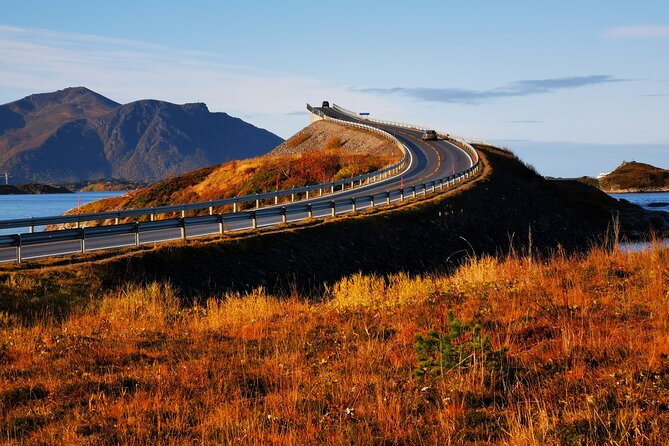
This 3.5-hour outing links several sights around Molde with the famous Atlantic Ocean Road. The road’s central section is about 8 kilometers long, crossing eight bridges between low islands and skerries.
The setting is open and often dramatic. The road runs beside Hustadvika, a stretch of sea known for shallows and sandbanks. Fishermen and cruise ships use these waters, but rough weather can make the crossing difficult. That fact gives the road more meaning than a simple scenic drive: you are seeing a route shaped by exposed coast, strong weather, and demanding navigation.
You will not spend hours walking along the bridges. The coach carries you across the main section, so your view depends on the weather, your seat, and how busy the road is. The dedicated stop at Eldhusøya is important because it gives you time outside the vehicle, with a closer feel for the sea and the narrow peninsula.
More Audio Tours in Norway
- Oslo: Scenic Fjord Cruise with Audio Guide Commentary
★ 4.5 · 5,375 reviews - Molde: Atlantic Ocean Road & Varden Audio Guide Bus Tour
★ 4.1 · 473 reviews - Geiranger: Bus Tour with Multilingual Audio Guide
★ 4.0 · 317 reviews
Starting in Molde: roses, jazz, football, and a sail-shaped hotel
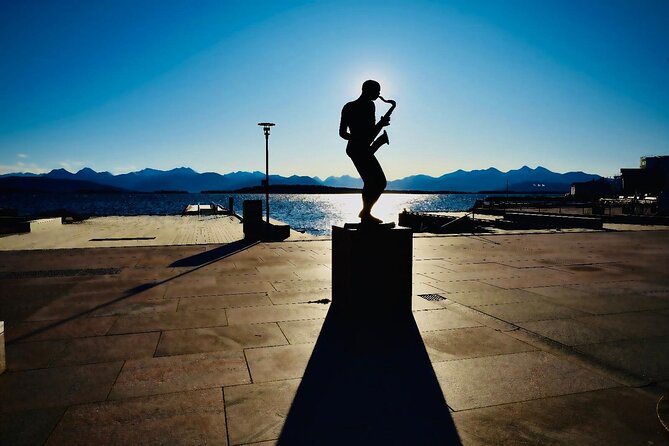
The tour begins with a look at Molde’s main sights. The route includes the Rose Maiden, Jazz Boy, the rose garden, the football stadium, and Moldegård.
These stops are mainly viewed from the bus, so think of this part as an orientation drive rather than a walking tour. Molde is known for flowers, music, sport, and its position beside the fjord. The Rose Maiden and Jazz Boy add local character, while the football stadium reflects the importance of sport in the town.
The drive through Molde also brings you past Hotel Seilet. Its tall, curved form resembles a sail, and its design recalls the Burj Al Arab in Dubai. At 82 meters high, it is hard to miss. This is one of the easier sights to appreciate from a moving bus because its shape reads clearly even if you have only a short view.
I would sit on the side with the clearest window and keep your camera ready, but do not expect long stops at every Molde landmark. The value here is seeing several local symbols in one pass before heading into the countryside.
Malmefjorden and the route beyond town
After passing Molde’s hiking and skiing area, the bus reaches Malmefjorden. This fjord has an unusual feature: its inner section can freeze in winter because freshwater enters the final part of the fjord.
That detail adds useful context to the drive. You are not simply passing another body of water. The temperature and character of the fjord are affected by the freshwater at its end, which helps explain why ice can form here despite the coastal setting.
This part of the route is viewed from the coach, with no listed walking stop. If you want a close look at the water, the trip will feel brief. If you prefer to cover more ground without arranging several separate excursions, the drive works well.
Marble country and the 40-kilometer cave system
The region around the route is known for high-quality marble. Mining began here in 1938, and the marble has mainly been used to make paper.
Beneath the area is a cave system stretching about 40 kilometers. Parts of the caves now host concerts and events, which gives the industrial story an unexpected cultural angle. You will hear about this during the audio portion of the tour, but you should not expect a cave visit. The route passes through the marble country rather than taking you underground.
This is one reason the audio matters. Without commentary, the rock, roads, and hills can look like pleasant scenery without much context. The app is meant to explain what you are seeing as the bus moves along, so setting it up properly before departure is worth the effort.
Another self-paced route in Norway:
- Ålesund: Ålesund and Surrounding Islands Audio Guide Tour
★ 4.1 · 116 reviews - Bergen: Troll Museum Entry Ticket + audio guide
★ 4.3 · 88 reviews - Åndalsnes – Trollstigen & Trollwall Audio Guid Bus Tour
★ 4.3 · 84 reviews - Norwegian Coastal Cities: Smartphone Audio Guide App
★ 4.0 · 27 reviews
Eide and the story of local electricity
The route continues through Eide, where marble and limestone companies are important local businesses. Eide also has a special story connected with electricity, which the audio tour explains.
Again, this is a drive-by section rather than a stop for a long visit. Its strength is the connection between local industry and the countryside. You see how the area’s stone resources have shaped business, while the electricity story adds another layer to a place that could otherwise seem like a small settlement on the way to the coast.
If the audio fails, this information may be lost. The bus driver may offer some commentary when possible, but that is not the same as a dedicated guide and should not be assumed.
Crossing Hustadvika on the Atlantic Ocean Road
The main road crossing is the tour’s strongest stretch. Eight bridges connect the islets over about 8 kilometers, and the route stays close to the open sea.
You may see skerries, small islands, and the broad water of Hustadvika. The road is famous because it makes a direct meeting point between land and sea. One bridge rises in a sweeping curve, while others sit lower and flatter, creating different views as the coach moves forward.
Weather can change the mood quickly. On a clear day, the sea and islands should appear crisp and open. In poor weather, the same coast can feel rough and exposed. Road conditions also matter. The stated route may change if weather or road restrictions make the planned drive unsuitable, with an alternative organized instead.
This is not an attraction where you need a long guided explanation to understand the basic appeal. The coast does the work. Still, the audio can help you notice why Hustadvika has been difficult for boats and why sandbanks and shallows matter here.
Eldhusøya gives you time outside the coach
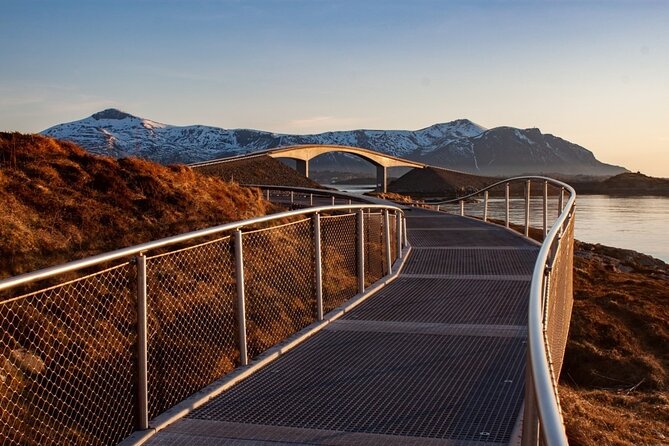
Eldhusøya is the best planned stop on the coastal section. You have about 30 minutes, and admission is included.
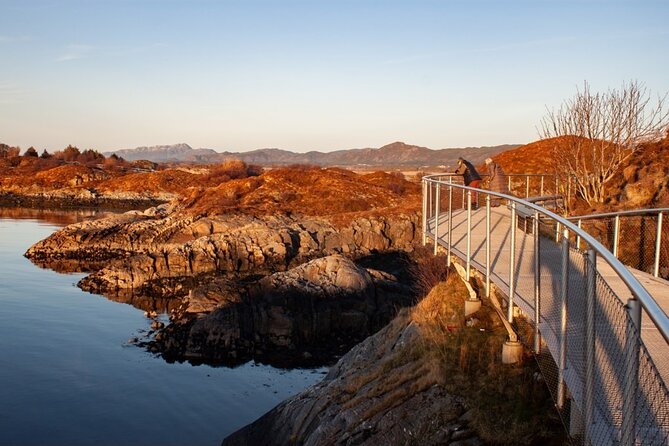
The peninsula provides one of the clearest views of the Atlantic Ocean Road bridges. You can walk around the area, take photographs, and feel the wind and sea at close range. That short walk is valuable because much of the rest of the outing takes place through bus windows.
Thirty minutes is enough for photographs and a walk, but not for a long exploration. Wear practical shoes and keep an eye on the return time. If the group is late leaving, the schedule can become tight later in the trip.
This is also the stop most likely to reward good weather. The bridge views are the main reason many people choose the outing, and Eldhusøya gives you a chance to frame them without a window reflection.
Håholmen, clipfish, and Ragnar Thorseth
The route also passes Håholmen, an island once connected with clipfish production. Clipfish is made by drying fish, a traditional method in southwestern Norway.
Today, Håholmen has a small hotel and a Viking museum linked with former owner and adventurer Ragnar Thorseth. The audio explains more about Thorseth and the island’s past.
Do not confuse this with a scheduled museum visit. The supplied timing lists no stop or admission for Håholmen, so you should expect to learn about it while passing the area. That is still useful, especially if you enjoy food traditions, maritime stories, and unusual local characters.
Farstadsanden and Elnesvågen
Farstadsanden is known for what is described as the world’s northernmost formation of sand dunes. In summer, local people use the beach for swimming and surfing.
You will see the area from the route, rather than receive a beach visit with time for swimming. The dune story is a pleasant surprise on a coastal drive, since it shows how varied the shore can be. You move from exposed rock and bridges to sand and beach culture within the same outing.
The bus then passes Elnesvågen, the municipality of Hustadvika and the birthplace of Jarlsberg cheese. Jarlsberg is one of Norway’s best-known cheese brands, so this brief detail gives the town a familiar connection for visitors who may not recognize its name.
These stops are best treated as passing points. If you want to walk on the beach, visit a cheese producer, or spend time at Håholmen, you will need a different arrangement.
Varden viewpoint and the Molde panorama
The second formal stop is Varden, 407 meters above sea level. You have about 15 minutes at the viewpoint, with views across Molde, the fjord, and its many islands.
On a clear day, the Romsdal Alps appear in the distance, with 222 mountain peaks visible from the panorama. This is a broad, elevated view that puts the earlier drive into context. From the road, you see individual fjords and islands. From Varden, you can understand how they fit together around Molde.
Fifteen minutes is short, especially if you need time to get off the bus, find the best viewing point, and take pictures. The road up is steep, so the coach is useful here. You do not need to manage the climb yourself, but anyone uneasy with steep roads should know what to expect.
Weather is the deciding factor. Clouds can cover the distant peaks, and the view may be far less impressive in poor conditions. Even then, the outlook over Molde and the nearby water can still make the stop worthwhile.
The audio app is the biggest practical issue
The tour requires the GuideToGo official app, available through Google Play and the Apple App Store. You also need to bring your own headphones.
I strongly suggest downloading the app before you reach the port, then checking that the audio works while you still have a reliable internet connection. Do not wait until boarding. Some phones may require an adapter, and some modern devices do not have a traditional headphone port.
The bus may not provide Wi-Fi, so do not assume you can download the program after departure. Save anything the app allows you to save for offline use. If you are traveling with someone else, each person should have the app ready rather than sharing one phone.
The audio system has been inconsistent on some departures. People have had trouble identifying the correct app, connecting headphones, or getting the commentary to play at the right point. When that happens, the trip becomes a scenic bus ride with limited explanation.
A live guide would be more dependable for you if local stories and clear commentary are a major part of the experience. The self-guided format keeps the price lower, but it also puts more responsibility on you.
Cruise pickup requires careful checking
The tour is built around cruise arrival and departure times. You must provide the name of your vessel or say that you are already in town. Departure times can be changed by email to match ship schedules.
Molde has two cruise terminals. Pickup should be at the pier where your ship docks, but you need to check the final instructions closely. Confusion is possible when two ships are in port, especially if the initial meeting information points toward the other terminal.
Look for clear bus identification and allow extra time to find the correct vehicle. The main meeting area may contain several operators and buses, and an on-site representative may not always be easy to identify. If your ship docks at a different pier from the one first shown, do not assume a taxi or transfer is included.
This is the weakest part of the experience. The scenery can be excellent, but a missed bus would be a serious problem on a cruise day. Read every email, confirm the pier, and keep the operator’s contact information accessible.
Is $83.94 a fair price?
At $83.94 per person, the outing is priced as a convenient half-day coastal excursion rather than a cheap local bus ride.
The price includes transport, the planned stops at Eldhusøya and Varden, and the mobile audio format. It lets you combine Molde sights, fjords, industry, beaches, and the Atlantic Ocean Road without arranging several separate drives. For a cruise passenger with limited time, that convenience has real value.
The price feels less attractive if the audio fails or if the pickup process costs you time and stress. You are paying for a coordinated route, not only for access to scenery. A standard guided coach excursion may be worth comparing if you want reliable commentary and staff support at the pier.
The trip is capped at 45 people, so it is not a tiny private outing. It is a practical group excursion with a set route and short stops.
Who should book this outing?
I would choose it if you want to see the Atlantic Ocean Road during a short stop in Molde, especially if you are comfortable preparing the app yourself. It works well for people who prefer a broad overview to a long visit at one attraction.
You will get the most from it if you:
- Have only part of a day in Molde
- Want the major bridge views without driving
- Enjoy fjords, islands, coastal roads, and local stories
- Are happy with audio commentary on your own phone
- Can walk for 30 minutes at Eldhusøya
- Understand that most sights are viewed from the bus
I would look for another option if you need a personal guide, guaranteed live narration, longer photo stops, or very clear assistance at the port. The route itself is strong, but the organization and app setup can affect the day.
Should you book the Molde and Atlantic Ocean Road audio tour?
Book it for the route, not for a polished guided experience. The Atlantic Ocean Road, Eldhusøya, and Varden give you the best of the outing, while Malmefjorden, the marble country, Håholmen, Farstadsanden, and Elnesvågen add useful local detail along the way.
Before paying, make sure you are comfortable with three things: using your own phone for the audio, bringing headphones, and confirming the correct Molde cruise terminal. If you prepare carefully and the weather cooperates, $83.94 buys a rewarding coastal overview. If you want a guide who handles every detail, choose a live-guided alternative instead.
FAQ
Where does the Molde and Atlantic Ocean Road tour take place?
The experience operates around Molde, Norway, with cruise pickup at the terminal where your vessel docks. The listed location is Alesund, but the itinerary focuses on Molde and the Atlantic Ocean Road.
How long does the tour last?
The tour lasts approximately 3 hours and 30 minutes.
Is the tour guided in person?
The experience is designed as a mobile audio tour in English. You should not assume that a live guide will be on the bus.
Which app do I need?
You need the GuideToGo official app, available on Google Play for Android and the App Store for Apple devices.
Do I need to bring headphones?
Yes. You should bring your own headphones, and it is wise to check whether your phone needs a headphone adapter.
How long are the stops at Eldhusøya and Varden?
The Eldhusøya stop lasts about 30 minutes. The Varden viewpoint stop lasts about 15 minutes.
What happens if weather or road conditions are poor?
The itinerary can change because of weather or road restrictions. If the planned route is not possible, an alternative tour will be organized.
Latest audio tours in Norway
- Oslo Scavenger Hunt and Highlights Self Guided Audio Tour★ 4.5 · 6 reviews
- Discover Oslo: Self Guided Audio Tour★ 3.5 · 5 reviews
- Akerselva River Meander: A Self-Guided Audio Tour★ 3.5 · 8 reviews
- Downtown Oslo: Self-Guided Highlights and History Audio Tour★ 4.0 · 10 reviews
- Audio Walking Tour in Bergen Famous Ghosts Location★ 5.0 · 4 reviews
- Bergen in Your Pocket: Landmarks and Lore Audio Tour★ 4.5 · 22 reviews
- Audio-Guide Bus Tour at Scenic Routes of Åndalsnes to Trollstigen★ 4.0 · 2 reviews
- Norwegian Coastal Cities: Smartphone Audio Guide App★ 4.0 · 27 reviews
Norway Audio Tours, compared.
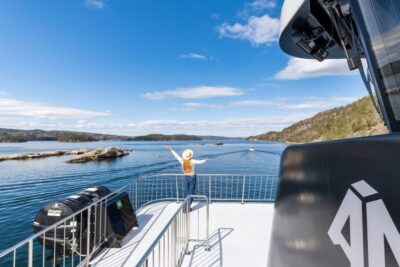
Scenic Fjord Cruise with Audio Guide Commentary
Read our review →
Molde: Atlantic Ocean Road & Varden Audio Guide Bus Tour
Read our review →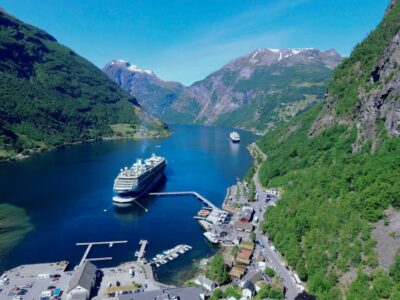
Geiranger: Bus Tour with Multilingual Audio Guide
Read our review →
Ålesund: Ålesund and Surrounding Islands Audio Guide Tour
Read our review →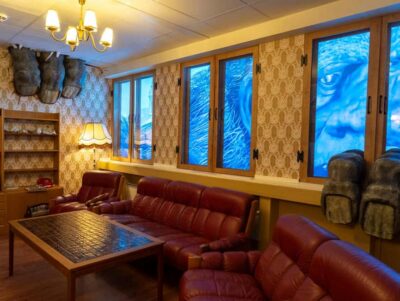
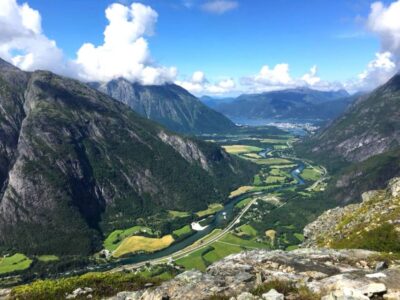
Åndalsnes – Trollstigen & Trollwall Audio Guid Bus Tour
Read our review →
Norwegian Coastal Cities: Smartphone Audio Guide App
Read our review →
Bergen in Your Pocket: Landmarks and Lore Audio Tour
Read our review →Browse the lists this tour appears in