
Reviewed · GREECE
Meteora Full Day Tour from Kalabaka with Audio in 8 languages
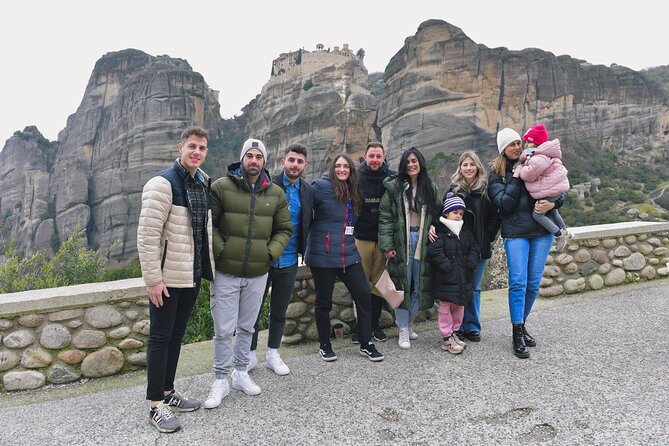
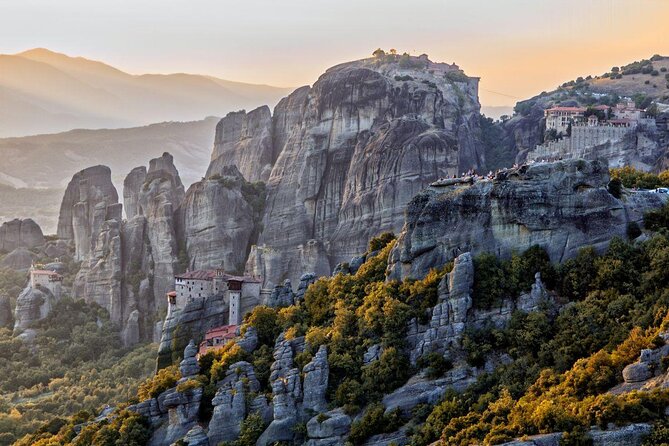
Meteora’s cliff-top monasteries are the main event here, perched on sandstone pillars that rise dramatically above Kalabaka. You’ll ride in a modern, air-conditioned minibus, hear the story of the rocks and monks, and enter two active monasteries rather than simply viewing them from below. I especially like the small-group limit of 20 and the easy pickup at Kalabaka train station.
I also like the chance to see Kastraki, the traditional village tucked beneath the rocks, plus the low price of $11.57 per person. The main consideration is that monastery admission is extra, and the published details conflict on both the audio languages and start time, so confirm those points before setting out.
Key points at a glance
- Two active monasteries: You get a look at working monastic sites, with admission charged separately at 5 euros per monastery in the tour details.
- Pickup at Kalabaka station: Meet a local guide holding a sign with your name, then travel by air-conditioned minibus.
- Meteora’s ancient caves: The caves may have sheltered people as early as 50,000 years ago, long before the monasteries appeared.
- Kastraki village stop: You have time to see the traditional settlement below the rocks and return to Kalabaka for a quick meal or coffee.
- Small maximum group: The minibus can carry up to 20 people, a more personal setup than a large coach.
- Check the language details: One part of the information says audio is available in eight languages, while another says six.
Why Meteora is worth your time
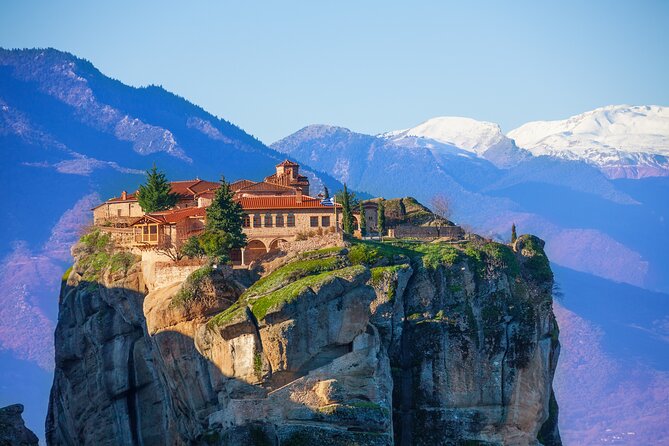
Meteora is one of Greece’s most unusual sights because the monasteries are only half the story. The rock pillars themselves are the setting, rising above the plain in tall, weathered shapes of sandstone and conglomerate. From the road, you see cliffs, caves, ledges, and buildings that seem carefully placed on the highest points.
The caves are thought to have been inhabited as early as 50,000 years ago. Monks returned to the area in the ninth century, and the first monasteries were built in the fourteenth century. That timeline helps you read the site properly: this is not simply a collection of old churches. It is a place where people sought solitude in the rocks, then built communities in positions that were difficult to reach.
I like that this tour explains both the natural and religious sides of Meteora. A quick photo stop can show you the scale of the cliffs, but a guide can explain why the caves mattered and how the monasteries fit into the area’s story. The included local guide is especially useful here, since you are not just being driven to a viewpoint and sent off on your own.
More full-day outings in Greece
- From Athens: Delphi Full Day V.R. Audio Guided Tour
★ 4.6 · 3,028 reviews - Delphi full day V.R audio guided tour with entry ticket
★ 5.0 · 405 reviews - Mycenae, Epidaurus & Nafplio Full-Day V.R audio guided Tour
★ 4.5 · 248 reviews
Meeting your guide at Kalabaka station
The tour begins at Pindou 47 in Kalampaka, with pickup at Kalabaka train station. Your guide is expected to hold a sign with your name, which should make the meeting point fairly simple, particularly if you have arrived by train and are carrying luggage or trying to orient yourself in town.
The vehicle is an air-conditioned modern minibus. That matters in Meteora, where a warm day and winding roads can make a non-air-conditioned ride tiring. The maximum group size is 20, so this is not a private outing, but it is still more manageable than a large sightseeing coach.
The stated start time is 12:00 am, which is unusual alongside the description of a four-hour daytime visit. I would confirm the exact local departure time with the provider before booking transport or planning lunch. The experience is also described as a full-day tour in one place and approximately four hours in another. The practical expectation should be a short half-day-style outing unless the operator confirms a longer schedule.
Riding into the Meteora rocks
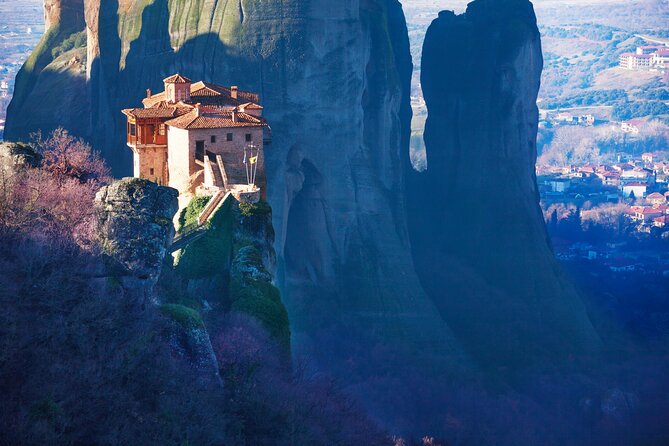
Once you are aboard, the route takes you from Kalabaka toward the Meteora rock formations. The guide provides commentary about the area, while an audio guide is listed as available in multiple languages. The information gives two different figures, eight languages in the main description and six in the included features. If language access matters to you, ask which languages are actually available on your departure.
The trip is designed to give you context as you move through the area. You will hear about the caves, the return of monks in the ninth century, and the construction of monasteries from the fourteenth century onward. That background makes the scenery more meaningful. Otherwise, the rock towers can seem like a striking but disconnected collection of viewpoints.
A local guide also helps with the practical rhythm of the visit. Meteora is not a single building with one entrance. It is a broad area of rock formations and monasteries, so having someone direct the route saves you from spending your limited time working out where to go next.
Entering two active monasteries
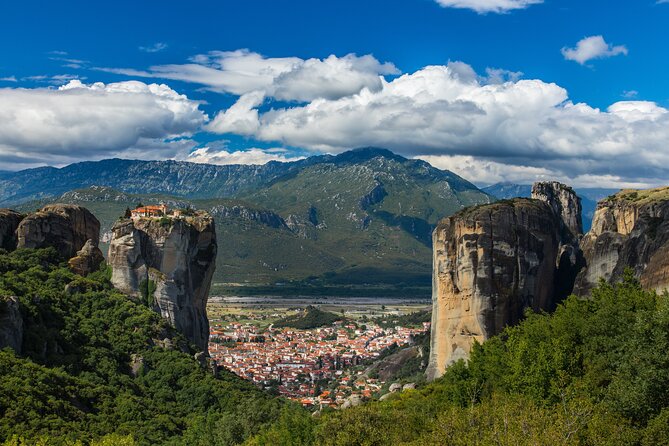
The heart of the experience is entry into two active monasteries. Seeing the buildings from the road is worthwhile, but going inside gives you a closer sense of their religious purpose and the continuing presence of monastic life.
Admission is not included. The information gives two different prices: 3 euros in the itinerary and 5 euros per monastery in the exclusions. Since you are visiting two monasteries, budget for two separate entrance fees and confirm the current charge before departure. At the higher stated rate, that would be 10 euros per person in addition to the tour price.
The low booking price can therefore be misleading if you compare only the headline figure. At $11.57, the transport, guide, and route planning offer good value, but your actual outing costs more once monastery admission and any food or drink are added. Still, even with the extra fees, it remains an inexpensive way to reach Meteora if you do not have your own car.
The tour information does not provide a dress code or detailed accessibility notes. Since these are active religious sites, you should be prepared for a respectful setting and follow any monastery rules given on the day. The activity says most people can participate, and service animals are allowed, but it does not promise step-free access or describe the walking conditions in detail.
More Audio Tours in Greece
- Athens: Acropolis Ticket with Optional Audio or Live Guide
★ 4.2 · 11,055 reviews - Athens: Cape Sounio & Poseidon Temple Trip with Audio Guide
★ 4.4 · 4,521 reviews - Athens: Acropolis Ticket with Audio Guide
★ 4.0 · 3,575 reviews - Athens: Acropolis Museum Ticket with optional Audio Guide
★ 4.4 · 2,652 reviews
Kastraki beneath the cliffs
The stop in Kastraki adds a welcome human scale to the trip. The village sits beneath the Meteora rocks, so you can see how the settlement relates to the cliffs and monasteries above it. This is different from viewing the area only as a historic site. You also get a sense of the community below the rock pillars.
The stop is listed as part of the Meteora portion of the visit, followed by a return to Kalabaka. You should not expect a long village tour based on the published timing, but it gives you another angle on the area and a break from monastery visits.
Kastraki is also useful for photographs because the rocks rise directly behind the village. The supplied details do not promise a meal there, so treat it as a sightseeing stop rather than a planned restaurant visit. Bring your own water if needed, since food and drinks are not included.
Returning to Kalabaka for free time
After the Meteora visit, the minibus returns you to Kalabaka. You then have free time for a quick lunch or coffee, according to the tour plan. This is a practical ending because it leaves you in town rather than at a distant attraction.
The return also makes the tour easy to combine with a train-based visit. You can meet at the station, see Meteora without arranging a rental car, and finish back at the same general meeting point. The tour ends where it begins, at Pindou 47, so check the exact drop-off arrangement if you need to catch a train soon afterward.
The timing deserves attention. The listed duration is approximately four hours, while the description uses full day in places. I would not schedule a tight onward connection until the provider confirms the actual departure and return times. The return to Kalabaka is convenient, but a timetable mismatch could turn convenience into a scramble.
Guides, drivers, and the feel of the ride
The experience includes an English-speaking local expert guide, with audio support for additional languages. A past departure was led by Eva, who was praised for explaining the monasteries and surrounding area clearly and for being accommodating. That is the kind of personal guidance that helps at a place where the visual drama can easily overshadow the details.
The driving also matters on a route with winding roads and steep rock formations. Costas has handled a transfer and was specifically praised for safe, comfortable driving. That does not guarantee who will drive your departure, but it suggests the operator uses experienced local drivers.
The small minibus format gives you a better chance to hear the guide than you would have on a large coach. It also keeps the route relatively simple. The tradeoff is that you do not have the flexibility of a private car or a custom itinerary. With up to 20 people, the group still needs to move together.
Is $11.57 good value?
At $11.57 per person, this is priced more like a basic transfer than a guided visit to one of Greece’s major sights. You receive an air-conditioned vehicle, an English-speaking guide, transportation from Kalabaka, and visits to two monasteries. For someone without a car, that is a useful package.
The extra costs are modest but important. Food and drinks are excluded, and monastery entry is separate. Because the price information lists both 3 euros and 5 euros per monastery, confirm the admission fee before you go. The audio guide language count also needs checking, since the details do not agree.
The tour is best value if you want a straightforward introduction to Meteora and do not need a private schedule. It is less suitable if you want a long, slow visit inside each monastery, extensive time in Kastraki, or a full day of independent photography. The four-hour duration keeps the cost and commitment low, but it also limits how much time you can spend at each place.
Who should book this Meteora outing?
I would recommend it to you if you are staying in Kalabaka, arriving by train, or looking for an affordable way to see Meteora without renting a car. It also suits first-time visitors who want the major setting, historical explanation, and two monastery interiors in one organized trip.
The tour works particularly well for visitors who value transport and structure. You meet at one clear point, ride in an air-conditioned vehicle, receive guiding in English, and return to Kalabaka. The mobile ticket makes the booking easy to carry on your phone.
I would choose a different arrangement if you need a confirmed language other than English, want private guiding, or have strict accessibility requirements. The available information does not spell out the audio languages, monastery access conditions, or precise walking demands. Ask before paying if any of those points are essential.
The weather policy is worth knowing too. The experience requires good weather. If poor weather causes cancellation, you will be offered another date or a full refund. You can cancel for a full refund up to 24 hours before the start time, but changes or cancellations inside that window are not accepted.
Should you book this tour?
Book it if you want a low-cost, guided introduction to Meteora with two monastery visits, minibus transport, and a return to Kalabaka. The spectacular rock formations are the reason to come, but the guide’s explanation of the caves, monks, and monastery history gives the visit needed meaning.
Before booking, confirm three details: the actual start time, the current monastery entrance fee, and whether the audio guide supports your preferred language. Once those are clear, this is a practical choice for seeing Meteora efficiently without giving up the experience of entering active monasteries.
FAQ
Where does the Meteora tour start?
The meeting point is Pindou 47 in Kalampaka, with pickup at Kalabaka train station. A local guide is expected to hold a sign with your name.
Where does the tour end?
The activity ends back at the meeting point in Kalabaka.
How long does the tour last?
The stated duration is approximately four hours. The description also uses the phrase full day, so confirm the precise schedule with the provider before making onward plans.
What vehicle is used?
Transportation is provided in an air-conditioned modern minibus.
How many people can join the tour?
The maximum group size is 20 people.
Is a guide included?
Yes. An English-speaking local expert guide is included, along with an audio guide. The tour information gives conflicting figures of six and eight audio-guide languages, so confirm the current language selection.
Are monastery entrance fees included?
No. Entrance is charged separately. The supplied details list both 3 euros and 5 euros per monastery, so confirm the current fee before visiting.
Are food and drinks included?
No. Food and drinks are not included. After returning to Kalabaka, you have free time for a quick lunch or coffee.
Can I cancel for a refund?
You can cancel at least 24 hours before the experience starts for a full refund. Cancellations or changes made less than 24 hours before the start time are not accepted. If poor weather causes the tour to be canceled, you will be offered another date or a full refund.
Latest audio tours in Greece
- The Palace of the Grand Master E-Ticket with Audio Tour★ 4.0 · 9 reviews
- Explore Lindos Acropolis in 3D & Audio★ 4.0 · 4 reviews
- The Palace of the Grand Master. Self-guided Audio Tour★ 3.5 · 15 reviews
- Acropolis of Lindos E-Ticket with Audio Tour on your Phone★ 4.5 · 8 reviews
- Olympia Archaeological Site & Museum E-Ticket with Audio Tour★ 4.0 · 11 reviews
- Mykonos: Find your (queer) god Self-Guided Audio Tour★ 4.0 · 2 reviews
- Meteora Smart Audio Guided Tour★ 4.5 · 9 reviews
- Varlaam Monastery Greece Self-Guided Walking Audio Tour★ 5.0 · 3 reviews
Full-Day, compared.
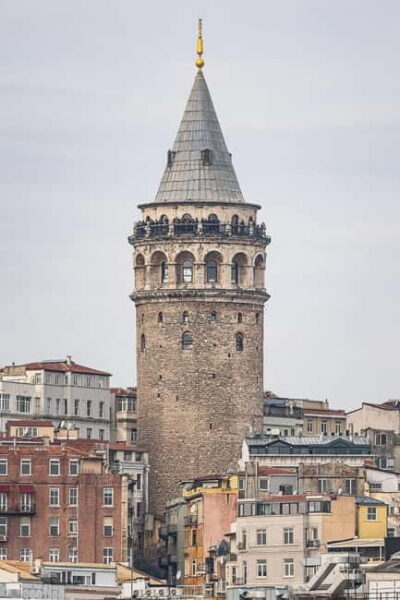
Galata Tower All-Day Entry Ticket with Audio Guide
Read our review →
Delphi full day V.R audio guided tour with entry ticket
Read our review →
Mycenae, Epidaurus & Nafplio Full-Day V.R audio guided Tour
Read our review →
Nizwa Heritage & Culture Full Day Tour with Audio Guiding
Read our review →
Electric Car with GPS Audio Guide Full Day Tour in Lisbon
Read our review →
Browse the lists this tour appears in