Reviewed · ISTANBUL
Istanbul:Basilica Cistern Skip-the-Line Ticket & Audio Guide
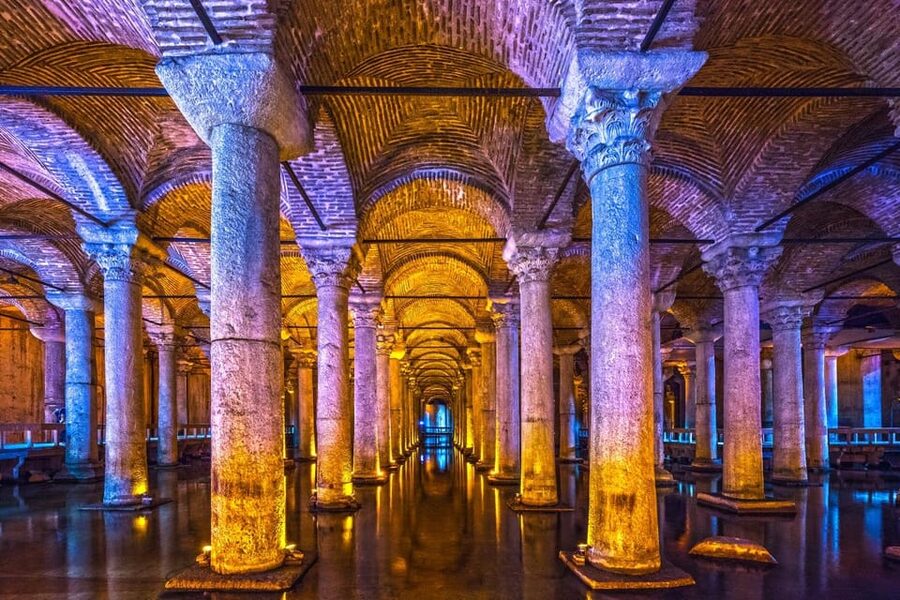
The Basilica Cistern is one of Istanbul’s most atmospheric sights: a huge sixth-century water tank beneath the old city, supported by 336 marble columns. You walk down 52 steps, then follow raised paths through a cool, shadowy hall where the famous Medusa heads wait at the far end. I especially like the freedom to enter on your own schedule and the included English audio guide, which gives the building useful context without tying you to a group.
The other strong point is the simple QR-ticket setup, plus a limited-time free eSIM internet offer. The main caution is price. At $54 per person, this is not a cheap admission ticket for a single attraction, and skip-the-ticket-line does not mean skipping security. Expect a possible security queue and confirm that your booking includes the entry ticket, not only the audio guide option.
Key points to know before you go
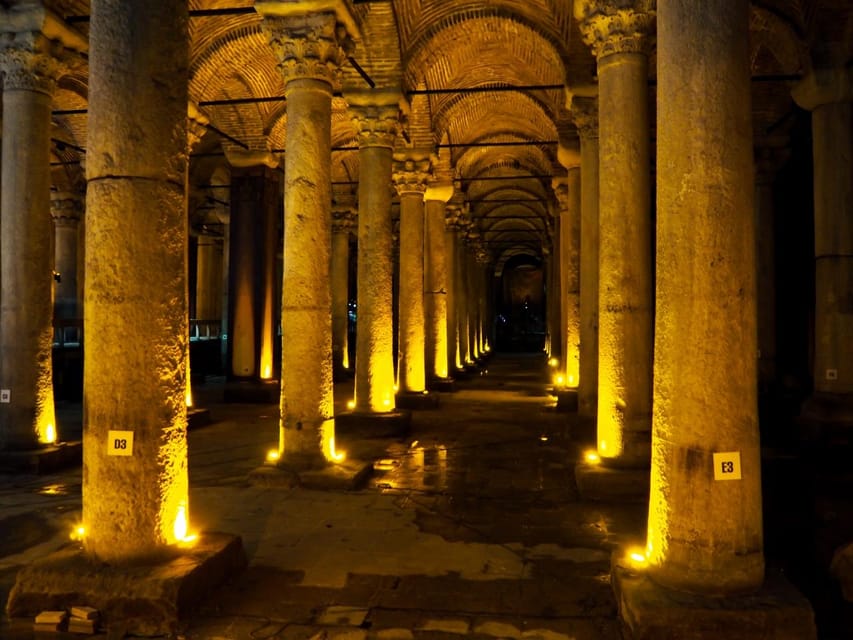
- 336 columns fill a vast underground chamber: The cistern measures about 140 by 70 meters and covers roughly 9,800 square meters.
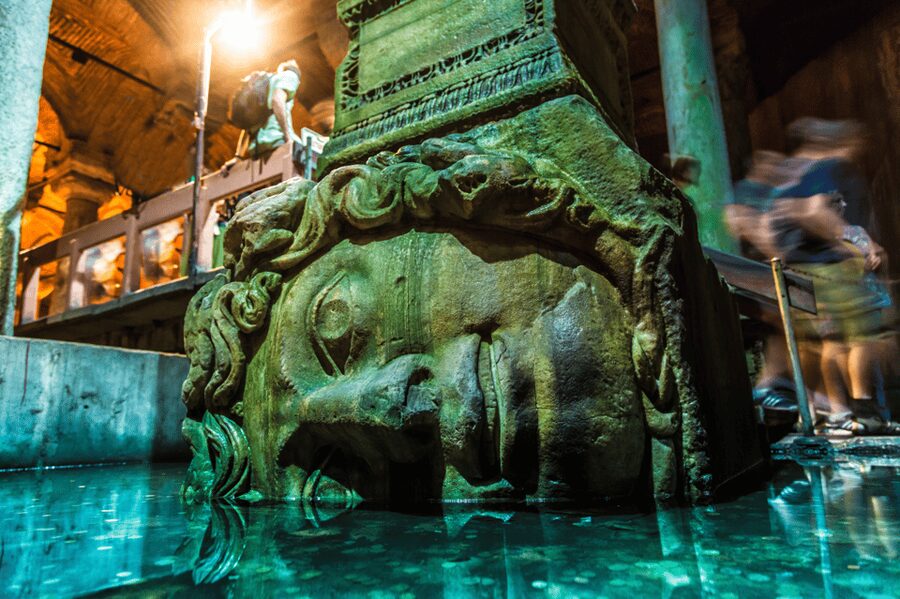
- The two Medusa heads are the star detail: These Roman-era sculptures sit beneath columns at the northwest edge, one placed upside down and another on its side.
- Your visit is self-guided: You receive an entry QR code and a separate link for the English audio guide by email.
- Skip the ticket line, not security: Every visitor must pass through the security check, and a line can form there.
- The ticket is valid for one day: Check the available starting times before booking and plan your visit around your old-city sightseeing.
- The $54 price needs careful thought: The eSIM offer adds value if you need mobile data, but the ticket is costly if you only want a short look inside.
Why the Basilica Cistern is worth your time

Istanbul has plenty of grand monuments above ground, but the Basilica Cistern offers a sharp change of mood. You leave the bright streets near Hagia Sophia and descend into a broad, low-lit chamber where rows of columns disappear into the darkness.
This was not built as a church, despite the name. The cistern was an underground reservoir constructed during the reign of Byzantine Emperor Justinian I, between 527 and 565. A basilica once occupied the site above it, which explains the name. Locals often call it the Yerebatan Cistern, meaning the Underground Cistern.
The practical purpose was water storage. The cistern could hold an estimated 100,000 tons of water, supplying the city during the Byzantine period. Today, its value is less about understanding ancient plumbing and more about seeing how engineering, reused sculpture, brickwork, and soft lighting combine in one memorable space.
I like this stop because it does not require a full day. You can fit it between Hagia Sophia, the Blue Mosque area, and other old-city sights. At the same time, the architecture rewards a slower look. If you rush through for a few photographs, you will miss much of what makes it special.
More Church Audio Tours in Istanbul
- Istanbul: Basilica Cistern Fast-Track Entry and Audio Guide
★ 4.6 · 7,521 reviews - Istanbul: Basilica Cistern Skip-the-Line Entry & Audio Guide
★ 4.6 · 1,477 reviews - Basilica Cistern Guided Tour & Blue Mosque Audio Guide
★ 4.3 · 1,337 reviews
Descending 52 steps into the old reservoir
Your visit begins with a staircase of 52 steps. That descent gives the experience a clear sense of transition. Above you is modern Istanbul. Below is a large Byzantine structure built for a practical need more than 1,500 years ago.
The ticket arrangement is designed for independent entry. You receive two separate emails from Istanbul Tourist Pass: one with the entry QR codes and another with the audio guide link. Have both available on your phone before you arrive. The ticket lets you avoid the regular ticket-purchase line, but you still need to pass through mandatory security.
That distinction matters. The phrase skip-the-ticket-line can sound like immediate access, but it does not remove every queue. The entrance may still have a security line, and all visitors must use it. If you are planning several major sights close together, leave some breathing room rather than scheduling the cistern between two tight appointments.
The ticket is valid for one day, with starting times shown during booking. This is useful for a flexible old-city day, but you should still check the exact availability before paying. The material provided does not promise a guided meeting point, hotel pickup, or transportation, so plan to make your own way there and manage the visit yourself.
Looking up at 336 marble columns

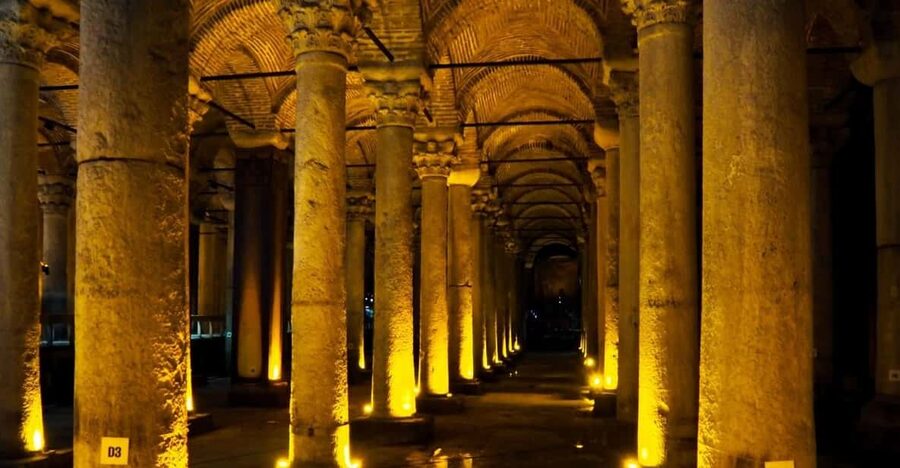
Inside, the scale becomes clear. The cistern measures about 140 meters long and 70 meters wide, with a total area of roughly 9,800 square meters. Its 336 columns are arranged in 12 rows, with 28 columns in each row.
Each column rises about 9 meters. The spacing is roughly 4.80 meters, creating a steady rhythm of arches and vertical supports. Some columns are made from a single piece of marble, while others have two sections. Many were taken from older buildings and reused here, a common practice in the ancient world.
The architectural details vary. About 98 columns use Corinthian-style capitals, while others show Dorian influence. You do not need to be an architecture specialist to appreciate the effect. The repeated forms make the room feel orderly, but the differences keep it from looking mechanical.
The brick walls are about 4.80 meters high. The floor was covered with bricks and sealed with a thick brick-dust mortar to keep the water inside. The audio guide is useful here because it can explain the construction while you look around at your own pace. You are not trying to keep up with a guide or catch every word over a crowd.
The atmosphere is a major part of the appeal. The underground setting, columns, arches, and water create a mood unlike the major mosques and museums nearby. The cistern is not simply another old building. It feels like a piece of the city’s hidden infrastructure made visible.
Finding the Medusa heads
The two Medusa heads are the cistern’s most famous details. You find them beneath columns at the northwest edge of the reservoir. They date from the Roman period, though their original location and purpose are not known.
One head is positioned upside down, while the other rests on its side. The unusual placement has inspired plenty of stories. The practical explanation is more straightforward: older sculptures may have been brought here and used as column supports during construction.
The myth is still worth hearing. Medusa was one of the three Gorgons in Greek mythology, a figure with snakes for hair who could turn anyone who looked at her into stone. Images of the Gorgons were often used to guard important places. Their presence in the cistern may have had a protective purpose, though no firm answer explains exactly why these sculptures were placed as they are.
Give yourself time at this point. The heads are not enormous, and their location can make them easy to overlook if you simply follow the main path. This is where the audio guide can add real value. Instead of seeing two odd stone supports, you get a link between Roman sculpture, Greek mythology, Byzantine construction, and modern Istanbul sightseeing.
More Church Audio Tours in Turkey
- Istanbul: Basilica Cistern Skip-the-Line Entry & Audio Guide
★ 4.2 · 993 reviews - Topkapi Palace + Basilica Cistern Tickets & Audio Guide
★ 4.5 · 30 reviews - Basilica Cistern& Hagia Sophia Audio Guided Tour w/Tickets
★ 4.6 · 22 reviews - Istanbul: Chora Church (Kariye Camii) & Digital Audio Guide
★ 4.2 · 19 reviews
Using the audio guide without a group
The English audio guide is included with the experience, and its separate link arrives by email. That format suits you if you prefer to set your own pace. You can pause, replay, or move on rather than waiting for a group.
There is no named personal guide provided, so this is not the right choice if you want a live historian answering questions. It is better for travelers who enjoy independent visits and want more explanation than a bare admission ticket provides.
Start the audio guide before or shortly after entering, then match its information to what you see. The most useful subjects should be the cistern’s construction under Justinian I, its measurements, the reused columns, the Roman Medusa heads, and the role of the reservoir. Keep your phone charged, since both the QR code and audio link depend on it.
The free internet offer through an eSIM is available for a limited time. That may be handy if you need mobile data to open the audio guide or display your ticket. Read the booking details carefully, since the eSIM is an added offer and not the main sightseeing product. I would not pay $54 solely for internet access.
What the $54 price really buys you
At $54 per person, this experience sits well above the cost of a simple attraction admission. The price buys more than entry: you get the Basilica Cistern ticket, an English audio guide, a skip-the-ticket-line arrangement, and, for a limited time, the eSIM offer.
The value depends on how you travel. If you want to enter independently, dislike arranging tickets at several stops, and need mobile data, the package may save effort. The QR system is convenient, especially on a busy day in the old city.
If you only want to see the cistern and do not care about an audio guide, compare the cost with the regular admission option available at your travel date. The information here does not provide a separate standard ticket price, so I cannot say that $54 is a bargain. My honest view is that this is a convenience package, not a low-cost entry ticket.
The rating supplied for this experience is 3.8 out of 5 from 38 reviews. I would read that as a sign to check the details closely rather than book on headline wording alone. The strongest reasons to choose it are the self-guided format, the audio explanation, and avoiding the ticket-purchase line. The main weaknesses are the high price and the fact that security lines remain.
How to fit it into an Istanbul day
The cistern is in the old city, southwest of Hagia Sophia. It makes sense as part of a walking day around the central historic sights. You can plan it near Hagia Sophia and the Blue Mosque area, then use the cistern as a cooler indoor stop when you want a break from the streets.
The visit is valid for one day rather than a fixed multi-day period. Check the available starting times and choose one that leaves room for delays at security. Since there is no transportation included in the supplied details, you are responsible for reaching the entrance yourself.
The highlights also refer to views over the Golden Horn and Bosphorus, as well as Hagia Irene, described as Istanbul’s second-biggest church. Those are not listed among the included items, which are the Basilica Cistern ticket, English audio guide, and limited-time eSIM. Do not assume that a view stop or Hagia Irene entry is part of this booking unless your confirmation specifically says so.
That distinction is important when comparing Istanbul sightseeing packages. The cistern itself is the confirmed attraction. Treat the other highlight wording as background or possible nearby points of interest, not as guaranteed admissions.
Who should choose this experience
I would choose this for an independent visitor who wants structure without joining a group. It works well if you already plan to explore the old city on foot and want a short, atmospheric stop with enough historical explanation to make the architecture meaningful.
It also suits anyone who prefers digital tickets and audio content in English. Families and mixed-age groups may like the freedom to move at different speeds, though everyone still needs to manage the QR codes and security entrance.
I would hesitate if you are focused on saving money, need a live guide, or expect instant access at the door. Skip-the-ticket-line does not mean skipping security, and no personal guide or transportation is included in the stated package.
The underground setting may also be less appealing if you prefer open-air monuments and panoramic views. The cistern’s magic comes from darkness, columns, brick vaults, and the sense of being below the city. The Golden Horn and Bosphorus views mentioned in the highlights are not the main experience inside the reservoir.
Small practical details that matter
Keep the two emails easy to find. One contains the entry QR codes, and the other contains the audio guide link. It is wise to open both before reaching the entrance, especially if your mobile connection is uncertain.
Do not plan around the idea of walking straight past every line. You can avoid the ticket-purchase queue, but security is mandatory and may take time. Arrive with enough flexibility to handle that.
The free cancellation policy allows you to cancel up to 24 hours in advance for a full refund. That gives you some protection if your Istanbul plans change, but the exact booking terms should still be checked before purchase.
The English audio guide is the only language specifically included in the information provided. If you need another language, confirm availability before booking rather than assuming it is offered.
Should you book it?
Book this experience if you want a self-guided Basilica Cistern visit, value an English audio guide, and like the convenience of a QR ticket with possible mobile data included. The Medusa heads, 336 columns, and enormous underground reservoir make this one of Istanbul’s most unusual historic stops.
Skip it if $54 feels high for one attraction, if you want a live guide, or if you are counting on skipping all queues. For many people, the best reason to buy is convenience. Just confirm that your selected option includes the entry ticket, check the starting time, and remember that the security line remains part of the visit.
FAQ
What is included in the Basilica Cistern experience?
The package includes skip-the-ticket-line entry to the Basilica Cistern, a professional English audio guide, and, for a limited time, free internet through an eSIM. The entry ticket is not included if you purchase only the audio guide option.
Can I skip the security line?
No. You can skip the ticket-purchase line, but all visitors must pass through security. A line may still form at the entrance.
How do I receive the ticket and audio guide?
You receive the entry QR codes and the audio guide link in separate emails from Istanbul Tourist Pass.
How long is the ticket valid?
The ticket is valid for one day. Check the available starting times when you book.
Is the audio guide available in English?
Yes. An English audio guide is included with the experience.
Can I cancel for a full refund?
Yes. You can cancel up to 24 hours in advance for a full refund.
More Skip-the-Line Audio Tours in Istanbul
- Topkapi Palace and Harem Skip-the-Line-Tickets & Audio Guide
★ 4.3 · 4,745 reviews - Hagia Sophia Skip-the-Line Ticket & Blue Mosque Audio Guide
★ 4.1 · 1,879 reviews - Istanbul: Hagia Sophia Skip-the-Line Ticket with Audio Tour
★ 4.4 · 1,767 reviews - Dolmabahce Palace & Harem Skip-the-Line Entry & Audio Guide
★ 4.7 · 927 reviews
Latest audio tours in Istanbul
- Topkapi Palace Museum Skip The Ticket Line Tickets + Audio Guide★ 3.0 · 2 reviews
- Topkapi Palace and Harem Museum Ticket with Audio Guide★ 3.0 · 2 reviews
- Istanbul: Hagia Sophia Entry Ticket with Digital Audio Guide★ 4.5 · 7 reviews
- Istanbul Self-Guided Audio Tour★ 3.0 · 2 reviews
- Istanbul Walking Tour with Audioguide on Your Smartphone★ 5.0 · 6 reviews
- Istanbul Bosphorus Sightseeing Cruise with Audio Guide★ 5.0 · 67 reviews
- Istanbul: Bosphorus and Golden Horn Cruise with Audio Guide★ 4.5 · 83 reviews
- Dolmabahce Palace Skip the Ticket Line Entry with Audio Guide★ 4.0 · 6 reviews
Church & Cathedral Audio Tours, compared.

St. Peter’s Basilica & Dome Entry Ticket & Audio Tour
Read our review →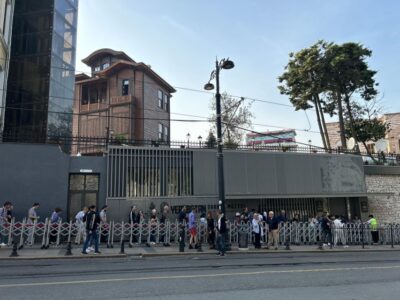
Basilica Cistern Fast-Track Entry and Audio Guide
Read our review →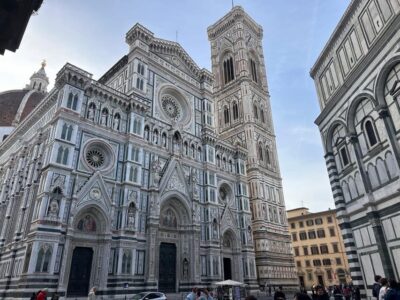
Cathedral & Brunelleschi’s Dome Ticket & Audio App
Read our review →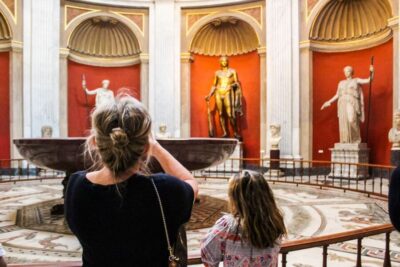
Vatican & Sistine Chapel Ticket with Optional Audio Guide
Read our review →
St. Mark Basilica Ticket, Audioguide+History Gallery
Read our review →
Skip the Line: Vatican & Sistine Chapel Ticket with Audio Guide
Read our review →
St. Peter’s Basilica with Optional Dome Ticket & Audioguide
Read our review →