
Reviewed · GREECE
Olympia: The Famous VR Glasses Tour (+Audio Guide)
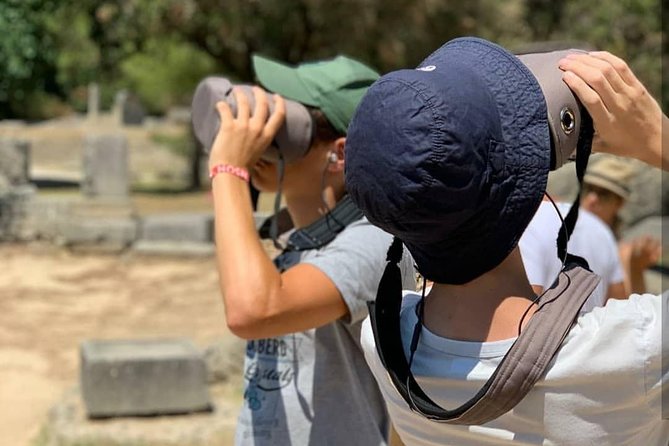
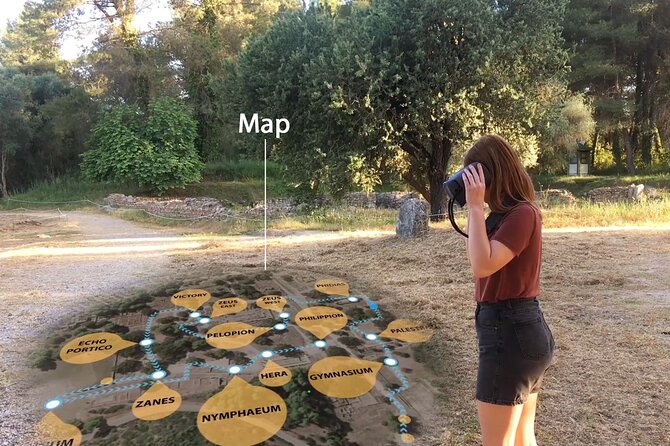
Ancient Olympia is powerful, but its broken columns and scattered stones can be hard to read. This VR glasses tour rebuilds the site in front of you, showing the Temple of Zeus in full color, athletes racing in the stadium, and the Olympic flame being lit at the Temple of Hera. I like the GPS map and audio guidance, which let you explore without being tied to a group. I also like the short demonstration at the local office, especially if gadgets are not your strong suit.
The main catch is practical: the €20 site admission is not included, and the glasses must be collected and returned at an office about an eight-minute walk from the archaeological site entrance. Cruise passengers need to plan carefully, since the office closes from 13:30 to 15:00 and transport from the port can eat up much of the day.
Key points to know before booking
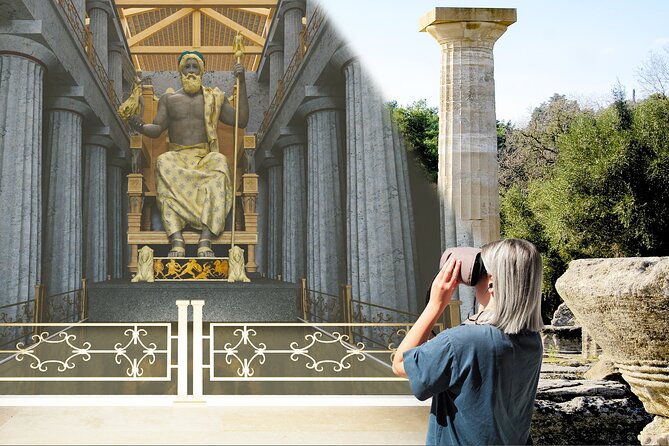
- See Olympia restored in VR: Reconstructed temples, statues, athletes, and ceremonies give shape to ruins that can otherwise be difficult to understand.
- Follow a GPS-enabled map: The system helps guide you between monuments, though clearer arrows would make some turns easier.
- Explore at your own pace: You receive the equipment after a demonstration rather than joining a fixed walking group.
- Budget for the entrance fee: The VR rental costs $31.13 per person, but admission to Ancient Olympia is separate and listed at €20 per person.
- Allow time beyond the site visit: Plan for the walk between the office and entrance, equipment collection, equipment return, and any transport connections.
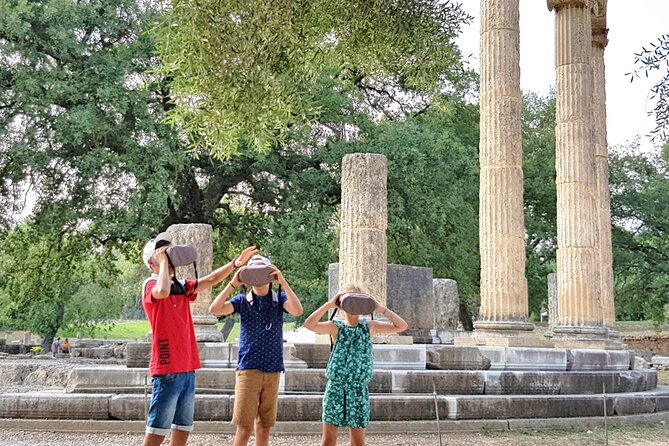
- Especially good for families: Children ages 6, 9, and 12 are reported to have enjoyed the interactive format, though one headset can be shared if young children tire of carrying their own.
Why VR makes Ancient Olympia easier to understand
Olympia asks you to imagine a great deal. You see foundations, partial walls, fallen drums of columns, and open spaces where religious buildings and athletic facilities once shaped the ancient sanctuary. Even with signs, it can be difficult to tell how large a temple was, where a statue stood, or how the stadium felt during a race.
The VR glasses solve much of that problem. At selected points, the ancient structures return around you in reconstructed form. Faded or broken statues regain their color, buildings regain their height, and historical scenes show people using the site rather than leaving you to picture everything from a ground plan.
I like this approach because it adds context without requiring a guide to keep a whole group moving. You can stop, look around, listen to the explanation, and then continue when you are ready. The experience lasts about two to three hours overall, though the main archaeological-site portion is roughly one hour. In practice, you should allow extra time for walking to the entrance, waiting at the gate, and returning the glasses.
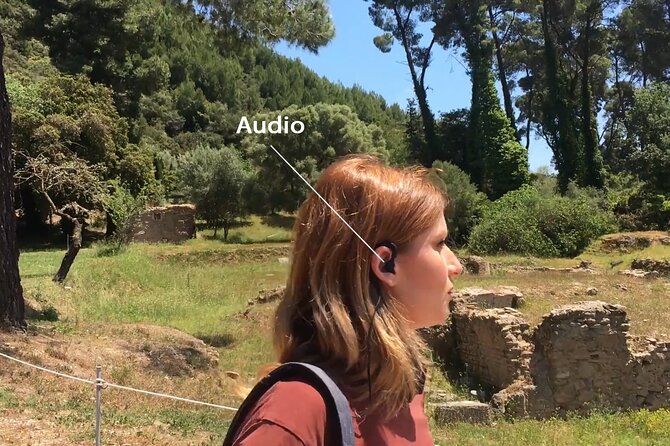
The audio guide is part of the equipment. It supplies the story while the virtual images supply the missing architecture. That combination is the heart of the experience. The ruins give you the genuine ancient setting, while the technology helps you understand what you are seeing.
More Audio Tours in Greece
- Athens: Acropolis Ticket with Optional Audio or Live Guide
★ 4.2 · 11,055 reviews - Athens: Cape Sounio & Poseidon Temple Trip with Audio Guide
★ 4.4 · 4,521 reviews - Athens: Acropolis Ticket with Audio Guide
★ 4.0 · 3,575 reviews
Picking up the equipment at Olympia Back in Time
You begin at the local office called Olympia Back in Time, at Tsourekas Th., Archea Olimpia 270 65, Greece. This is also where you finish, so you do not need to find a second return location.
The staff provide a short live demonstration before you head toward the site. That small introduction matters. You learn how to use the glasses, how the audio works, and how the map guides you. Several practical accounts describe the staff as friendly and helpful, and the equipment is generally considered easy to operate, even for people who are not comfortable with new technology.
The office is close to Ancient Olympia, but not directly at the entrance. The walk is about eight minutes to the archaeological site, with some visitors describing it as roughly 15 minutes depending on the route and pace. On a hot day, that distance matters. It is also important if your bus or ship schedule gives you only a narrow window.
If you arrive by local transport, the office is near public transportation, and one account notes that a train stop is close by. The experience itself does not include transport from a cruise port. You need to arrange that separately and build in time for the journey to Olympia, the walk to the office, the walk to the site, and the return trip.
The Temple of Zeus and its vanished statue
The first major reconstruction focuses on the Temple of Zeus. This was the great sanctuary’s central religious building, and the VR scene helps you understand its scale in a way that surviving stones cannot fully provide.
The virtual presentation places you before the massive Statue of Zeus, described in the experience as so tall that it nearly reached the ceiling. The statue is no longer there, so this is one of the few ways to get a visual sense of the temple interior and the awe it was designed to create.
The restored color is especially useful. Modern ruins often look pale and stripped down, but ancient buildings and sculptures were not meant to be seen as bare gray stone. The VR treatment gives you a better feel for their original appearance without pretending that the reconstruction is the surviving monument itself.
You should still look away from the screen at times. The real columns, foundations, and surrounding ground are the reason you came to Olympia. The glasses work best as a layer over the archaeological site, not as a replacement for it.
The ancient race at Olympia Stadium
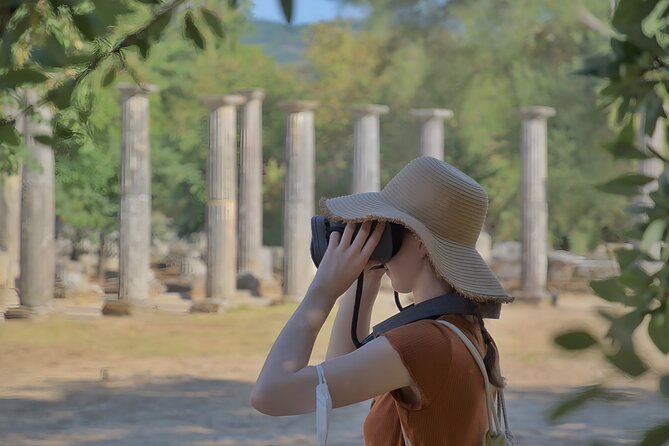
At the stadium, the experience shifts from architecture to action. You watch a foot race with athletes running toward the finish while spectators cheer from the surrounding banks.
This is a strong use of VR because the stadium is a broad, open space. Without people, noise, or movement, it can be hard to sense its purpose. The race gives the track energy and makes the dimensions easier to grasp.
The audio presentation adds a narrative to the scene, while the visual reconstruction shows how the space worked as a sporting venue. It also helps families. Children who might lose interest in a row of foundations have a clear event to watch and a reason to look around.
You will be walking on uneven ground and spending time in the open, so comfortable shoes and protection from the sun are sensible. The experience does not remove the physical demands of the site. One critical account found the amount of walking difficult, especially when combined with a short cruise schedule. That is a real consideration, not a minor complaint.
Another self-paced route in Greece:
- From Athens: Delphi Full Day V.R. Audio Guided Tour
★ 4.6 · 3,028 reviews - Athens: Acropolis Museum Ticket with optional Audio Guide
★ 4.4 · 2,652 reviews - Athens: Acropolis Ticket & Optional Self-Guided Audio Tours
★ 4.1 · 2,542 reviews - Parthenon & Acropolis Museum with Audio or Live Tour Option
★ 4.1 · 2,446 reviews
The Temple of Hera and the Olympic flame
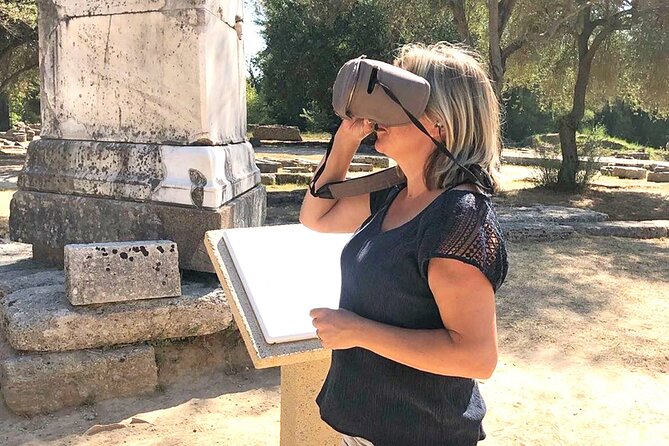
The Temple of Hera brings a different side of Olympia into view. Here, the VR sequence shows the sacred lighting of the Olympic flame, a ritual with a direct link to the modern Olympic tradition.
The experience also introduces the ancient Games held for women in honor of Hera. That is a useful addition because visitors often focus almost entirely on the male athletic contests. This stop gives you a broader picture of the sanctuary and its religious life.
The scene is shorter than the Temple of Zeus and stadium sections, but it adds variety. You are not simply moving from one ruined building to another. You are seeing ceremonies, competition, worship, and public spectacle as connected parts of the ancient site.
Twelve more monuments across the archaeological site
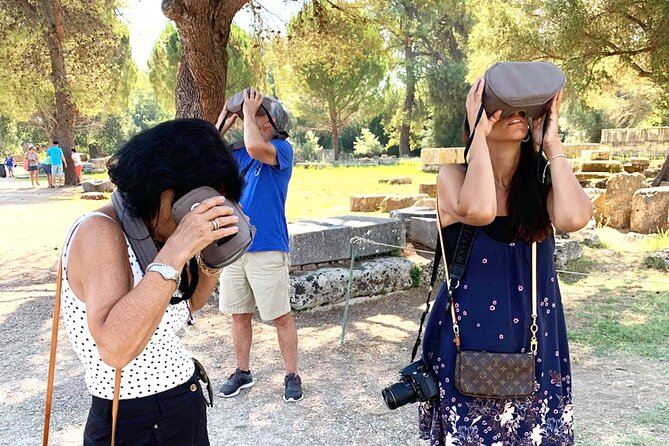
After the main highlights, the route continues through 12 additional monuments. Each has its own explanation, and the GPS system helps you move from one area to the next.
This is where the self-guided format earns its keep. You can pause at a monument, listen carefully, and examine the real remains before moving on. A traditional guide can offer more room for questions, but a private audio route gives you control over the rhythm.
The navigation is not perfect for every user. Some people have found that a direction such as turn left can be confusing when two paths appear. A clearer arrow on the screen would help. I suggest checking the map before leaving each stop and looking at the physical paths around you instead of following the audio blindly.
The GPS feature is still valuable. Olympia is spread out, and the site contains many foundations that can look alike at first glance. The map gives you a basic structure for the visit, while the audio tells you why each location matters.
Price, admission, and what the experience is worth
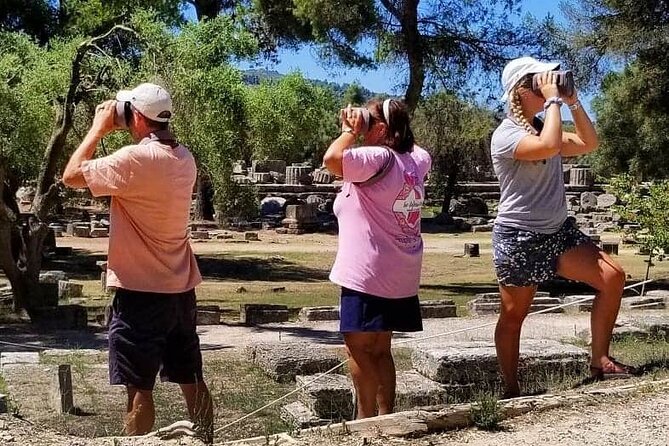
The VR experience costs $31.13 per person. That is not a bargain basement ticket, but it compares favorably with a private guide if you want a more personal pace and do not need live commentary throughout the visit.
The important point is that the archaeological-site admission is separate. The stated entrance price is €20 per person. EU visitors under 25 and non-EU visitors under 18 enter free under the conditions given for this experience. Check your own eligibility at the gate, and budget for the admission rather than assuming the VR price covers everything.
The value depends on how much explanation you need. If you are happy reading signs and using your imagination, you may find the rental unnecessary. If ruins often leave you wondering what you are looking at, the reconstructed scenes can change the entire visit.
The cost also makes more sense for families or small groups who want freedom. You avoid following a large walking party and can stop when children need a break. The maximum group size is 60, but the equipment lets you experience the visit independently rather than as one tightly managed group.
Timing advice for cruise passengers
This experience can work from a cruise port, but only with careful planning. The journey from the port to Olympia takes about 30 minutes by transport according to the practical information provided, and the office is not at the archaeological entrance. Add the walk to the site, the separate admission process, the time inside, the walk back, and the return of the equipment.
The office does not accept returns between 13:30 and 15:00. If your ship or bus requires you to leave around 14:30, you may need to return the glasses before 13:30. That can force you to hurry through the site.
I would aim for an early start and avoid booking this as a rushed last-minute shore visit. The experience is advertised at two to three hours, but a cruise passenger needs more time around that core duration. The best plan is to reach Olympia by late morning at the latest, confirm the transport back, and leave a generous buffer.
If your transport provider gives you only two hours in Olympia, the VR rental may feel cramped. The equipment itself is not the problem. The issue is the combined travel, walking, admission, and return schedule.
Families, older adults, and people who dislike group tours
The format suits families particularly well. Children can see the ancient race, restored buildings, and people in motion instead of relying only on written signs. The interactive scenes give them a reason to stay engaged during a long outdoor visit.
For very young children, consider sharing one headset. A child may enjoy trying the glasses but then stop wearing them, leaving an adult to carry the equipment. This is a small point, but it can matter when you are already carrying water and personal items.
Older adults can use the glasses successfully, provided they are comfortable walking across the site. The equipment is supported by a demonstration and technical help, but the tour does not remove the distance between the office and the ruins or the walking required inside Olympia.
I would choose this over a standard group tour if you prefer quiet exploration, want to linger at one monument, or need to move at your own pace. I would choose a live guide instead if asking questions and receiving personal historical commentary matters more to you than flexibility.
Practical strengths and limits of the technology
The strongest feature is the combination of restored visual scenes and spoken explanation. The glasses show you the scale and appearance of the buildings, while the audio gives you the story behind them. You are not left staring at a foundation with only a sign for help.
The GPS map is another useful tool, especially for a first visit. Still, it should be treated as assistance rather than perfect navigation. Watch for forks in the path, and check the map if the spoken direction seems vague.
You may also feel self-conscious wearing the glasses. Other people at the site may ask what you are seeing, since the virtual scenes are invisible to them. That is part of the experience, and the tradeoff is worthwhile if the technology helps you understand the ruins.
The tour is offered in English, with the audio equipment described as supporting language choices in some practical accounts. Confirm your preferred language when booking if English is not suitable. Technical support and information are included, and service animals are allowed.
Cancellation and booking details
Confirmation is provided when you book, and the experience is often reserved well in advance, with an average booking lead time of about 23 days. That suggests you should reserve ahead if your dates are fixed.
Free cancellation is available up to 24 hours before the local start time. Cancellations or changes made inside that 24-hour window are not refunded or accepted.
Should you book the Olympia VR glasses tour?
I would book it if you want Ancient Olympia to make visual sense rather than simply want to walk among ruins. The Temple of Zeus, the stadium race, the Olympic flame, and the restored statues give you clear reference points, and the audio guide adds useful background without forcing you into a group.
I would be more cautious if you are visiting on a tight cruise schedule, have difficulty with extended walking, or expect the price to include the site entrance. In those cases, calculate the transport and return times first.
For families, independent sightseers, and anyone who wants more context than the site signs provide, this is a smart addition. Just arrive early, wear comfortable shoes, budget for the €20 entrance fee, and leave enough time to return the glasses before the office closes.
FAQ
Where does the Olympia VR tour begin?
It begins at Olympia Back in Time, Tsourekas Th., Archea Olimpia 270 65, Greece.
Where do I return the VR glasses?
You return the glasses at the same Olympia Back in Time office where you collected them.
How long does the experience take?
The full experience lasts approximately two to three hours. The archaeological-site portion is listed at about one hour, with additional time needed for the office visit and walking between the office and site.
Is admission to Ancient Olympia included?
No. The entrance ticket is separate and is listed at €20 per person.
Who can enter Ancient Olympia free under the stated conditions?
Visitors from the European Union under age 25 and visitors from outside the European Union under age 18 enter free under the conditions provided for the experience.
Is the tour guided by a live person?
The experience includes a live demonstration, audio guide, technical support, and information. The visit through the archaeological site is self-guided.
Is the audio guide in English?
The experience is offered in English. The glasses include an audio guide.
Does the tour include transport from a cruise port?
No. Transport to and from Olympia is not included.
Can I return the equipment between 13:30 and 15:00?
No. Returns are unavailable during that period because the office is closed.
Can I cancel for a full refund?
Yes, if you cancel at least 24 hours before the experience start time. Cancellations or changes made less than 24 hours before the start are not refunded or accepted.
Latest audio tours in Greece
- E-Ticket to Akrotiri with Audio Tour on your Phone★ 5.0 · 2 reviews
- Authentic Santorini: A Self-Guided Audio Tour of Oia★ 4.5 · 3 reviews
- The Palace of the Grand Master E-Ticket with Audio Tour★ 4.0 · 9 reviews
- The Palace of the Grand Master. Self-guided Audio Tour★ 3.5 · 15 reviews
- Explore Lindos Acropolis in 3D & Audio★ 4.0 · 4 reviews
- Acropolis of Lindos E-Ticket with Audio Tour on your Phone★ 4.5 · 8 reviews
- Olympia Archaeological Site & Museum E-Ticket with Audio Tour★ 4.0 · 11 reviews
- Mykonos: Find your (queer) god Self-Guided Audio Tour★ 4.0 · 2 reviews
Greece Audio Tours, compared.

Cape Sounio & Poseidon Temple Trip with Audio Guide
Read our review →
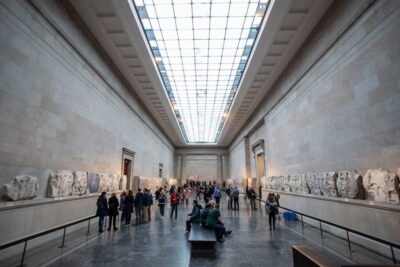
Acropolis Museum Ticket with optional Audio Guide
Read our review →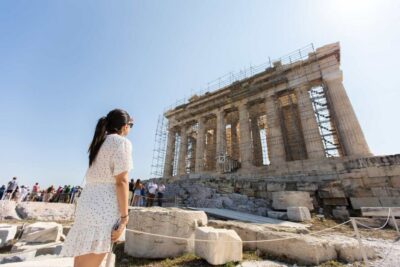
Acropolis Ticket & Optional Self-Guided Audio Tours
Read our review →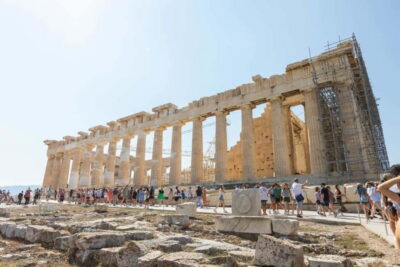
Parthenon & Acropolis Museum with Audio or Live Tour Option
Read our review →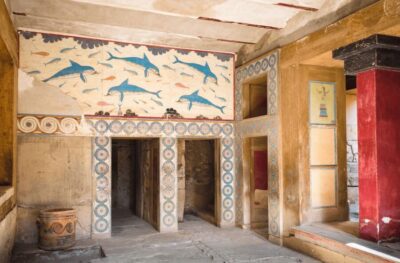
Knossos Palace Entry Ticket with Optional Audio Guide
Read our review →Browse the lists this tour appears in