
Reviewed · BERLIN
Take the U Train: An Audio Story of Berlin’s Oldest Elevated Railway Line
Berlin’s first U-Bahn route is best understood on foot, not from a train window. This self-guided audio walk follows the old high-level railway from Warschauer Straße across Oberbaumbrücke and along the steel viaduct toward Gleisdreieck. GPS starts each story at the right place, so you can look up at the structure while hearing how the line came to be.
I like the freedom of setting your own pace, and I like that the VoiceMap app works offline with maps, audio, and location data already loaded. The main catch is simple: this is mostly a walking tour, with very little actual train riding, so buy it for the railway story and street-level views rather than for a long U-Bahn journey.
Key points at a glance
- The route follows Berlin’s first high-level U-Bahn line, built by Siemens & Halske at the end of the 19th century.
- Warschauer Straße is the starting point, with access to the U1 and U3 lines.
- Oberbaumbrücke supplies the visual highlight, carrying the route across the River Spree between Friedrichshain and Kreuzberg.
- The VoiceMap audio plays by GPS, so the story changes as you reach the right locations.
- Most of the experience is on foot, despite the U-Bahn theme and route.
- Your BVG ticket is extra, and you need a valid ticket for the route, validated before boarding.
A railway story that works best at street level
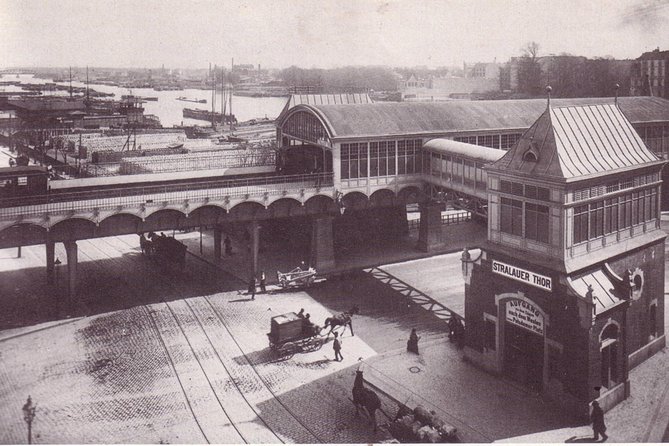
This experience traces the original Stammstrecke, Berlin’s first main section of high-level railway. Siemens & Halske built it near the end of the 19th century, when the city needed a fast way to connect growing neighborhoods without laying every track at street level.
You begin at Warschauer Straße in Friedrichshain. The station serves the U1 and U3, so it is a practical place to reach by public transport. From there, the route follows the railway toward the River Spree and across Oberbaumbrücke.
That setup gives you something a standard sightseeing walk often misses. You are not simply looking at old buildings and hearing dates. You are following the path of a working transport system, seeing how the rail line fits into bridges, streets, canals, and later city development.
The GPS format matters here. You can pause when you want to take a photo, catch up with someone in your group, or simply watch trains pass. The audio begins automatically at the intended points, though you should still keep an eye on your phone and make sure location services are working before setting off.
More train journeys in Berlin
- From Naples: Caserta Palace Ticket and Train with Audioguide
★ 4.3 · 348 reviews - Porticcio: Coastal Train Ticket with Audio Guide & Tastings
★ 3.6 · 159 reviews - Zurich: Audio Guided City Tour and Train to “Top of Zurich”
★ 4.2 · 65 reviews
Warschauer Straße: beginning beside the tracks
Warschauer Straße is a useful starting point because it links directly with the U1 and U3. You meet the route at Warschauer Str. 35, 10245 Berlin, then begin following the line westward.
The first part helps you get oriented. You are not entering a museum or joining a guide with a flag. You are using your phone, headphones, and the surrounding railway as the setting. That makes the experience private and flexible, but it also means you are responsible for starting the app, following directions, and keeping your group together.
I would arrive a few minutes early. Download the tour material and confirm that the offline map and audio are available before you begin. The app is designed to work without a mobile connection, which is useful underground or in places where your signal becomes unreliable.
Your ticket is an important part of the start. You need either a valid BVG day ticket or a single ticket, known as an Einzelfahrschein, valid for two hours along a single route. Validate it before boarding the train and keep it with you for the entire tour. The ticket is not included in the $14.99 tour price.
Oberbaumbrücke: the route’s strongest visual moment
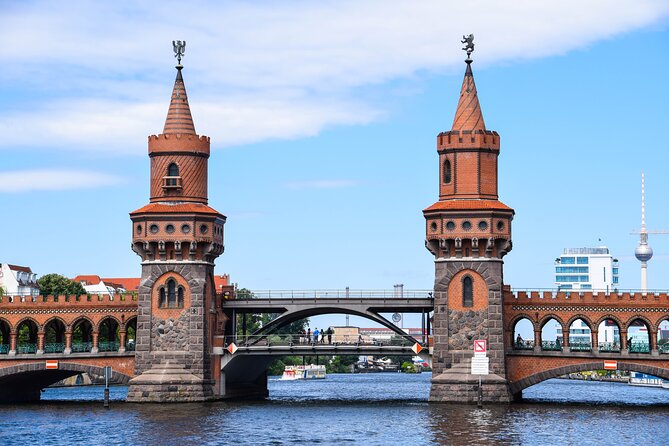
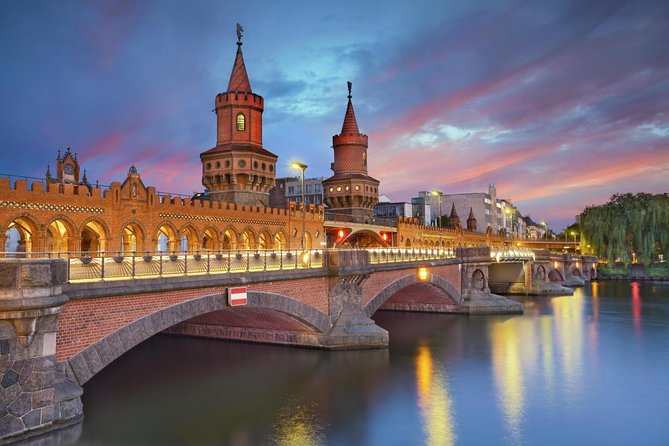
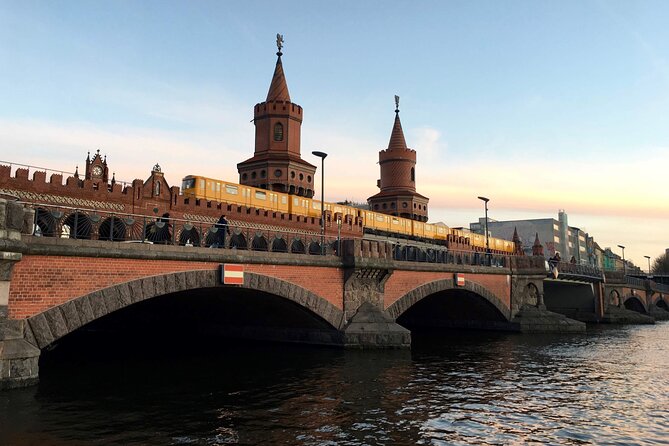
The walk continues toward Oberbaumbrücke, the 1896 bridge connecting Friedrichshain and Kreuzberg over the River Spree. This is likely to be the most memorable section for anyone who enjoys Berlin’s infrastructure as much as its monuments.
The bridge gives the railway story a clear sense of place. Instead of hearing about an old line in isolation, you see the route cross a major river and connect two parts of the city. The setting also helps explain why transport routes matter in Berlin. A bridge is not just a crossing. It determines how neighborhoods connect and how people move through the city.
The audio adds context while you are standing in the actual setting. You can pause the story to look at the bridge, the water, and the railway structure, then resume when you are ready. That is one of the better reasons to choose a self-guided format here. A live guide has to keep moving, while you can spend a little longer on the parts that interest you.
Still, do not expect a traditional sightseeing stop with an organized viewing platform or an entrance hall. Oberbaumbrücke is part of the public route. Traffic, pedestrians, and ordinary city movement remain part of the experience.
Beneath the steel viaduct on Skalitzer Straße
After the bridge, the route follows the beautiful steel viaduct down Skalitzer Straße. This is where the tour becomes a close look at the railway itself.
From street level, you can study the structure as it continues above the road. The audio gives you a reason to pay attention to details that you might otherwise pass without a second thought. The railway is not a separate attraction fenced off from daily life. It is part of the city streetscape, with shops, traffic, sidewalks, and apartment blocks around it.
This section is also where the walking element becomes especially clear. The tour follows the line, but you are generally walking beside or beneath it rather than spending most of the time inside a train. If you want a long ride with commentary through the carriage windows, this is not the right product.
I like the practical connection between the sound and the setting. You hear about the railway while looking directly at its supports and track bed. That combination makes the information easier to remember than a list of dates delivered in a room.
More Audio Tours in Berlin
- Berlin: Solar Powered Sunset Catamaran Cruise & Audio Guide
★ 4.6 · 1,043 reviews - Berlin: Boat Sightseeing Cruise with Audioguide
★ 4.6 · 947 reviews - Berlin: Panoramic Boat Tour with Bilingual Audio Guide
★ 4.1 · 136 reviews - Berlin: Französischer Dom Viewing Platform with Audio Guide
★ 4.1 · 43 reviews
Gitschiner Straße and the canal-side route
The route continues along Gitschiner Straße, then toward Hallesches Ufer and Tempelhofer Ufer. These names may mean little before you begin, but they mark the changing setting of the old line as it moves west.
The tour’s value here comes from continuity. You are not jumping between unrelated points. You are walking the historic route in order, listening as the railway moves from bridge to viaduct and toward the original eastern end near Gleisdreieck.
The GPS audio should help prevent the walk from becoming a simple transfer between stations. Each location triggers the next part of the story, so the surrounding streets become part of the explanation. You can use the map to keep your bearings and check how much of the route remains.
Because this is a city walk, comfortable shoes matter. The duration is about two hours, and the experience includes walking through several streets rather than waiting in one central attraction. The supplied information does not specify seating or scheduled rest stops, so plan on being on your feet for much of the route.
Gleisdreieck: reaching the original eastern branch
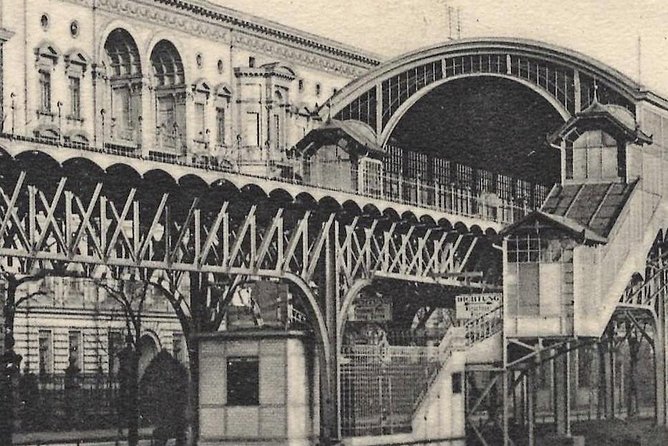
The tour ends at today’s U-Bahnhof Gleisdreieck, at Gleisdreieck, 10963 Berlin. This was the eastern end of the original section covered by the experience.
Ending at a present-day station gives the story a useful final point. You have followed the route from Warschauer Straße across the Spree and along the viaduct, then reached the place where that original eastern branch ended. The route feels like a connected piece of Berlin transport history rather than a collection of facts.
There is no listed museum admission or attraction entrance included at the end. The product ends at the station, so do not plan on a built-in indoor exhibition or a formal farewell from a guide. You can continue using Berlin’s public transport from there, but your BVG fare remains your responsibility.
What the VoiceMap format does well
The VoiceMap app includes the audio, map, and geodata for offline use. That is a real advantage for a route that moves through stations, streets, and areas where a phone connection may vary.
The audio starts automatically at the right place through GPS. In theory, that lets you keep your attention on Berlin instead of constantly searching a written itinerary. You still need to watch your phone occasionally because GPS can be affected by tall buildings or railway structures, but the system is designed to guide you without a live tour leader.
The tour also comes with lifetime access. That matters if you want to stop and finish later, repeat part of the route, or use the material again on another Berlin visit. The experience is private, so only your own group participates. You set the pace and decide how long to linger at Oberbaumbrücke or beneath the viaduct.
The tradeoff is that an app cannot answer follow-up questions. If you want a conversation about Berlin’s transport history, a live guide would offer more flexibility. Here, the quality of the experience depends partly on how comfortable you are managing your own phone and route.
The $14.99 price and the extra costs
At $14.99 per person, this is a modestly priced activity for a two-hour private audio experience. The lifetime access improves the value, especially if you may return to Berlin or want to repeat the walk at a different pace.
But the headline price is not the full cost. You must provide:
- A smartphone
- Headphones
- A valid BVG day ticket or suitable single ticket
- Any food or drinks
- Any museum or attraction admission along the route
Transportation is also not included. The starting point is near public transport, but getting to Warschauer Straße is your responsibility, as is continuing from Gleisdreieck afterward.
I would call the price fair if you want a focused story about Berlin’s railway design and enjoy self-guided walks. It is less attractive if you mainly want to ride the U-Bahn. One existing rating described the experience as spending very little time on the train, and that distinction is worth taking seriously before you book.
Who should choose this experience?
I would recommend it to independent visitors who like architecture, public transport, engineering, and city history. It also suits couples or small private groups who prefer to pause, take photos, and walk at their own speed.
You will get the most from it if you enjoy looking up at bridges and track structures, not just visiting famous squares. The route gives you a practical way to see Friedrichshain, the Spree crossing, Kreuzberg, and the viaduct streets as parts of one transport story.
It may not suit you if you dislike using headphones, relying on GPS, or walking for most of a two-hour activity. Families can participate, and service animals are allowed, but the supplied information does not provide a special children’s format.
The tour is open every day, all day, within the stated operating period. That flexibility is useful for fitting it around museum visits or a changing Berlin schedule. I would still choose daylight if you want to see the bridge and steel structure clearly, since much of the value comes from looking at the route as you hear about it.
A few practical ways to make it work better
Before leaving, charge your phone and download the audio, map, and geodata for offline access. Bring headphones that let you hear the narration without losing awareness of traffic and other people around you.
Validate your BVG ticket before boarding and do not throw it away. The required fare is separate from the tour, and you need to keep the ticket with you throughout the experience.
Give yourself room to pause. The automatic audio is convenient, but you do not have to rush from one trigger point to the next. If the app starts a section while you are still crossing a street or finding a viewpoint, stop safely and listen when you are ready.
The tour is non-refundable and cannot be changed after booking. Because of that, check that you have a compatible smartphone, headphones, and the time for a two-hour walk before paying.
Should you book Take the U Train?
Book it if you want a flexible, private history walk built around Berlin’s first U-Bahn route. The best parts are the GPS-linked storytelling, the crossing of Oberbaumbrücke, and the chance to follow the steel viaduct through ordinary city streets rather than seeing the railway only from inside a carriage.
Skip it if your main goal is a long train ride. The experience follows the U-Bahn, but it is primarily a walking tour with audio. At $14.99, it offers solid value for transport-history fans and independent explorers, especially because access lasts for life. Just add the BVG ticket, headphones, and a charged phone to your plan.
FAQ
Where does the tour begin?
It begins at Warschauer Str. 35, 10245 Berlin, near Warschauer Straße station. The station is served by the U1 and U3.
Where does the tour end?
The route ends at Gleisdreieck station, at Gleisdreieck, 10963 Berlin.
How long does the experience take?
The tour lasts approximately two hours.
Do I need a public transport ticket?
Yes. You need a valid BVG day ticket or a single ticket valid for two hours along a single route. Validate it before boarding and keep it with you throughout the tour.
Does the tour include a smartphone or headphones?
No. You must bring your own smartphone and headphones. The VoiceMap app provides the audio, maps, and geodata, with offline access.
Is the tour guided in person?
No. It is a private, self-guided audio tour. The VoiceMap app uses GPS to play the audio at the intended locations.
Latest audio tours in Berlin
- Self Guided Tours Berlin With 100 Captivating Audio Stories★ 5.0 · 2 reviews
- Self-Guided Audio Tour-The Fall of the wall: A light for humanity★ 4.5 · 8 reviews
- E-ticket to Berlin Botanical Garden with Audio Tour★ 5.0 · 2 reviews
- Berlin Self-Guided Audio City Tour★ 4.5 · 2 reviews
- Berlin’s Museum Island: A Self-Guided Audio Tour★ 3.5 · 3 reviews
- Hop-on Hop-off Berlin Tour with Audio Guide★ 3.0 · 11 reviews
- Berlin: Französischer Dom Viewing Platform with Audio Guide★ 4.1 · 43 reviews
- Berlin: Charlottenburg Palace & Gardens Ticket & Audio Tour★ 4.2 · 9 reviews
Train Experiences, compared.

Caserta Palace Ticket and Train with Audioguide
Read our review →
Porticcio: Coastal Train Ticket with Audio Guide & Tastings
Read our review →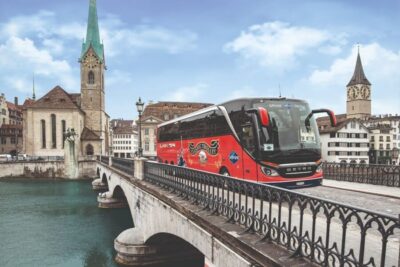
Audio Guided City Tour and Train to “Top of Zurich”
Read our review →
Browse the lists this tour appears in