
Reviewed · GERMANY
Spicy’s Gewürzmuseum Entry Ticket and Audio Guide
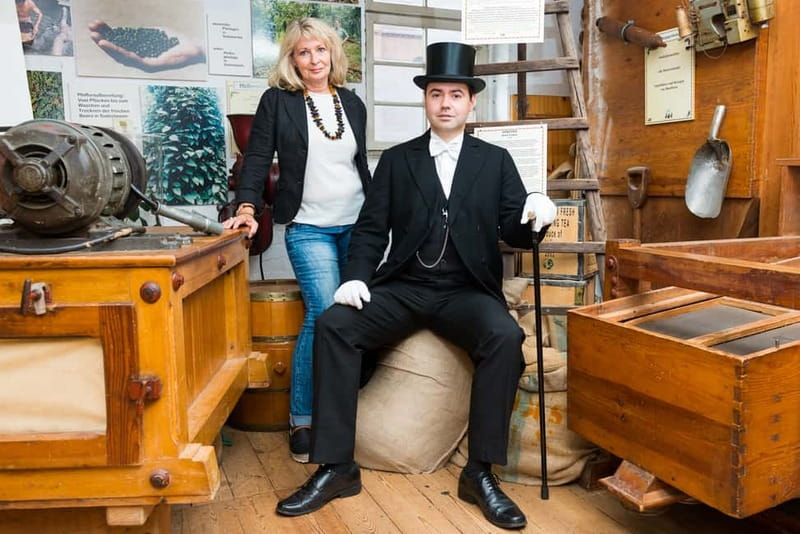
Spicy’s Gewürzmuseum turns an old warehouse floor into a hands-on lesson in the world’s kitchen. You can touch, smell, and taste more than 50 spices, while the museum’s 900-plus objects explain how pepper, herbs, seeds, and other seasonings move from field to finished product.
I like the personal phone audio guide, which lets you set your own pace, and the tasting tables, where the subject becomes more than a row of display cases. The main drawback is practical: the museum is not suitable for wheelchair users, and a charged smartphone is essential.
Key points at a glance
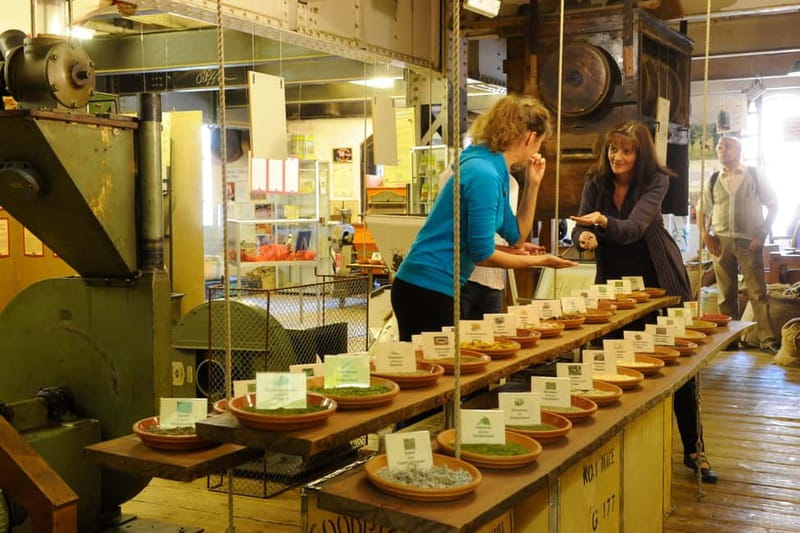
- More than 50 spices can be handled, smelled, and examined in containers and clay bowls.
- Over 900 exhibits cover five centuries of spice use and trade.
- Antique equipment and machinery show the path from cultivation to packaged product.
- Audio guides in German, English, and French work on your own smartphone or tablet.
- Pepper samples for adults and gummy bears for children add a small but welcome tasting element.
- The original storage building gives the museum a genuine warehouse setting rather than a polished modern gallery.
A warehouse floor filled with pepper, herbs, and seeds
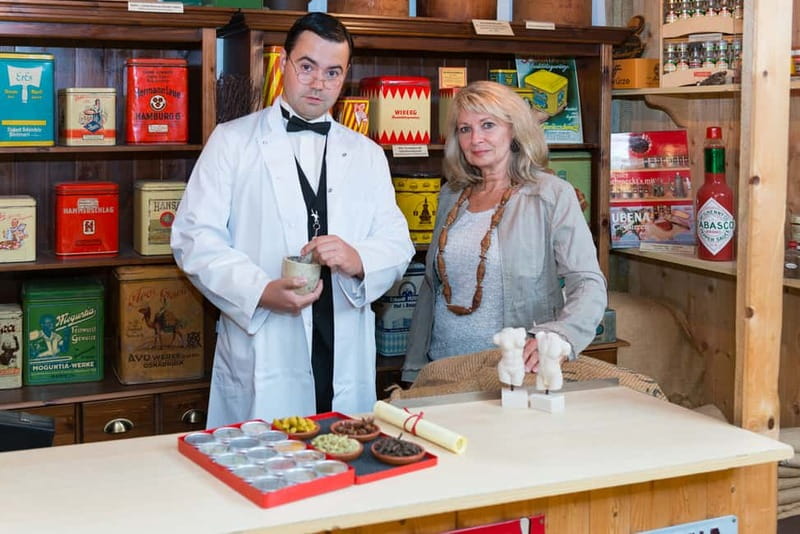
The first thing you notice is the setting. Spicy’s Gewürzmuseum occupies an original storage floor, so the building itself fits the subject. This is not a glossy food attraction designed around dramatic lighting and slick screens. It feels like a working place where goods were stored, sorted, and moved.
That setting matters. Spices have always been practical goods, bought, sold, stored, and shipped before they reached a kitchen. The old storage space gives the displays a useful sense of place. You are not only looking at jars in a museum. You are seeing spices in a building connected to the way commercial goods were handled.
The museum contains more than 900 exhibits from the last five centuries. That collection gives you several ways into the subject. You can follow the history of familiar kitchen staples, compare spices from different parts of the world, or simply stop at the tasting tables and see what catches your nose.
The displays include herbs, spice seeds, and classic spices. Some are kept in containers, while others are set out in clay bowls. The clay bowls are especially useful because they invite you to lean in, take a careful smell, and compare one item with another.
More Audio Tours in Germany
- Neuschwanstein Castle Skip-the-Line Ticket with Audio Guide
★ 4.4 · 1,388 reviews - Berlin: Solar Powered Sunset Catamaran Cruise & Audio Guide
★ 4.6 · 1,043 reviews - Berlin: Boat Sightseeing Cruise with Audioguide
★ 4.6 · 947 reviews
Touch and smell are the real attraction
The museum works best when you use your senses. You are encouraged to touch and smell many of the spices, rather than just read about them. That makes the visit more active than a standard display of sealed samples.
Smell is a tricky museum tool. After several strong scents, your nose can stop separating them clearly. For that reason, do not expect every spice to seem equally powerful throughout your visit. Start with the lighter or less familiar samples, and give your senses a pause when needed.
This is also why a short visit can be satisfying. You do not need several hours to read every label or study every object. At the advertised duration of about 1.5 hours, you have enough time to listen to the audio guide, examine the machinery, and spend time at the tasting area without turning the visit into an endurance test.
You can taste a pepper spice sample as an adult. Children receive gummy bears, which gives younger visitors their own small treat while adults explore the more serious side of the collection. The tasting corner is an important part of the visit because it turns an abstract lesson into a physical memory. You will remember the smell and flavor long after a written explanation has faded.
Follow the route from cultivation to finished spice
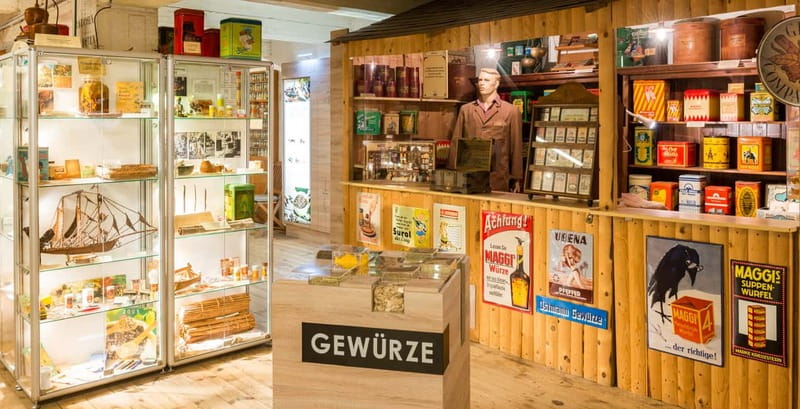
One of the most useful parts of the museum is its focus on production. The displays explain the process from cultivation to finished product, rather than treating each spice as an isolated object.
You can see antique equipment and machinery connected with this process. These objects help explain the work behind the small jars and packets found in a kitchen. Growing, processing, storing, and preparing spices all require different steps, and the machinery gives those steps a physical form.
I like this approach because it answers practical questions. What does a spice look like before it reaches the kitchen? How was it handled in earlier periods? What kind of equipment was used? Even if you arrive knowing little about spices, the objects help connect the raw material to the product you recognize.
The museum also places kitchen herbs, seeds, and classic spices side by side. That variety keeps the visit from becoming a single lesson about pepper. Some displays will be familiar, while others may be new to you. The most useful habit is to compare the appearance of a spice with its scent and, where permitted, its taste.
The five-century time span adds context without requiring a long academic lecture. You see how spices became part of cooking, trade, storage, and daily life across time. The audio guide can fill in the explanations as you move between objects.
Let the audio guide set your pace
Your entry includes a downloadable audio guide available in German, English, and French. You use your own smartphone or tablet, so bring a charged device and headphones if you prefer to listen privately.
This format gives you control. You can pause when a spice catches your attention, skip ahead if a section is less interesting, or replay a point you want to remember. It also suits visitors with different interests. A child may spend more time at the tasting area, while an adult may want to hear more about storage methods or antique machinery.
The main tradeoff is that the audio guide depends on your own device. A low battery can turn a useful feature into a nuisance, so charge your phone before arriving. You also need to exchange your voucher at the museum’s ticket counter before beginning. That is a small step, but leave enough time to handle it before settling into the exhibits.
Since no personal guide is listed, you should not expect a live host walking your group through the museum. The audio guide is the main source of spoken interpretation. That makes this a good choice if you like independent sightseeing, but less suitable if you want to ask a guide questions as you go.
Another self-paced route in Germany:
- Füssen: Neuschwanstein Castle Express Ticket and Audio Guide
★ 3.9 · 788 reviews - Neuschwanstein Castle Ticket With Audio Guided Tour
★ 3.5 · 473 reviews - Berlin: Panoramic Boat Tour with Bilingual Audio Guide
★ 4.1 · 136 reviews - Berlin: Französischer Dom Viewing Platform with Audio Guide
★ 4.1 · 43 reviews
A closer look at the exhibits and storage building
The old storage floor does more than provide an unusual backdrop. It helps you understand why spices needed careful handling. Storage spaces had to accommodate goods in quantity, and the museum uses that sense of scale to show that spices were once part of a larger supply chain.
The exhibits cover five centuries and include antique tools, machines, containers, and examples of spices. You can move between the broad story and small details. One moment you may be looking at a piece of equipment, and the next you may be leaning over a clay bowl to smell a seed or dried herb.
That change of scale is one of the museum’s strengths. A history display can become dry when it stays at the level of dates and trade routes. Here, the tangible objects keep the subject grounded. You can see the implements, smell the products, and understand that the finished spice came from a physical process.
The museum is also well suited to mixed-age groups. Adults receive the pepper sample, while children receive gummy bears. The hands-on displays give younger visitors something to do, and the audio guide lets adults follow the explanations at their own pace. Still, the subject is not built solely for children. The machinery and long time span give adults plenty to consider.
What the tasting area adds
The tasting area is more than a bonus. It is the point where the museum’s main idea comes together. Spices are not only objects with names and origins. They affect smell, taste, memory, and cooking.
Use the tasting tables slowly. Smell one sample at a time, and pay attention to the difference between a whole seed, a dried herb, and a more familiar finished spice. If you rush through every bowl, the scents may blur together.
The pepper sample for adults is a modest inclusion, but it fits the theme well. It gives you a direct taste of one of the world’s best-known spices. Children’s gummy bears are a simple touch, yet they make the visit easier for families by giving younger visitors a clear reward of their own.
The displays also invite careful handling where allowed. Follow the museum’s instructions at each station. The aim is not to touch everything quickly, but to notice how a spice’s texture, appearance, and smell work together.
Is $8 a fair price for 90 minutes?
At $8 per person, this is one of the easier Hamburg attractions to justify if you have an interest in food, local museums, or unusual historic interiors. The price includes entry, the downloadable audio guide, and a tasting element. You are not paying extra for a long list of optional add-ons.
The value comes from the combination of content and access. You receive a substantial collection of more than 900 objects, a sensory display with over 50 spices, antique machinery, and a self-guided explanation in three languages. For a visit lasting about 1.5 hours, that is a solid amount of material.
I would be more cautious if you dislike museums that rely on reading, listening, and close examination. The subject is narrow, and the attraction does not promise a large performance or a full meal. Its appeal comes from details, smells, samples, and objects.
Families may find the price especially reasonable because the tasting element gives children something concrete to enjoy. Adults who cook, collect spices, or like industrial and food history are also likely to get good value. If you have only a short time in Hamburg, compare it with your other priorities. This is a focused museum, not a broad introduction to the whole city.
Who should make time for this museum?
I would recommend Spicy’s Gewürzmuseum to you if you enjoy food culture and prefer hands-on exhibits to rooms of untouchable objects. It also fits well for a rainy afternoon, a family outing, or a stop between other Hamburg sights.
It is a good match for:
- Adults curious about how everyday ingredients are grown and processed.
- Families who want a short museum visit with tasting and a child-friendly treat.
- Visitors who enjoy working through an audio guide at their own pace.
- Anyone interested in old storage buildings, antique equipment, and practical trade history.
- People looking for a modestly priced indoor attraction.
You may want to choose another activity if you need step-free access for a wheelchair user. The museum is specifically listed as not suitable for wheelchair users. You should also reconsider if you cannot bring a charged smartphone or tablet, since the audio guide is accessed through your own device.
Practical details before you go
Your voucher must be exchanged at the ticket counter before you begin. Bring a charged smartphone, and make sure you know which language you want for the audio guide: German, English, or French.
The stated duration is 1.5 hours, but your pace will shape the visit. If you smell every sample, listen to the audio, and study the machinery, you can use the full time comfortably. If you focus mainly on the tasting tables, you may finish sooner.
The activity allows cancellation up to 24 hours in advance for a full refund, and you can reserve now and pay later. Starting times depend on availability, so check the schedule when choosing your date.
Should you book Spicy’s Gewürzmuseum?
Book it if you want an affordable, sensory museum visit with real objects, old machinery, and a clear focus. The strongest reasons are the chance to handle and smell many spices, the original storage setting, and the production story that connects cultivation with the finished product.
I would make it part of a Hamburg plan for food-minded visitors, families, and anyone who enjoys smaller museums with a specific subject. Just bring a charged phone, allow about 90 minutes, and remember that wheelchair access is not available. At $8, the combination of audio guide, tastings, and more than 900 exhibits makes this a sensible choice when you want something more engaging than a standard display of labels and glass cases.
FAQ
Where is Spicy’s Gewürzmuseum located?
Spicy’s Gewürzmuseum is in Hamburg, in Northern Germany.
How long does the visit take?
The stated duration is about 1.5 hours.
What is included with admission?
Admission includes entry to Spicy’s Gewürzmuseum, a downloadable audio guide, a pepper spice sample for adults, and gummy bears for children.
Which languages are available for the audio guide?
The audio guide is available in German, English, and French.
Can I use my own phone for the audio guide?
Yes. The audio guide is accessible through your own smartphone or tablet.
What should I bring?
Bring a charged smartphone. You will need it to access the audio guide.
Can I taste the spices?
Yes. The museum includes tasting areas, and adults receive a pepper spice sample. Children receive gummy bears.
How many spices can I explore?
The museum features more than 50 spices, including kitchen herbs, spice seeds, and classic spices.
Is the museum wheelchair accessible?
The activity is listed as not suitable for wheelchair users.
Can I cancel my booking?
Yes. You can cancel up to 24 hours in advance for a full refund. You can also reserve now and pay later.
Latest audio tours in Germany
- Private audio book city rally around the Jahrhunderthalle in Bochum★ 5.0 · 12 reviews
- Private audio book city rally around the old town of Essen Kettwig★ 4.0 · 6 reviews
- Sanssouci Park: A Self-Guide Audio Tour of the Garden’s Landmarks★ 3.0 · 2 reviews
- Beautiful Baroque Potsdam: A Self-Guided Audio Tour★ 4.5 · 4 reviews
- Nuremberg Walking Tour with Audioguide on your Smartphone★ 5.0 · 3 reviews
- Nuremberg Scavenger Hunt and Highlights Self Guided Audio Tour★ 4.5 · 7 reviews
- Discover Nuremberg: Self-Guided Audio Tour★ 3.0 · 9 reviews
- Self Guided Tours Munich With 100 Captivating Audio Stories★ 5.0 · 3 reviews
Germany Audio Tours, compared.

Neuschwanstein Castle Skip-the-Line Ticket with Audio Guide
Read our review →
Solar Powered Sunset Catamaran Cruise & Audio Guide
Read our review →

Füssen: Neuschwanstein Castle Express Ticket and Audio Guide
Read our review →
Neuschwanstein Castle Ticket With Audio Guided Tour
Read our review →

Französischer Dom Viewing Platform with Audio Guide
Read our review →
Lübeck Scavenger Hunt and Highlights Self Guided Audio Tour
Read our review →Browse the lists this tour appears in